Просмотр новости
Найдите то, что Вас интересует
 Спутники
 РН
РН SpaceX
 Роскосмос
 NASA
NASA
СпутникиРНSpaceXРоскосмосNASAIn reply to <a href="https://liturgy.co.nz/resources-13th-ordinary-28-june-2026#comment-297134">Tdbiubiu</a>.
Thanks for the comment, "Tdbiubiu" - as I've indicated in another comment, we just use our ordinary name on this site; it is part of keeping this a safe place, with more light than heat. Blessings.
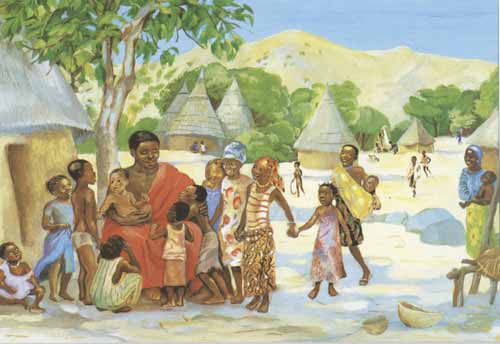
Let us pray (in silence) [that we may live as the people God calls us to be]
Pause
Keep the whānau/household of your church, O God,
safe in your tender compassion,
so that you protect us in all adversities,
and free us to serve you devotedly in good works
to the honour of your name;
through Jesus Christ,
who is alive with you,
in the unity of the Holy Spirit,
one God, now and for ever.
Amen.
The Maori version for Aotearoa New Zealand:
E TE Ariki, whakapumautia te whakapono o to iwi, o te Hahi, kia ora a ii a koe te tiaki kei he; kia ngakau nui ai hoki ki te mahi i nga mahi pai, kia whakakororiatia ai tou Ingoa; ko Ihu Karaiti hoki to matou Ariki. Amine. [Te Pukapuka o Nga Inoi – The Book of Common Prayer in Maori]
The above is my revision for my Book of Prayers in Common in which I seek to provide a set of collects with history and commentary. You can read my reflection on this collect at Ordinary 13 or following below.
Whānau – a word in Te Reo Māori (the Māori language) often translated as “family”. Whānau is wider than the typical Western idea of a nuclear family and signifies a lifelong connection built on shared identity, mutual support, and collective wellbeing.
Resources off this site:
Textweek
Resources for Preaching Downunder
Familiam tuam, quaesumus, Domine, continua pietate custodi: ut a cunctis adversitatibus, te protegente, sit libera; et bonis actibus tuo nomini sit devota.
This originates in the Gregorian Sacramentary, was in Sarum Trinity 22 where it stayed through all the Books of Common Prayer to 1928, and through into the 1962 RC Missal. The Vatican II revision for Ordinary 13 uses a prayer from the Ambrosian Sacramentary of Bergamo, so since then there is no obvious shared collect for this Sunday. The Sunday of Ordinary 13 is always the one closest to June 29, the Feast of Sts Peter and Paul. For this reason, TEC uses a collect composed for the 1549 BCP praying for the unity of the church founded on the apostles. I have taken that lead of using a prayer focusing on the Church as the reason to use this one from the Trinity 22 tradition.
1549 BCP:
LORDE we beseche thee to kepe thy housholde the churche in continuall godlines; that throughe thy proteccion it maye be free from al adversities, and devoutly geven to serve thee in good workes, to the glory of thy name; Through Jesus Christ our Lorde. Amen. [the “Amen” was added in 1559]
BCP 1662:
LORD, we beseech thee to keep thy houshold the Church in continual godliness; that through thy protection it may be free from all adversities, and devoutly given to serve thee in good works, to the glory of thy Name, through Jesus Chriſt our Lord. Amen.
Joint Liturgical Group 1968 and Modern Collects (1972) renders this as:
Lord God, we pray you to keep your household the Church in continual godliness that through your protection it may be free from all hindrances and may serve you in singleness of mind to the glory of your Name; through Jesus Christ our Lord.
The start is identical to Epiphany 5, so I have translated that identically. [You can check the reflection here]. The Latin familia is much more than “family”. It was a household including extended relatives, servants, and guests. This is much better represented by the te reo Māori (‘the Māori language’) whānau, an extended household group. Cranmer rendered this as “housholde the churche”. There are also echoes of Web 13:21.
Epiphany 5 is:
Familiam tuam, quaesumus Domine, continua pietate custodi: ut quae in sola spe gratiae caelestis innititur, tua semper protectione muniatur. Per Dominum …
Lectionary Readings IntroductionsThis site provides something different: many sites and books provide a brief summary of the reading – so that people read out or have in their pew sheet an outline of what they are about to hear. They are told beforehand what to expect. Does this not limit what they hear the Spirit address them? This site provides something different – often one cannot appreciate what is being read because there is no context provided. This site provides the context, the frame of the reading about to be heard. It could be used as an introduction, printed on a pew sheet (acknowledged, of course), or adapted in other ways. This is an experimental venture and I will see how useful it appears.
Genesis 22:1-14
From 2 Chronicles 3:1 there has been an assumption that Abraham took Isaac to Jerusalem. But taking wood from Beersheba to Jerusalem where wood was plenteous appears unusual. Hence, in this story, the land of Moriah probably refers to Sinai near Kadesh.
Jeremiah 28:5-9The context is the prophet Hananiah is a false prophet. The people preferred Hananiah’s proclamations to Jeremiah’s because Hananiah’s appeared more positive.
Romans 6:12-23
Paul has argued that our justification and peace with God is by faith, and that this is a free gift. Now he turns to the obvious, resulting issue: if that is the case – why cease from sinning?
Matthew 10: (37-39) 40-42
One context of today’s text is the Mediterranean understanding of family in Jesus’ day. The extended family was the primary unit – Jesus’ community provided leaving the primary unit and cleaving to His community as a new primary unit. The second context is that of Middle Eastern hospitality, which was provided to strangers, and by doing so enhanced one’s honour. These contexts are the converse of much of our contemporary context in which even the “traditional” nuclear family is no longer a primary unit, and hospitality is extended to family and friends.
The Liturgy Facebook Page
The Liturgy Twitter Profile
The Liturgy Instagram
| # | Наименование новости | Тональность | Информативность | Дата публикации |
|---|---|---|---|---|
| 1 | Comment on The New Oxford Annotated Bible by Bosco Peters | 5 | 2 | 23-06-2026 |
| 2 | Comment on Resources 14th Ordinary – 5 July 2026 by Bosco Peters | 0 | 1 | 01-07-2026 |
| 3 | Comment on Church Year by Bosco Peters | 0 | 3 | 08-06-2026 |
| 4 | Comment on Tarore of Waharoa by Bosco Peters | 0 | 3 | 24-04-2026 |
| 5 | Comment on To Orans or Not to Orans? by Bryce | 0 | 0 | 14-05-2026 |
| 6 | Comment on Meet BUowo, the anonymous BU staff member who collects data to help students find better housing by BUowo | 5 | 7 | 09-04-2026 |
| 7 | Letters to The Editor — June 13, 2026 | 0 | 0 | 12-06-2026 |
| 8 | Letters to The Editor — June 27, 2026 | 0 | 0 | 26-06-2026 |
| 9 | Comment on Be Careful What You Pray For by Annabel Smyth | 1 | 2 | 24-06-2026 |
| 10 | Letters to The Editor — July 2, 2026 | 0 | 0 | 01-07-2026 |