Просмотр новости
Найдите то, что Вас интересует
 Спутники
 РН
РН SpaceX
 Роскосмос
 NASA
NASA
СпутникиРНSpaceXРоскосмосNASA
The measles outbreak in rural West Texas has grown to 90 cases across seven counties, the state health department posted online Friday, and 16 people are hospitalized.
In neighboring eastern New Mexico, the measles case count is up to nine, though state public health officials said Thursday there’s still no evidence this outbreak is connected to the one in Texas.
Measles is a highly contagious disease. Here’s what you should know about how to protect yourself against measles, as well as what’s happening in Texas and New Mexico.
Where are measles spreading?
The West Texas cases are concentrated in Gaines County, which has 57 infections, and Terry County, north of Gaines, where there are now 20 confirmed cases.
Dawson County, to the east of Gaines, was new to the count with six. Yoakum County has four and Lubbock, Lynn and Ector counties have a case each.
Trump Administration
Feb 21
FactChecking RFK Jr.'s first interview as HHS Secretary
Transgender rights
Feb 21
DOJ files complaint against judge challenging Trump's transgender troop ban
Texas state health department data shows the vast majority of cases are among people younger than 18: 26 in kids younger than 4 and 51 in kids 5-17 years old. Ten adults have measles and three cases are “pending” an age determination. The Ector County Health Department told the Odessa American its case was in a child too young to be vaccinated.
State health officials have said this outbreak is Texas’ largest in nearly 30 years. Health department spokeswoman Lara Anton said last week that cases have been concentrated in a “close-knit, undervaccinated” Mennonite community — especially among families who attend small private religious schools or are homeschooled.
In New Mexico, all of the cases are in Lea County, which borders Gaines County in Texas. The state health department has said people may have been exposed at a grocery store, an elementary school, a church, Nor-Lea Hospital and a Walgreens in Hobbs, New Mexico.
What is measles?
Measles is a respiratory virus that can survive in the air for up to two hours. Up to 9 out of 10 people who are susceptible will get the virus if exposed, according to the U.S. Centers for Disease Control and Prevention.
Most kids will recover from the measles if they get it, but infection can lead to dangerous complications like pneumonia, blindness, brain swelling and death.
Is the vaccine safe?
Yes, the measles, mumps and rubella (MMR) vaccine is safe and highly effective in preventing measles infection and severe cases of the disease.
The first shot is recommended for children between 12 and 15 months old and the second between 4 and 6 years old. The vaccine series is required for kids before entering kindergarten in public schools nationwide.
Before the vaccine was introduced in 1963, the U.S. saw some 3 million to 4 million cases per year. Now, it’s usually fewer than 200 in a normal year.
There is no link between the vaccine and autism, despite a now-discredited study and health disinformation.
Why do vaccination rates matter?
In communities with high vaccination rates — above 95% — diseases like measles have a harder time spreading through communities. This is called “herd immunity.”
But childhood vaccination rates have declined nationwide since the pandemic and more parents are claiming religious or personal conscience waivers to exempt their kids from required shots.
The U.S. saw a rise in measles cases in 2024, including an outbreak in Chicago that sickened more than 60. Five years earlier, measles cases were the worst in almost three decades in 2019.
Gaines County has one of the highest rates in Texas of school-aged children who opt out of at least one required vaccine, with nearly 14% of K-12 children in the 2023-24 school year. Health officials say that number is likely higher because it doesn’t include many children who are homeschooled and whose data would not be reported.
What are public health officials doing to stop the spread?
Health workers are hosting regular vaccination clinic and screening efforts in Texas, as well as working with schools to educate people about the importance of vaccination and offering shots.
New Mexico health officials are also hosting several vaccination clinics in Hobbs next week.
___
The Associated Press Health and Science Department receives support from the Howard Hughes Medical Institute’s Science and Educational Media Group and the Robert Wood Johnson Foundation. The AP is solely responsible for all content.
If you think physical therapy is only about rehabilitation after surgery or recovering from an accident, think again. For the vast majority, seeing a physical therapist should be about prevention, routine assessment and staying well.
“We're the best-kept secret in health care,” Sharon Dunn, the past president of the American Physical Therapy Association, told The Associated Press.
Roger Herr, the current president of the APTA, and Gammon Earhart, associate dean for physical therapy at the medical school at Washington University in St. Louis, echoed Dunn's prevention message in separate interviews with the AP.
“We need to change our image by getting out of our silos, out of our brick-and-mortar clinics,” said Dunn, who teaches at LSU.
The image of the profession tends to be one-dimensional. You’ve had knee surgery, your back keeps acting up or you’re injured and you've been referred by a physician to a physical therapist.
You go several times, you get an evaluation and you’re discharged with exercises to do and advice about how to move more efficiently.
“That's a big chunk of what physical therapists do,” Earhart said. “But I think a lot of people don’t understand. They think when they have a major medical problem that a physical therapist is going to massage them until they feel better. That’s not what it is.”
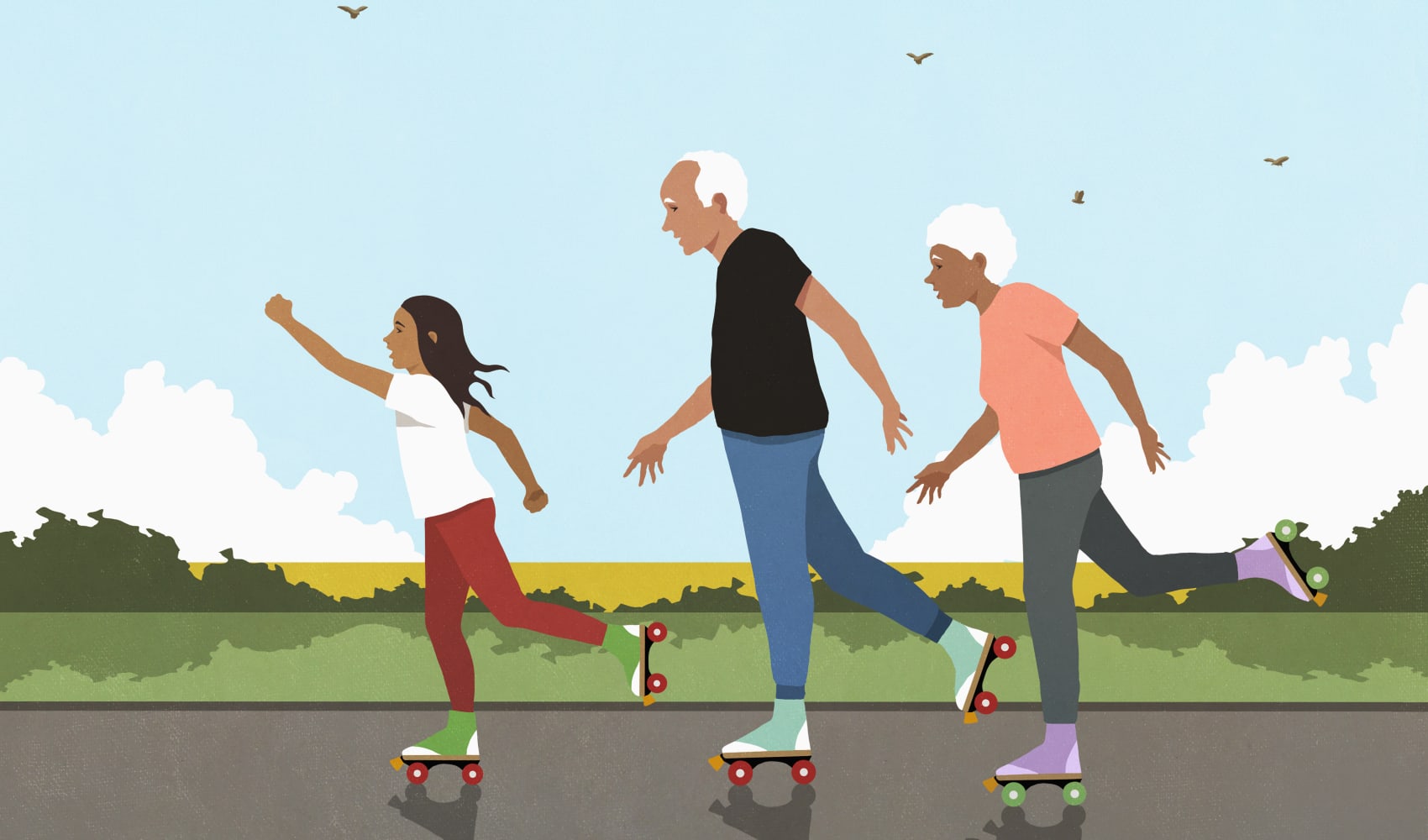

Many in the profession favor thinking of physical therapists the way we do dentists; patients make appointments for regular exams.
“Even if you’re not having any problem, you go in and have everything checked out," Earhart said. “If there's any problems that seem to be brewing, you head them off at the pass.”
An exam could include health history and current health — physical activity, sleep, nutrition, etc. This would be followed by a look at how you're moving. It might include things like postural alignment and movement patterns as you walk, run, reach, sit and stand. In terms of strength and flexibility, think muscle imbalances.
Herr is a big backer of annual wellness visits for all ages.
“Physical therapists can fit into all parts of the spectrum,” Herr said. “It can be for the young, emerging athletes or high-end athletes, or someone who wants to age well and be as functional and independent as possible.”
Think preventionYou can now visit a physical therapist in all 50 states without needing a referral from a physician or surgeon. That's the good news.
“I just don’t think the public knows they can go to a physical therapist without a physician's referral,” Dunn said.
The bad news for an annual exam might be the price tag. These preventative visits are not usually covered by insurance. Earhart estimated such a visit in the Midwest might cost $150 out of pocket. But an intervention like this might save expenses — and add healthy years — in the long run.
Herr, who is based in New York, suggested a cost of $200-$300 in a more expensive part of the country.
“Surgery and accidents can still happen, but generally you’re on top of things with these visits,” Earhart said. “I think if people understood more that the way they move might be setting them up for a problem down the line, they’d be much more inclined to see a physical therapist.”
The hips for ballet — or notWe are all built differently with variations in hip architecture and so forth. It might be useful to evaluate children early to decide what sports or activities suit them. Testing beforehand to avoid a problem later is the perfect job for a physical therapist.
“If we screened kids as they were choosing sports and said this sport is probably not the right kind of stress for the way you are put together, it could save a lot of pain and problems down the line,” Earhart said. “Maybe they don't have the hips for ballet.”
Distance runners should think this way. Some are built more efficiently to avoid injuries despite pouring on the miles or kilometers. Others are not, and it would be good to know in advance.
Fear of fallingFalling — and the fear of falling — is debilitating for the aging population. Herr said physical therapists can help with relatively simple interventions.
“You want to show people they can get back up if they fall," Herr said. “And once they know they can do it, it gives them confidence and it can help reduce the fear of falling. One of the risks of falling is that people don’t do anything, so you don’t move and therefore you become more out of shape and not as functional.”
Herr noted that “floor to stand” movements involve flexibility, strength, balance and coordination. And planning.
“It sounds simple getting up from a lying position on the floor to stand," Herr said. "But it's a great exercise for all age groups."
Issues with weightEarhart estimated that perhaps 50% of physical therapy patients are there because of issues related to being overweight.
“Somebody does not have to be morbidly obese for their weight to be affecting their movement,” she said. “The more weight somebody is carrying the higher the loads are on their joints.”
Earhart said she sees patients for “prehab” for weight-loss surgery known as bariatric surgery, also known as gastric bypass. This involves the digestive system to limit how much patients can eat, or the ability of take in calories.
The surgery can also involve rehab visits.
Herr said he’s watched obese patients drop weight. It can be a question of motivation, though it’s not always that straightforward.
“I have seen people change based on a milestone, like having a kid and they really want to be a good parent,” Herr said. “They want to be a fit parent, and the same thing with a grandparent. So that motivates people to engage because of a lifestyle change.”
| # | Наименование новости | Тональность | Информативность | Дата публикации |
|---|---|---|---|---|
| 1 | AI analyses of eye scans can detect diseases like diabetes, osteoporosis and thyroid disease in seconds | 7 | 9 | 29-06-2026 |