Просмотр новости
Найдите то, что Вас интересует
 Спутники
 РН
РН SpaceX
 Роскосмос
 NASA
NASA
СпутникиРНSpaceXРоскосмосNASA
Sentences are being announced for the people convicted on terrorism charges in connection with last year’s shootout at the Prairieland ICE Detention Center in Alvarado, Texas. The attack happened almost a year ago, on July 4, 2025.
The alleged organizer, Benjamin Song, was sentenced to 100 years in prison; he could have received as little as 20 years or up to life.
Prosecutors said Benjamin Song, a former U.S. Marine Corps reservist, yelled “get to the rifles” and opened fire, striking one police officer who had just pulled up to the center. Though it was Song who opened fire, prosecutors charged several other protesters with attempted murder of an officer and discharging a firearm as well, but they were found not guilty. The prosecution had argued that from the group’s planning, it was foreseeable to those others that a shooting could happen.
Maricela Rueda was sentenced to 70 years. Savanna Batten, Zachary Evetts, Autumn Hill, Meagan Morris, and Elizabeth Soto were sentenced to 600 months (approx. 50 years).
Daniel Estrada was charged with corruptly concealing a document and conspiracy to conceal documents. He was found guilty of both and sentenced to 30 years.
There were nine defendants on trial in all, eight of whom faced the charge of providing material support to terrorists, among other charges.
The sentencing hearing was on Tuesday morning (June 23) in a federal courthouse in Fort Worth. The ninth defendant’s hearing was rescheduled for next week. The other defendant could be sentenced to 10 to 60 years.
Federal prosecutors claim the group targeted the facility to disrupt immigration and deportation operations. They will be sentenced for their roles in rioting, obstruction, and attempted murder. An Alvarado police officer was shot but survived.
Prosecutors called the case “domestic terrorism,” calling the violence an attack plotted by antifa operatives, but attorneys for the accused denied that characterization, saying there were no antifa associations and that it was merely a demonstration with fireworks before gunshots broke out. The decentralized far-left movement has become a target of the Trump administration. FBI Director Kash Patel had said the case was the first time charges of providing material support to terrorists had targeted people accused of being antifa members.
Short for “anti-fascists,” antifa is not a single organization but rather an umbrella term for far-left militant groups that confront or resist neo-Nazis and white supremacists at demonstrations.
The terrorism charges followed Trump’s order last fall to designate antifa as a domestic terrorist organization. Those charges did not require a tie to any organization, and there is no domestic equivalent to the State Department’s list of foreign terror organizations. That’s in part because organizations operating within the United States are protected by broad First Amendment rights.
Critics of the Justice Department’s case have said the outcome could have wide-reaching effects on protests.
“That opposition is something that the government wants to squash so a case like this helps the government kind of see how far they can go in criminalizing constitutionally protected protests and also helps them kind of intimidate, increase the fear, hoping that folks in other cities then will think twice over protesting,” said Suzanne Adely, interim president of the National Lawyers Guild, a progressive legal group.
The group brought fireworks and vandalized vehicles and a guard station; at least one person brought a gun. The group’s attorneys say it was an anti-immigration crackdown protest. Attorneys for the defendants have said most protesters began leaving when two guards from the center came outside. That was before any shots were fired.
The trial lasted 12 days back in March; more than 45 witnesses testified, and hundreds of pieces of evidence were shown; the jurors ultimately convicted them. It was closely followed by legal experts and critics who called the proceedings a test of the lengths the government can go to punish protesters.
The officer who was shot, Alvarado Police Lt. Thomas Gross, testified that when responding to the scene, he saw a person clad in all-black with their face covered and carrying a rifle. He told jurors he was shot with a round that went into his shoulder and out of his neck.
Song’s attorney, Phillip Hayes, told jurors during closing arguments that there wasn’t a call to arms before Gross arrived on the scene and “aggressively” pulled out his firearm. Hayes suggested that Song’s shots were “suppressive fire” and that a ricochet bullet is what hit the officer.
Leading up to the trial, several people pleaded guilty to providing material support to terrorists after being accused of supporting antifa. They face up to 15 years in prison at sentencing.
Some of them testified for the prosecution, including Seth Sikes, who said he went to the detention center because he wanted to bring some joy to those held inside.
“I felt like I was doing the right thing,” he said.
Associated Press reporter Jim Vertuno contributed from Austin, Texas.
Sentences are being announced for the people convicted on terrorism charges in connection with last year's shootout at the Prairieland ICE Detention Center in Alvarado, Texas. The attack happened almost a year ago, on July 4, 2025.
The alleged organizer, Benjamin Song, was sentenced to 100 years in prison; he could have received as little as 20 years or up to life.
Prosecutors said Benjamin Song, a former U.S. Marine Corps reservist, yelled “get to the rifles” and opened fire, striking one police officer who had just pulled up to the center. Though it was Song who opened fire, prosecutors charged several other protesters with attempted murder of an officer and discharging a firearm as well, but they were found not guilty. The prosecution had argued that from the group’s planning, it was foreseeable to those others that a shooting could happen.
Maricela Rueda was sentenced to 70 years. Savanna Batten, Zachary Evetts, Autumn Hill, Meagan Morris, and Elizabeth Soto were sentenced to 600 months (approx. 50 years).
Daniel Estrada was charged with corruptly concealing a document and conspiracy to conceal documents. He was found guilty of both and sentenced to 30 years.
There were nine defendants on trial in all, eight of whom faced the charge of providing material support to terrorists, among other charges.
The sentencing hearing was on Tuesday morning (June 23) in a federal courthouse in Fort Worth. The ninth defendant's hearing was rescheduled for next week. The other defendant could be sentenced to 10 to 60 years.
The latest news from around North Texas.
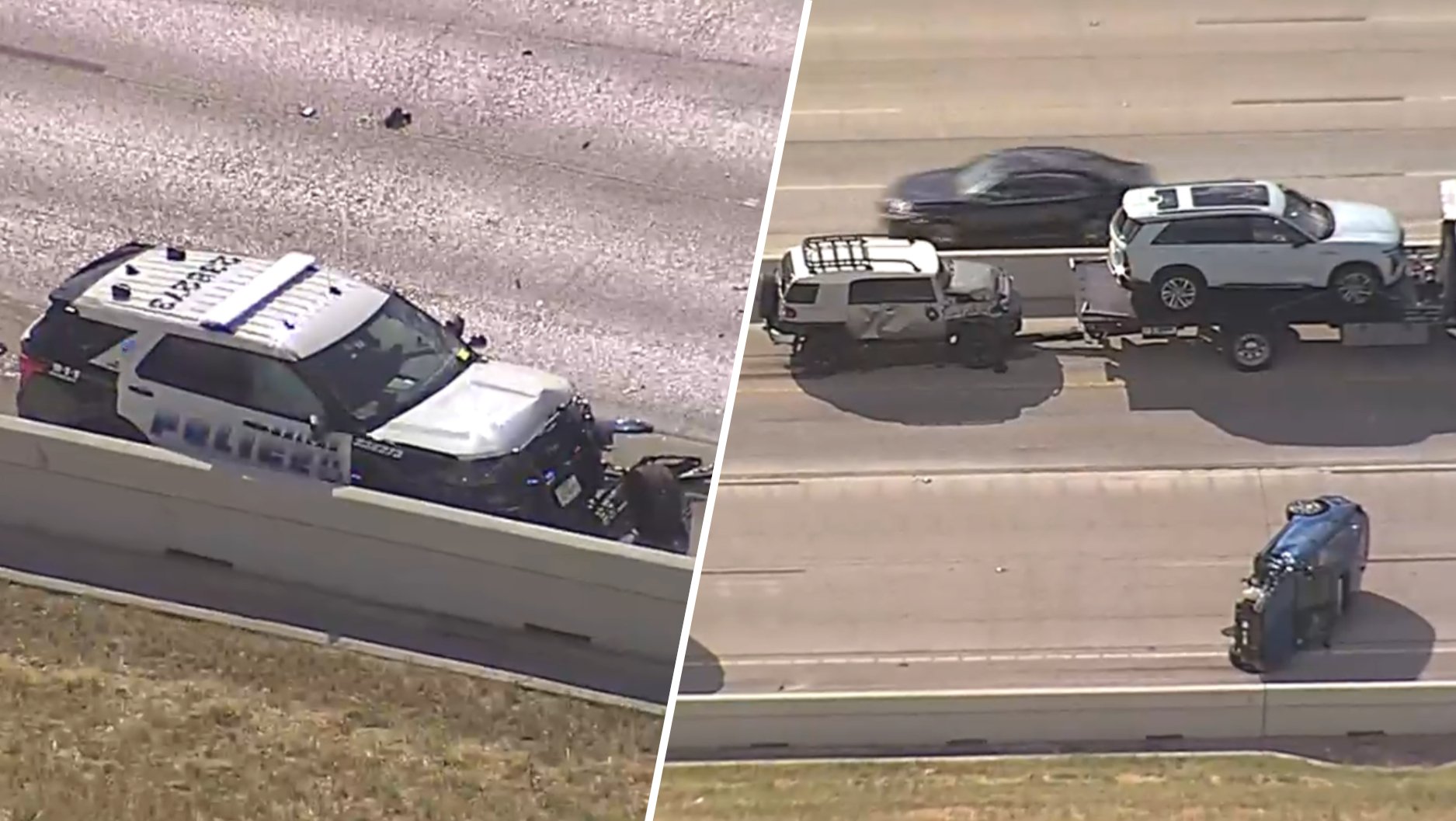
Federal prosecutors claim the group targeted the facility to disrupt immigration and deportation operations. They will be sentenced for their roles in rioting, obstruction, and attempted murder. An Alvarado police officer was shot but survived.
Prosecutors called the case "domestic terrorism," calling the violence an attack plotted by antifa operatives, but attorneys for the accused denied that characterization, saying there were no antifa associations and that it was merely a demonstration with fireworks before gunshots broke out. The decentralized far-left movement has become a target of the Trump administration. FBI Director Kash Patel had said the case was the first time charges of providing material support to terrorists had targeted people accused of being antifa members.
Short for “anti-fascists,” antifa is not a single organization but rather an umbrella term for far-left militant groups that confront or resist neo-Nazis and white supremacists at demonstrations.
The terrorism charges followed Trump’s order last fall to designate antifa as a domestic terrorist organization. Those charges did not require a tie to any organization, and there is no domestic equivalent to the State Department’s list of foreign terror organizations. That’s in part because organizations operating within the United States are protected by broad First Amendment rights.
Critics of the Justice Department’s case have said the outcome could have wide-reaching effects on protests.
“That opposition is something that the government wants to squash so a case like this helps the government kind of see how far they can go in criminalizing constitutionally protected protests and also helps them kind of intimidate, increase the fear, hoping that folks in other cities then will think twice over protesting,” said Suzanne Adely, interim president of the National Lawyers Guild, a progressive legal group.
The group brought fireworks and vandalized vehicles and a guard station; at least one person brought a gun. The group's attorneys say it was an anti-immigration crackdown protest. Attorneys for the defendants have said most protesters began leaving when two guards from the center came outside. That was before any shots were fired.
The trial lasted 12 days back in March; more than 45 witnesses testified, and hundreds of pieces of evidence were shown; the jurors ultimately convicted them. It was closely followed by legal experts and critics who called the proceedings a test of the lengths the government can go to punish protesters.
The officer who was shot, Alvarado Police Lt. Thomas Gross, testified that when responding to the scene, he saw a person clad in all-black with their face covered and carrying a rifle. He told jurors he was shot with a round that went into his shoulder and out of his neck.
Song’s attorney, Phillip Hayes, told jurors during closing arguments that there wasn’t a call to arms before Gross arrived on the scene and “aggressively” pulled out his firearm. Hayes suggested that Song’s shots were “suppressive fire” and that a ricochet bullet is what hit the officer.
Leading up to the trial, several people pleaded guilty to providing material support to terrorists after being accused of supporting antifa. They face up to 15 years in prison at sentencing.
Some of them testified for the prosecution, including Seth Sikes, who said he went to the detention center because he wanted to bring some joy to those held inside.
“I felt like I was doing the right thing,” he said.
Associated Press reporter Jim Vertuno contributed from Austin, Texas.