Просмотр новости
Найдите то, что Вас интересует
 Спутники
 РН
РН SpaceX
 Роскосмос
 NASA
NASA
СпутникиРНSpaceXРоскосмосNASAFeminist film scholar Lori Jo Marso redresses misconceptions of the gendered gaze, parsing through the lessons we can learn from our exhilaration and unease.
Feminist film scholar Lori Jo Marso redresses misconceptions of the gendered gaze, parsing through the lessons we can learn from our exhilaration and unease.

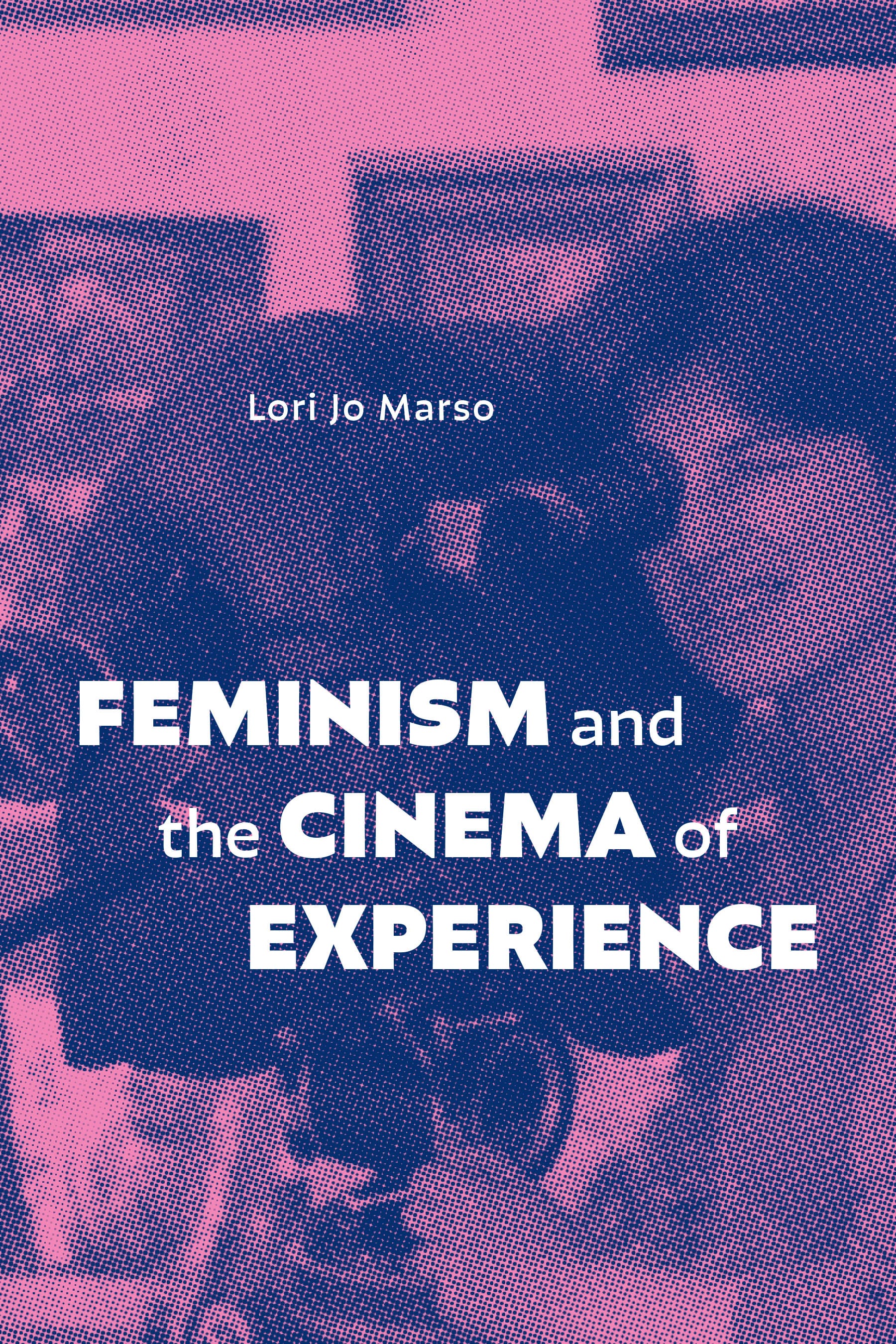 Cover of Feminism and the Cinema of Experience by Lori Jo Marso (Duke University Press, 2025)
Since the publication of John Berger’s seminal 1972 Ways of Seeing, the specter of the “male gaze” has been at the forefront of much feminist art and film criticism. “Men look at women. Women watch themselves being looked at,” he wrote. “This determines not only most relations between men and women but also the relation of women to themselves.”
But what is a scopophilic woman (this critic included) supposed to do with that? It is one thing to resist a life of lonely objectification; it is another to see one’s own power to look as inevitably, and irrevocably, mediated by patriarchy.
Lori Jo Marso is the latest feminist film scholar to redress misconceptions of the gendered gaze — the experience of women seeing women onscreen, she contends, can be at once exhilarating, emancipatory, and constructively uncomfortable. In her new book Feminism and the Cinema of Experience, Marso prioritizes the competing emotions and ideas provoked specifically by the imagery in film rather than a set of supposedly feminist storylines or themes. “Feeling like a feminist most often doesn’t feel good,” she asserts in her introduction. “Feeling like a feminist provokes anxiety, summons deep ambivalence to norms of femininity, and triggers worry and confusion about sex, love, marriage, children, and friendship.”
Rather than champion either a valedictory “strong woman” conquering all or a wronged woman seeking vengeance, the films Marso examines and celebrates are a far cry from those so often shilled by Hollywood. In centering women and nonbinary filmmakers’ cinematography — the art of camera placement, framing, and movement — Marso makes a compelling case that “the cinematic depiction of experience and the subsequent solicitation of uncomfortable feelings in viewers … is feminist film’s most transgressive political intervention.”
Divided into four sections prefaced by Marso’s specific definitions of contested or novel terms, such as “feminist,” “ambivalence,” “stasis,” and “plasticity”, Feminism and the Cinema of Experience draws our attention to how the gaze behind the lens directs — and disrupts — conventions of looking. Coining the term “motherwork camerawork” in her first chapter to join the practice of filming with the broadly defined labor of mothering, Marso considers how nonnormative mothers “are depicted as both strange and ordinary, never sentimentalized or sanitized.” She cites the late Chantal Akerman’s canonical Jeanne Dielman, quai du Commerce, 1080 Bruxelles (1975), about a single mother who is also a sex worker, in which the camera is trained on actor Delphine Seyrig as she moves between “three airless rooms.”
Marso argues that, as the static camera refuses closeups, focusing on the heroine from a detached remove, “Akerman brings to our attention what is invisible because it is too close to us.” As a result, the ennervation and exasperation of menial domestic tasks are thrown into vivid audiovisual relief.
Comparing Jeanne Dielman to Senegalese-French director Alice Diop’s Saint Omer (2022), about a mother on trial for killing her baby, Marso considers how the static camera with long shot duration can present a complicated Black woman as “opaque, but still legible and even sympathetic.” During long takes of the trial, some up to 20 minutes, Diop’s shots resemble photographs; framing and composition demand patience of the viewer, refusing to readily hand over the ”motives and feelings” of the woman onscreen. The likely ambivalence of the viewer, Marso claims, is of a piece with what it means to “feel like a feminist”; it isn’t easy, but it is the only way forward.
In a chapter on the genre of horror, Marso explores how a film like Julia Ducournau’s Titane (2021) — about a mechanophiliac serial killer — could qualify as feminist in the first place. “Ducournau’s images touch our bodies and trigger our emotions,” she claims. “What was hitting my eyes and ears made me cringe, look away, look back … and peek through squinted vision … my emotions veered from ecstasy to deep sorrow.” Ducournau’s lens focuses on how feminine bodies “soft and hard … surprise and fail us … are the source of pain and pleasure … leak strange fluids, grow old or ugly; exceed or break the rules of gender; and are just simply never in our control.” In relentlessly exposing the lawlessness of supposedly “natural” femininity, Ducournau’s films expose — and break through — the horrifying boundaries of gendered logic.
Jettisoning distinctions between “highbrow” and “lowbrow” movies to honor the camera’s power to catalyze new ways of seeing, Marso extends her analysis to Greta Gerwig’s Barbie (2023), Emerald Fennell’s A Promising Young Woman (2020), and Joey Soloway’s television series I Love Dick (2016–17). In her postscript, Marso argues that film — as well as her own book — can be a form of “feminist address,” a love letter to “cinematic mechanisms that shift the gaze [and] create a new aesthetic language” onscreen. By extension, the gaze, the very act of looking, also becomes the art of looking — on one’s own liberating terms.
Feminism and the Cinema of Experience (2025) by Lori Jo Marso is published by Duke University Press and is available online and through independent booksellers.
| # | Наименование новости | Тональность | Информативность | Дата публикации |
|---|---|---|---|---|
| 1 | Diaries of a Chairwoman | 0 | 5 | 25-02-2026 |
| 2 | Palimpsexts: Autotheory as Worldmaking in Feminist Film and Video | 0 | 5.3 | 20-07-2026 |
| 3 | Bunny Yeager’s Feminist Pin-Up Girls | 0 | 5 | 23-09-2025 |
| 4 | Examining the Legacy of Fascist Cinema’s Grand Dame | 2 | 7 | 05-09-2025 |
| 5 | How the Motorcar Helped Fuel Feminism | 2 | 6 | 26-05-2025 |
| 6 | Женщины – новая мишень лудомании | 0 | 5 | 29-05-2026 |
| 7 | When being fat was the height of fashion | 0 | 7 | 19-06-2026 |
| 8 | Del fetiche a la normalización: el lesbianismo desafía su histórica estigmatización audiovisual | 2 | 7 | 15-05-2026 |
| 9 | ТАСС в спецпроекте "Смена перспективы" расскажет о женщинах-режиссерах | 0 | 0 | 29-06-2020 |
| 10 | Feminism for a World on Fire by Natasha Walter — the call for a global, grassroots movement | 0 | 8.21 | 14-08-2026 |