Просмотр новости
Найдите то, что Вас интересует
 Спутники
 РН
РН SpaceX
 Роскосмос
 NASA
NASA
СпутникиРНSpaceXРоскосмосNASAIf you’re ever out on a bike ride with me and you ask an innocent question like “hey, what’s with all the red plants on farms?” I must warn you that because of my masters degree in soil chemistry (that has laid fallow for

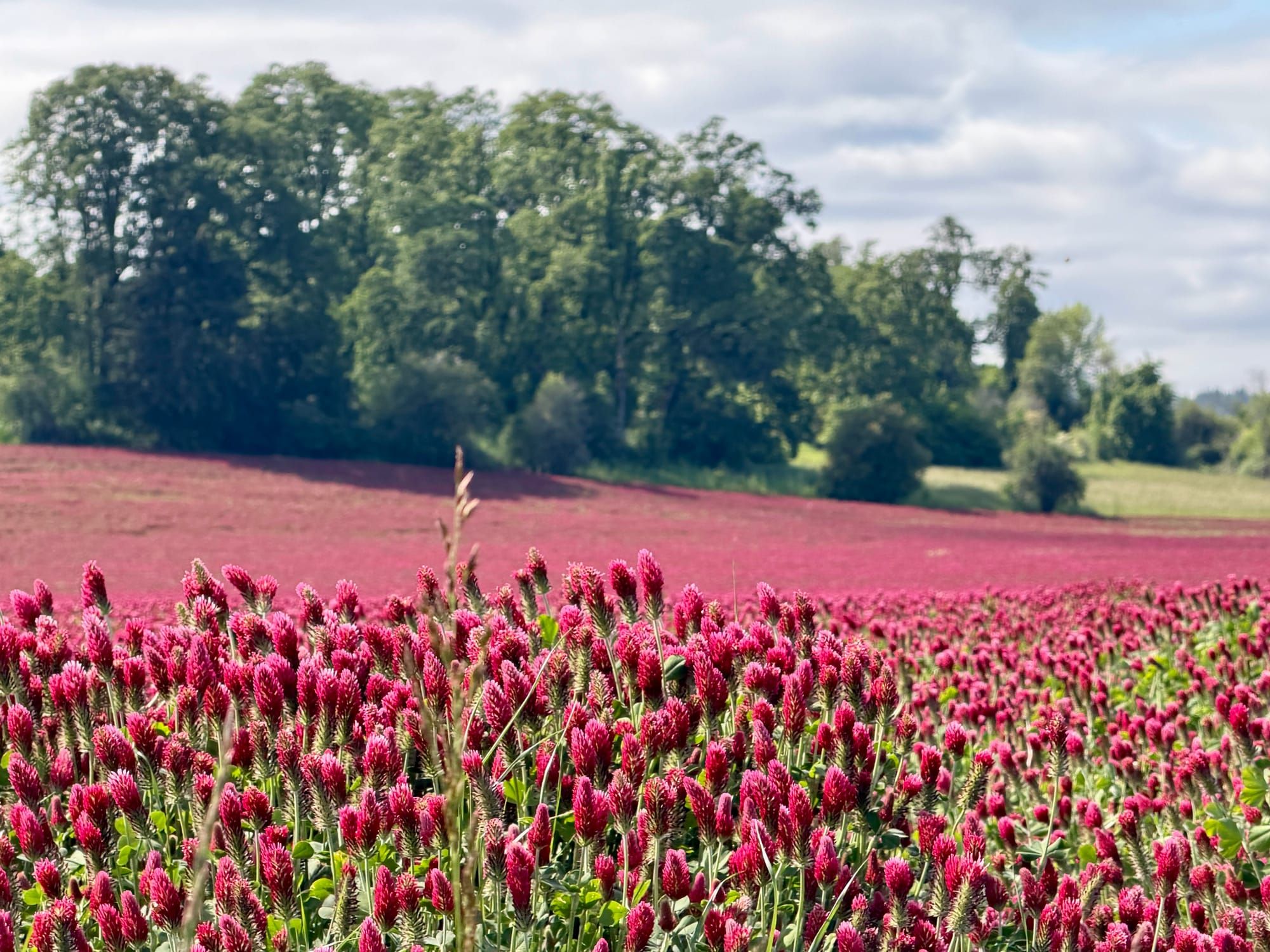
If you’re ever out on a bike ride with me and you ask an innocent question like “hey, what’s with all the red plants on farms?” I must warn you that because of my masters degree in soil chemistry (that has laid fallow for over 30 years), I will go full Cliff Clavin on you whenever I’m given the chance.
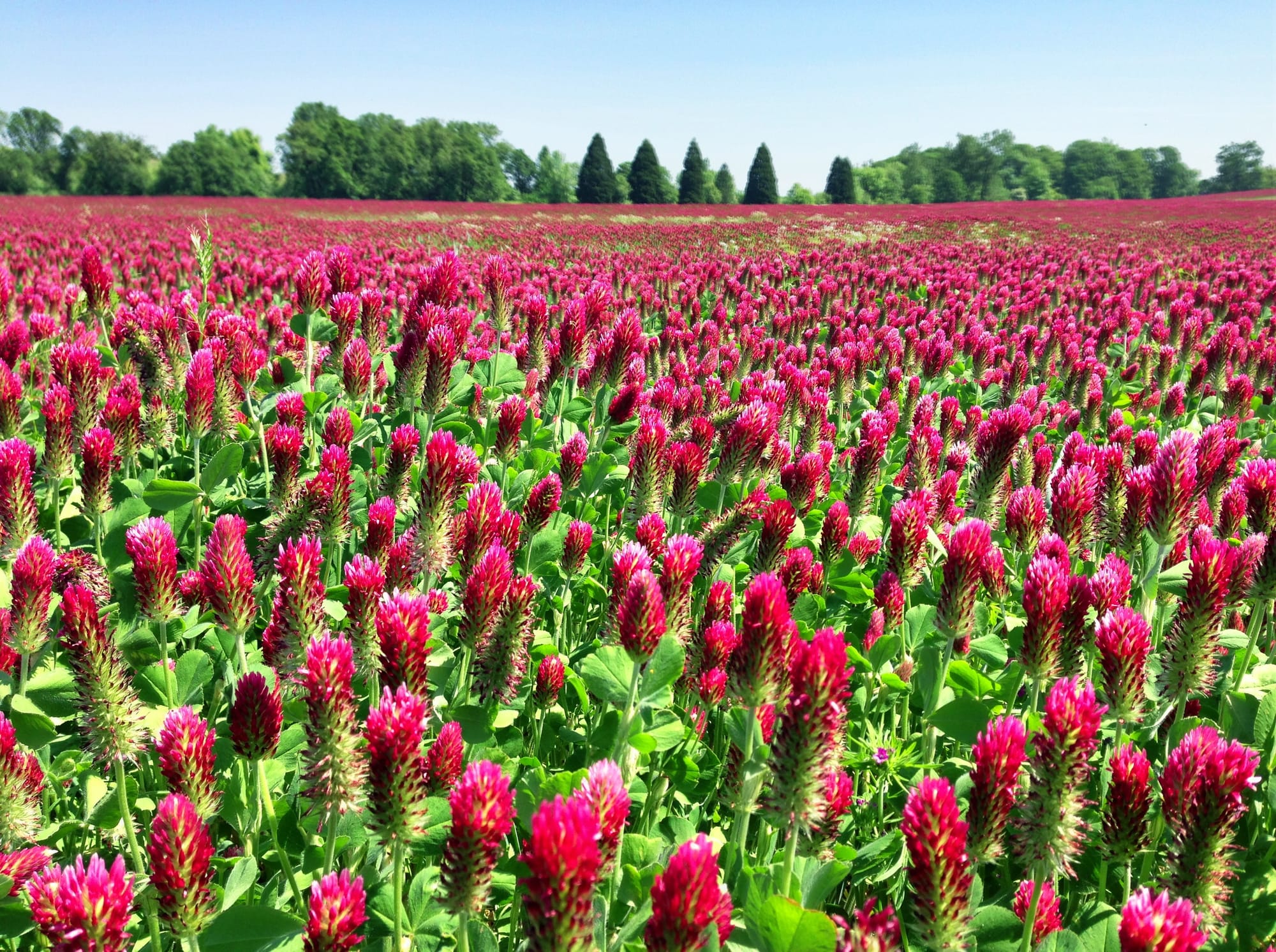
So here's the answer off the top of my head: Those plants are red clover, a cover crop grown typically in the spring on farms that normally grow food crops. They’re red because they’re loaded with cobalt (typically blue in pigments, but bright red when combined with oxygen), a rare metal. The thing about cobalt is that it has an extremely high affinity for nitrogen, so much so that a cobalt-laden clover plant can pull nitrogen out of the air to store in its roots.
Remember that the air we breathe is around 78% nitrogen gas that is inert, and we survive on the remainder being mostly oxygen with some carbon dioxide.
How it works is that there are bacteria located in nodules in the roots of a clover plant, and they're loaded with cobalt and that bacteria takes the air coming into the plant through regular respiration, and pulls out nitrogen from the N₂ gas, concentrating it, before storing it in the roots.
The bacteria in those nodules are so good at this process that farmers can plant red clover in the spring, then plow the plants with their nitrogen rich roots back into the soil a few months later and see gains in nitrogen levels close to what you’d get after applying a commercial grade fertilizer.
So basically, it’s free fertilizer that comes from the air that loads your field up with nutrients that are ready for the next crop you grow. Planting clover is relatively easy and a good way to improve soil health within normal cycles of growing and leaving a field fallow.
I swear I’m fun at parties.
| # | Наименование новости | Тональность | Информативность | Дата публикации |
|---|---|---|---|---|
| 1 | Comments: Сульфат магния - для растений или для людей? Для чего и когда применяется сульфат магния на огороде? | 0 | 7 | 27-06-2026 |
| 2 | Растения вне закона | 0 | 5 | 26-07-2024 |
| 3 | Ботва растёт как на дрожжах, а моркови почти нет: грядку подводит популярная ошибка с питанием | 0 | 5 | 26-06-2026 |
| 4 | Перестала воевать с сорняками каждые выходные: 7 простых правил, которые полностью изменили уход за дачей | 5 | 7 | 27-06-2026 |
| 5 | Comments: Что можно посадить под березой? | 0 | 5 | 27-06-2026 |
| 6 | Урожай набирает вес под слоем земли: картофель после этой процедуры растёт совсем иначе | 2 | 6 | 21-06-2026 |
| 7 | What to plant in July: Best vegetables and flowers to grow | 5 | 7 | 01-07-2026 |
| 8 | Не выкидывайте листья и кору! Из чего сделать мульчу, которая увеличит урожай в разы | 0 | 5 | 27-06-2026 |
| 9 | Делаете ли вы кластеризацию | 0 | 0 | 22-04-2026 |
| 10 | "Ease His Pain" by Listening to Terry Boyd's World on KGON 92.3 FM! | 0 | 2 | 07-07-2026 |