Просмотр новости
Найдите то, что Вас интересует
 Спутники
 РН
РН SpaceX
 Роскосмос
 NASA
NASA
СпутникиРНSpaceXРоскосмосNASASupergiant deep-sea isopods endure years without food by pairing an enlarged stomach with cold-adapted metabolic control. Going without food for a day is difficult. Going without food for five years seems impossible. Yet the supergiant bathynomid, a giant deep-sea isopod that can grow larger than a football, routinely survives for years between meals in one [...]
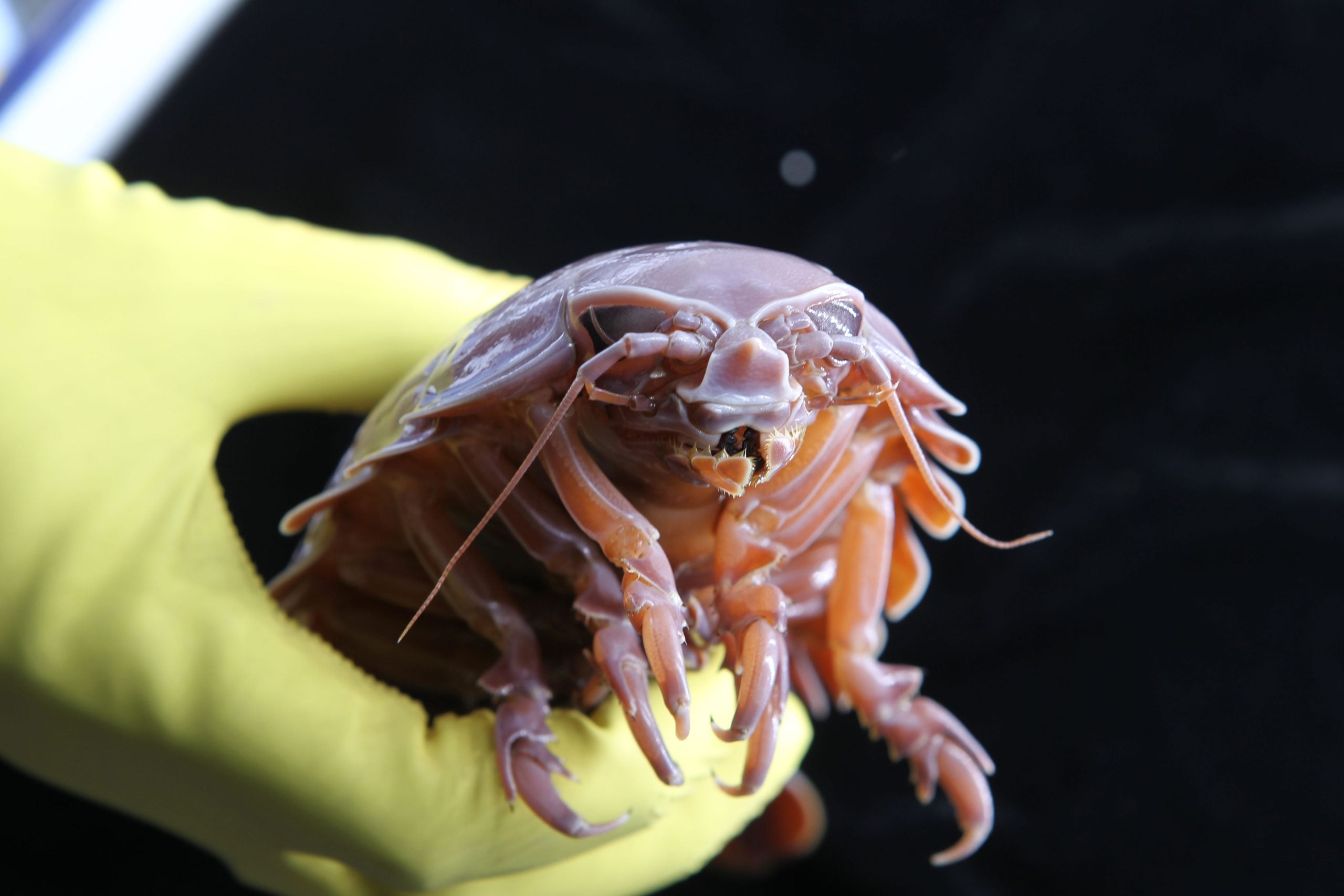 Deep-sea supergiant isopod. Credit: Prof. LI Xinzheng
Supergiant deep-sea isopods endure years without food by pairing an enlarged stomach with cold-adapted metabolic control.
Going without food for a day is difficult. Going without food for five years seems impossible. Yet the supergiant bathynomid, a giant deep-sea isopod that can grow larger than a football, routinely survives for years between meals in one of the most food-starved environments on Earth.
This apparent contradiction has long puzzled scientists. How can an animal that reaches such impressive sizes thrive in the deep ocean, where nutrients are scarce, and feeding opportunities are unpredictable?
A research team from the Institute of Oceanology of the Chinese Academy of Sciences (IOCAS) set out to answer that question. Using multiomics analyses and functional experiments, they discovered that deep-sea isopods combine an enormous food-storage stomach with an exceptionally low basal metabolic rate (BMR), allowing them to endure prolonged periods of starvation.
The findings were published in the journal Cell.
Survival depends on restraintFor the study, the researchers examined two isopod species living at different depths: Bathynomus jamesi from approximately 898 meters and Bathynomus doederleini from around 300 meters. By combining comparative genomics with analyses of anatomy, physiology, behavior, and associated microbes, they identified a survival pattern described as “increasing revenue and reducing expenditure” in response to limited food.
In deep-sea isopods, the stomach takes up about two-thirds of the body, making it much larger than the stomachs of related species from shallower water or intertidal habitats. When packed with food, the stomach holds a finely ground, heavily digested, mud-like mixture with relatively few digestive bacteria, such as Firmicutes.
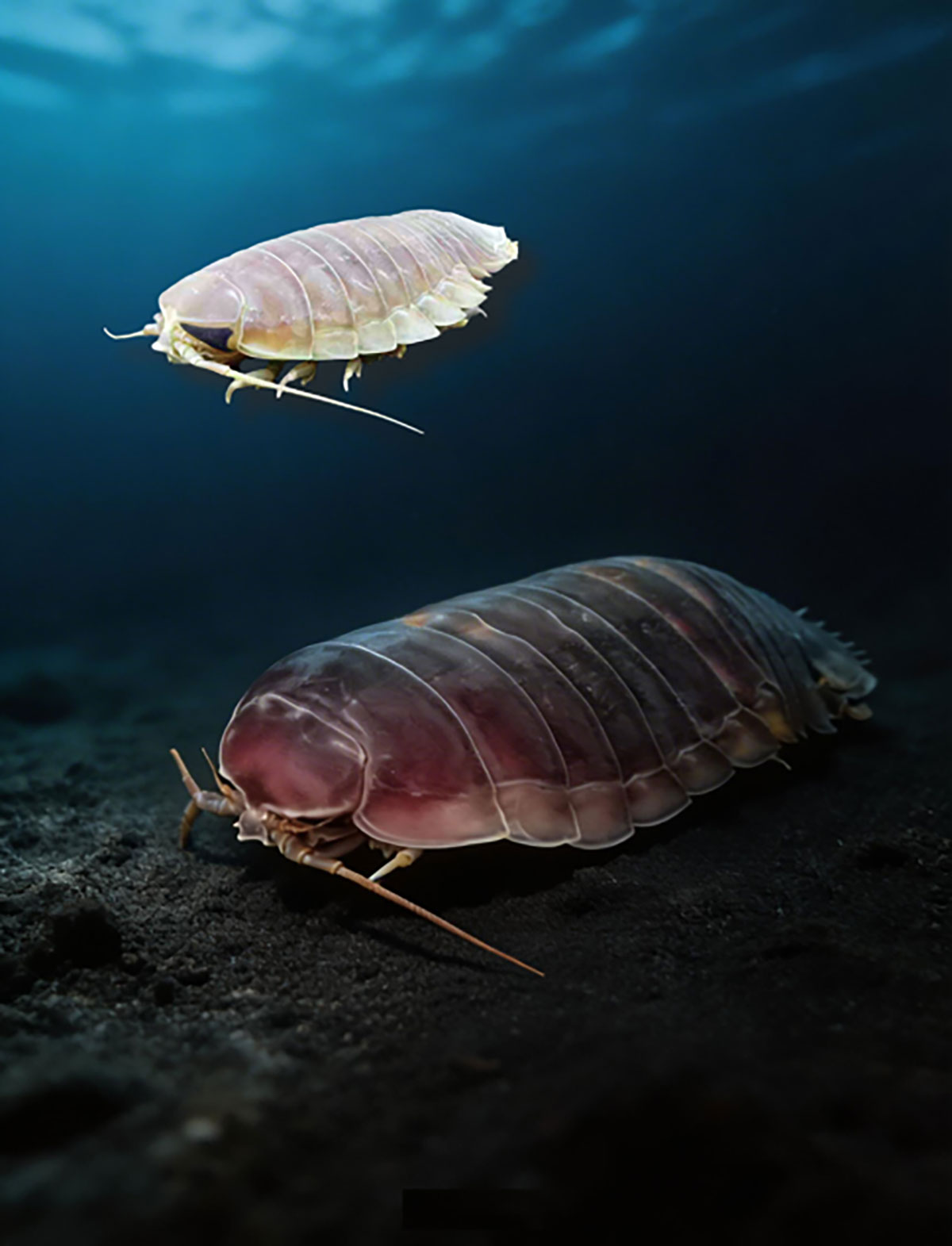 This simulated image shows deep-sea isopods and their living environment. Credit: Institute of Oceanology of the Chinese Academy of Sciences/Handout via Xinhua
It is instead rich in Chlamydiae, which are linked to lipid storage. Together, these traits suggest that deep-sea isopods may eat large meals whenever food becomes available and then sharply lower their BMR, allowing stored reserves to be digested and used slowly over long periods.
A borrowed gene changes metabolismThe researchers also found a horizontally transferred gene, ND1, that came from an outside symbiotic bacterium and later became part of the isopod genome. The gene is homologous to a component of Complex I in the electron transport chain and is thought to have an important role in energy metabolism.
Although horizontally transferred genes can face limits after entering a new genome, ND1 appears to have overcome some of those barriers by duplicating after transfer and reaching extremely high expression levels.
The researchers also identified a mechanism controlling gene expression in deep-sea isopods through epigenetic changes to histones, achieving “high efficiency, energy conservation, and precise control.” The extremely high expression of ND1 is specifically controlled by histone acetylation.
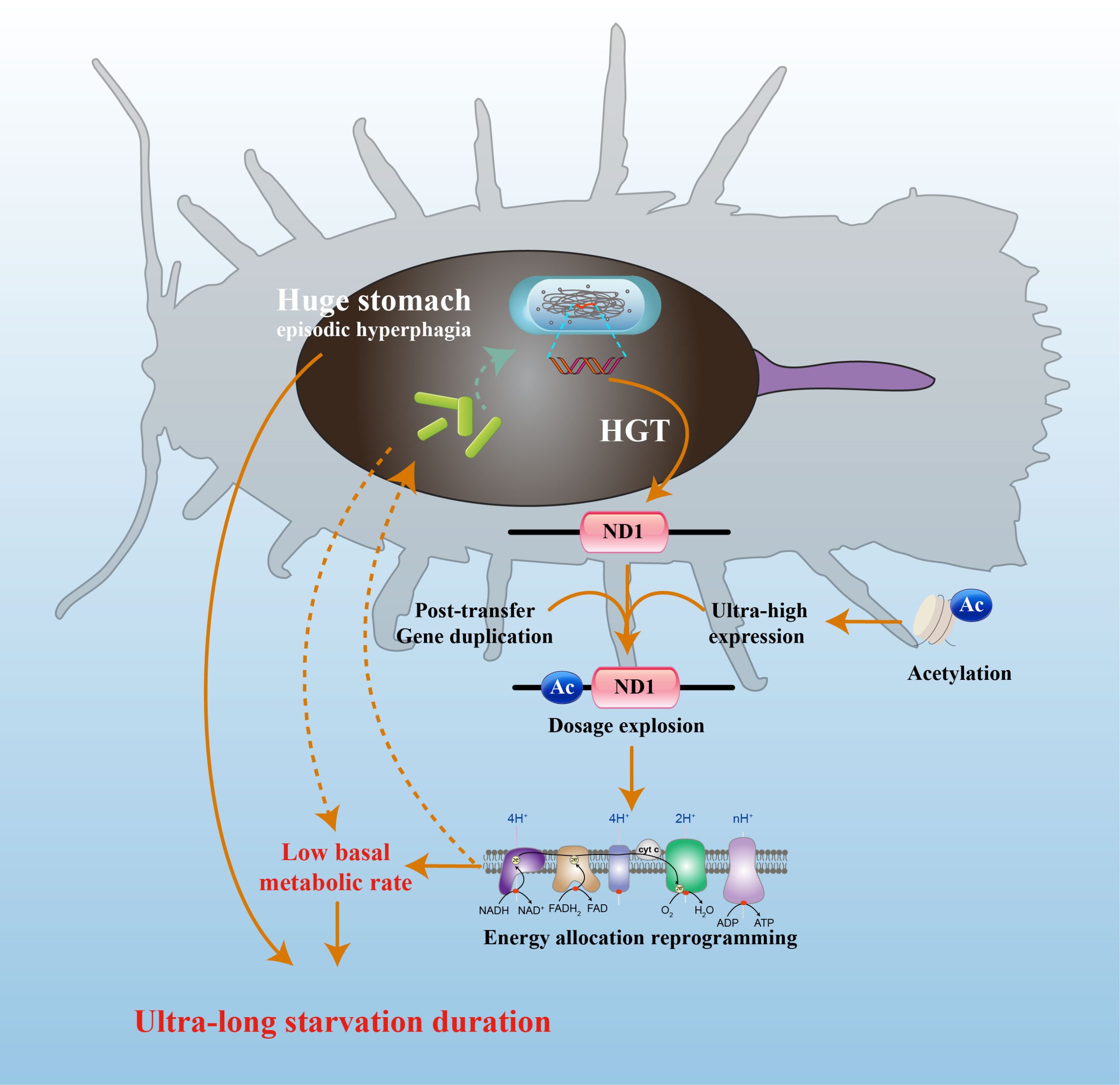 Mechanism diagram showing the survival strategy and horizontally acquired energy metabolism-related gene in reprogramming energy allocation in deep-sea isopods. Credit: YUAN Jianbo, et al.
To examine what ND1 does, the researchers inserted it into zebrafish, nematodes, and human 293T cells. At normal temperatures, ND1 increased energy metabolism and made the organisms less able to tolerate starvation. Under low temperature conditions (which simulate the deep-sea environment), however, ND1 knock-in suppressed energy metabolism and lowered mitochondrial activity. In zebrafish, this raised starvation tolerance by 37%.
Deep-sea giants balance trade-offsThe results suggest that ND1 helps adjust the mitochondrial metabolic network by fine-tuning metabolic depression. This appears to help solve the central tradeoff between the high energy needs of gigantism and the need to conserve energy in extreme environments.
This study is the first to show a new evolutionary strategy in which deep-sea megafauna reshape energy allocation through horizontal gene transfer combined with epigenetic optimization.
“Our work not only deciphers the mystery of ultra-long starvation tolerance in deep-sea isopods,” said Jianbo Yuan, first author of the study, “but also provides an important paradigm for understanding how life balances growth and survival in extreme environments.”
Reference: “Deep-sea megafauna co-opts microbial energy metabolism genes to withstand ultra-long starvation” by Jianbo Yuan, Xiaojun Zhang, Shihao Li, Kun Wang, Yamin Sun, Man Luo, Yang Su, Qi Kou, Chengzhang Liu, Yang Yu, Roujing Li, Long Wang, Xinzheng Li, Kahou Chu, Jianhai Xiang and Fuhua Li, 5 June 2026, Cell.
DOI: 10.1016/j.cell.2026.05.012
Never miss a breakthrough: Join the SciTechDaily newsletter.
Follow us on Google and Google News.
| # | Наименование новости | Тональность | Информативность | Дата публикации |
|---|---|---|---|---|
| 1 | This Giant Deep-sea Creature Survives Five Years Without Food, Thanks to a Borrowed Bacterial Gene | 0 | 20.88 | 16-07-2026 |
| 2 | Giant Squid Detected off Western Australia in Stunning Deep-Sea Discovery | 5 | 7 | 11-05-2026 |
| 3 | ТИХОХОДКИ В МОРЕ: НЕУБИВАЕМЫЕ СУЩЕСТВА Есть существо, которое пережило бы ... | 5 | 7 | 08-07-2026 |
| 4 | Тыуған көнөгөҙ менән ихлас ҡотлайбыҙ! 💐🌼🌷🌻🌹🌾🌸🥀 От души поздравляем с ... | 0 | 0 | 21-02-2025 |
| 5 | ABC: Трамп рассматривает возможность отставки главы аппарата Белого дома | 0 | 0 | 13-11-2018 |
| 6 | Багаевская: Утро 18 дек, Вт | 0 | 0 | 17-12-2018 |
| 7 | Дмитрий Борисов Стихи Любовь Такая разная То сладость То война ... | 0 | 0 | 21-02-2025 |
| 8 | Спрос на перевозки из Китая и Казахстана в Беларусь вырос в 3 раза | 0 | 0 | 28-01-2025 |
| 9 | Газинский: сборная России в матче против шведов будет играть только на победу | 0 | 0 | 19-11-2018 |
| 10 | В Кузнецке прошел городской конкурс «А ну-ка, парни!» | 0 | 0 | 21-02-2025 |