Просмотр новости
Найдите то, что Вас интересует
 Спутники
 РН
 SpaceX
 Роскосмос
 NASA
СпутникиРНSpaceXРоскосмосNASADiesel has passed £2 a litre in Britain for the first time. In February it was £1.41. It is not because the world ran out of oil. Tankers are moving through the Strait of Hormuz again, Gulf exports are back close to pre-war levels, and Brent crude is around $102 a barrel. Crude has partially ... Read more
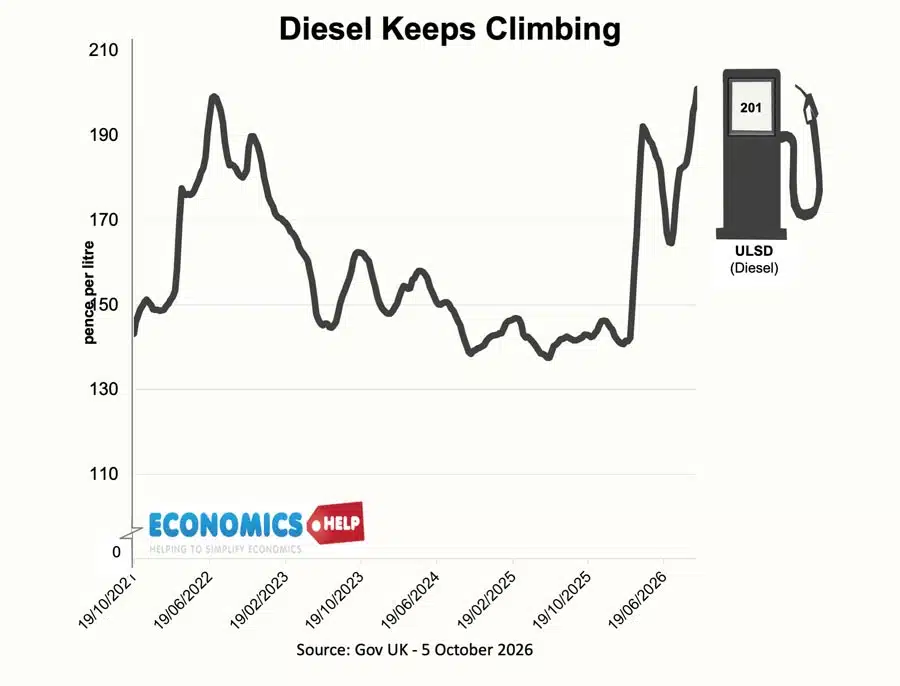 Diesel has passed £2 a litre in Britain for the first time. In February it was £1.41. It is not because the world ran out of oil. Tankers are moving through the Strait of Hormuz again, Gulf exports are back close to pre-war levels, and Brent crude is around $102 a barrel. Crude has partially recovered. But Diesel is still in crisis.
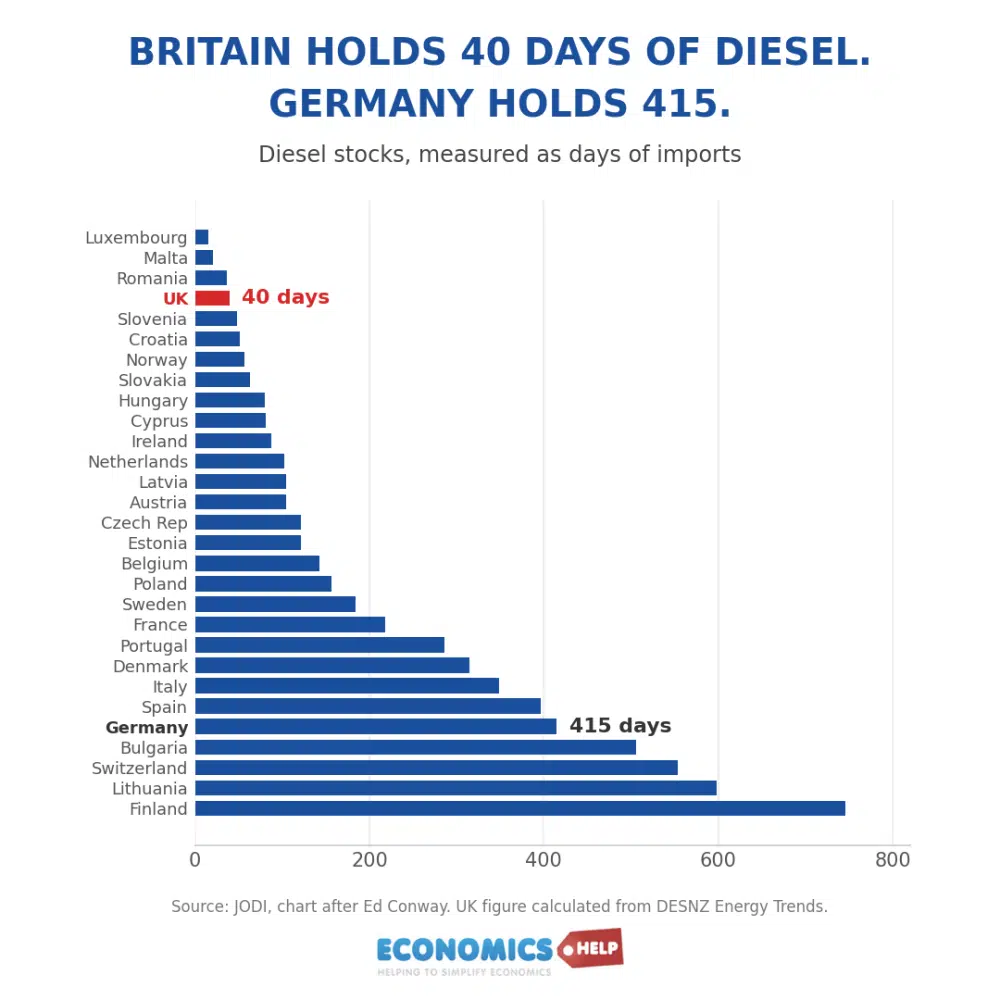
Because measured against what it imports, the UK holds about 40 days of diesel stocks. Germany holds 415.
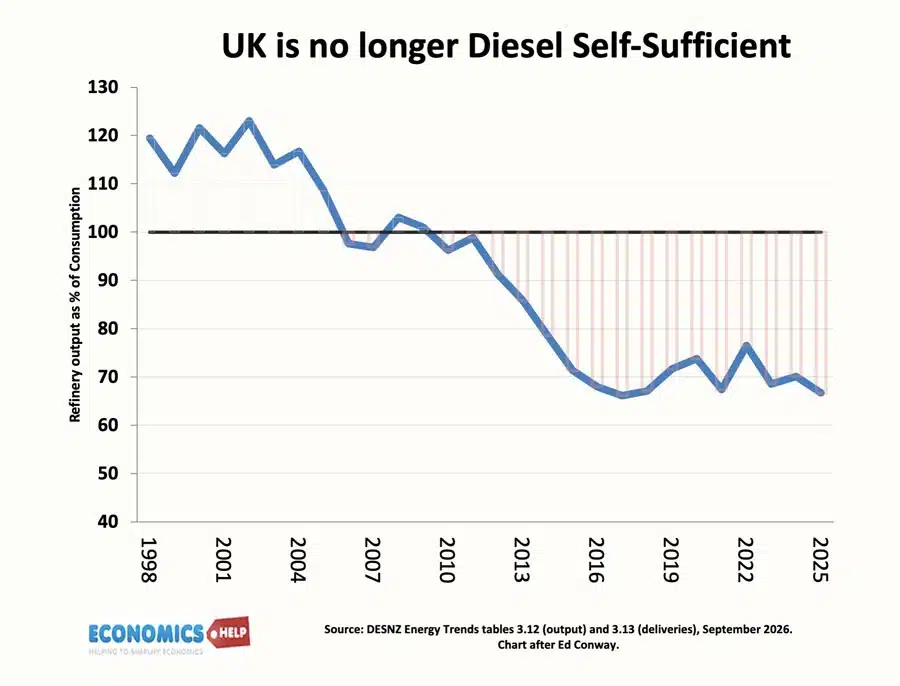
There was a time when that would not have mattered, because Britain made its own. In 1998 our refineries produced 119% of the diesel this country used. We fell below self-sufficiency in 2006, and today we produce only about two thirds of what we consume.
This was not a conscious decision. It was the logic of a privatised energy market — if importing is cheaper, import. And for twenty years it was cheaper. The problem is that the two assumptions holding that logic up have both stopped being true. Diesel is no longer cheap, and we can no longer be confident the imports will keep arriving.
Why the price is expensive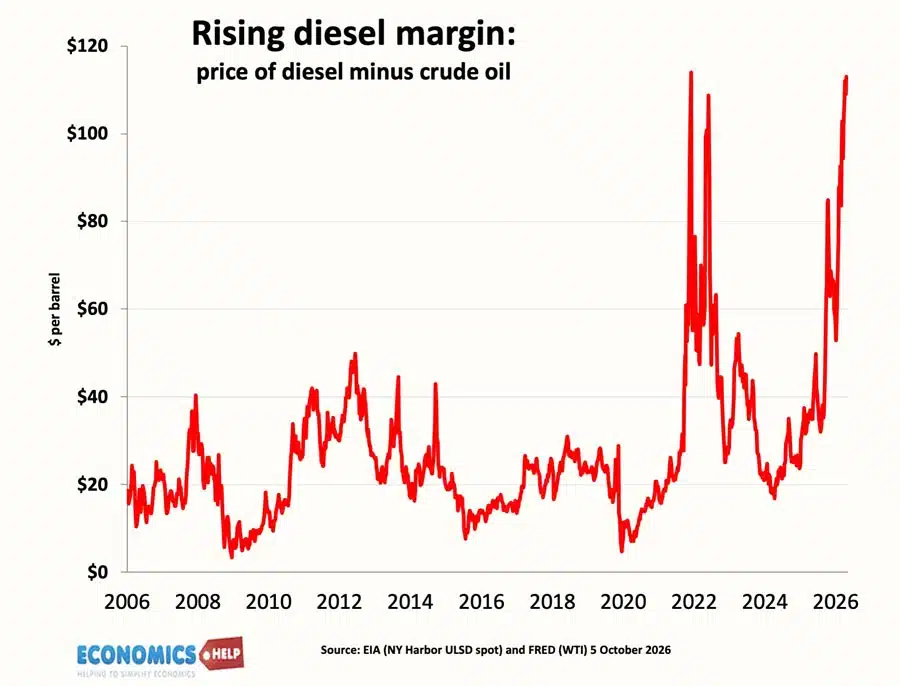
Brent is around $102 a barrel, which is still quite elevated on the start of the year.. But the real story is the diesel crack, which has reached $113.8. That is the extra cost on top of crude oil, and it is back at the record set in 2022. The current oil shock is now longer than the Ukraine shock of 2022.
A few things explain the gap. Shipping costs have soared. Freight is now around 27% of the delivered cost of a barrel, when in January it was just 3%. A Hormuz round trip costs $15 to $20 a barrel, and that is before the extra insurance that comes with the risk.
But the main issue is simpler. Crude oil can be re-routed — through pipelines, around Africa, or out of strategic reserves. Diesel cannot. Diesel only exists once crude has been through a refinery, and only part of each barrel comes out as diesel. And the world is running short of refining capacity.
Steno Research estimates that effective refining capacity serving world markets has fallen from a normal range of around 94% to 89.8% today. Seaborne diesel exports from the major exporters are down 1 to 1.5 million barrels a day. Ukrainian strikes have taken out a large share of Russian refining capacity, and the Houthis have hit the Jazan refinery in Saudi Arabia.
So opening up Hormuz does not unwind the cost of shipping or repair a damaged refinery. The Wall Street Journal warns that flows through the strait remain volatile. And you can see what traders actually expect from the futures market. If this were a temporary disruption, you would see high prices now and normal prices further out. Instead the market still expects high prices in the long term.
Diesel as a geopolitical weapon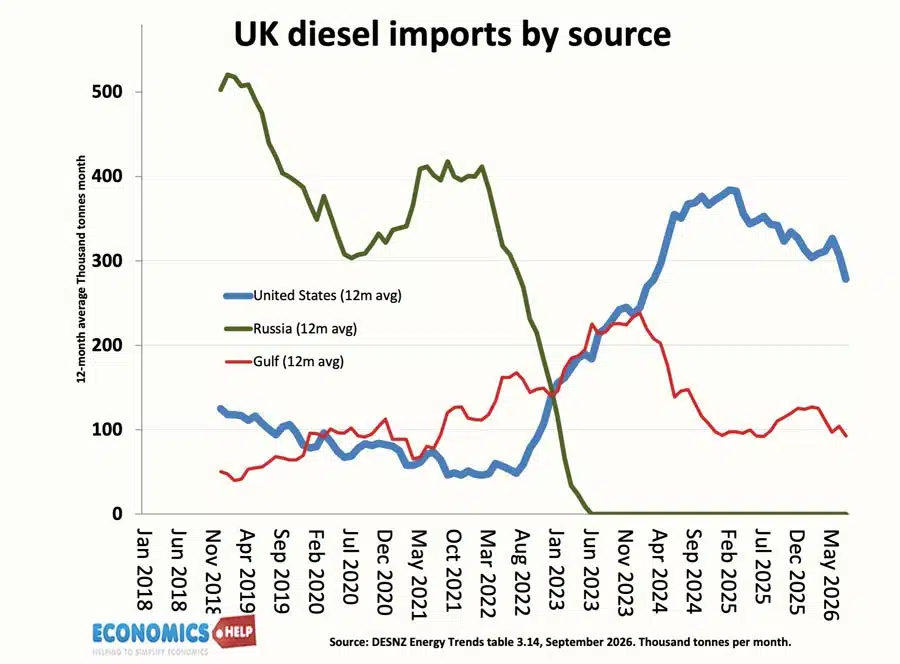
The deeper problem is that diesel has become a geopolitical weapon. You can see it in Britain’s own import data. We used to buy large volumes of Russian diesel. After 2022 that went to zero, and we switched to the United States and the Gulf. It is a similar story with LNG. We swapped one dependency for another.
Which is why a US export ban would hurt Britain in particular. On Steno’s numbers, a 90-day American ban would take about 1.6 million barrels a day of US output off world markets and drop effective global capacity to 88.3%.
Russia still matters even though none of it comes here any more. If Ukrainian strikes knock out Russian refining, that is less diesel in the world and more competition for what is left. China has suspended most fuel exports while it absorbs the Hormuz shock — and Beijing does not generally let its independent refiners chase global margins anyway. Europe has sizeable reserves but is not releasing them at scale, even under pressure from Washington, possibly because it expects things to get worse.
This is the big story. Global refining capacity has fallen, and there was very little spare room to begin with.
How Britain made itself fragile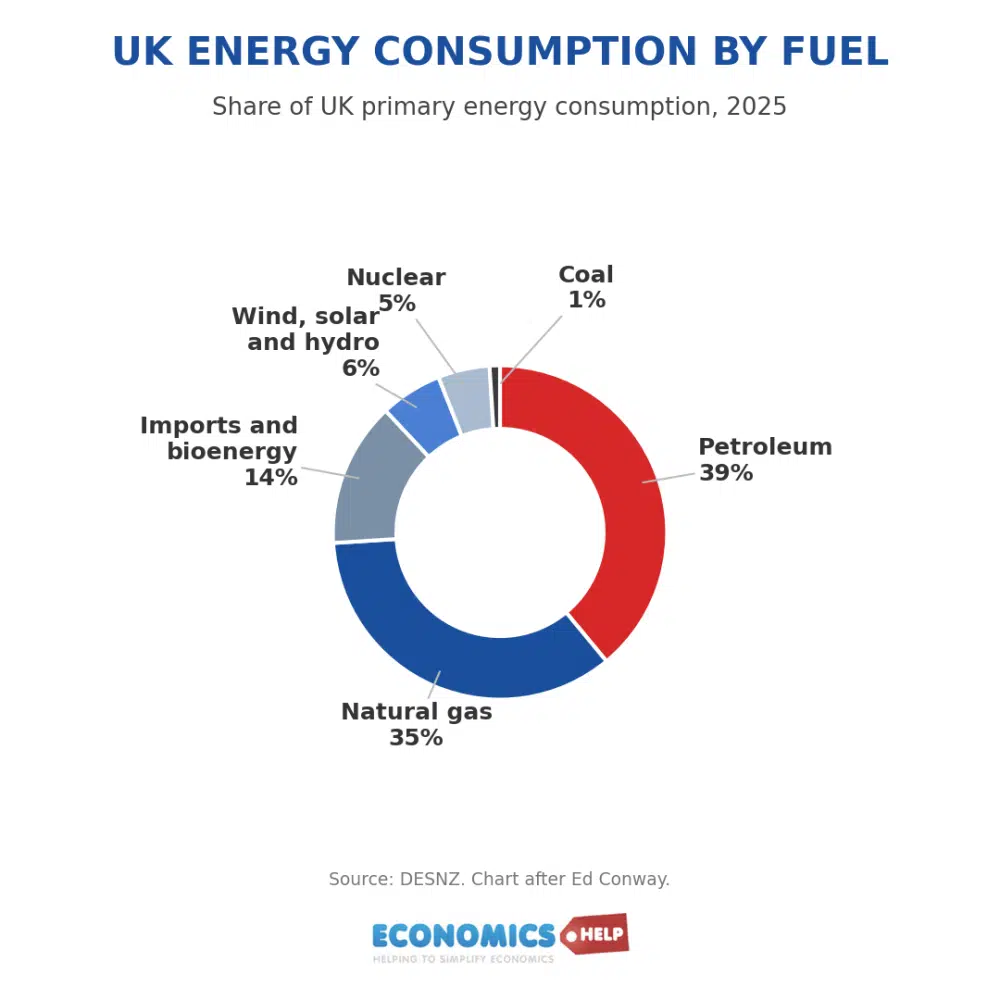
It is worth remembering how much of our energy still comes from fossil fuels. Petroleum is 39% of UK energy consumption and natural gas is another 35%. Renewables are a growing share of electricity, but of total energy, wind, solar and hydro are 6%. Fossil fuels are still 75% of the total. China may be rolling out electric lorries, but Britain is a long way behind. Moving goods around this country still means diesel.
Britain’s approach has been to treat energy as a market rather than a public good. Refineries like Grangemouth are privately owned, and the short-term profit motive was to shut refining capacity and import instead. There is also no profit in holding large stocks of fuel. Stocks have been falling since 2007. That is fine when markets are stable. When they are volatile, it leaves little room for manoeuvre.
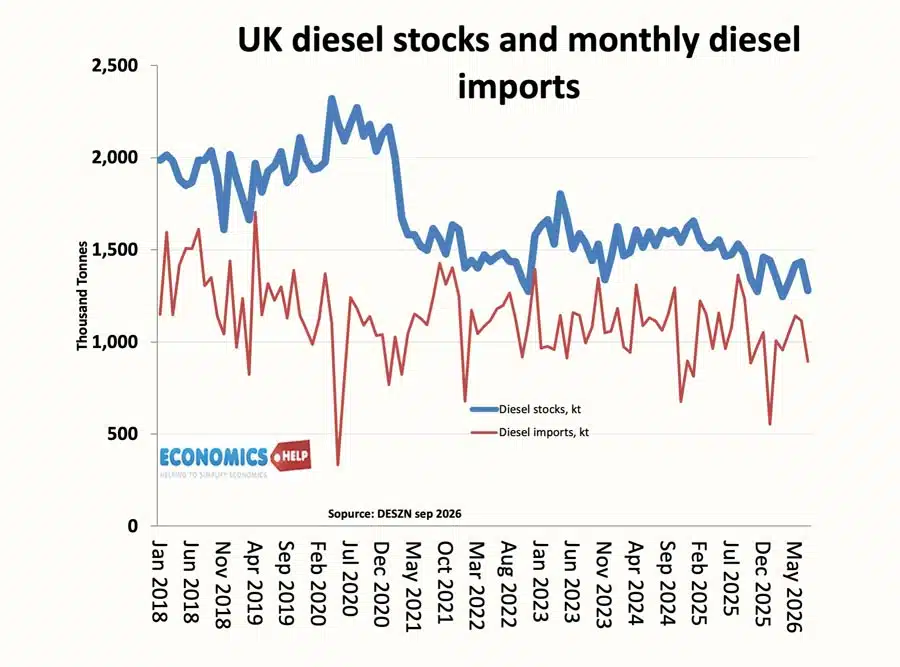
The refining numbers tell the same story. In 2005 British refineries produced just over 19 million tonnes of diesel. Last year it was under 12 million — a fall of more than a third, and it happened while demand was going up, not down. Twelve big refineries became a handful. Grangemouth stopped refining in spring 2025 and became an import terminal.
The 40 daysThe government’s answer to all this is that the UK holds 10 million tonnes of oil, more than meeting the IEA’s 90-day obligation. That is true — measured against net imports of all oil. Because we still produce North Sea crude, that denominator is small, which flatters the number.
Measured against diesel imports, it is 40 days. This is not an oil shortage. It is a diesel shortage.
There is a further twist. Not all of that oil is actually in Britain. Under IEA rules a country can count stock held offshore or sitting in another country’s terminal. In 2000, 93% of Britain’s stock was physically here. Today it is about three quarters. On paper it is a strategic reserve. In a real crisis, you are relying on being able to import your own stockpile.
Why America is panickingHigher diesel prices are a serious problem in the US too, pushing up inflation and bond yields. And there is a political dimension. There is a visible correlation between diesel prices and the chances of the Democrats retaking the Senate. It is hardly a surprise that Washington is looking at every option available.
For now the US has stepped back from an export ban. The G7’s 100 million barrel release has temporarily calmed the oil market. But plenty of people are sceptical, for a simple reason: releasing more crude does not fix a refining bottleneck. It is the right volume of the wrong thing. The Gulf region remains volatile, with continued threats of Houthi and Iranian action against refineries and shipping. The market is not pricing a return to normality any time soon.
The same mistake twiceThe uncomfortable part for Britain is that this is not only about diesel. There are eerie parallels with natural gas.
The same market logic applied there. Rough, which was about 70% of Britain’s gas storage capacity, was closed by Centrica in 2017 after the government declined to subsidise the repairs, and was only partially reopened in 2022. EU gas storage was 71% at the end of September, against 82.5% a year earlier. Gulf states are warning that LNG supplies will take a long time to return to normal.
Britain made the same choice twice. Strategic reserves of energy were treated as a cost rather than as insurance.
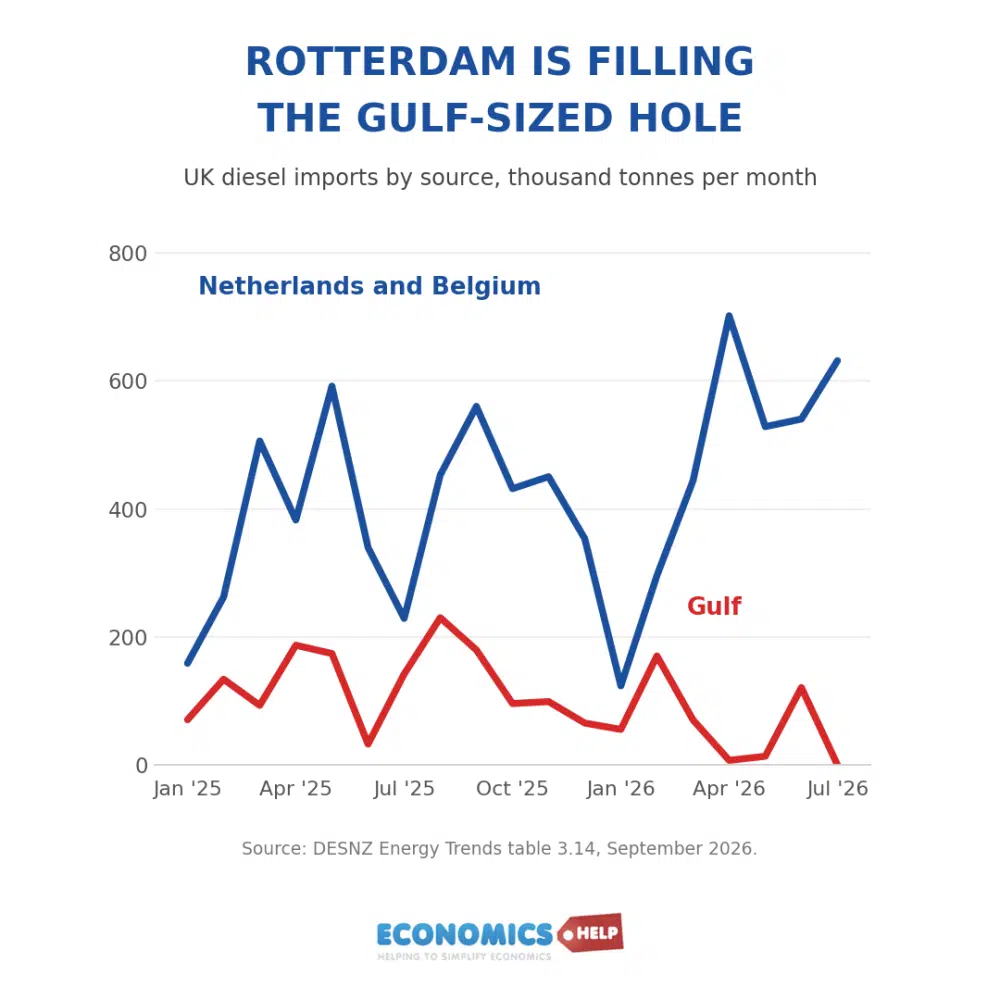
So how worried should we be?Less than the headline suggests, in the short run. Stocks are a buffer against disruption, not a countdown. Forty days only means Britain runs dry in forty days if imports fall to zero, and that is not going to happen. Since April we have been importing around 600 thousand tonnes of diesel a month from the Netherlands and Belgium,
offsetting the fall from the Gulf.
A crack margin of $113 a barrel is partly higher costs, but it is also an enormous profit margin, and that is a powerful incentive to produce as much diesel as possible. It is exactly why big US oil companies lobbied so hard against an export ban. Europe also has sizeable diesel reserves it is reluctant to release, possibly fearing a worse situation over winter.
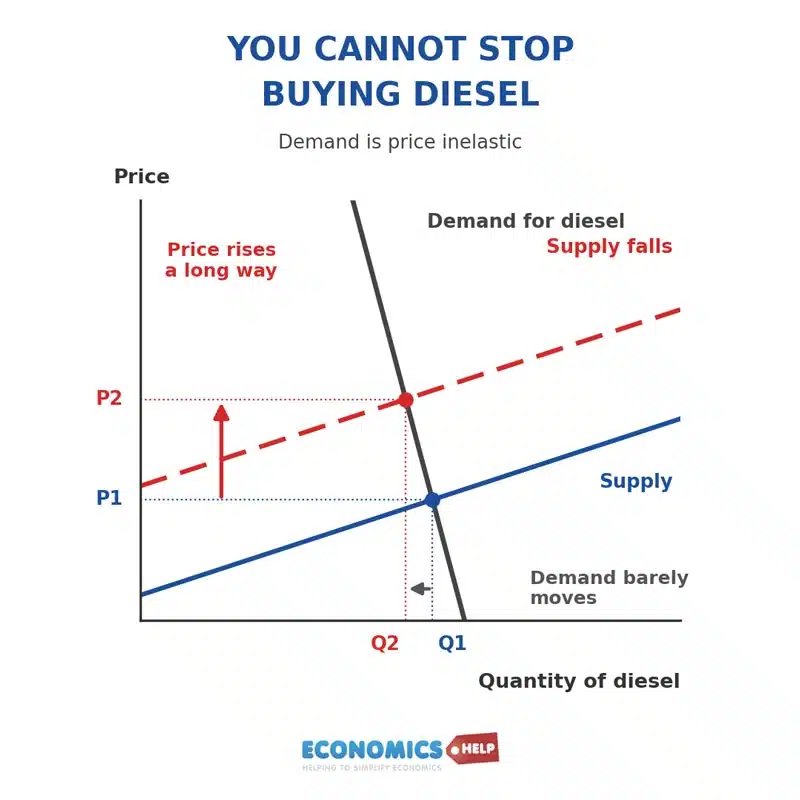
High prices are also reducing global demand. But because diesel is embedded in essential freight, demand is very price insensitive, which means prices have to rise a long way to make a difference. There would only be a risk of physical shortage if the price of diesel were fixed. It is certainly amplifying the incentive to buy an electric car.
So Britain is not going to run out of diesel by Christmas. But being a net importer leaves you at the mercy of events elsewhere, and that is why the pump price went from £1.41 to £2.00 in seven months while crude barely moved.
All UK figures are from
DESNZ
Energy Trends, September 2026 edition, published 29 September 2026:
UK energy consumption shares are from the
Digest of UK Energy Statistics (DUKES) 2026, Chapter 1. Pump prices are from the DESNZ weekly road
fuel price statistics.
The 40-day figure is my own calculation from Energy Trends tables 3.11 and 3.14: diesel
stocks at month end divided by average daily diesel imports, averaged over the three most recent
months. On that basis it is 40.5 days. Ed Conway’s published figure, using JODI data, is 42
days.
Tejvan Pettinger. Author of “Cracking Economics” “What Would Keynes Do?” – studied PPE Oxford University (1995-99) and works as an economics teacher and writer.
| # | Наименование новости | Тональность | Информативность | Дата публикации |
|---|---|---|---|---|
| 1 | Transport businesses call for help as diesel price hits record high | 0 | 9.06 | 21-10-2026 |
| 2 | Why Oil and Diesel Face Higher Prices | 0 | 9.11 | 18-07-2026 |
| 3 | Pump prices hit new Iran war highs as oil prices spike - with Brits facing fresh cost of living crisis | 0 | 7.42 | 14-09-2026 |
| 4 | Цены на дизель в Британии приблизились к рекордно высокому уровню | 0 | 16.25 | 24-09-2026 |
| 5 | Diesel prices plummeted a record 17p a litre last month as oil prices fell amid easing tensions with Iran | 0 | 7 | 01-07-2026 |
| 6 | ‘Half my day’s pay goes to filling up my car now’: diesel crisis ripples across Britain | 0 | 8.61 | 21-09-2026 |
| 7 | Стоимость бензина в Британии обновила исторический максимум | 0 | 0 | 21-03-2022 |
| 8 | Hundreds of forecourts already charging £2 a litre for fuel as near-record prices threaten to further stoke inflation, piling pressure on Labour to abandon planned Fuel Duty hike | 0 | 13.76 | 17-09-2026 |
| 9 | People in Shetland or the Outer Hebrides: how are you coping with the diesel prices? | 0 | 5.86 | 25-09-2026 |
