Просмотр новости
Найдите то, что Вас интересует
 Спутники
 РН
 SpaceX
 Роскосмос
 NASA
СпутникиРНSpaceXРоскосмосNASAIn 2024, 10.1% of the world population — about 824 million people — lived in extreme poverty, on less than $3.00 a day (WB) In 2024, roughly 18% of the world population lived on less than $4.20 a day, down from 57% in 1981 (WB) Global extreme poverty is projected to fall only marginally, from ... Read more
Extreme global poverty, defined as an income of less than $3.00 a day, has fallen from around 47% of the global population in 1981 to 10.1% in 2024.
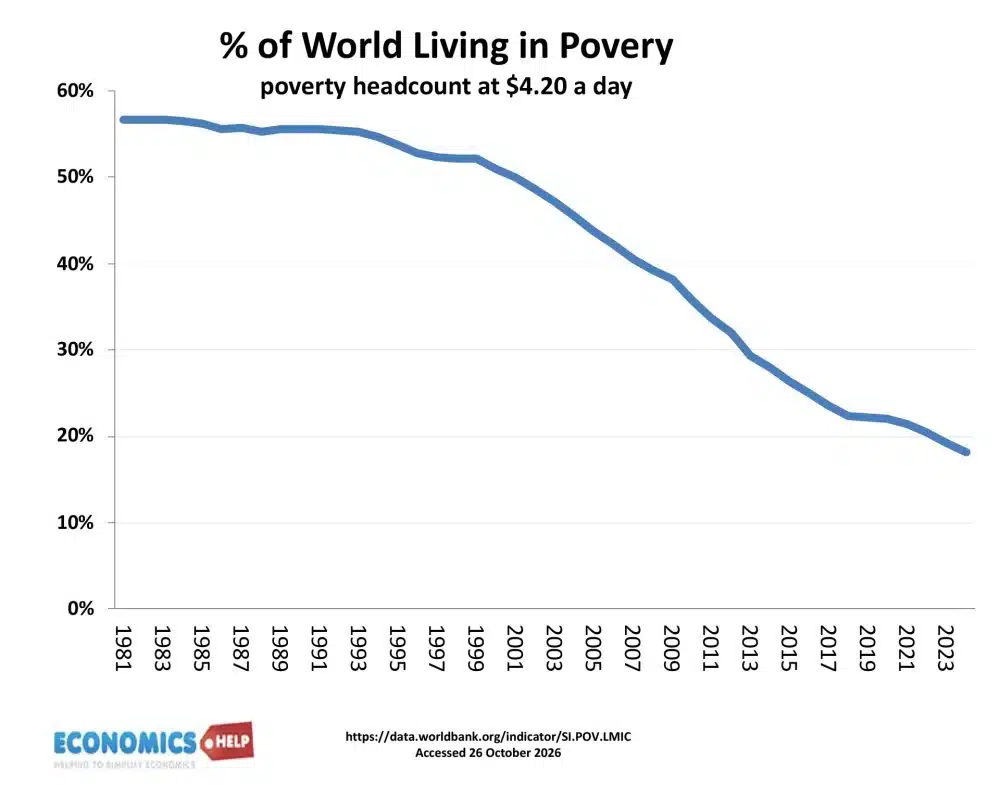
Even with a higher poverty line of $4.20 a day, there was a sharp fall from the late 1990s to 2024 — from around 52% to roughly 18%.
However, the fall has been concentrated in Asia and Latin America.
Share of the world population living in absolute poverty 1820-2015This shows that poverty was the norm – for more than 90% of the population. In 1820, researchers estimate that 94% of the world population was living under our terms of absolute poverty (less than $2 a day)
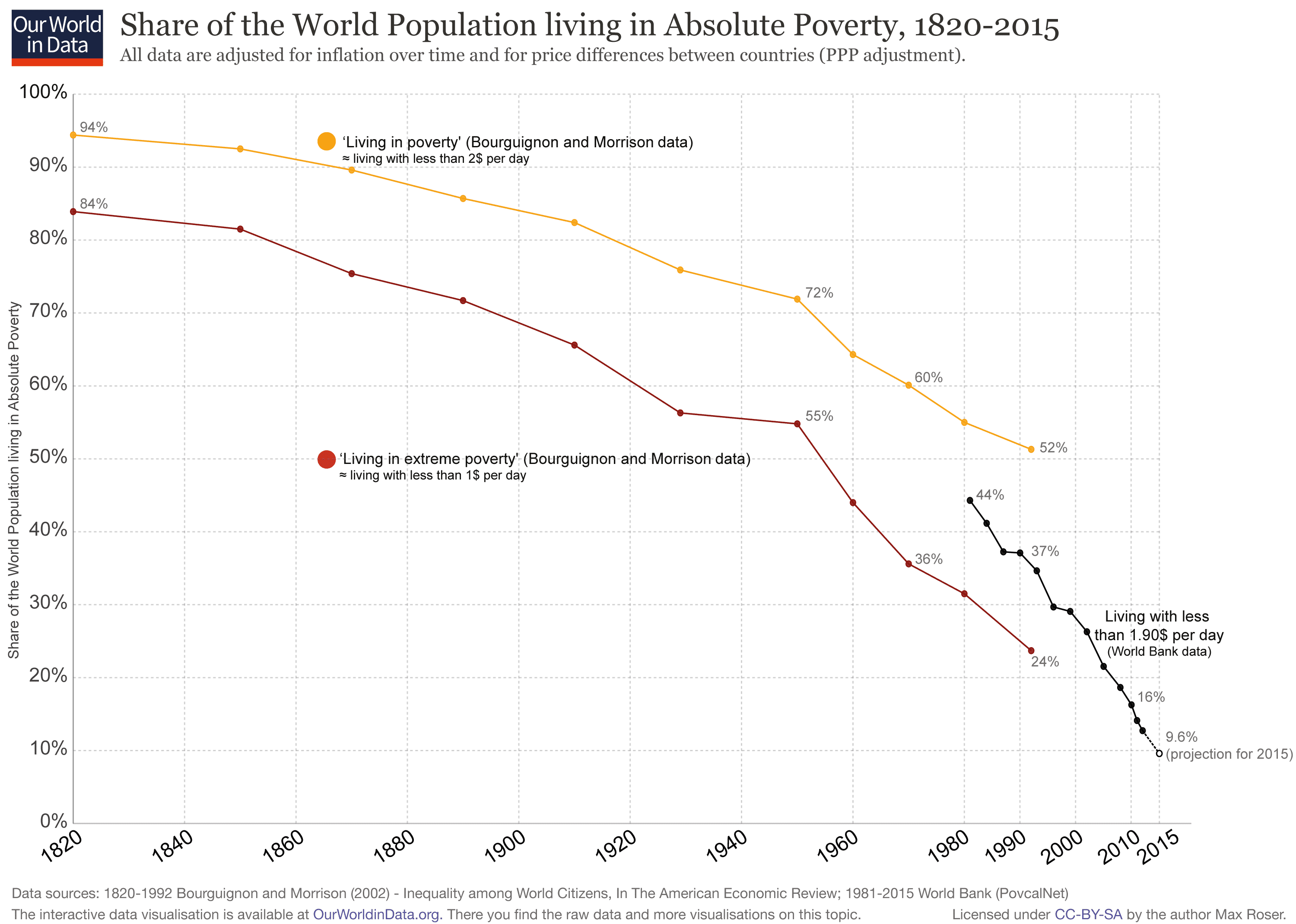
Absolute poverty levels have fallen considerably since 1820 – with a sharp fall in the post-war period.
Note: this series uses the pre-2025 $1.90 a day poverty line and is not directly comparable with the current $3.00 figures above.
Source: OurWorldinData
 Source: OurWorldinData
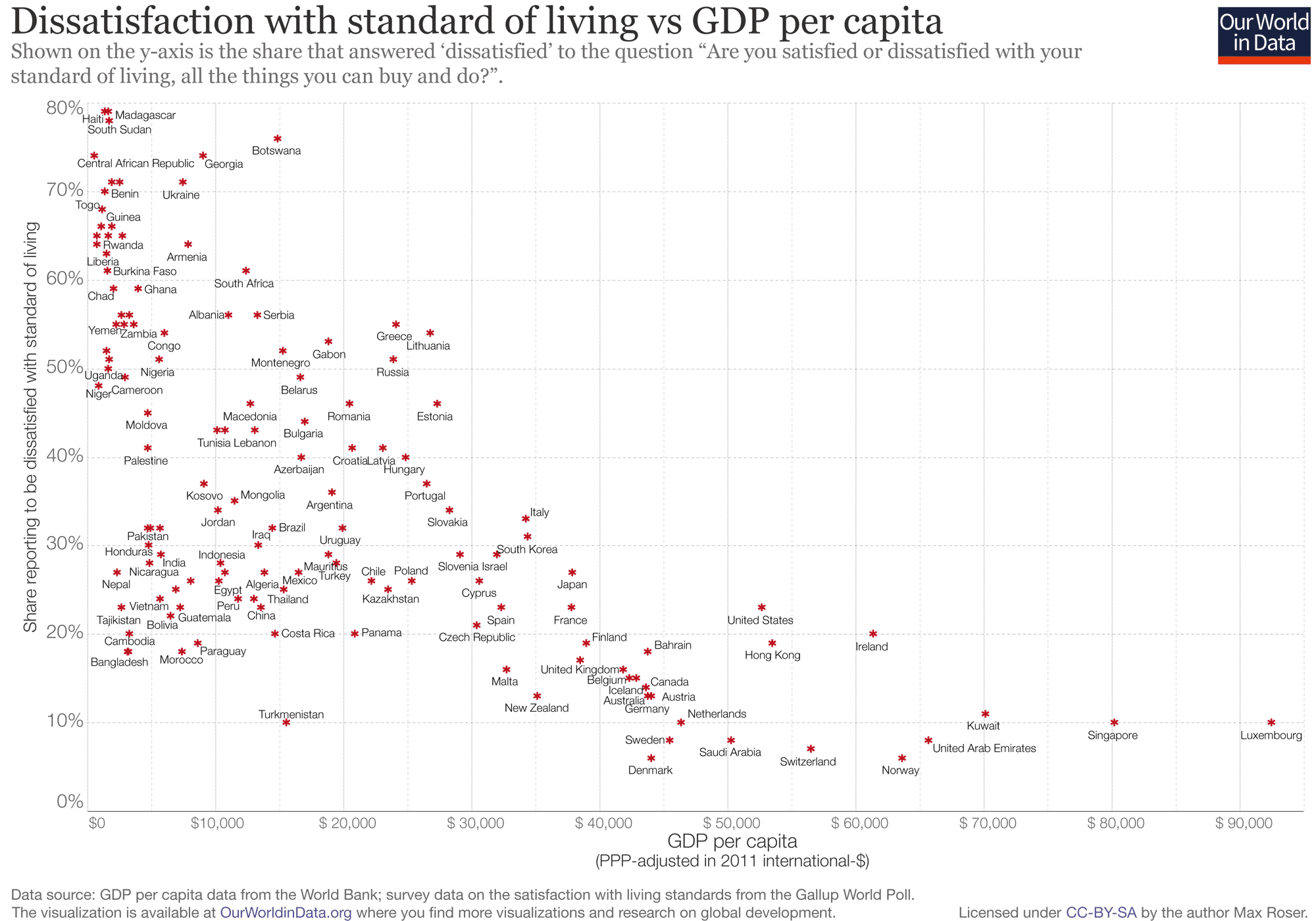
Cambodia and Bangladesh have similar low-income levels to Rwanda and Benin, but Bangladesh reports dissatisfaction of 18% compared to over 70% in Benin. This shows many other factors affect living standards apart from reported income levels.
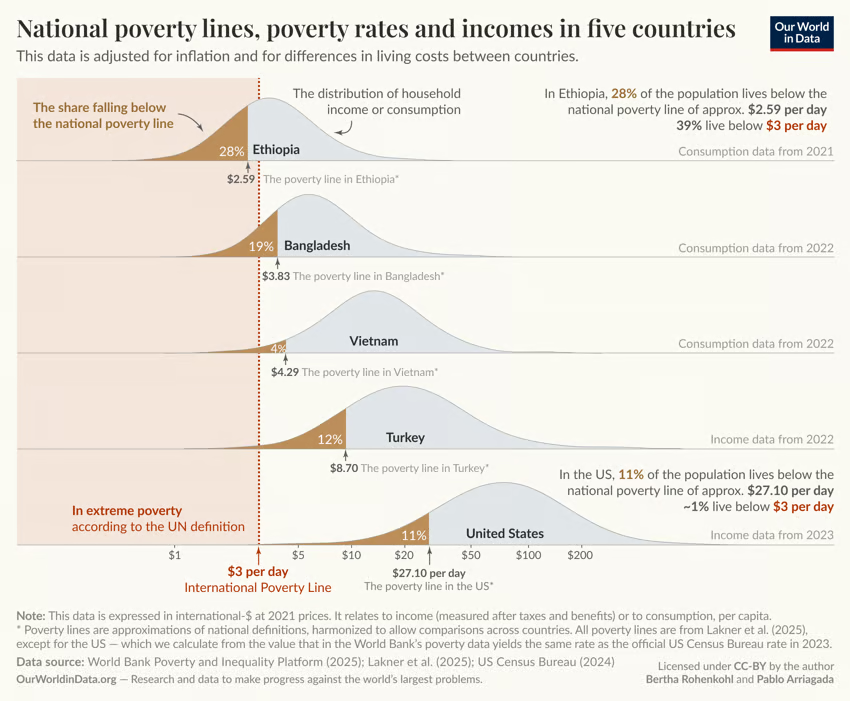
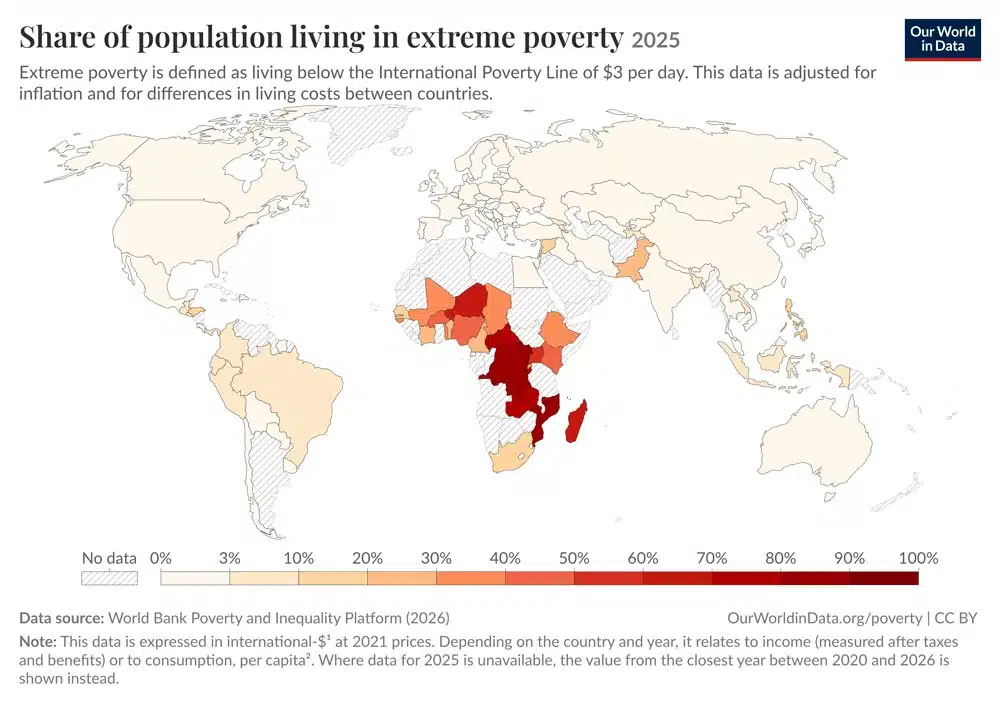
In 2024, 824 million people lived on less than $3.00 a day, down from 2.31 billion in 1990.
Poverty headcount ratioThis measures the share of the population living with income levels below the poverty line.

Source: OurWorldinData
Note: this chart uses the pre-2025 $1.90 a day poverty line.
Oxfam’s January 2026 report found the 12 richest billionaires own more wealth than the poorest half of humanity, some 4.1 billion people (link)
Related
About The AuthorTejvan Pettinger. Author of “Cracking Economics” “What Would Keynes Do?” – studied PPE Oxford University (1995-99) and works as an economics teacher and writer.
| # | Наименование новости | Тональность | Информативность | Дата публикации |
|---|---|---|---|---|
| 1 | Den globala multidimensionella fattigdomen ökar för första gången sedan 2010 | 0 | 11.25 | 12-10-2026 |
| 2 | Всемирный банк: почти половина населения мира живет менее чем на $5,5 в день | 0 | 0 | 17-10-2018 |
| 3 | ООН: в 2024 году голод испытывали более 670 млн человек по всему миру | 0 | 0 | 03-11-2025 |
| 4 | Всемирный банк считает, что число живущих в условиях крайней нищеты увеличится на 150 млн | 0 | 0 | 07-10-2020 |
| 5 | Kenya: Acute Hunger Doubles to 266 Million As Humanitarian Food Aid Falls 59% | 0 | 12.3 | 16-10-2026 |
| 6 | Healthy diet too expensive for one in three people globally, UN report finds | 0 | 6.3 | 21-07-2026 |
| 7 | Эксперты: уровень бедности в Латинской Америке в 2020 году стал самым высоким за 12 лет | 0 | 0 | 04-03-2021 |
| 8 | Сколько бедных в мире | 1 | 10 | 17-10-2026 |
| 9 | В ООН заявили, что около 45 млн человек в мире могут столкнуться с голодом | 0 | 0 | 02-12-2021 |
