Просмотр новости
Найдите то, что Вас интересует
 Спутники
 РН
 SpaceX
 Роскосмос
 NASA
СпутникиРНSpaceXРоскосмосNASATexas can make transportation resources go further by using clear, measurable criteria to prioritize which projects receive funding.
The post Texas should follow Virginia’s lead on transportation project funding appeared first on Reason Foundation.

ID 73436862 © Typhoonski | Dreamstime.com
Testimony Texas can make transportation resources go further by using clear, measurable criteria to prioritize which projects receive funding. August 17, 2026A version of the following public comment was submitted to members of the Texas House Committee on Transportation on August 17, 2026.
With a growing population and limited resources, Texas needs to make existing transportation resources go further. But often state agency staff may feel that they do not have detailed guidance from elected officials. Texas could adopt a quantitative project prioritization tool. North Carolina and Virginia are considered the leaders in this area. With this approach, some or all projects in a state’s transportation improvement plan are scored based on criteria including a reduction in traffic congestion, the creation of economic development, and safety improvements. Virginia’s program, SMART Scale, illustrates how such a process works.
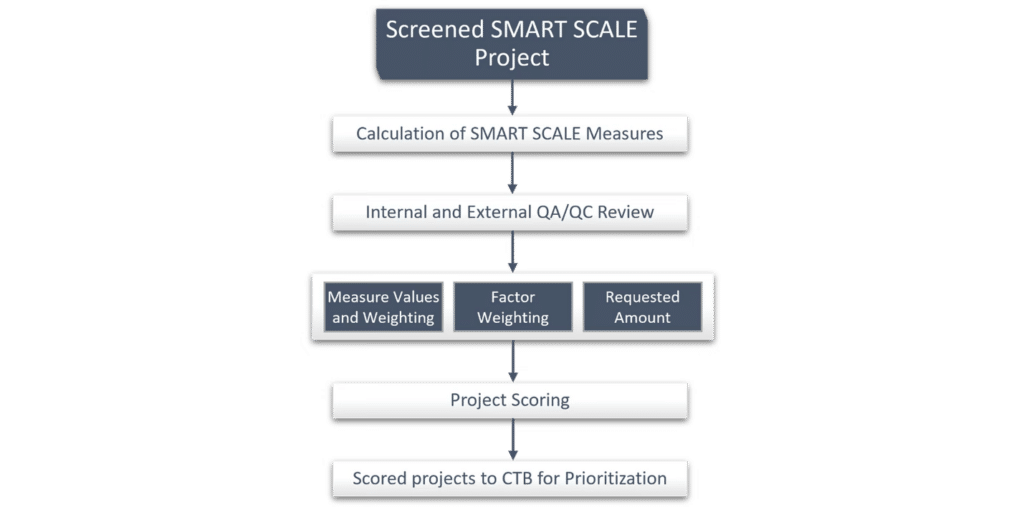
SMART scale detailsIn Virginia, local or regional governments submit an application for the Commonwealth Transportation Board (CTB) to review. Most of the funding supports minor arterials and collectors. Virginia’s SMART Scale includes five steps:
Projects follow a specific 18-month application process. Starting in an even year, in January through March local governments submit pre-applications with project details. In April and May state staff screen the applications. From June to August local governments refine their applications. In August through December state officials screen, score, and prioritize. In January scores are made public. From February to June the state agencies make any needed changes and engage the public. At the end of June, the state adopts the funding scenario and six-year transportation funding plan. For example, Texas might use the following process for project prioritization.
SMART SCALE applications can be submitted by counties, cities, metropolitan planning organizations, and transit agencies. Applicants must show that projects have the support of key stakeholders. For example, a freight rail project must have the support of a railroad owner or operator.
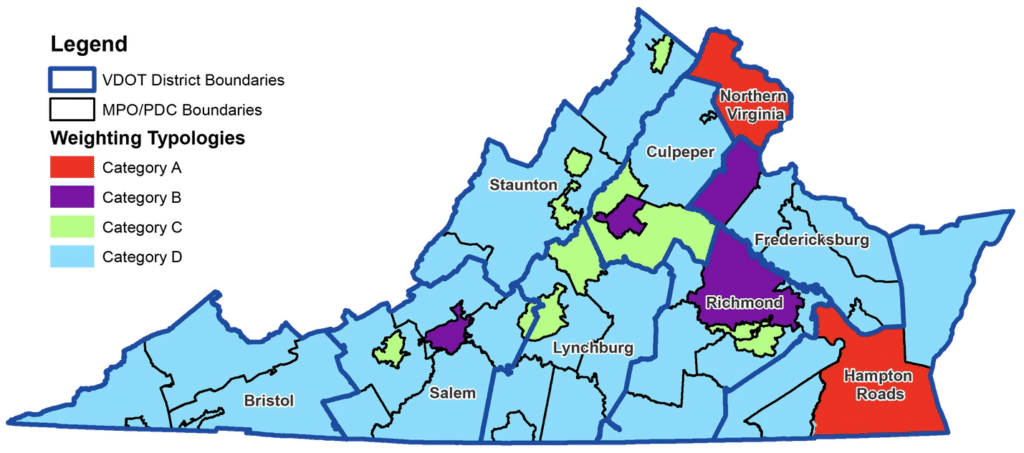
Projects are scored in 14 measures across six categories: safety, congestion, accessibility, environment, economic development, and land use. Different regions in the state weight the priorities differently. More-populated urban centers score congestion at 45% and safety at 15%. Rural regions score congestion at 10% and safety at 40%. This allows for different priorities based on regional needs.
Copyright © 2026 Reason Foundation
| # | Наименование новости | Тональность | Информативность | Дата публикации |
|---|---|---|---|---|
| 1 | Public-private partnerships can help Texas address its port infrastructure backlog | 0 | 10.3 | 17-08-2026 |
| 2 | Texas launches new program to improve railroad crossing safety | 0 | 7.78 | 17-08-2026 |
| 3 | Texas should collect more data before evaluating its autonomous vehicle program | 0 | 5.75 | 25-08-2026 |
| 4 | Texas can expand data centers without raising electricity costs | 0 | 7 | 19-08-2026 |
| 5 | Texas should address the structural problems driving teacher pension debt | 0 | 6.08 | 18-08-2026 |
| 6 | Examining the effect of increasing Texas’ homestead exemption | 0 | 12.18 | 01-09-2026 |
| 7 | Reining in discretionary grant transportation funding | 0 | 7.44 | 18-06-2026 |
| 8 | Texas’ data center tax exemptions are good tax policy | 0 | 6.65 | 26-07-2026 |
| 9 | Annual Surface Transportation Infrastructure Report 2026 | 0 | 18.17 | 28-05-2026 |
| 10 | Annual Transportation Finance Report 2026 | 0 | 18.89 | 28-05-2026 |