Просмотр новости
Найдите то, что Вас интересует
 Спутники
 РН
 SpaceX
 Роскосмос
 NASA
СпутникиРНSpaceXРоскосмосNASABNEF predicts enough refined metal until 2027, but lengthy mine development may cause a shortage by 2050.
The post Copper surplus masks looming $332B mine shortfall appeared first on Canadian Mining Journal.
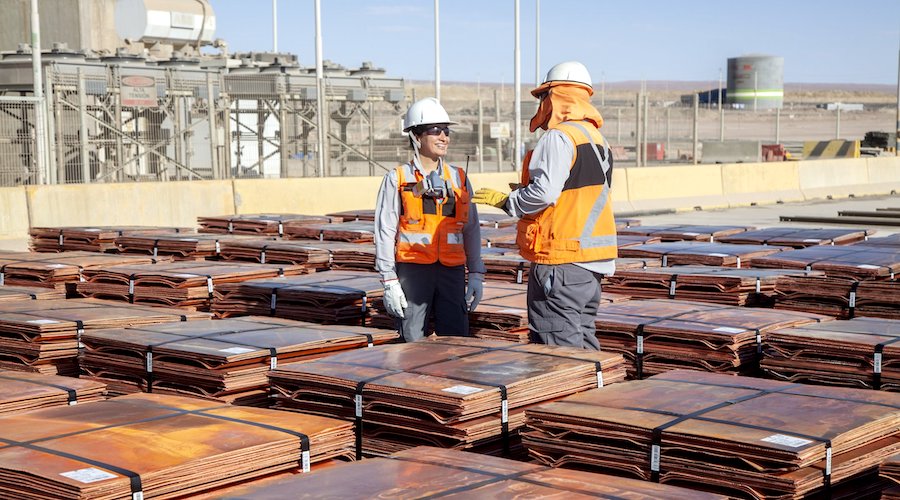 Copper cathodes at Codelco's Gabriela Mistral mine. Credit: Codelco
The copper industry needs $332 billion in new mine investment to avert a supply shortage that could begin in 2028, even as refined metal production is expected to outpace demand over the next two years.
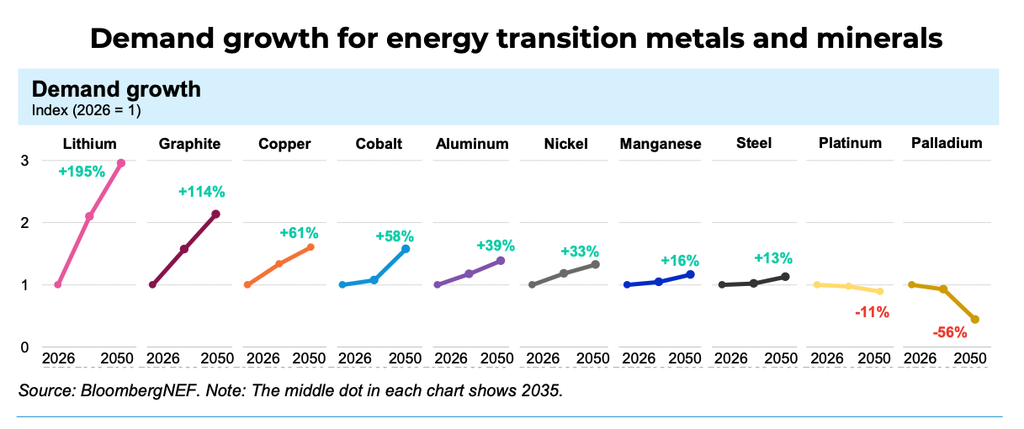
Global copper consumption is forecast to rise 61% between 2026 and 2050 to nearly 46 million tonnes, leaving a potential deficit of 20 million tonnes, or 44% of projected demand, according to BloombergNEF's Transition Metals Outlook 2026, released Tuesday.
The forecast contrasts with the International Copper Study Group's (ICSG) near-term outlook, which projects a refined copper surplus of 368,000 tonnes in 2027, up from 104,000 tonnes in 2026.
The difference reflects two measures of supply. ICSG tracks refined copper production against consumption, while BloombergNEF (BNEF) examines whether mining capacity can satisfy demand over the coming decades. Higher smelter output could keep refined metal available in the near term without addressing the shortage of new mines needed to support electrification.
Mining investment gapBNEF expects copper supply to fall short of demand beginning in 2028, with the deficit widening to 3 million tonnes, or 8% of consumption, by 2035. The gap is projected to reach 20 million tonnes, or 44%, by 2050.
Demand is forecast to grow 34% by 2035, driven by copper's widespread use in vehicles, lithium-ion batteries, electrical wiring and data centres. Its role in clean energy technologies is expected to accelerate consumption as electrification expands.
Supply faces two major constraints: declining ore grades, which make copper increasingly difficult and expensive to extract from existing mines, and insufficient investment in exploration to identify new deposits.
BNEF estimates that new copper mines take an average of 17 years to reach production. Lengthy permitting processes, substantial capital requirements and technical challenges further complicate efforts to expand output before shortages intensify.
Electrified transport is expected to become a major source of demand growth, with copper consumption in the sector forecast to surge 244% to 11.4 million tonnes by 2050 as electric vehicle adoption and supporting infrastructure expand.
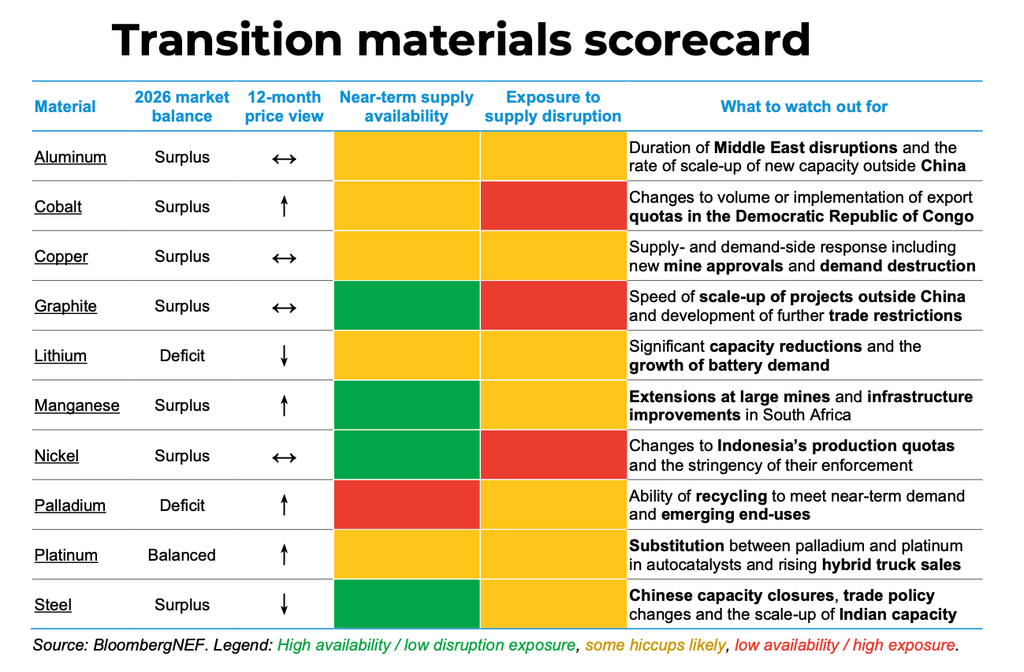
Copper stands apart from the other nine materials examined in BNEF's outlook. The research firm expects lithium, graphite, cobalt, aluminium, nickel, manganese, steel, platinum and palladium to have sufficient long-term production capacity to support electrification through 2050.
That distinction makes copper a potentially greater obstacle to the energy transition than several battery materials that have attracted substantial investment in recent years.
Processing concentrationThe outlook also identifies supply chain vulnerabilities beyond mining, particularly the concentration of mineral refining capacity.
Eight of the 10 materials studied have more than half their global refining capacity concentrated in a single country. China holds that dominant position in seven, leaving supply chains exposed to trade restrictions, geopolitical tensions and shifts in industrial policy.
The findings highlight a separate challenge for governments seeking to diversify critical mineral supplies. Expanding mine production alone will not establish independent processing networks, which require additional capital, infrastructure and industrial capacity.
The anticipated refined copper surplus could limit immediate pressure on the market. Stronger smelter production may provide a temporary cushion, although it cannot create additional mined supply.
The industry's ability to secure financing, permits and construction capacity in the coming years will help determine how severely copper shortages constrain electrification in the 2030s and beyond.
| # | Наименование новости | Тональность | Информативность | Дата публикации |
|---|---|---|---|---|
| 1 | Global copper surplus to more than triple by 2027: ICSG | 0 | 11.22 | 14-10-2026 |
| 2 | Global copper shortage may reach 10 mln metric tons over next decade — expert | 0 | 14.79 | 24-09-2026 |
| 3 | Hudbay, Mitsubishi approve Copper World construction | 0 | 8.18 | 21-10-2026 |
| 4 | Canadian Copper advances Murray Brook with EIA filing | 0 | 7.24 | 14-07-2026 |
| 5 | Eriez debuts copper reduction process for scrap metal recycling | 0 | 7.35 | 19-10-2026 |
| 6 | Sponsored video: Bravo drills Luanga copper-gold | 0 | 14.56 | 20-07-2026 |
| 7 | Awalé gold-copper assays point to bigger lode in West Africa | 0 | 12.26 | 20-07-2026 |
| 8 | The race for copper has brought a wave of mining mega-mergers | 0 | 5 | 15-01-2026 |
| 9 | Copper touches one-month high on Chinese shortages and Iran peace hopes | 2 | 7 | 21-07-2026 |
| 10 | Copper price run signals deeper supply squeeze: Sprott | 0 | 9.22 | 19-08-2026 |