Просмотр новости
Найдите то, что Вас интересует
 Спутники
 РН
 SpaceX
 Роскосмос
 NASA
СпутникиРНSpaceXРоскосмосNASANearly a decade after a dust explosion in central Maine, systemic blind spots left people on the front lines of another blast. This time, it was deadly.
Nine years ago, in the small central Maine town of Detroit, a foreman climbed to the top of a high-capacity fertilizer silo at Northeast Agricultural Sales. It was early October. The harvest season had wound down, and he was scraping off the residual chemical crust with a metal shovel.
As the man worked, he struck an exposed electrical wire, according to a U.S. Occupational Safety and Health Administration report. The resulting spark was small, but it happened in a dark, tightly enclosed cylinder filled with suspended particles of micro-pulverized sulfur.
The cloud ignited, severely injuring the foreman, Anthony Tower, and two others, federal records show.
Corporate leadership said the disaster was a result of human error, claiming Tower violated internal safety protocols by taking a metal tool into a confined space. Federal safety inspectors, however, saw systemic problems and fined the company $48,000 for mishandling dust hazards.
The blast was a warning: when fine particulate matter — whether it’s chemical sulfur, pulverized grain, microscopic aluminum or sawdust — is suspended in an enclosed space, it ceases to be mere waste. It becomes an explosive vapor waiting for a spark.
In the decade that followed, Maine’s regulatory infrastructure operated as if the Detroit explosion had been an anomaly: the state didn’t start tracking how many facilities have dangerous amounts of combustible dust, instead relying on companies to self-report the hazard; it also didn’t address loopholes that left private industrial sites largely uninspected for dust risks. Meanwhile, federal safety inspectors lacked a comprehensive standard and managed dust-related problems through reactive, piecemeal citations.
On May 15, those regulatory gaps culminated in another disaster, this time at a pine mill in Searsmont. There, on the grounds of Robbins Lumber, stood a concrete and steel silo designed to store kiln-dried sawdust and wood shavings.
When volunteer firefighters arrived at the mill that morning, they were responding to a routine call of a smoldering fire near the base of the silo, where workers bagged wood shavings. The crew directed a steady stream of water into the lower hatch, a tactic that had worked on previous small fires in the facility’s top-vented silo, according to an investigation by the National Institute for Occupational Safety and Health.
This particular silo, a used Harvestore installed in 1993, was an airtight, oxygen-limited model.
The water did not suffocate the ember. Instead, according to NIOSH, the high-pressure stream likely acted as a mechanical pump, driving fresh oxygen into the sealed upper vault. The force blasted microscopic wood dust off the interior walls, churning it into a cloud. When oxygen hit the hot fuel, the mixture detonated. The pressure spike lifted the silo off its foundation, and it blew apart in a violent fireball.
Andrew Cross, a volunteer firefighter from Morrill, died at the scene. Searsmont Assistant Fire Chief Wayne Woodbury and mill co-owner Alden Robbins were severely burned and died weeks later. A dozen others were injured.
 Maine State Fire Marshal Shawn Esler on Oct. 13 at the department’s office, housed at the Maine Department of Public Safety in Augusta. (Rich Abrahamson/Staff Photographer)
Purchase this image
NIOSH, which issues reports when firefighters are injured or killed on the job, concluded that officials at the state, local and company levels could have better identified and trained for the specific mechanics of combustible dust explosions, a hazard that the agency had been warning about for decades.
“I don’t know that the state understood the severity of combustible dust hazards, including myself,” said Maine State Fire Marshal Shawn Esler. He used to be the fire chief in Waterville, home to lumber yards, repair shops, plastic fabricators and other sites that could be at risk.
Without reform, experts say it’s only a matter of time before another explosion.
PHYSICS OF A DUST BOMBA standard fire requires three elements: fuel, oxygen and heat. An explosion requires two extra variables: dispersion and confinement.
At Robbins Lumber, the fine pine dust was the fuel; the fire hose provided both the dispersion force and the oxygen surge; the embers provided the heat source; and the airtight silo provided the sealed pressure vessel. Once ignited, the expanding combustion gases had nowhere to go but out — destroying the vessel holding them.
“It is far from just a sawmill problem,” said Guy Colonna, a chemical engineer who helped draft the National Fire Protection Association’s combustible dust and confined space standards. “If people get just one thing out of my instruction, I hope it’s that.”
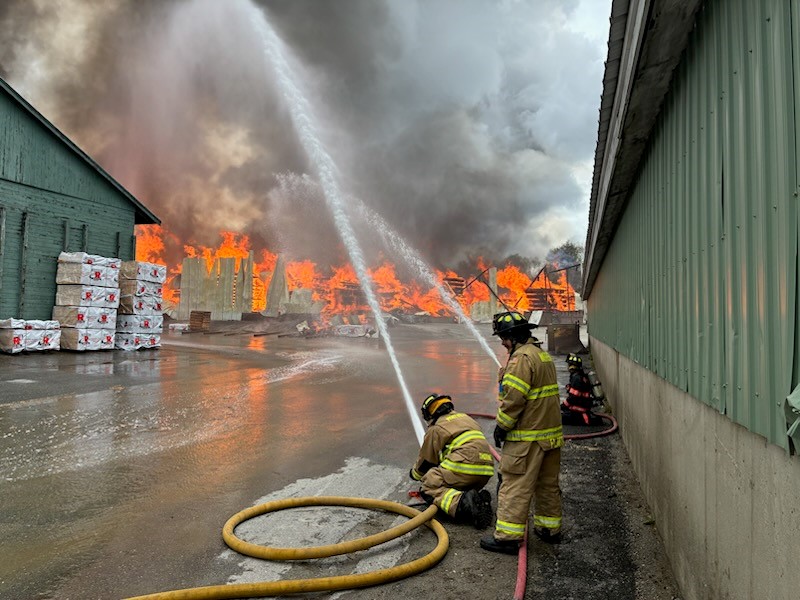 Firefighters combat the fire at Robbins Lumber in Searsmont on May 15. (Courtesy of the Maine Department of Public Safety)
For years, Colonna has traveled the country trying to educate industrial operators on dust hazards, which extend from plastic recycling centers to flour mills. Federal data show more than 200 major combustible dust incidents across the U.S. since 1980, killing more than 100 people and injuring 700. Yet convincing small-town industrial enterprises to pay attention has historically proven difficult.
Last year, Colonna, who lives in Blue Hill, said he was forced to cancel a seminar in Maine because almost no one registered. Last month, when he returned to teach a two-day workshop, the 40-person class filled up within days, and the waiting list was long enough to fill two more classrooms, according to a spokesperson for the Maine Department of Labor.
“Now it’s on everyone’s front burner,” said Jeff Lewis, a risk management specialist at Cross Insurance, which covers many of Maine’s independent lumber mills and helped fund the cost of the combustible dust training course.
WHO OVERSEES DUST HAZARDS?The regulatory framework is a patchwork of jurisdictional carve-outs.
At the state level, the Bureau of Labor Standards oversees safety strictly within public institutions, like town fire stations, public works facilities, churches or schools. Private industry falls under the federal Occupational Safety and Health Administration.
At the federal level, no single binding regulation governs combustible dust in general industry.
After fatal industrial dust catastrophes in the mid-2000s, Congress tried to pass a law forcing OSHA to create a comprehensive safety standard for particulate hazards. Rulemaking began in 2009, and heavy lobbying by manufacturers delayed the effort until it was dropped in 2017.
When a dust explosion occurs, OSHA must rely on the “General Duty Clause,” a broad provision requiring a workplace free from recognized hazards. Federal inspectors cite voluntary, third-party guidelines to prove a company ignored “recognized industry knowledge.”
Experts have characterized it as post-disaster prosecution rather than pre-disaster prevention.
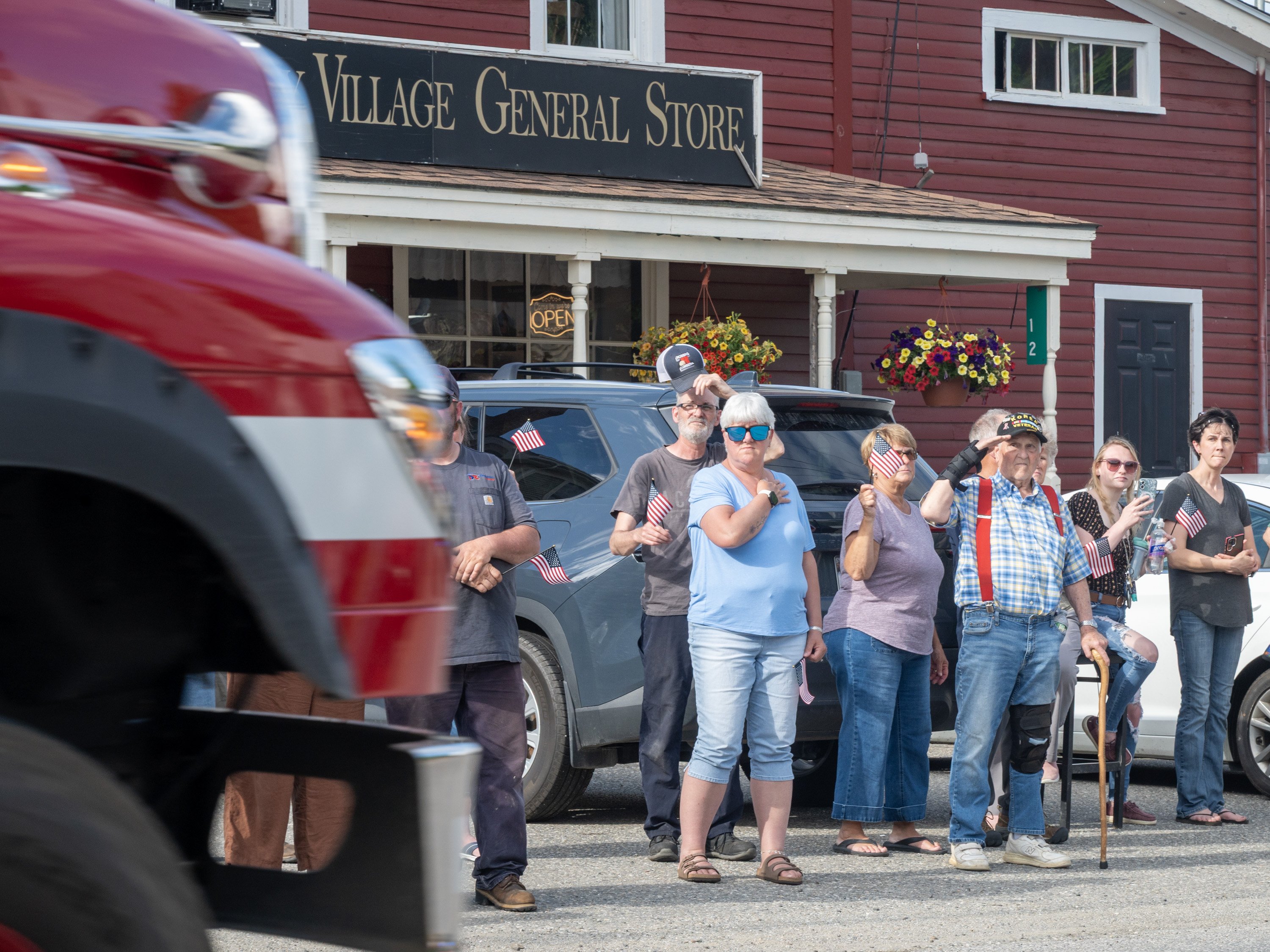 Spectators watch a procession accompanying the remains of Searsmont Assistant Fire Chief Wayne Woodbury on June 15. Woodbury was severely injured in the explosion at Robbins Lumber and died weeks later. (Joe Phelan/Staff Photographer)
Purchase this image
Colonna is now advocating for updates to the NFPA code that would mandate signs on all sealed or oxygen-limited silos warning firefighters and workers never to inject air or water directly into a smoldering hatch.
State officials rely on voluntary safety reviews rather than mandatory enforcement. Maine offers free workplace safety reviews through the Bureau of Labor Standards, sending inspectors into private facilities to identify OSHA violations without issuing fines. The reviews temporarily shield that workplace from federal inspection.
State safety consultants toured nine sawmills in 2023, one in 2024, four in 2025 and two so far in 2026, state records show. Because those consultations are confidential, however, the public has no way to know if they analyzed dust levels.
Under Maine emergency planning rules, a private facility storing more than 10,000 pounds of combustible dust must report it to the state and their local fire departments. The 60 companies that did, according to records obtained by the Portland Press Herald, ranged from aerospace part makers to milk carton recyclers to composting facilities.
Only four of those were sawmills: Hammond Lumber in Belgrade, Louisiana-Pacific in New Limerick, PalletOne in Livermore Falls and Woodland Pulp in Baileyville. Robbins disclosed risks for its diesel fuel and sulfuric acid but not its sawdust silo.
 A person walks past a burned-out fire truck and an incinerated structure at Robbins Lumber in Searsmont on May 16. (Rich Abrahamson/Staff Photographer)
On the morning of the disaster, federal regulators say the Searsmont silo was about 20% full. That means it held at least 36,000 pounds of fine, dry wood dust, which is almost four times the legal reporting threshold.
The public often assumes the Office of the State Fire Marshal conducts routine safety audits of industrial facilities like Robbins Lumber, but Esler said state law only gives him the authority to review building plans and inspect daycares, hospitals and public buildings.
“There are a lot of buildings built in Maine that do not require a permit from our office,” he said.
The Fire Marshal’s sole interaction with Robbins Lumber occurred during a routine paperwork review of blueprints for the mill’s sprinkler system, he said. With a small staff, the office cannot inspect every private business in Maine or check its hazard documentation.
While safety experts recommend red warning placards on airtight silos, state fire code does not mandate them, Esler said. Maine operates under the 2018 edition of NFPA code, which contains minimal references to combustible dust and imposes no labeling requirements on sealed silos.
The Maine Forest Products Council, the primary lobbying arm for the state’s timber and wood products industry, offered no statement regarding sector-wide dust safety protocols. But fire chiefs have told Esler that some mills are organizing walk-throughs of their high-risk areas.
Robbins Lumber management did not respond to questions about why a formal dust hazard analysis was never performed, why local fire departments were never briefed on the oxygen-limited mechanics of the silo or why the vessel did not have warning signs on it.
In August, the company issued a statement about its rebuilding plans on its website.
“Our objective is not simply to meet current industry standards, but to exceed them,” Catherine Robbins-Halsted, a co-owner and vice president, wrote. “We are committed to learning from this event and to doing everything we can to help prevent anything like this from happening again.”
WHAT CAN BE DONE?In the aftermath of the explosion, a group of fire officials, sawmill operators, elected leaders and insurers formed to discuss a response to Searsmont. They must wait, however, until Mainers go to the polls next month before deciding what reforms to pursue, Esler said.
“I can’t give you the answers about the solutions that I feel may be warranted without consulting with the next governor,” Esler said.
Esler expressed skepticism toward creating a state-mandated inventory of privately owned silos to determine if combustible dust risks are documented and notified. His office cannot inspect a private workplace without statutory authority, a complaint or corporate invitation.
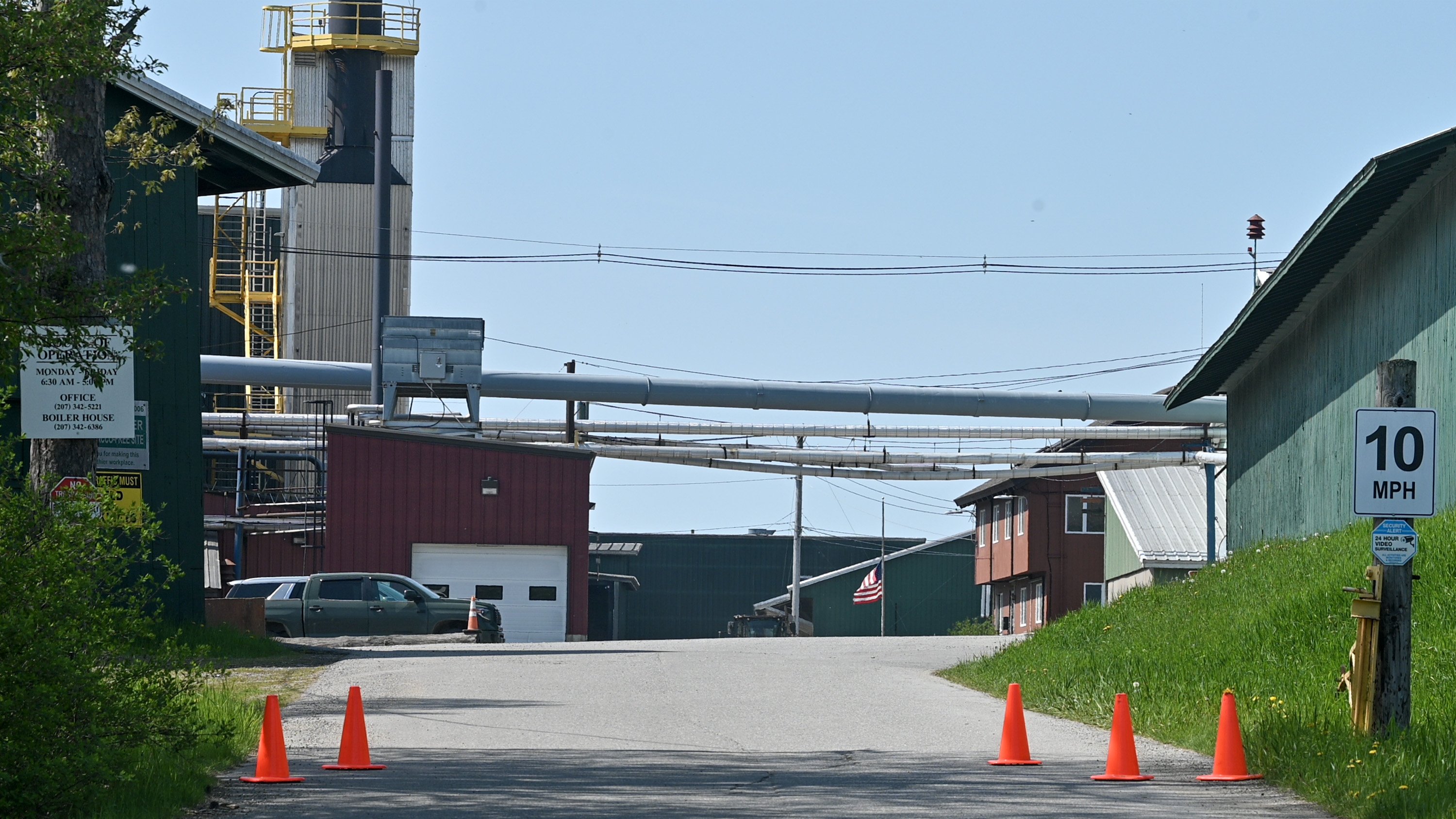 An American flag at half-staff is seen on May 19 near the entrance of Robbins Lumber on Ghent Road in Searsmont. (Joe Phelan/Staff Photographer)
Purchase this image
His office is wrapping up a statewide inventory of hazardous firefighting foam, but most of that material is stored in public buildings, where his office has more pull and more authority. He was also able to secure public funding to hire someone to conduct the survey.
He pointed to recent progress in equipping volunteer fire departments with mapping software that allows crews to view documented hazards on their way to a call. But that requires companies to accurately report their hazards and local fire departments to input the data.
The urgency for reform is compounded by an impending workforce collapse in the Maine fire service and the need for more training, Esler said.
For now, policy reforms are being vigorously debated behind closed doors but remain on hold. When asked what he would tell a Maine citizen asking how the state plans to prevent another Searsmont explosion, Esler’s answer was brief: “Wait and see.”
| # | Наименование новости | Тональность | Информативность | Дата публикации |
|---|---|---|---|---|
| 1 | Federal report says firefighting tactics at Maine lumber mill explosion aided the blast | 0 | 4.87 | 11-08-2026 |
| 2 | Lewiston man charged with arson after disturbance, house fire on Libby Avenue | 0 | 35 | 01-09-2026 |
| 3 | ‘Stubborn’ wildfire in Penobscot County turns into full-time response for volunteer firefighters | 0 | 43.09 | 28-07-2026 |
| 4 | Chemical safety board skewers Maine paper mill over gas spill that led to deaths | -3 | 7 | 14-07-2026 |
| 5 | Small explosion in Portland was likely electrical vault issue, fire official says | 0 | 28.67 | 27-07-2026 |
| 6 | Hannaford website, app back online after weeklong outage | 0 | 36.43 | 20-10-2026 |
| 7 | Gorham’s Orchard Ridge Farm for sale months after devastating fire | 0 | 33.99 | 18-10-2026 |
| 8 | Is Maine’s foliage peaking later as falls get warmer? | 0 | 37.48 | 16-10-2026 |
| 9 | Gin from Union’s former Sweetgrass Winery & Distillery is back on shelves | 5 | 5 | 06-07-2026 |
| 10 | Hannaford app, website still offline days after company identified security issue | 0 | 38.28 | 15-10-2026 |


