Просмотр новости
Найдите то, что Вас интересует
 Спутники
 РН
 SpaceX
 Роскосмос
 NASA
СпутникиРНSpaceXРоскосмосNASAPune’s latest confrontation over Rapido’s bike-taxi service has once again left commuters caught between an operator facing action for allegedly running without authorisation and an administration under pressure from autorickshaw unions to stop the service
Pune’s latest confrontation over Rapido’s bike-taxi service has once again left commuters caught between an operator facing action for allegedly running without authorisation and an administration under pressure from autorickshaw unions to stop the service.
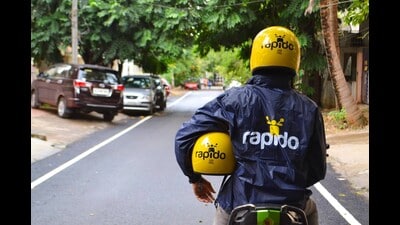
The Regional Transport Office (RTO) has not granted the necessary permissions, and an FIR has now been registered against the company for allegedly running bike taxi services in the city using petrol-powered non-transport two-wheelers without mandatory permissions. But beyond the legal dispute lies a more basic question - why should commuters have to bear the consequences of a transport system that offers them limited choices?
Other cities have grappled with the same question, though their regulatory positions differ. In Bengaluru, the Karnataka High Court ruled in January 2026 that motorcycles could be used as taxis, setting aside an earlier order that had halted bike-taxi operations. The court directed authorities to consider applications for permits under the existing legal framework. The ruling did not give operators an unrestricted licence to run services, but it underlined the need for a clear regulatory route rather than an indefinite impasse.
There is little to dispute about the need for regulation. A company cannot be allowed to operate a public transport service without the required licences and permits. Passenger safety, insurance, driver verification and accountability cannot be left to the discretion of an app-based company. If bike-taxi operators are flouting the law, action is justified. But enforcing the law is only one part of the administration’s responsibility, while it must also address the transport needs that make these services attractive in the first place.
Pune is a city of youngsters. Students arrive from across Maharashtra and the country to study, while professionals move here for jobs in the IT sector, industry and other fields. For many, a bike taxi is a practical option for short journeys. Not everyone owns a vehicle, and not every destination is conveniently connected by public transport. Even where buses and the Metro are available, commuters need an affordable last-mile option to reach their homes, colleges, offices or coaching classes. A bike taxi can fill that gap, particularly when time is short, and a cab is too expensive.
The trouble is that passengers often have little leverage when an autorickshaw driver refuses a short-distance fare, demands more than the meter fare or declines to go to a particular destination. Such complaints are hardly new. While many autorickshaw drivers provide necessary service, the failure to consistently enforce rules against overcharging and refusal of fares undermines public confidence in the system.
The recent fare revision adds to the frustration. Pune’s minimum autorickshaw fare, after a rise in CNG prices, has risen four times since 2021, from ₹18 to ₹30 for the first 1.5 km — an increase of nearly 67% in less than five years. The latest revision, effective September 1, also raised the per-kilometre charge from ₹17 to ₹20.
Drivers have their own case for higher fares, given rising operating costs and the need to sustain their livelihoods. But commuters are entitled to ask whether fare increases have been accompanied by better service and greater compliance with meter rates.
This is where the administration needs to demonstrate consistency. If it insists that app-based aggregators follow prescribed rules, it must enforce those rules uniformly. Unauthorised bike-taxi operations should face action, but complaints against autorickshaw drivers must also receive timely attention. An established transport system cannot be shielded from scrutiny simply because it has been around longer. Equally, consumer demand cannot justify bypassing the law.
Nor should bike-taxi services be treated as a solution without shortcomings. Concerns about road safety, passenger protection, insurance and the suitability of vehicles for commercial transport are legitimate. A fare displayed on a screen and a digital payment do not automatically guarantee a safe journey. Operators must meet regulatory requirements rather than expect the administration to overlook them because customers find their services useful.
Autorickshaw unions have a right to raise concerns about their livelihoods and demand a level playing field. But their concerns cannot be the sole basis for deciding what choices commuters should have. That decision must take into account the law, safety, public interest and the changing mobility needs of a growing city.
The administration should provide a clear, time-bound process for considering applications, prescribe enforceable safety standards and ensure that passengers are not left at the mercy of arbitrary fares or refusals. It must also strengthen public transport and last-mile connectivity so that commuters are not forced to depend on any single mode.
This is not a contest that should be decided in favour of an app-based company or the autorickshaw lobby. It is about whether Pune’s commuters can have safe, legal and reasonably priced choices.