Просмотр новости
Найдите то, что Вас интересует
 Спутники
 РН
 SpaceX
 Роскосмос
 NASA
СпутникиРНSpaceXРоскосмосNASAFourteen of Metro Vancouver's 21 municipalities have new mayors, as voters search for answers to cost-of-living challenges
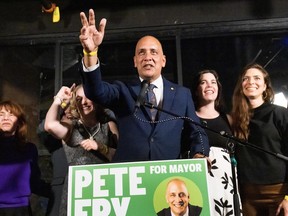 Pete Fry celebrates the win during municipal election night at Slate Event Space in Vancouver on Oct. 17, 2026. Photo by Arlen Redekop /PNG
The winds of change blew through Metro Vancouver this weekend, where residents in the majority of municipalities — 14 of 21 — woke up Sunday morning with a new mayor.

Subscribe now to read the latest news in your city and across Canada.
Subscribe now to read the latest news in your city and across Canada.
Create an account or sign in to continue with your reading experience.
Create an account or sign in to continue with your reading experience.
And in nine of those cities, incumbent mayors were defeated by challengers — a significant upheaval because an incumbent’s name recognition is typically a strong asset in municipal elections.
The results signalled “greater voter discontent” and an electorate clamouring for city halls to offer new solutions to day-to-day struggles, said Leger pollster Steve Mossop.
“It’s a long laundry list: cost of living, housing, affordability, property taxes, spending, homelessness, traffic, policing,” said Mossop, Leger’s Western Canada executive vice-president.

Start your day with a roundup of B.C.-focused news and opinion.
By signing up you consent to receive the above newsletter from Postmedia Network Inc.
A welcome email is on its way. If you don't see it, please check your junk folder.
The next issue of Sunrise will soon be in your inbox.
We encountered an issue signing you up. Please try again
A Leger poll during the municipal campaign found 57 per cent of Metro Vancouver voters were looking for change and half of residents thought their cities were on the wrong track. But the scope of turnover from Saturday’s vote still surprised many political watchers.
Metro Vancouver incumbent mayors fell in Vancouver, Surrey, Delta, New Westminster, West Vancouver, Port Moody, Maple Ridge, and Langley City and Township.
This trend repeated itself in other parts of the province, where mayors seeking re-election were defeated in municipalities such as Prince George, Kamloops, Penticton, Quesnel and Fort St. John.
With the exception of Brad West, who won Port Coquitlam in a landslide, some re-elected mayors achieved narrower margins of victory compared to the last election in 2022, including in Kelowna, Victoria and North Vancouver City.
In Abbotsford, Mayor Ross Siemens held onto his seat, but only three incumbent councillors were re-elected, as voters filled the council with a large slate of newcomers.
“In Abbotsford, we got both stability and change,” said political scientist Hamish Telford with the University of the Fraser Valley.
There doesn’t seem to be an overall pattern, Telford said, that explains the changes at city halls across B.C.: Vancouver switched from a conservative council to a progressive one, while New Westminster traded a progressive mayor for a more conservative one.
Delta picked a fresh, new voice in Melissa Granum, who beat both the incumbent mayor and an incumbent councillor, while Surrey and Langford voted for a new mayor but chose familiar faces who had previously led those cities.
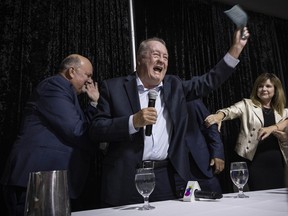 Surrey mayor-elect Doug McCallum on Saturday night. Photo by Jason Payne /PNG
In the case of Surrey, Doug McCallum’s re-election marks the fifth time he will be mayor in the past three decades. He defeated Brenda Locke, who primarily ran “to continue the progress” that she’d accomplished in her first term.
Locke and other incumbents, observers say, may have misjudged the electorate’s appetite to hear what they would do differently to improve people’s quality of life.
“I think what voters were perhaps expressing was dissatisfaction with the state of affairs. They’re just not seeing the progress they want,” Telford said. “And so incumbents out and challengers in. We’ll see if that makes a difference.”
Experts are slightly divided on whether the repudiation of some incumbents could mean NDP Leader David Eby and his MLA candidates face an uphill battle in next weekend’s provincial election.
Mossop believes it does spell trouble for Eby, noting Leger’s polling shows 56 per cent of British Columbians think the province is going in the wrong direction under the NDP.
But he is not convinced that Vancouver’s election of Pete Fry, its first Green mayor, will necessarily lead to more support for the Green party of B.C. on Oct. 24.
Telford, though, believes Fry’s victory could “put some wind in the sails” of provincial Green Leader Emily Lowan, since she exuded the most optimistic voice for change at last week’s leaders’ debate.
“I’m not expecting great breakthroughs for the Green party, but if they push up their numbers enough, that could be very detrimental to the NDP,” Telford said.
 B.C. Green party Leader Emily Lowan, from left, B.C. NDP Leader David Eby, and B.C. Conservative interim Leader Lorne Doerkson during the B.C. election provincial leaders’ debate Oct. 14. Photo by Ethan Cairns/BC Broadcast Consor
Public opinion polls show the B.C. Conservatives narrowly ahead of the NDP, with the Greens trailing.
On Sunday, Eby made a public appeal for Green supporters to back the NDP in the provincial election to stop a Conservative government from gaining power. In response, Lowan accused Eby of “trying to scare British Columbians into voting for him.”
When asked by reporters Sunday if losses by municipal incumbents signalled trouble in the provincial election, Eby said only that they showed B.C. voters are “anxious.”
By Sunday morning, Eby said he had already congratulated several mayors-elect. He said he told McCallum that a re-elected NDP government would work with the incoming Surrey mayor on his campaign commitments for improved transit for the city.
Telford was less certain the municipal results could mean problems for the NDP. In many cases, he said, voters rejected incumbent mayors for “experienced” alternatives: Vancouver’s Fry had been on council, as had Daniel Fontaine who upset incumbent Patrick Johnstone in New Westminster, and Delaney Mack who ousted Langley City incumbent Nathan Pachal.
But provincial voters may not apply that same logic to the B.C. Conservative party, as leader Lorne Doerkson and a number of his candidates are new, Telford said. So, next weekend undecided voters may be weighing whether the Conservatives have enough experience to govern, or whether it is safer to stay with the status quo NDP.
“I think the conundrum people have is they want change, but they’re not convinced that the Conservatives are the right change. And how that plays out next Saturday will be interesting,” Telford said.
 West Vancouver mayor-elect Kirk LaPointe, left, is congratulated on his win.
Even for keen political watchers like Ashley McDougall, with Impact Public Affairs in Vancouver, the outcome of the municipal votes was surprising.
“Voters across Metro Vancouver were looking for change, and of course the incumbents were largely on the receiving end of that,” she said.
Richmond was already guaranteed a new mayor because Malcolm Brodie is stepping down and his name wasn’t on the ballot for the first time in three decades. But McDougall noted voters chose the biggest change possible, passing over two incumbent councillors for mayor-elect Rob Howard, a former MLA and councillor from many years ago.
In West Vancouver, McDougall said, incumbent Mark Sager had faced a number of controversies, allowing journalist Kirk LaPointe to position himself as a better alternative and win a decisive victory.
In New Westminster, MacDougall believes Fontaine was successful in bringing down Johnstone by running on a campaign of reducing taxes.
In Vancouver, MacDougall wonders if Sim’s downfall was partly due to investing too much money in the police budget, rather than on housing, affordability measures, and other ways to address public safety.
In Surrey, Mossop suggested the South Asian vote may have been the difference for McCallum, as well as his typically strong ground game of getting people out to vote.
Like in Surrey, key issues that may have stymied the incumbent mayors in Langley Township and City are managing growth and transportation.
“They take time to solve, and people are growing frustrated with the slow pace of change,” Telford said.
With files from Joseph Ruttle
This website uses cookies to personalize your content (including ads), and allows us to analyze our traffic. Read more about cookies here. By continuing to use our site, you agree to our Terms of Use and Privacy Policy.