Просмотр новости
Найдите то, что Вас интересует
 Спутники
 РН
РН SpaceX
 Роскосмос
 NASA
NASA
СпутникиРНSpaceXРоскосмосNASAAmerican law has long recognized that punishment should reflect the harm caused. A man who steals a $50 power tool from a hardware store is a thief. A man who cuts communications lines at a federal building faces felony charges. Yet someone who severs a fiber-optic cable serving 911 dispatch centers, hospitals and first responders in pursuit of scrap copper may face little more than a misdemeanor, if he is charged at all. That is a legal failure.
The data are alarming. Between June 2024 and June 2025, there were 15,540 reported theft and vandalism incidents targeting America's communications networks, disrupting service for more than 9.5 million customers. Nearly 9,800 occurred in the first half of 2025 alone, double the previous six months. This is an accelerating crime wave.
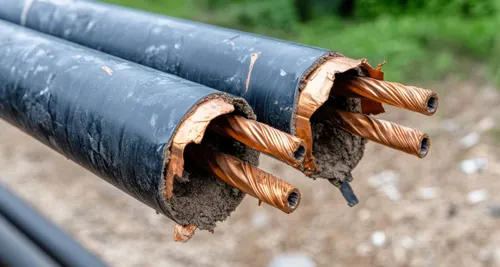
Copper runs through the veins of our communications infrastructure. As prices have climbed near record highs, fueled by demand from renewable energy projects, data centers and AI infrastructure, thieves have read the market signal. What they find in a buried conduit or along a utility pole may fetch a few hundred dollars at a scrapyard. What they leave behind, to paraphrase FCC Commissioner Olivia Trusty, is destruction measured in millions of dollars and lives endangered.
The examples are everywhere. In Tucson, Ariz., thieves targeting underground cables knocked out streetlights, creating hazards for drivers and pedestrians. In Los Angeles, copper theft disabled landline communications at fire stations. In Virginia Beach, attacks caused more than $1 million in infrastructure damage. In Kansas City, individuals were charged with cutting cables tied directly to emergency communications. In Pierce County, Wash., thieves used heavy equipment to haul away $55,000 in copper wire and fiber cable.
The damage vastly exceeds the value of the material stolen, making standard theft statutes almost absurd. In a study released last fall, Dr. Edward Lopez examined the true societal costs of these outages. He found that in just six months, communications infrastructure theft and vandalism imposed costs on Americans ranging from $38 million to $188 million. Texas alone bore $18 million.
Federal law imposes up to 10 years in prison on anyone who willfully damages or destroys a communications facility operated or controlled by the federal government. But the same act against a privately owned broadband network is usually punished according to the scrap value of the copper stolen. The severed fiber, interrupted 911 service, disconnected hospital or school without distance learning is largely invisible to the law.
That must change. Communications networks are at least as essential as highways and bridges. State legislatures should treat attacks on privately owned communications infrastructure with the same gravity as attacks on public utilities and government property.
If punishment is supposed to reflect harm, penalties for attacking communications infrastructure should reflect the full cost. Until they do, thieves will continue to conclude that the copper is worth the risk. We should prove them wrong.
 American law has long recognized that punishment should reflect the harm caused. A man who steals a $50 power tool from a hardware store is a thief. A man who cuts communications lines at a federal building faces felony charges. Yet someone who severs a fiber-optic cable serving 911 dispatch centers, hospitals and first responders in pursuit of scrap copper may face little more than a misdemeanor, if he is charged at all. That is a legal failure.
The data are alarming. Between June 2024 and June 2025, there were 15,540 reported theft and vandalism incidents targeting America's communications networks, disrupting service for more than 9.5 million customers. Nearly 9,800 occurred in the first half of 2025 alone, double the previous six months. This is an accelerating crime wave.
Copper runs through the veins of our communications infrastructure. As prices have climbed near record highs, fueled by demand from renewable energy projects, data centers and AI infrastructure, thieves have read the market signal. What they find in a buried conduit or along a utility pole may fetch a few hundred dollars at a scrapyard. What they leave behind, to paraphrase FCC Commissioner Olivia Trusty, is destruction measured in millions of dollars and lives endangered.
The examples are everywhere. In Tucson, Ariz., thieves targeting underground cables knocked out streetlights, creating hazards for drivers and pedestrians. In Los Angeles, copper theft disabled landline communications at fire stations. In Virginia Beach, attacks caused more than $1 million in infrastructure damage. In Kansas City, individuals were charged with cutting cables tied directly to emergency communications. In Pierce County, Wash., thieves used heavy equipment to haul away $55,000 in copper wire and fiber cable.
The damage vastly exceeds the value of the material stolen, making standard theft statutes almost absurd. In a study released last fall, Dr. Edward Lopez examined the true societal costs of these outages. He found that in just six months, communications infrastructure theft and vandalism imposed costs on Americans ranging from $38 million to $188 million. Texas alone bore $18 million.
Federal law imposes up to 10 years in prison on anyone who willfully damages or destroys a communications facility operated or controlled by the federal government. But the same act against a privately owned broadband network is usually punished according to the scrap value of the copper stolen. The severed fiber, interrupted 911 service, disconnected hospital or school without distance learning is largely invisible to the law.
That must change. Communications networks are at least as essential as highways and bridges. State legislatures should treat attacks on privately owned communications infrastructure with the same gravity as attacks on public utilities and government property.
If punishment is supposed to reflect harm, penalties for attacking communications infrastructure should reflect the full cost. Until they do, thieves will continue to conclude that the copper is worth the risk. We should prove them wrong.
| # | Наименование новости | Тональность | Информативность | Дата публикации |
|---|---|---|---|---|
| 1 | Permitting Reform Needed to Finish BEAD | 0 | 12.23 | 11-09-2026 |
| 2 | 500 pounds of stolen copper uncovered in Kansas home, deputies say | 0 | 11.82 | 25-09-2026 |
| 3 | There's No Such Thing as a Free Input | 0 | 8.18 | 13-08-2026 |
| 4 | Don't Take Wi-Fi for Granted | 0 | 12.86 | 24-06-2026 |
| 5 | $100K in copper pipe stolen from Upstate hospital: Police | 0 | 8.68 | 29-09-2026 |
| 6 | Ex-Soldier Gets 70-Month Sentence For Telecom Hack Scheme | 0 | 12.48 | 25-09-2026 |
| 7 | CA-47 Sign Theft: Troutman Campaign Vows Prosecutions, Replacement Signs | 0 | 7.66 | 01-05-2026 |
| 8 | Detenido por robar más de 12.000 metros de cable de alumbrado público en Alcalalí, Xàbia y Murla | 0 | 10.39 | 13-08-2026 |
| 9 | Thieves make off with €5m haul from prestigious Italian winery | 0 | 5.98 | 09-10-2026 |