Просмотр новости
Найдите то, что Вас интересует
 Спутники
 РН
РН SpaceX
 Роскосмос
 NASA
NASA
СпутникиРНSpaceXРоскосмосNASAPatra, a decorated DIG in the CRPF, was suspended for allegedly “disseminating audio/video messages and posters/banners” on social media
Central Reserve Police Force’s (CRPF) cadre officer Bidhan Chandra Patra, who was suspended on June 17, 2026, only for the order to be revoked later, was suspended based on a report prepared by an IPS officer also posted in the CRPF. That report itself relied on a screenshot of a forwarded WhatsApp message in a personal group forwarded by Patra allegedly, officials aware of the matter said.
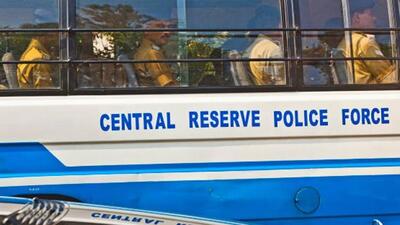
Patra, a decorated deputy inspector general (DIG) in the CRPF, was suspended for allegedly “disseminating audio/video messages and posters/banners” on social media advocating for a “change in government.”
An internal communication dated June 10 (a week before he was suspended), seen by HT, said that Patra was to be probed under the draconian Official Secrets Act,1923 (OSA), with the enquiry officer directed to check all his internal communication, including internal files and digital logs from the past 12 months, for any potential leak.
Also Read: CRPF revokes suspension of DIG over social media post
Documents seen by HT showed that while the home ministry cleared Patra’s suspension on August 27, 2026, the CRPF headquarters issued the order revoking the suspension only on September 15—the 90th day of the suspension. The timing is significant because under Central Civil Services (CCS) Rules, 1965, the CRPF had to extend the suspension by the 90th day and also communicate the reasons for this punitive action. This did not happen.
In fact, according to one communication seen by HT, Patra had intimated the President’s office on the evening of September 15 about his right to resume work the following morning, as the enquiry committee had not shared any evidence, grounds for continued suspension or the identity of the competent authority who ordered his suspension. CRPF issued the reinstatement order that same evening, according to a confidential order released by the CRPF.
While Patra did not wish to comment on the matter, one officer, who asked not to be named, said that the CRPF had also roped in the Intelligence Bureau (IB) to question Patra.
“Three IB officials also visited Patra in Tripura and questioned him. There was no evidence against him of any wrongdoing so this is why the case had to be dropped,” the officer said.
People aware of the matter said Patra was suspended on the basis of an intelligence report prepared by an IPS officer within the CRPF about a link and message he purportedly forwarded.
The screenshot of the link was a press conference related to the Central Armed Police Forces (CAPF) General Administration Act, 2026, against which some retired officers had said that cadre officers would get justice only if the government in the Centre is changed.
The Centre introduced the CAPF General Administration Bill, 2026, in the Rajya Sabha on March 27, 2026, which overrode the Supreme Court’s judgment on CAPF recruitments and functioning. It was passed by the Lok Sabha on April 2 and the Rajya Sabha on April 1, amid protests from opposition leaders who said it would break the morale of the cadre officers.
Around a year before the Centre brought the bill to the Parliament, the Supreme Court had ruled in favour of the cadre officers, who had fought a decade long legal battle seeking their cadre review, timely promotion, and leadership roles by reducing the deputation of IPS officers to the forces.
Different cadre officers, including Patra had approached the court saying that despite being under Group A services and serving in senior ranks throughout their careers, they could not reach leadership roles in the force because the government brought IPS officers from outside on deputation.
The Supreme Court ruled in favour of CAPF officers on May 23, 2025, and directed the Centre to progressively reduce IPS deputation, among other directives. The review petition filed by Centre was also dismissed on October 28, 2025. Even while the apex court’s judgment was yet to be implemented, the bill was introduced in March 2026.
CRPF’s retired additional director general(ADG) HR Singh, a former cadre officer and President of the Alliance of All Ex Paramilitary Forces Welfare Association - the umbrella group protesting the new law—said Patra’s suspension on flimsy grounds was a message to serving cadre officers because Patra was one of the officers who filed petitions in the Supreme Court.
“Several officers in the CRPF were also transferred because their families had protested
peacefully at Raj Ghat against this black law. Suspending a DIG was to send a message in the force. In Patra’s case, ordering the inquiry and suspending him based on a WhatsApp screenshot report filed by an IPS officer is itself wrong. The grounds on which he was suspended are flimsy too. If the MHA had ordered that he be reinstated but the CRPF took another three weeks until the 90th day to revoke his order then that too makes it clear that they had no valid case right from the start.”
Singh said that the new law passed by the government is unfair to the extent that over 3000 decorated cadres officers, many serving gallantry and Shaurya Chakra winners have approached the Supreme Court against it. “The families of many serving officers will be holding a peaceful protest at Jantar Mantar against this unfair law.”
While introducing the new law, the Home Ministry said IPS officers were essential for effective functioning and Centre-State coordination. While framing fixed numbers for both IPS and cadre officers in the CAPFs, the government in the statement of object and reason in the bill, said that the absence of an umbrella law has caused regulatory provisions to evolve in a fragmented manner resulting in several service-related litigations and causing functional and administrative difficulties.
(There was no response from the CRPF. The copy will be updated as and when the force responds).