Просмотр новости
Найдите то, что Вас интересует
 Спутники
 РН
РН SpaceX
 Роскосмос
 NASA
NASA
СпутникиРНSpaceXРоскосмосNASASeven-in-ten adults under 30 say they spend too much time on their smartphone, as do about two-thirds of those ages 30 to 49.
 (Catherine McQueen via Getty Images)
Between scrolling, notifications, and messages, smartphones can be hard to put down. Just over half of U.S. adults say they spend too much time on their smartphone, according to a Pew Research Center survey from May and June 2026. About a third of adults say their smartphone use is about right, while just 3% say they spend too little time using these devices.
Roughly half of U.S. adults – and a majority of those under 50 – say they spend too much time on their smartphone
% of U.S. adults who say the amount of time they spend on their smartphone is …
Note: Those who did not answer, including those who do not have a smartphone, are not shown.
Source: Survey of U.S. adults conducted May 26-June 1, 2026.
PEW RESEARCH CENTER
Roughly half of U.S. adults – and a majority of those under 50 – say they spend too much time on their smartphone
% of U.S. adults who say the amount of time they spend on their smartphone is …
| Too much | About the right amount | Too little | Group | |
|---|---|---|---|---|
| U.S. adults | 53 | 36 | 3 | All |
| Ages 18-29 | 70 | 20 | 2 | Ages |
| 30-49 | 64 | 29 | 2 | Ages |
| 50-64 | 49 | 43 | 3 | Ages |
| 65+ | 25 | 54 | 3 | Ages |
Note: Those who did not answer, including those who do not have a smartphone, are not shown.
Source: Survey of U.S. adults conducted May 26-June 1, 2026.
PEW RESEARCH CENTER
Younger adults stand out for describing their smartphone use as excessive. Seven-in-ten adults under 30 say they spend too much time on it, as do about two-thirds of those ages 30 to 49. Roughly half of those ages 50 to 64 and a quarter of those 65 and older say the same.
About this researchThis Pew Research Center analysis looks at Americans’ use of and personal experiences with smartphones.
Why did we do this?Pew Research Center does research to inform the public, journalists and decision-makers. This research builds upon our past work studying Americans’ use of mobile technology such as smartphones.
Learn more about Pew Research Center.
How did we do this?We surveyed 9,750 U.S. adults from May 26 to June 1, 2026. Everyone who took part in this survey is a member of the Center’s American Trends Panel. The survey represents the views of the full U.S. adult population.
Here are the questions used for this analysis, the topline and the survey methodology.
Are Americans cutting back on their smartphone time?While many Americans feel their phone takes up too much of their time, are they doing anything about it?
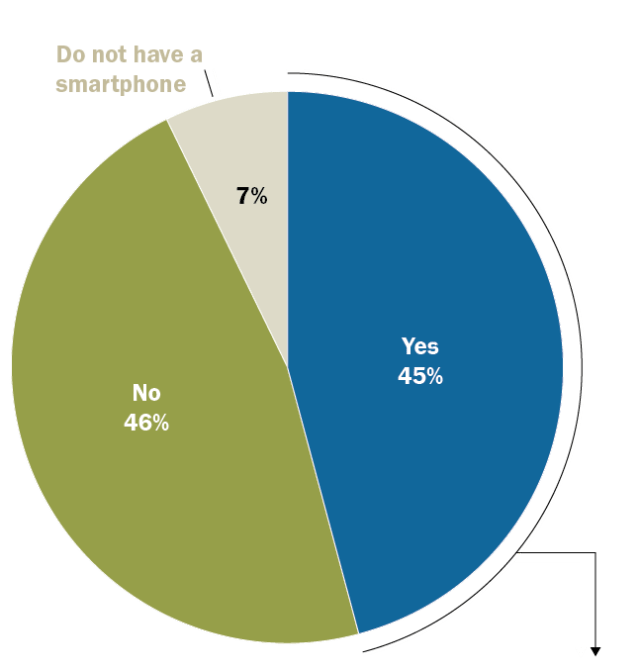
45% of Americans have tried to cut back on smartphone use; a quarter of them say they were highly successful
% of U.S. adults who say they have ever tried to cut back on the time they spend on their smartphone in the past 12 months
Among U.S. adults who’ve tried to cut back in the past 12 months, % who say they were __ at cutting back on the time they spend on their smartphone
Note: Those who did not answer are not shown.
Source: Survey of U.S. adults conducted May 26-June 1, 2026.
PEW RESEARCH CENTER
45% of Americans have tried to cut back on smartphone use; a quarter of them say they were highly successful
% of U.S. adults who say they have ever tried to cut back on the time they spend on their smartphone in the past 12 months
| Response | Percentage |
|---|---|
| Yes | 45 |
| No | 46 |
| Do not have a smartphone | 7 |
| Among U.S. adults who’ve tried to cut back in the past 12 months, % who say they were __ at cutting back on the time they spend on their smartphone | |
| NET extremely/very successful | 25 |
| Somewhat successful | 52 |
| NET not too/not at all successful | 23 |
Note: Those who did not answer are not shown.
Source: Survey of U.S. adults conducted May 26-June 1, 2026.
PEW RESEARCH CENTER
In our survey, 45% of U.S. adults say they’ve tried to cut back on their smartphone use over the past 12 months. A nearly identical share (46%) says they have not tried to do so.
Not surprisingly, those who feel they spend too much time on their smartphone are more likely to say they’ve tried to cut back. Among this group, 62% say this.
Still, wanting to cut back and actually doing it are different things. We also asked those who’ve tried to cut back how successful their efforts were.
Among this group, a quarter say they were extremely or very successful at cutting back on the time they spend on their smartphone. Another 52% say they were somewhat successful. Roughly a quarter of these Americans (23%) say they were not too or not at all successful at cutting back.
Adults under 50 are far more likely than older Americans to say they’ve tried to cut back their smartphone use. Roughly six-in-ten adults in this age group say this, compared with about four-in-ten among those ages 50 to 64 and an even lower share among those 65 or older.
Success at limiting smartphone use, meanwhile, varies little by age among those who have tried to cut back.
Adults under 50 stand out for trying to cut back on their smartphone use
% of U.S. adults who say they ever tried to cut back on the time they spend on their smartphone in the past 12 months
Note: Those who did not answer or gave other responses are not shown.
Source: Survey of U.S. adults conducted May 26-June 1, 2026.
PEW RESEARCH CENTER
Adults under 50 stand out for trying to cut back on their smartphone use
% of U.S. adults who say they ever tried to cut back on the time they spend on their smartphone in the past 12 months
| Demographic | Percentage |
|---|---|
| All U.S. Adults | 45 |
| Ages 18-49 | 58 |
| 50-64 | 39 |
| 65+ | 23 |
Note: Those who did not answer or gave other responses are not shown.
Source: Survey of U.S. adults conducted May 26-June 1, 2026.
PEW RESEARCH CENTER
Despite concerns about screen time, smartphones remain a regular feature of daily life. In fact, about one-in-four adults say they’re on their smartphones “almost constantly.” Another 60% say they use their smartphone several times a day.
Adults under 30 are the most likely age group to describe their smartphone use as almost constant, with 42% saying this. Still, a third of adults ages 30 to 49 say they use their smartphones almost constantly, as do 21% of those ages 50 to 64.
A smaller share of adults ages 65 and older report using their smartphone almost constantly (9%).
Younger adults are especially likely to say they use their smartphone ‘almost constantly’
% of U.S. adults who say they use their smartphone …
Note: Those who did not answer, including those who do not have a smartphone, are not shown.
Source: Survey of U.S. adults conducted May 26-June 1, 2026.
PEW RESEARCH CENTER
Younger adults are especially likely to say they use their smartphone ‘almost constantly’
% of U.S. adults who say they use their smartphone …
| Group | Almost constantly | Several times a day | About once a day | Several times a week or less | |
|---|---|---|---|---|---|
| U.S. adults | group1 | 26 | 60 | 3 | 2 |
| Ages 18-29 | group2 | 42 | |||
| 30-49 | group2 | 33 | |||
| 50-64 | group2 | 21 | |||
| 65+ | group2 | 9 |
Note: Those who did not answer, including those who do not have a smartphone, are not shown.
Source: Survey of U.S. adults conducted May 26-June 1, 2026.
PEW RESEARCH CENTER
Americans see both benefits and downsides when asked about the impact that smartphones have on people’s lives.
Americans see their smartphone as helpful for staying informed, connected; some say it hurts their sleep
% of U.S. adults who say using their smartphone __ each of the following a lot or a little
Note: Those who did not answer, including those who do not have a smartphone, are not shown.
Source: Survey of U.S. adults conducted May 26-June 1, 2026.
PEW RESEARCH CENTER
Americans see their smartphone as helpful for staying informed, connected; some say it hurts their sleep
% of U.S. adults who say using their smartphone __ each of the following a lot or a little
| Helps | Hurts | Neither helps nor hurts | |
|---|---|---|---|
| How informed they are | 73 | 3 | 15 |
| How connected they feel to others | 51 | 12 | 29 |
| How productive they are | 30 | 34 | 27 |
| Their mood | 18 | 22 | 51 |
| How much sleep they get | 5 | 41 | 46 |
Note: Those who did not answer, including those who do not have a smartphone, are not shown.
Source: Survey of U.S. adults conducted May 26-June 1, 2026.
PEW RESEARCH CENTER
On one hand, people widely see smartphones as helping them stay informed and connected. Roughly three-in-four adults say their smartphone helps them stay informed, and about half say it helps them feel connected to others. Far fewer say these devices hurt these aspects of their lives.
Views are more mixed when it comes to productivity. Relatively similar shares say their smartphones help, hurt or have no impact on their productivity.
Americans are also about equally likely to say smartphones help and hurt their mood. But the largest share of adults – about half – say phones neither help nor hurt this.
Sleep stands out as the clearest perceived downside of smartphones that we asked about. Much larger shares say their smartphones hurt than help the amount of sleep they get (41% vs. 5%). Still, nearly half say their phone has no impact on their sleep.
Age is again a big factor in Americans’ views on these questions.
A majority of adults under 30 say their smartphone use takes a toll on their sleep
% of U.S. adults who say using their smartphone hurts each of the following a lot or a little
Note: Those who did not answer, including those who do not have a smartphone, or gave other responses are not shown.
Source: Survey of U.S. adults conducted May 26-June 1, 2026.
PEW RESEARCH CENTER
A majority of adults under 30 say their smartphone use takes a toll on their sleep
% of U.S. adults who say using their smartphone hurts each of the following a lot or a little
| Ages 65+ | 50-64 | 30-49 | 18-29 | |
|---|---|---|---|---|
| How much sleep they get | 14 | 36 | 52 | 62 |
| How productive they are | 15 | 28 | 43 | 49 |
| Their mood | 8 | 18 | 29 | 31 |
| How connected they feel to others | 5 | 10 | 16 | 15 |
| How informed they are | 1 | 3 | 4 | 3 |
Note: Those who did not answer, including those who do not have a smartphone, or gave other responses are not shown.
Source: Survey of U.S. adults conducted May 26-June 1, 2026.
PEW RESEARCH CENTER
Adults under 30 are the only age group in which a majority (62%) say smartphones hurt their sleep. Still, about half of those ages 30 to 49 also say this.
Views on smartphones’ effect on productivity follow a similar age pattern. Adults under 30 are again the most likely to say their smartphone hurts how productive they are.
Age differences are more modest on other questions. However, adults under 50 are more likely than those 50 and older to say their smartphone hurts their mood.
Note: Here are the questions used for this analysis, the topline and the survey methodology.

William Bishop is a research associate focusing on internet and technology research at Pew Research Center.

Olivia Sidoti is a research analyst focusing on internet and technology research at Pew Research Center.

Monica Anderson is a director of research at Pew Research Center.
| # | Наименование новости | Тональность | Информативность | Дата публикации |
|---|---|---|---|---|
| 1 | Weekly: 9.5.26 | 0 | 13.23 | 04-09-2026 |
| 2 | Wie hängt man weniger am Handy? | 0 | 10.97 | 19-08-2026 |
| 3 | Americans Are Negative About Social Media’s Impact on Democracy – and the Rest of the World Is Catching Up | 0 | 9.51 | 01-10-2026 |
| 4 | From cash to credit, how Americans’ payment methods have changed in the past decade | 0 | 12.24 | 30-09-2026 |
| 5 | Half of teenage girls missing out on sports and social activities due to phone addiction | 0 | 7.61 | 26-09-2026 |
| 6 | Despite a price increase, Indian smartphone consumers ready to spend more: Counterpoint report | 0 | 11.43 | 24-07-2026 |
| 7 | About 8 in 10 Americans take supplements, and many see them as important to their health | 0 | 14.85 | 10-09-2026 |
| 8 | How Americans think about corporate and political influence on the news | 0 | 8.67 | 15-09-2026 |
| 9 | RuStore: россияне рассказали, как долго готовы обходиться без смартфона | 0 | 13.67 | 02-10-2026 |