Просмотр новости
Найдите то, что Вас интересует
 Спутники
 РН
РН SpaceX
 Роскосмос
 NASA
NASA
СпутникиРНSpaceXРоскосмосNASAThis represents the second failed attempt at an execution via lethal injection in Tennessee this year alone.
|
This represents the second failed attempt at an execution via lethal injection in Tennessee this year alone.
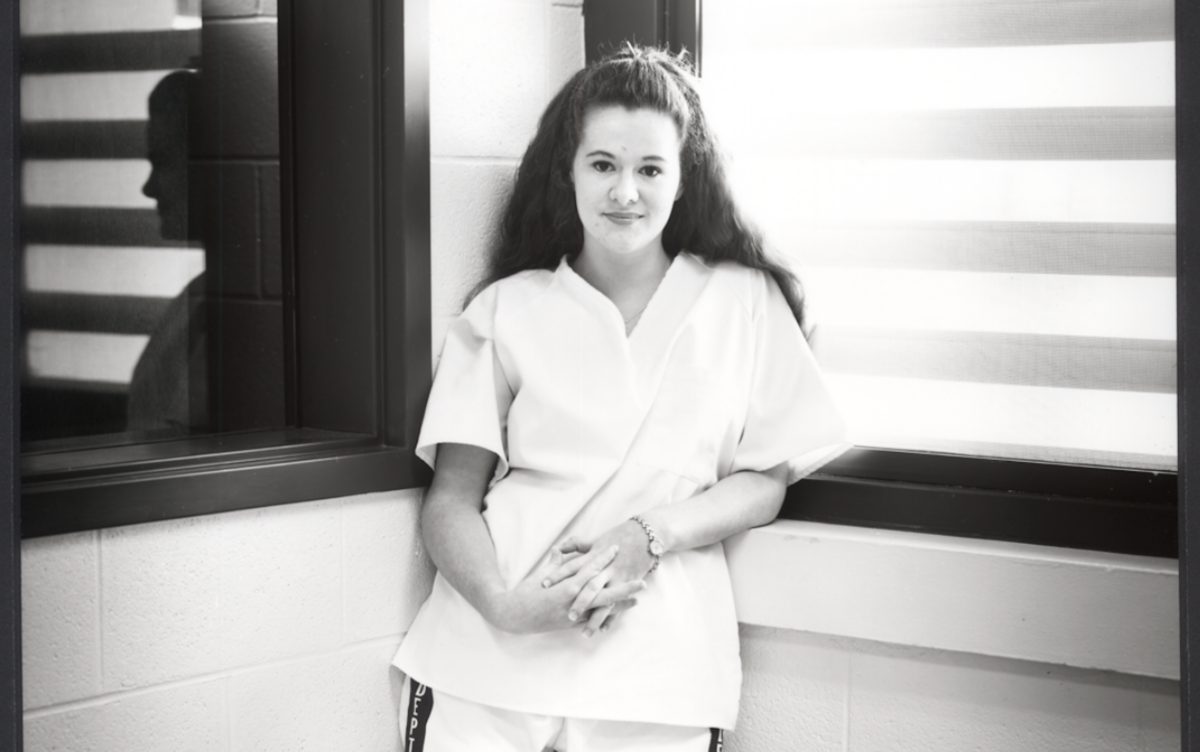 Christa Pike stands in prison in 1998.Toshi Kazama
Honest, paywall-free news is rare. Please support our boldly independent journalism with a donation of any size.
Tennessee woman Christa Pike has been hospitalized after surviving two lethal injection doses administered by state officials on Wednesday evening, marking the second botched execution in the state this year and prompting a pause on executions in the state.
The execution of Pike, convicted of murdering a classmate in 1995 at the age of 18, was scheduled for Wednesday morning, but was delayed after a last-minute ruling by a federal appeals court ordering a stay. The Supreme Court’s conservative majority quickly ruled to allow her execution to go ahead, and state officials rushed to carry it out on Wednesday evening to avoid having to reschedule.
At about 6:30 pm, journalists were brought to the witness room. Shortly after, curtains concealing the execution room were opened, and Pike was strapped to a gurney inside.
At one point after the first injection, Pike said that she felt concentrated pain on one part of her arm, which felt like it was “about to burst open,” witnesses to the botched execution said. “Does this happen like that? The one spot?” she asked. She could be heard moaning and snoring, clearly still alive. Officials then issued a second dose, and closed the curtains again after a few minutes. Witnesses said they continued to hear Pike snoring for almost an hour.
In all, the process took over two hours. Pike’s lawyers said afterward that she was transferred to a nearby hospital and that they have not been informed on her condition.
Pike’s lawyers said that she was given “degraded pentobarbital” that failed to stop her heart. Officials use pentobarbital and other anesthetic or sedative drugs in executions by giving the prisoner an overdose — but this method has a high failure rate, with over 7 percent of executions using this method being botched, according to an analysis by the Death Penalty Information Center.
“We take no pleasure in being right, but the concerns raised by Ms. Pike proved to be true: difficult vein access, blown veins, degraded pentobarbital, no emergency medical care available when things inevitably go wrong, all under a protocol that remains veiled in secrecy,” her attorneys said in a joint statement, per The Tennessean.
Witnesses said that there are no contingencies for two failed injections in the protocol. The Tennessee Department of Correction claimed to have “followed every step” of the protocol in a statement issued after journalists said the agency did not make a single official available to talk to the press during a news conference afterward.
“The Tennessee Department of Correction followed every step of the State’s lawful, established execution protocol approved by the Attorney General’s Office. The lethal injection chemical in the protocol has consistently been effective, and the protocol does not allow for additional procedures beyond what was carried out this evening. Christa Pike has been transported to an off-site medical facility,” the department said.
Republican Gov. Bill Lee said that he is pausing state executions for the rest of the year and is ordering a review after Pike’s botched execution. The state had one more execution scheduled for this December that will now be paused.
Lee, however, insisted on carrying out executions this year despite health care workers raising concerns that the state’s protocol does not follow ethical guidelines after another botched execution earlier this year.
In May, the state attempted to execute Tony Carruthers with a lethal dose of pentobarbital. But the medical team tasked with carrying out the execution, including physician Mark Fowler, pricked Carruthers over and over in repeated failed attempts to administer an IV line, in a process described as “torturous” by witnesses. Fowler also oversaw Pike’s botched execution.
As Carruthers bled from the puncture wounds, moaning in pain, the medical team pricked him over a dozen times, a witness said — in the arms, feet, and hand, before attempting to insert a central line through his collarbone and shoulder, using a method experts said is nowhere close to standard procedure. The team eventually gave up, and the state put off his execution for another year. He has been left paralyzed in the right side of his body after the procedure caused a stroke, his family said.
Carruthers’s execution attempt went on after a previous three-year moratorium on executions in the state expired in 2025. That policy went into effect after the state was found to have not been properly testing the drugs it was using for the procedures. Indeed, ahead of Carruthers’s lethal injection attempt, the state’s prison officials refused to confirm whether or not the drugs they would be using were expired.
Meanwhile, rights advocates had also raised concerns about Pike’s case and the method of execution. Advocates say that the jury in her case was not given crucial information about Pike’s horrific childhood, in which she was sexually abused and raped starting when she was a toddler. At the same time, sexual violence and trauma experts had argued, ahead of her execution attempt, that there was a risk that lethal injection would force her to relive some of her worst traumas right as she died because the doctor may try to inject her through her groin.
“Once she is restrained and immobilized, a man will try to find a vein in Ms. Pike’s arm through which he will inject the poison that will kill her,” the experts wrote in a brief. “If he cannot find a vein in her arm, the expectation is that he will attempt to inject the poison near her groin.”
“It is difficult for me to understand as a person that this is a choice that we have made as a society to take pain and to multiply it,” said Angie Bergman, an attorney for Pike who challenged her solitary confinement.
Truthout is funded almost entirely by readers — that’s why we can speak truth to power and cut against the mainstream narrative. But independent journalists at Truthout face mounting political repression under Trump.
We rely on your support to survive McCarthyist censorship. Please make a tax-deductible one-time or monthly donation.