Просмотр новости
Найдите то, что Вас интересует
 Спутники
 РН
РН SpaceX
 Роскосмос
 NASA
NASA
СпутникиРНSpaceXРоскосмосNASAA Tesla Cybercab rider in Austin says a 10-minute trip turned into a 70-minute ordeal after the driverless taxi took a long detour across the city.
The reason is a limitation Tesla still hasn’t solved. Its robotaxis can’t drive on highways, so a quick hop that a human would take up the freeway becomes a winding surface-street tour.
more…
A Tesla Cybercab rider in Austin says a 10-minute trip turned into a 70-minute ordeal after the driverless taxi took a long detour across the city.
The reason is a limitation Tesla still hasn’t solved. Its robotaxis can’t drive on highways, so a quick hop that a human would take up the freeway becomes a winding surface-street tour.
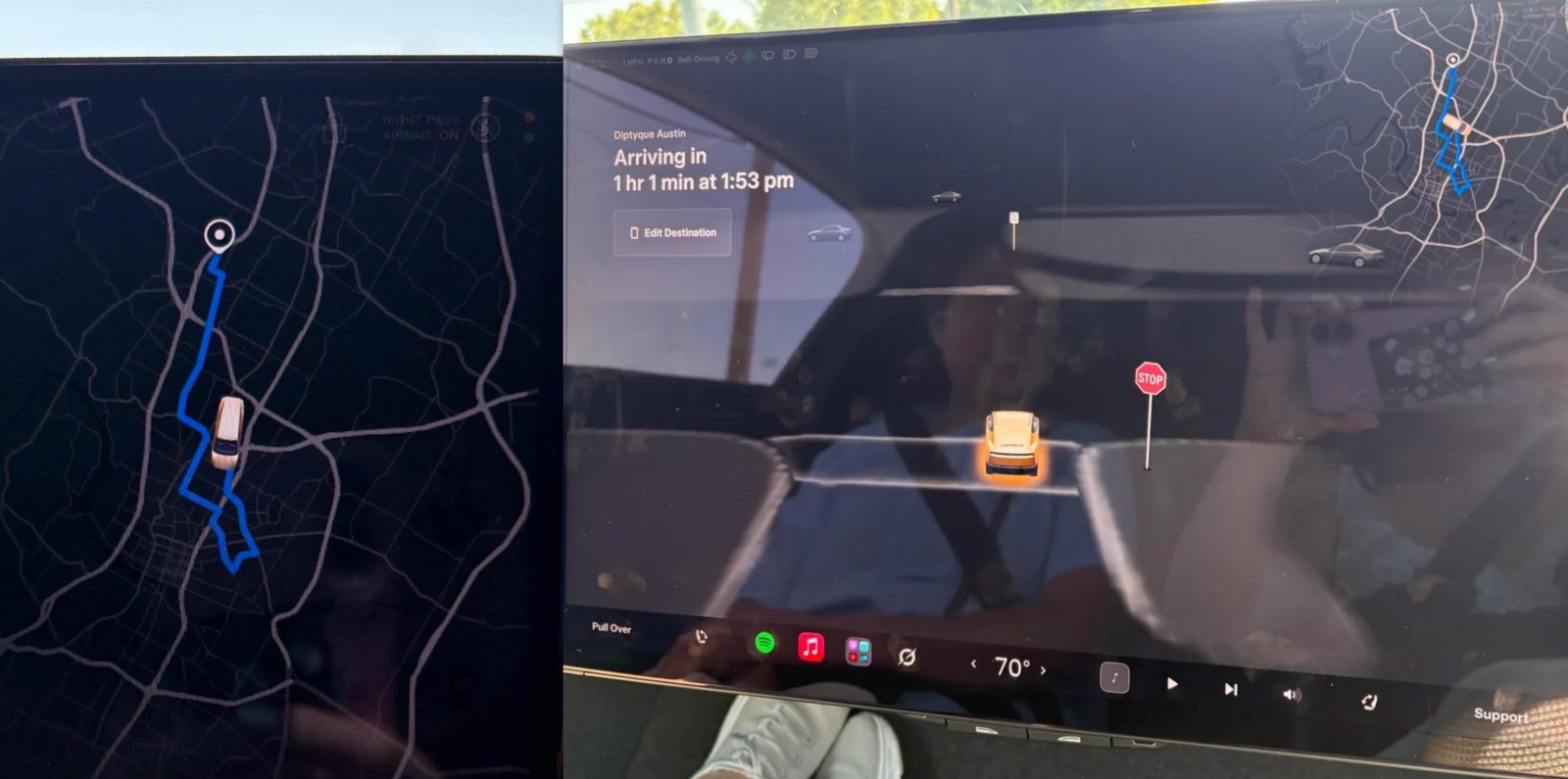
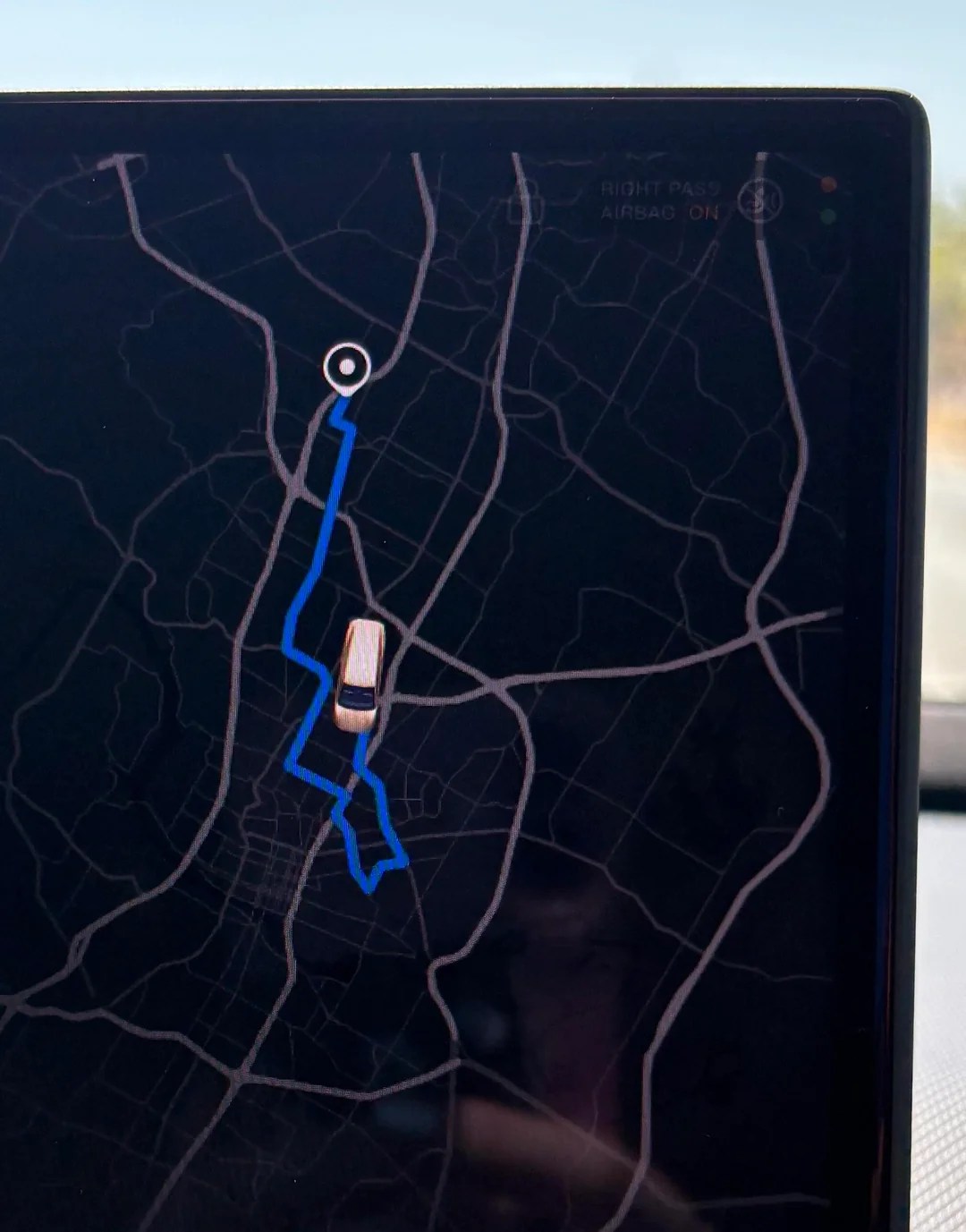
The rider, posting on r/Austin, booked a ride from 99 Ranch Market to the Domain, both in north Austin. That’s normally about a 10-minute trip straight up the highway. Instead, he wrote, the Cybercab “took me on a massive south detour through East Austin,” and the whole thing took 70 minutes.
He titled the post “My Cybercab held me hostage for an hour.” That part’s a joke. As other riders pointed out, you can end a Tesla robotaxi ride at any time and call something else. The fare came to $20, roughly market rate, but Tesla’s app only shows a price estimate when you book, not a time estimate. So you don’t find out you’ve signed up for the scenic route until you’re on it.
Why the car drove the long wayRiders in the thread landed on a plausible explanation, and the original poster agreed with it.
Tesla’s robotaxi doesn’t use highways like MoPac or US-183 in Austin, and riders say it also steers clear of at-grade railroad crossings. Put those two constraints together and the car had to run far south on surface streets, staying parallel to Capital Metro’s Red Line until it could finally get across the tracks on a bridge in East Austin. “It was basically driving parallel to the Red Line the whole way,” the poster wrote.
It’s a small story, but it’s a clean illustration of what “no highways” actually costs a rider in a city built around them.
Tesla’s robotaxi still avoids the freewayThis is the part that doesn’t make it into the launch videos.
Waymo, the clear leader in the space, already runs fully driverless rides on freeways. Tesla’s vision-only system stays on lower-speed surface streets inside a tight geofence, where a mistake plays out at 35 mph instead of 65. We’ve made the case before that the long routes and weird reroutes point to a safety bottleneck: Tesla’s fleet crashes roughly once every 57,000 miles, about four times worse than an average human driver.
A car that reroutes around train tracks and can’t merge onto MoPac isn’t a general-purpose autonomous vehicle yet. It’s a demo experiment that happens to charge $20.
A rough opening act for the CybercabThe timing doesn’t help. The steering-wheel-free Cybercab only started carrying public riders in Austin on September 3, and NHTSA opened an audit the same day into how Tesla self-certified a two-seater with no steering wheel or pedals. Days before that, one of Tesla’s Austin robotaxis drove straight through a set of bollards.
The 70-minute detour applies to the whole fleet, not just the new car. Tesla runs the same surface-street-only software on its Model Y robotaxis and the Cybercab, so any rider in Austin can draw the same route.
Electrek’s TakeThe “held hostage” framing is funny, and it’s not fair — nobody was trapped. But jokes aside, you’re left with a real data point about how far Tesla’s autonomy is from the product Elon Musk has been selling for years.
Musk pitched the robotaxi as a car that goes anywhere a human can, cheaper. What Austin actually has is a taxi that can’t take the highway, won’t cross a train track, and can turn a five-mile trip into an hour with no one at the wheel. It’s simply not ready for primetime, but Tesla is not new to releasing half-baked features.
That’s not a knock on the engineers keeping it inside its limits. It’s the honest picture of where the tech is.
If you’d rather own your ride than hail one, powering an EV at home with rooftop solar cuts your fuel costs to nearly zero. With electricity rates up almost 10% last year and expected to keep climbing, going solar is one of the best ways to protect yourself against rising costs. And with lease and PPA options, you can do it with zero upfront cost and start saving immediately. If you want to find the best deal, check out EnergySage. It’s a free service with hundreds of pre-vetted installers competing for your business, so you save 20 to 30% compared to going it alone. No sales calls until you pick an installer. Get your free quotes here.


FTC: We use income earning auto affiliate links. More.

| # | Наименование новости | Тональность | Информативность | Дата публикации |
|---|---|---|---|---|
| 1 | My Tesla Cybercab launch predictions | 0 | 14.76 | 28-08-2026 |
| 2 | Tesla’s active robotaxi fleet in Austin crashes back to 8 vehicles after Cybercab pump | 0 | 16.46 | 22-09-2026 |
| 3 | Tesla brings Cybercab to China, rules out sale and robotaxi service | 0 | 16.09 | 16-09-2026 |
| 4 | Tesla Cybercab has a hidden virtual joystick to drive it manually | 0 | 11.89 | 08-09-2026 |
| 5 | Tesla Cybercab is already under NHTSA investigation after launch | 0 | 15.06 | 04-09-2026 |
| 6 | Tesla Cybercab Changes the Robotaxi Race | 0 | 6.72 | 09-09-2026 |
| 7 | If a Tesla Cybercab fleet were profitable, Tesla wouldn’t sell you one | 0 | 11.9 | 07-09-2026 |
| 8 | Tesla Cybercab Changes the Robotaxi Race | 0 | 6.72 | 09-09-2026 |
| 9 | First look at Tesla Cybercab’s steering: a Cybertruck wheel bolted on | 0 | 15.35 | 11-09-2026 |
| 10 | NHTSA orders Tesla to prove its Cybercab is legal to sell, under oath | 0 | 14.69 | 15-09-2026 |