Просмотр новости
Найдите то, что Вас интересует
 Спутники
 РН
РН SpaceX
 Роскосмос
 NASA
NASA
СпутникиРНSpaceXРоскосмосNASATerry Eissfeldt, aviation consultant and former CEO of West Coast Helicopters, shares how people make or break a successful organization.
The post Wisdom from the Field: How relationships determine success in helicopter maintenance appeared first on Vertical Mag.
Throughout four decades in the helicopter maintenance industry, Terrence Eissfeldt has had a number of fascinating experiences. He’s changed a fuel line at 30 below zero with a polar bear escort standing guard. After a helicopter was blown off the pad, he rode out an ice storm on a mountaintop. He’s been stranded on a remote strip for a day and a half with bears circling. While all these experiences taught him valuable lessons throughout his career, it’s what he learned about the relationships within an organization that truly contributed to his success.
“People are really the most important factor in any good organization or safety program,” Eissfeldt shared during Episode 81 and 82 of the Vertical MRO Podcast. “Everything else, you know what, it’s all fluff.”
Eissfeldt’s career took him from apprentice to engineer to maintenance supervisor and eventually CEO. During that time, he picked up valuable skills beyond maintenance technical proficiency. He learned how to develop relationships and bring out the best in people, which in turn increased the productivity and success of his teams.
During the two-episode podcast interview, Eissfeldt shared insight on his leadership philosophy and advice for others seeking to strengthen their skills. What follows is a summary of the wisdom he imparted for maintainers and maintenance organizations.
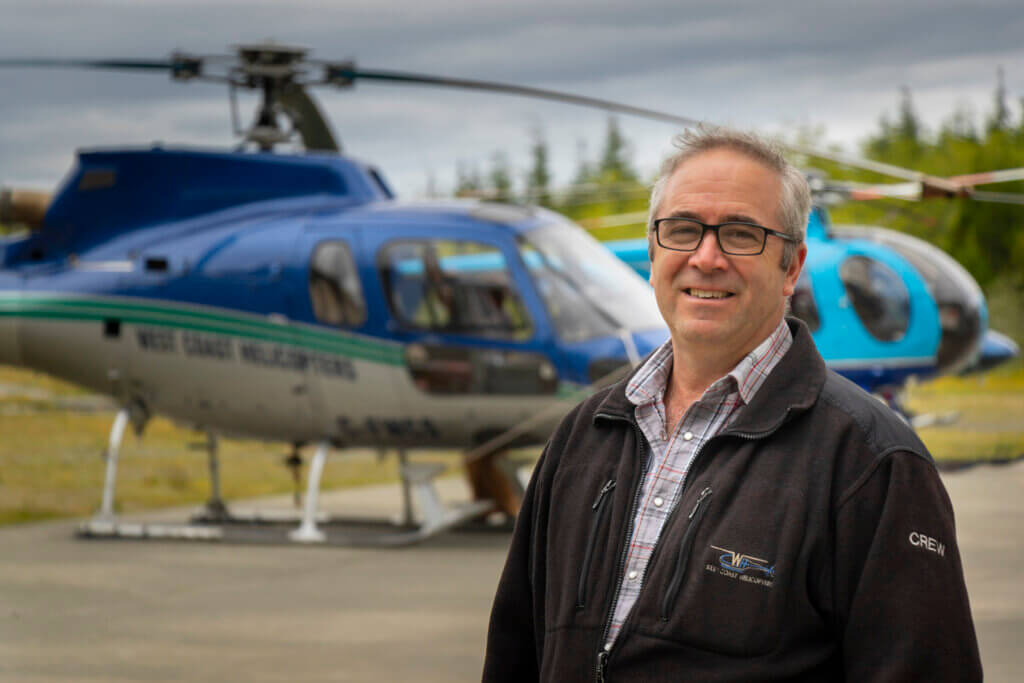 Retired West Coast Helicopters CEO Terry Eissfeldt at the Port McNeil base, BC
Leadership starts with listening
When Eissfeldt began his career as an apprentice, he found great wisdom in listening. He would sit in the corner of the lunchroom, absorbing stories from senior engineers rather than immediately trying to prove himself. That instinct served him well as he gained insights into the job.
“Listen and learn,” he shared as advice for new apprentices. “Don’t be scared to ask questions.”
He employed the same philosophy when he led the Helicopter Association of Canada maintenance committee from 2010 to 2019, and in return gained more insight into how to nurture meaningful discussions and foster collaboration.
Eissenfeldt recognized there were a number of issues the committee needed to address. Rather than walking in with a list of items to cover, he said he chose to start with questions, letting the committee members highlight the industry’s priorities. “I went in with a completely open agenda,” he said. “I wanted to have whatever topics we were talking about be very meaningful.”
By recognizing the experience and skill of the members on the committee and fostering discussion and collaboration, he helped guide initiatives that ended up solving industry issues, such as the Bell medium fleet’s groundings in Canada due to a field inspection requirement on the main rotor heads. Eissenfeldt led the committee to develop a training curriculum for pilots to perform the inspection that was later approved by Transport Canada, saving considerable time and expense for the industry.
“I learned a lot about meaningful discussions and how to collaborate [on the committee],” he said. “I brought that experience home to the company.”
Don’t be the smartest person in the room
Eissfeldt never attempted to be the authority on every subject his teams handled. Quite the opposite. He built his leadership approach around surrounding himself with people who know more than him in their specialties.
“If you’re the smartest one in the room, you’re in the wrong room,” he said. “I want people who are skilled and passionate and know what the heck they’re talking about, and I’m ready and willing to listen and learn.”
As an example, he highlighted the value of recognizing the individual aptitudes of his engineers. He underscored the difference between a mechanic who can turn a sheet-metal repair into “a piece of art” and one who’s a gifted troubleshooter. Both have entirely different skill sets, yet neither one superior to the other. A leader’s job, he says, isn’t to outperform both. It’s to recognize both and put them on tasks where each is the strongest.
Retention is a leadership decision
Eissfeldt’s decision to recognize individual aptitudes and deploy people where their skills can shine requires him to really know the people on his team. People are happy when they’re nurtured and recognized for their skills. He said he invested a lot of time learning about his people, nurturing their skills, and helping them shine. In return, they stayed with the company.
“My wife would often give me heck,” he explained. “She said, ‘You treat your guys way too well. Nobody treated you like that.’ And I said, ‘Yeah, well, I want to keep these guys.’”
This personal focus isn’t something that is successful if it is touched on every once in a while, but instead is a daily leadership choice in how people are dispatched, scheduled, and treated, even when things get hard, he emphasized. That includes making hard decisions in favor of employee needs, especially when family issues conflict with work. In these instances, he aims to balance authority with empathy.
“Keeping people coming home at the end of the day; that’s always been my motivation,” he said.
Mentorship goes both ways
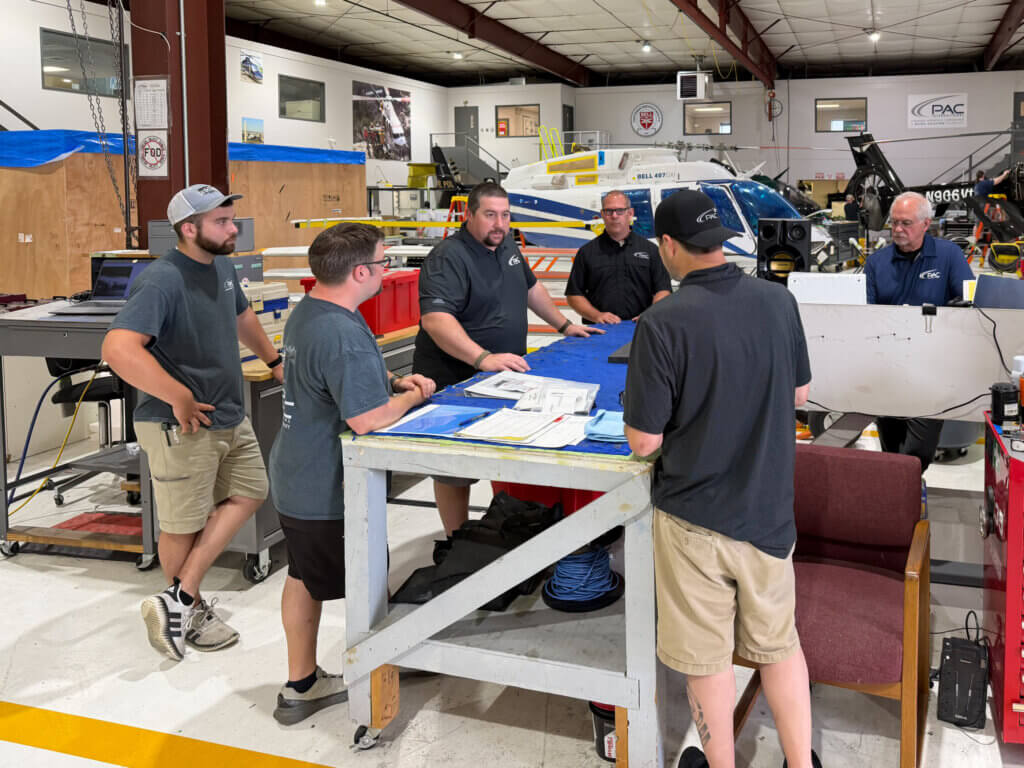
The maintenance world today is so different from when Eissfeldt first picked up a wrench. In comparison, today’s data-rich, digitally native shop floor can feel very foreign to maintenance veterans. He remembers watching an apprentice reformat a spreadsheet in five minutes flat, a task that wasn’t part of his toolkit when he first started, and feeling he still had a lot to learn.
In his eyes, however, this offers a unique leadership opportunity for the younger members of the team. What he calls “reverse mentorship” gives younger apprentices the opportunity to develop trusting and respectful relationships with veteran engineers by teaching them about digital tools.
“These young folks are coming out with a much higher level, a huge comfort level when it comes to operating with technology,” he said.
Parting advice
When Podcast host Jon Gray asked Eissfeldt’s advice for young apprentices, his answer did not include technical skills.
“Be willing to listen, be willing to ask and learn, and don’t be scared to tap into the industry’s experienced people,” he said.
He also emphasized the importance of seeking a workplace that is welcoming, inclusive and respectful.
“Who we work with determines, from what I’ve experienced, how we do our job and whether or not we do a good job or a bad job,” he said. “So good relationships then basically are built on trust. The respect, honesty, and trust that’s built up is critical and key to a good working environment.”
Conversely, he warned: “If you’re not enjoying your work and going into work, then something needs to change. Don’t be scared of change.”
To listen to the entirety of the two-part podcast, visit the Vertical MRO Podcast or go directly to Episode 81 and 82.
| # | Наименование новости | Тональность | Информативность | Дата публикации |
|---|---|---|---|---|
| 1 | Mission over maintenance: Choosing the right helicopter for the job | 0 | 5.75 | 19-08-2026 |
| 2 | Vertical MRO 2026: New workshops, expert speakers and career development for maintainers | 0 | 9.42 | 11-08-2026 |
| 3 | Helicopter maintenance tool control: Why every tool counts | 0 | 6.84 | 21-08-2026 |
| 4 | European Helicopter Association: AI-enabled tools may improve IIMC safety | 0 | 10.34 | 13-09-2026 |
| 5 | New head of Airbus Corporate Helicopters discusses hopes for division | 0 | 7.61 | 24-09-2026 |
| 6 | Farewell to the Twirly Birds | 0 | 10.75 | 17-09-2026 |
| 7 | NTSB finds unidentifiable pilot incapacitation led to fatal California CBP helicopter crash | 0 | 7.09 | 23-09-2026 |
| 8 | Hayward & Green announces exclusive partnership with NHV Helicopters | 0 | 12.42 | 14-09-2026 |
| 9 | NTSB cites pilot, air traffic controller in fatal 2024 Houston tour helicopter crash | 0 | 9.44 | 23-09-2026 |
| 10 | Vertical Valor Plus’s special air medical issue now available | 0 | 8 | 17-09-2026 |