Просмотр новости
Найдите то, что Вас интересует
 Спутники
 РН
РН SpaceX
 Роскосмос
 NASA
NASA
СпутникиРНSpaceXРоскосмосNASABrain scans of Israeli soldiers revealed that training and serving side by side blurred their neural 'fingerprints' – suggesting that our surroundings shape us more than previously thought
Brain scans of Israeli soldiers revealed that training and serving side by side blurred their neural 'fingerprints' – suggesting that our surroundings shape us more than previously thought
On March 31, 2019, some 580 eager young men reported to the Israeli military's induction center. They had been accepted into the Paratroopers Brigade after a day of selection tests and a series of interviews. Like generations of recruits before them, they signed for their red boots and collected the rest of their gear. But this time, something was different. They were about to take part in one of the most detailed and comprehensive studies ever designed to follow soldiers over time.
Through questionnaires and cognitive tasks, the study examined how military service affects mental health, cognitive processes and social factors. Funding came from the U.S. Department of Defense, before it became the Department of War.
"The Americans saw a big advantage in a structured, three-year period of service with a beginning, a middle and an end," explains Prof. Yair Bar-Haim of Tel Aviv University's National Center for Traumatic Stress and Resilience, one of the study's leaders. "Their military service is more complicated."
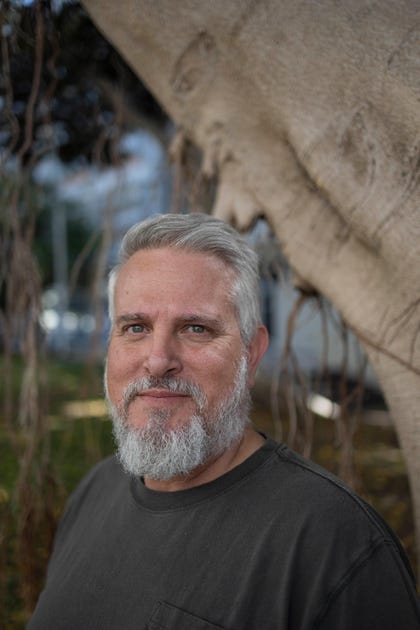
Prof. Yair Bar-Haim. "Our identity is not a frozen pattern in the brain. It's a dynamic process in which our personal history, living conditions and social environment shape one another over time." Credit: Tomer Appelbaum
All the paratroopers in the March 2019 intake were assessed four times: upon enlistment, after 15 months that included basic and advanced training, after another year of operational duty, and a few months after discharge. The researchers recently followed up with those who served as reservists during the Gaza war, who accounted for 80 percent of the original group. Six of the soldiers were killed in combat.
About 20 percent of the paratroopers developed symptoms of post-traumatic stress disorder over the study period, including the war. One notable finding linked intelligence to the risk of developing PTSD, a connection previously found among American soldiers. Among the Israeli soldiers with high cognitive aptitude scores of 80 or 90, known in Hebrew as Dapar scores, not a single case of PTSD was recorded during compulsory service, compared with about 10 percent among the others. During the Gaza war, while the soldiers were reservists or in career military service, the PTSD rates for high Dapar soldiers were similar to those of the other soldiers.
Bar-Haim cautions that the absence of cases in this study does not mean high intelligence offers complete protection. In a larger sample, he says, researchers could well find cases of PTSD during compulsory service among people with high intelligence. At the fifth assessment, following their wartime experiences, soldiers with high Dapar scores had PTSD rates similar to those of the rest of the group.
A subgroup of 50 recruits also underwent brain scans at each assessment so the researchers could examine the physiological basis of the psychological findings. They wanted to know whether resilience was reflected in a brain that remained stable or one that changed significantly to cope with trauma. The answer was unequivocal. They identified "very extreme adaptations," as Bar-Haim puts it, that produced this resilience.
Surprisingly, the biggest change was a blurring of the soldiers' distinct neural identities. After a year of intensive training, many soldiers' brain connectivity patterns resembled those of their fellow recruits at enlistment more closely than their own earlier patterns.
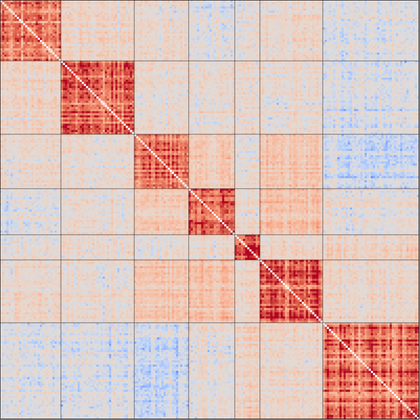
A brain connectivity matrix. Each row and column represents a brain region; each cell shows the correlation between the activity of the two intersecting regions. Stronger positive correlations appear in deeper red; negative correlations appear in blue.
To examine these changes, the researchers used a measure of brain connectivity known as the connectome. It reflects how closely the activity of different brain regions is coordinated. If, for example, activity in a region involved in vision increases or decreases as someone performs a task, that region is considered highly connected to another whose activity follows a similar pattern.
To map this connectivity, researchers divide the brain into roughly 1,000 regions and use functional MRI scans to measure how closely each region's activity is synchronized with every other region while the person is at rest. The result is a 1,000-by-1,000 matrix: the connectome.
About a decade ago, researchers at Yale University compared different people's matrices and found they could identify which participant each matrix belonged to with 99 percent accuracy. Later studies linked patterns of brain connectivity to personality traits.
"You can predict from someone's connectome whether they'll be extroverted or introverted, open to new experiences or closed off to them, and so on," says Prof. Ido Tavor, the study's other lead researcher. "You can even tell things about their life, like whether they play the piano."
Another study by Tavor, currently under peer review, found that the connectome can also predict who someone will become friends with. The researchers scanned students when they started university and asked them a year later who their friends were. The more similar two people's connectomes were, the more likely they were to become friends.
"We seem to want to be with people whose brain activity is synchronized in ways similar to our own, maybe because that reflects shared interests or a shared sense of humor," Tavor says. "The connectome captures something other measures don't."
Connectivity matters because, as Northwestern University neurologist Prof. Marsel Mesulam wrote in his 2006 foreword to "Fiber Pathways of the Brain," "nothing defines the function of a neuron better than its connections."
An individual nerve cell does not know whether it is involved in vision, hearing or decision-making. Its function is largely determined by its connections to other neurons. The prevailing view is that connectivity is a relatively stable, essential property of the brain. It is a kind of fingerprint, or more precisely, a brainprint, reflecting the brain's internal processes. In that sense, it can be seen as a neural signature of the self.
The paratrooper study gave the researchers an unusual opportunity to examine how the environment affects this property. The soldiers entered an intense environment together, undergoing the same training, following the same schedule, eating the same food and wearing the same clothes. In this melting pot, their connectomes lost some of their distinctiveness, making the soldiers harder to identify by their connectivity patterns.
At each assessment, the researchers mapped each soldier's connectome. They then compared his later scans with his own baseline scan and those of the other soldiers.
The researchers conducted the same assessments on a control group of 50 students in the military's academic reserve program, which allows recruits to complete a university degree before serving. The students were pursuing different courses of study, and many continued to live with their parents.
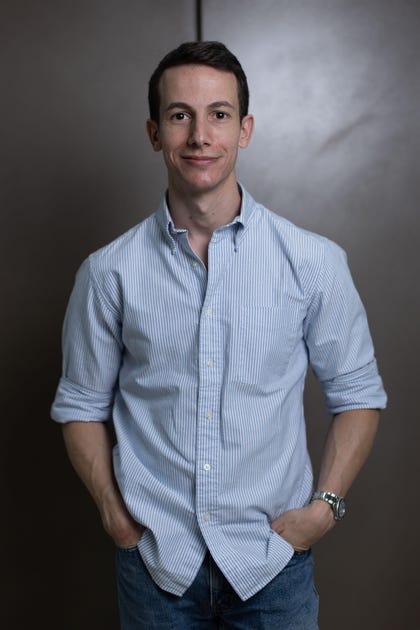
Tom Zalmenson. The study found that military pressures temporarily suspend the sense of self rather than erase it. Credit: Tomer Appelbaum
In the control group, the researchers could match students' later connectomes to their baseline scans with 90 to 97 percent accuracy across the second, third and fourth assessments. Among the paratroopers, however, the identification rate fell to about 80 percent at the second assessment. In other words, in these cases, a soldier's connectome after basic and advanced training was more similar to another soldier's baseline connectome than to his own. The findings were recently published in Nature Communications.
"The decline in the connectome's distinctiveness relative to the group occurred among all the paratroopers," Tavor stresses. "But for 20 percent, there was at least one other person whose earlier brain pattern was more like their current one than their own pattern from a year before."
"That's an enormous effect," Bar-Haim says.
One might have expected this similarity to emerge in regions involved in movement, given the strenuous physical activity the soldiers did together, or in visual processing, because they were exposed to the same surroundings. Instead, most of it emerged in brain networks that include regions of the frontal and parietal lobes, which are involved in complex cognitive processes such as attention, thinking and autobiographical memory.
"The very regions that contain the most information unique to a person were the ones that changed," says doctoral student Noga Yair, who ran the study with Dr. Tom Zalmenson.
"If we accept the basic premise that the connectome is an abstract representation of the self, our inner essence, then it turns out the self is much more flexible and more influenced by the environment than we knew," Yair continues. "The environmental effect here is dramatic."
"This is the first time anyone has shown a change like this in the connectome," Bar-Haim says.
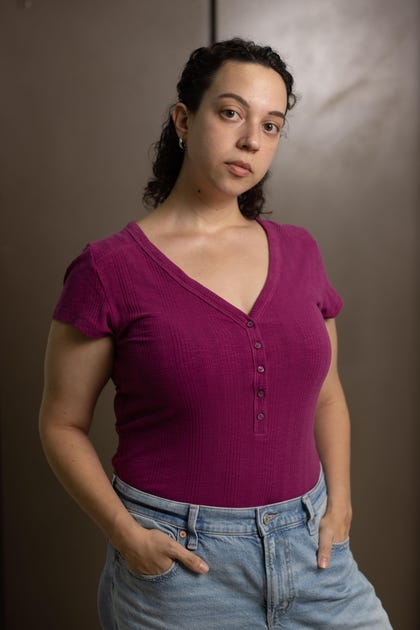
Noga Yair. "The very regions that contain the most information unique to a person were the ones that changed." Credit: Tomer Appelbaum
"We've only been studying the connectome for 10 years," Tavor adds. "Until now, what we've always seen is how stable it is and how it reflects a person's individuality."
"It sparks the imagination," Yair says. "Every time I give a talk about it, people come up with more ideas, like studying people in a kollel [a yeshiva for married men] or a locked psychiatric ward."
The researchers note that their findings concern relatively young people. Earlier research has established that the connectome is already distinctive and identifiable at this age. But it is also a stage of life when people's connectomes tend to be more similar to the group average than they are in later adulthood. As the researchers wrote in the paper, it remains unclear whether the effects observed among the soldiers also occur in older people, whose neural connectomes are more established.
One possible explanation for the changes is that social cohesion and agreement on how to act make people feel part of something bigger than themselves, with others they can lean on. "That's an important factor in resilience," Bar-Haim says.
An old joke tells of a sergeant who approaches his platoon during a grueling training exercise and announces: "The good news is that after two weeks, you can change your socks. The bad news is that you're swapping with Company B."
To borrow from the joke, the good news is that personality is not set in stone. It can change. The bad news is that we don't always control how it changes. But the study offers another piece of good news: The self was not erased by the pressures of military life, only temporarily suspended.
At the third assessment, a year after the intensive training together had ended and many of the soldiers had moved to different units, 90 percent of their connectomes most closely resembled their own baseline patterns. At the fourth assessment, after discharge, identification rates were similar to those of the students in the academic reserve program.
"So it's not an assembly line producing identical people," Tavor says reassuringly. "Eventually, individuality returns."
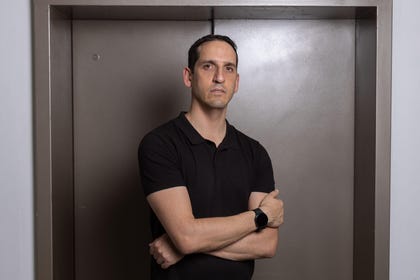
Prof. Ido Tavor. His research found that the more similar two people's brain connectivity patterns, the more likely they are to become friends. Credit: Tomer Appelbaum
Bar-Haim offers a slightly different interpretation. As he sees it, the self did not disappear and then return. Our individual neural signature takes shape through our interaction with the environment.
"The continuity of the self may depend not on the brain staying unchanged over time, but on its ability to change while also reestablishing the unique organization that distinguishes us from others," he says. "In that sense, our identity is not a frozen pattern in the brain. It's a dynamic process in which our personal history, living conditions and social environment shape one another over time."
| # | Наименование новости | Тональность | Информативность | Дата публикации |
|---|---|---|---|---|
| 1 | These mice have human (nerve cells) on the brain | 0 | 7.2 | 16-09-2026 |
| 2 | Same campaign, 30 years straight: Netanyahu's endless anti-Arab message | 0 | 11.73 | 01-10-2026 |
| 3 | «У бойца глаза должны быть всюду — видеть землю, воздух и себя»: как работают военные психологи в зоне СВО | 0 | 8.31 | 28-09-2026 |
| 4 | Alzheimer’s damage may begin outside the brain | 0 | 9.07 | 16-09-2026 |
| 5 | ЦАХАЛ создает космическую бригаду | 0 | 9.05 | 27-09-2026 |
| 6 | ЦАХАЛ создает космическую бригаду | 0 | 9.05 | 27-09-2026 |
| 7 | Израильские военные объявили о создании новой космической бригады, которая объединит ... | 0 | 6.93 | 27-09-2026 |
| 8 | During menopause, brain changes surprisingly take a break | 0 | 7.03 | 17-09-2026 |
| 9 | Ultra-Orthodox Jews condemn IDF as ‘enemy army’ (VIDEOS) | 0 | 13.67 | 30-09-2026 |
| 10 | Autism-linked variants converge on two molecular patterns in mouse brains | 0 | 11.48 | 01-10-2026 |