Просмотр новости
Найдите то, что Вас интересует
 Спутники
 РН
РН SpaceX
 Роскосмос
 NASA
NASA
СпутникиРНSpaceXРоскосмосNASADevendra Fadnavis said the requirement had been portrayed as an attempt to impose Marathi, while the requirement involved only basic phrases.
Maharashtra chief minister Devendra Fadnavis has said Marathi will be given priority in the state while stressing that people speaking other languages should not face discrimination, amid concerns over the requirement for passenger transport drivers to learn Marathi to obtain and retain their licences.
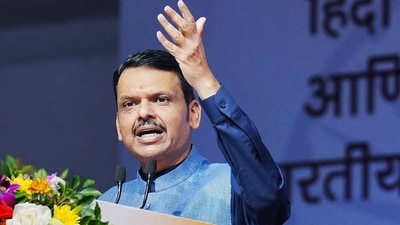
“We have never believed that languages should become a means of conflict,” Fadnavis said, adding that the BJP and the Mahayuti government had never allowed anyone to be treated unfairly on the basis of language.
The chief minister said that the government’s position was to respect regional identity as well as every Indian language.
Clarifying the BJP-led state government's position, he said, “Regional identity should be respected. Every mother tongue should be respected, but at the same time, all Indian languages should also be respected.”
“Marathi will certainly be given priority, because it is Maharashtra’s own language and mother tongue. But at the same time, people who speak other languages will never be treated unfairly simply because they speak another language,” he added.
Fadnavis further took swipe at the Opposition parties saying that some political parties had sought to make language the basis of their politics.
Earlier in July, Shiv Sena (UBT) and Maharashtra Navnirman Sena (MNS) held a joint rally on Marathi pride.
The comments came in the backdrop of Maharashtra transport department’s amendment to the Maharashtra Motor Vehicles Rules, 1989, in August. Under the amended provisions, passenger transport drivers who do not have a working knowledge of Marathi can face action against their driving licences.
Starting August 18, the licences of autorickshaw, taxi and app-based cab drivers without working knowledge of Marathi can be suspended for up to three months. Repeated violations can lead to cancellation of their licences.
Fadnavis said the requirement had been portrayed as an attempt to impose Marathi.
While, he said the requirement involved only basic phrases that drivers could use while interacting with passengers.
“It was essentially a two-page syllabus — just two pages — in which they had to learn things like ‘yahan basa’, meaning ‘please sit here… It was a very basic, two-page syllabus,” he added.
He added that members of Mumbai’s taxi and autorickshaw unions who speak Hindi had themselves expressed an interest in learning basic Marathi, but wanted more time to do so.
“Marathi will be our mother, and the other languages will be our aunts,” Fadnavis said.
State transport minister Pratap Sarnaik has said passenger transport vehicle drivers need a working knowledge of Marathi to ensure effective communication with commuters.
“Driving licences can be suspended for up to three months for lack of Marathi knowledge; repeated violations can lead to permanent cancellation,” Sarnaik said.
The minister has also directed the transport department to ensure more effective implementation of the amended rules.
“These amendments will remove ambiguity in the rules and make the importance of working knowledge of Marathi for passenger transport drivers clearer. Knowledge of the local language is necessary to communicate with passengers, understand their concerns and ensure safe and convenient travel,” Sarnaik said.