Просмотр новости
Найдите то, что Вас интересует
 Спутники
 РН
РН SpaceX
 Роскосмос
 NASA
NASA
СпутникиРНSpaceXРоскосмосNASA
Also in Final Reading: Regional policing and a new chief of staff.
Read the story on VTDigger here: Vermont lawmakers hope to steer new federal school choice tax credit funds toward public schools.
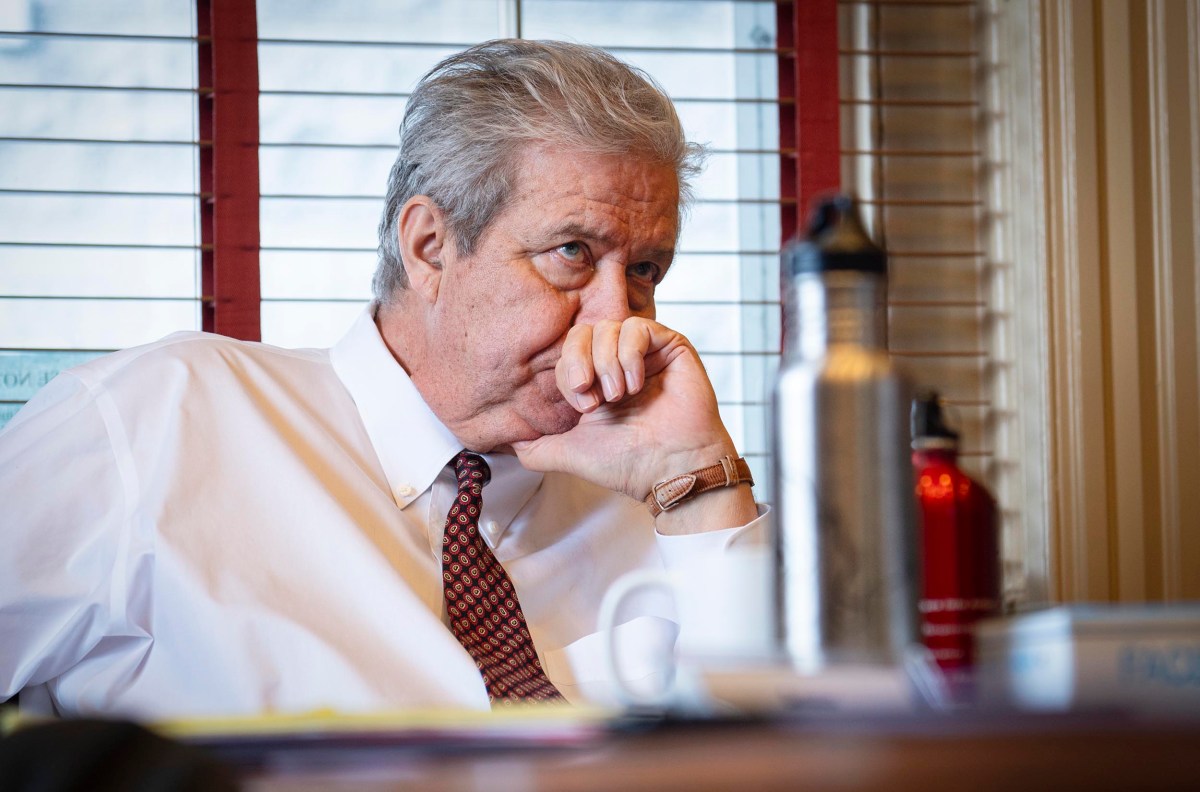 Sen. Seth Bongartz, D-Bennington, chair of the Senate Education Committee, listens during a briefing on the Scott administration’s education transformation proposal at the Statehouse in Montpelier in February 2025. File photo by Glenn Russell/VTDiggerOne Big Beautiful tax break
Tucked into this year’s miscellaneous tax bill, H.933, is language that would opt Vermont into a new federal school choice tax credit program established last year under Congress’s One Big Beautiful Bill Act.
At first glance, that decision might appear odd, given how much of a hornet’s nest the question of school choice and private school tuition is in Vermont politics.
But some lawmakers see the Federal Scholarship Tax Credit as an opportunity to steer what amounts to free money toward economically underprivileged students via summer school programs, tutoring and after-school programs.
The program allows federal taxpayers that contribute money to eligible education organizations to claim a federal tax reimbursement of up to $1,700. The program would be eligible for families making up to 300% of local median income.
The program is expected to generate billions of dollars for education, but is widely regarded as a way to steer tax breaks toward private schools, create a national voucher program and expand private school choice across the country.
Governors have the opportunity to opt out of the program altogether. So far, 28 mostly Republican-led states have opted into the program, while most Democrat-led states remain opposed or undecided.
In Vermont, lawmakers see the program as an opportunity to, instead, direct those federal dollars toward public school programs and programs for low-income students, and have written language into H.933 to do just that.
The jury is still out, though, on whether they’ll have the authority to do so.
The U.S. Treasury Department still needs to issue its rules around which organizations could be eligible for the program and how much authority states could have over the program.
Those regulations, expected to be issued in the summer, could determine whether donations made under the tax credit could benefit public school students, and whether state governments will have much of a say in who the credits go to.
Because of this, Vermont lawmakers have over the last three months gone back and forth about whether to participate in the program at all.
Legislation introduced by Sen. Seth Bongartz, D-Bennington, in January first sought to participate in the program, and directed that program dollars would be for students attending public schools or approved independent schools.
The House Ways and Means Committee later added its own language to the miscellaneous tax bill that opted Vermont out of the program entirely. But that language was later removed from the tax bill and was replaced in the Senate Finance Committee by language mirroring Bongartz’s.
Lawmakers like Sens. Martine Gulick, D-Chittenden Central, and Ruth Hardy, D-Addison, urged caution, and suggested waiting until the next legislative session, once the regulations are out, to decide whether to opt in at all.
“I can imagine some horrific scenarios, frankly, of organizations that might be anti-LGBTQ, or who knows,” Gulick said in March.
Gov. Phil Scott’s administration doesn’t seem to think public school programs would be excluded under the IRS regulations.
Rebecca Sameroff, Vermont Department of Taxes deputy commissioner, told lawmakers in Senate Finance this month that “the governor has been engaged with the U.S. Treasury and really likes the flexibility that this program seems to provide states.”
“I think that everyone seems very philosophically aligned that in Vermont, we would not be trying to deploy this in the way that we’re anticipating many red states would,” Sameroff told lawmakers. “Sending kids to private schools, undermining the public school program, I think we’re all kind of in agreement this would be for the Vermont public school population.”
Bill language has since been added that dictates specific criteria around what type of organization could be eligible for the program.
If federal regulations invalidate the state’s guidance, language in the bill would require that Scott decline to participate in the program “until the General Assembly has enacted legislation addressing” invalidated provisions in the law.
H.933 is expected to hit the Senate floor next week.
On the moveThe House gave preliminary approval Friday to a bill that would test out a new way for towns to share police services in Windham County. The bill, S.255, would allow municipalities to join a “law enforcement governance council” that would charge its members a set amount of money in exchange for policing from the Windham County Sheriff’s Department. The council would also have oversight of the sheriff’s work.
“For decades, Vermont has studied the challenge of rural public safety and regional service delivery,” said Rep. Michael Morgan, R-Milton, presenting the bill on the floor. “S.255 finally gives us a chance to do more than study the problem. It gives us a chance to test a practical solution.”
The proposal passed the Senate last month. It got only a tweak in the House Government Operations and Military Affairs Committee: one extra date for the council to report back on its findings to the Legislature. The bill is now set for final House approval next week, after which the Senate would give it one more set of eyes — and likely, “ayes.”
— Shaun Robinson
Legislative LinkedInBurlington Mayor Emma Mulvaney-Stanak has hired a familiar face from the Statehouse to serve as her new chief of staff. Lisa Gerlach — who had the same job under former Lt. Gov. David Zuckerman — will take on the City Hall role next month, the mayor’s office said Friday.
Gerlach has more recently been working for the Vermont branch of the American Federation of Teachers, a union. In Burlington, she’ll replace Erin Jacobsen, who left Mulvaney-Stanak’s office in February to return to practicing immigration law.
— Shaun Robinson