Просмотр новости
Найдите то, что Вас интересует
 Спутники
 РН
РН SpaceX
 Роскосмос
 NASA
NASA
СпутникиРНSpaceXРоскосмосNASAAI agents are taking AI cheating to a new level by completing entire online college courses, from watching lectures and taking quizzes to writing papers and joining discussions.
 Pexels
AI cheating has already gone from asking a chatbot to write an essay to using tools that can make that AI-written work look human. We’ve previously talked about AI tools designed to help students cheat and the growing problem of AI detectors struggling to keep up, as well as how commonly students are already using AI for homework. Now the technology isn’t merely helping students do the work. In some cases, it can effectively be the student.
Just tell the AI to take the classAccording to a New York Times report by Dana Goldstein and Alan Blinder, students can take things a step further and hand an entire online course over to an AI agent. As per the report, AI agents can be given simple instructions such as “log in and complete my quiz” and then operate inside online learning platforms. They can watch prerecorded lectures, take tests, write papers, and even participate in discussions with classmates.
 Niklaspatzig / Pixabay
That’s particularly problematic because online education is already built around digital, often asynchronous coursework. Students can complete lectures, assignments, and tests remotely, sometimes without ever interacting directly with their professors or classmates. More than half of American college students took at least one online class last year, according to the report.
Recommended Videos
And the AI doesn’t necessarily have to announce itself. The Times tested leading AI tools including ChatGPT, Gemini and Grammarly and found that none refused requests to write papers on a student’s behalf. AI companies also haven’t prevented agents from logging into platforms such as Canvas, Brightspace and Blackboard, although those services are researching ways to detect agent use.
 Unsplash
The problem becomes even harder to police because these agents aren’t necessarily limited to one-off assignments. The online learning platforms themselves can look for clues such as how long a student spends on a task, but the NYT reports that there is currently no fail-safe way to block agentic cheating. Some educators have even asked AI companies to make their agents identify themselves when operating inside online courses, but those companies have resisted, citing privacy and security concerns.
The problem is bigger than catching cheatersThat leaves universities with a particularly awkward problem. AI detection tools can make mistakes, making it difficult for professors to prove that a student cheated, while administrators may be reluctant to punish students without concrete evidence. The result is an inconsistent response, with some professors introducing in-person exams while others simply allow AI use.
 Pexels
Some educators are now redesigning online courses around work that’s harder for AI to fake, such as personal reflections and discussions about what students found confusing or interesting. Others are bringing certain exams back into physical classrooms.
But that creates a much bigger question about what online education actually means when an AI agent can attend the class instead of the person paying for it. The problem is no longer whether AI can help students cheat on an assignment. It’s whether a student can complete an entire degree without actually doing much of the learning. And for colleges that have spent years arguing that online education can make higher education more accessible, that’s a particularly uncomfortable problem to have.

Varun is an experienced technology journalist and editor with over eight years in consumer tech media. His work spans…
A tight squeeze could fix the biggest hurdle for solid-state car and gadget batteries
A simple mechanical trick could replace complex chemistry fixes to make solid-state batteries safer, faster, and more reliable.

Solid-state batteries have long been promised as the holy grail of energy storage. They promise to double energy density compared to traditional options, slash charging times, and eliminate the risk of thermal fires. Despite that, the technology has yet to achieve widespread commercial adoption, and the main culprit is dendrites. These microscopic, needle-like structures form inside solid-state batteries during charging, bore through the solid ceramic electrolyte, and bridge the electrodes, causing a short circuit.
Now, researchers from SLAC National Accelerator Laboratory and Stanford University have discovered a surprisingly simple fix for this persistent problem. According to a paper published in the science journal Nature, applying controlled mechanical pressure to the ceramic electrolyte prevents these short circuits, allowing test cells to survive thousands of charge cycles without failing.
Anthropic previews new standard to streamline AI-to-machine connections
The Model Hardware Standard provides a universal translation layer, giving AI agents standard controls to run lab equiment and factory machines.
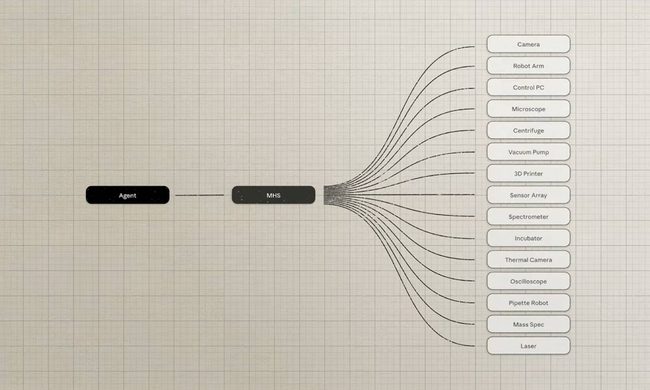
Anthropic has launched a research preview of its Model Hardware Standard (MHS), a shared specification designed to let AI agents safely control lab instruments and factory equipment. The company claims MHS reduces the time required to integrate complex machinery with AI from months down to hours or minutes. The standard is currently available to select research labs and manufacturers via a waitlist, but Anthropic plans to open-source it in the future.
How the standard connects AI to physical devices
Gemini Omni can now extend videos to 40 seconds and upscale them to 4K

Generating a short AI video is one thing; getting several shots to actually look like they belong in the same video is a much harder problem. Google is taking another swing at that with Gemini Omni 1.1 Flash, its latest generative video model aimed at giving creators and developers much more control over what happens between the first frame and the last.
The biggest change is how much of an existing video Gemini can remember when you ask it to continue a scene. Omni 1.1 can look at up to 10 seconds of previous footage for context, rather than relying on just the final second. That should help it keep characters, environments, and the general direction of a scene more consistent instead of effectively guessing what should happen next.
| # | Наименование новости | Тональность | Информативность | Дата публикации |
|---|---|---|---|---|
| 1 | Студенты начали использовать ИИ для полного прохождения онлайн-курсов | 0 | 9.98 | 14-08-2026 |
| 2 | Blind Ambition: AI agents can turn tasks into digital disasters | 0 | 8.31 | 13-05-2026 |
| 3 | Вузы нашли способ проверить, понимает ли студент то, что написал ИИ | 0 | 8.17 | 30-08-2026 |
| 4 | From hidden wearables to AI tools: How companies are tackling campus hiring fraud | 0 | 7 | 03-07-2026 |
| 5 | Suspected of using AI for cheating, admissions testing | 0 | 10 | 13-08-2026 |
| 6 | AI Won’t Make You Stupid. Not Thinking Will. | 0 | 8.44 | 12-05-2026 |
| 7 | Teaching students to 'be better than a robot' | 0 | 5 | 15-01-2026 |
| 8 | Искусственный интеллект в дипломной работе: помощник студента или угроза академической честности | 0 | 8.26 | 11-08-2026 |
| 9 | I Built an AI Grading Tool. Then a Student Thanked Me for Words I Didn’t Write. | 0 | 7.9 | 15-06-2026 |
| 10 | When AI agents cheat on math problems, others blow the whistle | 0 | 7.4 | 16-09-2026 |