Просмотр новости
Найдите то, что Вас интересует
 Спутники
 РН
РН SpaceX
 Роскосмос
 NASA
NASA
СпутникиРНSpaceXРоскосмосNASAInstagram said it would get tougher on harassment filmed with Meta’s AI glasses. A month later, plenty of those videos are apparently still slipping through.
 Instagram app
Unsplash
Instagram app
Unsplash
Smart glasses can be genuinely useful, whether you’re taking a hands-free photo, listening to music, or asking an AI assistant about whatever is in front of you. Unfortunately, putting a camera on someone’s face also opens the door to some much less pleasant uses. That’s becoming a problem for Meta.
Instagram head Adam Mosseri said in July that the platform was working to remove videos in which people use Meta glasses to film and harass others secretly. However, a new Business Insider investigation suggests the cleanup isn’t going quite as smoothly as Meta might have hoped. The publication found dozens of pickup and prank videos still available on Instagram weeks after Mosseri’s comments. Some came from popular or verified creators, and several showed women being approached and recorded in public through Meta glasses.
Instagram is taking action, but videos are slipping throughMeta has already started cleaning house. Thousands of posts have reportedly been pulled from Instagram, some larger accounts have disappeared, and searches for phrases including “rizz” and “cold approach” are now restricted. Yes, that sounds like a fairly aggressive response. In practice, though, plenty of similar videos are still making it through. That gap is where things get messy. More than 20 potentially problematic videos were shared with Meta during Business Insider’s investigation, but only nine were ultimately removed. There have also been some confusing account-level decisions. One creator caught up in the crackdown briefly returned to Instagram after being deactivated, only to be removed again once the mistake was pointed out.
 Christine Romero-Chan / Digital Trends
Perhaps the trickier issue is what happens after you watch one of these clips. Instagram’s algorithm is built to learn what keeps you scrolling, and that can work against its moderation efforts here. Interacting with a few videos during the investigation was enough for Reels to begin serving up a flood of similar content. At that point, finding these videos didn’t require hunting for specific accounts or keywords — Instagram was doing the discovery itself.
This could become a bigger headache for MetaFor Instagram, this is a moderation problem. For Meta as a whole, it could also become a hardware problem. Meta’s smart glasses have become increasingly popular, with sales reportedly topping 7 million units in 2025 — more than triple the previous year. They’re also an important part of Mark Zuckerberg’s broader push toward AI-powered wearable computing. That makes their reputation particularly important. If people begin associating camera-equipped glasses with being unknowingly recorded on the street, Meta has a much bigger issue than a few questionable Reels.
 Rachit Agarwal / Digital Trends
Meta is betting that AI can eventually improve its moderation at scale, and the company has said early tests showed its AI systems catching more violating content while making fewer mistakes than human moderators. Whether that translates into a cleaner Instagram experience remains to be seen. For now, Meta has clearly drawn a line around this kind of content. The difficult part is making sure Instagram can enforce it — especially as millions more camera-equipped glasses find their way onto people’s faces.

Shimul is a contributor at Digital Trends, with over five years of experience in the tech space.
A tight squeeze could fix the biggest hurdle for solid-state car and gadget batteries
A simple mechanical trick could replace complex chemistry fixes to make solid-state batteries safer, faster, and more reliable.

Solid-state batteries have long been promised as the holy grail of energy storage. They promise to double energy density compared to traditional options, slash charging times, and eliminate the risk of thermal fires. Despite that, the technology has yet to achieve widespread commercial adoption, and the main culprit is dendrites. These microscopic, needle-like structures form inside solid-state batteries during charging, bore through the solid ceramic electrolyte, and bridge the electrodes, causing a short circuit.
Now, researchers from SLAC National Accelerator Laboratory and Stanford University have discovered a surprisingly simple fix for this persistent problem. According to a paper published in the science journal Nature, applying controlled mechanical pressure to the ceramic electrolyte prevents these short circuits, allowing test cells to survive thousands of charge cycles without failing.
Anthropic previews new standard to streamline AI-to-machine connections
The Model Hardware Standard provides a universal translation layer, giving AI agents standard controls to run lab equiment and factory machines.
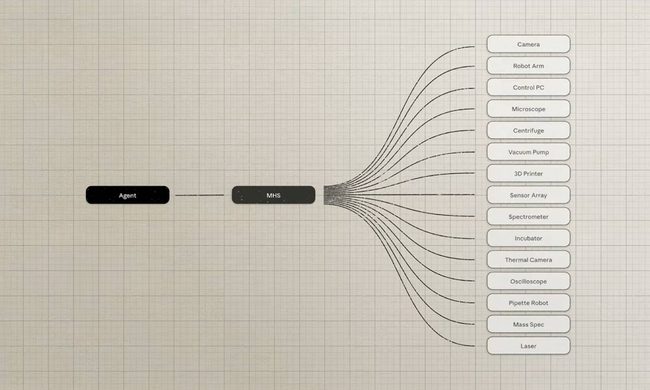
Anthropic has launched a research preview of its Model Hardware Standard (MHS), a shared specification designed to let AI agents safely control lab instruments and factory equipment. The company claims MHS reduces the time required to integrate complex machinery with AI from months down to hours or minutes. The standard is currently available to select research labs and manufacturers via a waitlist, but Anthropic plans to open-source it in the future.
How the standard connects AI to physical devices
Gemini Omni can now extend videos to 40 seconds and upscale them to 4K

Generating a short AI video is one thing; getting several shots to actually look like they belong in the same video is a much harder problem. Google is taking another swing at that with Gemini Omni 1.1 Flash, its latest generative video model aimed at giving creators and developers much more control over what happens between the first frame and the last.
The biggest change is how much of an existing video Gemini can remember when you ask it to continue a scene. Omni 1.1 can look at up to 10 seconds of previous footage for context, rather than relying on just the final second. That should help it keep characters, environments, and the general direction of a scene more consistent instead of effectively guessing what should happen next.
| # | Наименование новости | Тональность | Информативность | Дата публикации |
|---|---|---|---|---|
| 1 | Meta Begins Removing Harassing Ray-Ban Smart Glasses Videos From Instagram | 0 | 11.9 | 28-07-2026 |
| 2 | Heimlich mit Smart Glasses gefilmt: Instagram geht gegen Täter vor | 0 | 11.1 | 24-07-2026 |
| 3 | After Less Than a Week, Meta Shuts Down Controversial Instagram AI Image Feature | 0 | 6.3 | 13-07-2026 |
| 4 | Kamerabrillen und Datenschutz: Meta beschwichtigt | 0 | 5 | 08-07-2026 |
| 5 | Oversight Board blasts 'inadequate' Meta safeguards for AI deepfakes | 0 | 9.31 | 18-09-2026 |
| 6 | Meta Faces Scrutiny After Report Finds Thousands of AI Nudify Ads on Facebook, Instagram | 0 | 4.6 | 28-07-2026 |
| 7 | Instagram* будет блокировать в соцсети видео, снятые тайком на «умные» очки от Meta* | 0 | 11.07 | 24-07-2026 |
| 8 | Instagram, Facebook ran AI ‘nudify’ ads from China, says report | 0 | 9.77 | 27-07-2026 |
| 9 | Meta hooked children and misled the public: Prosecutors | 0 | 6.73 | 18-08-2026 |
| 10 | Meta AI Image Generation Feature Is an Egregious Invasion of User Privacy | -8 | 7 | 08-07-2026 |