Просмотр новости
Найдите то, что Вас интересует
 Спутники
 РН
РН SpaceX
 Роскосмос
 NASA
NASA
СпутникиРНSpaceXРоскосмосNASASummer is a time for sun and sand. If you live inland, build your own mini beach in this science experiment.
Investigate how Earth’s shorelines form with your own mini beach model
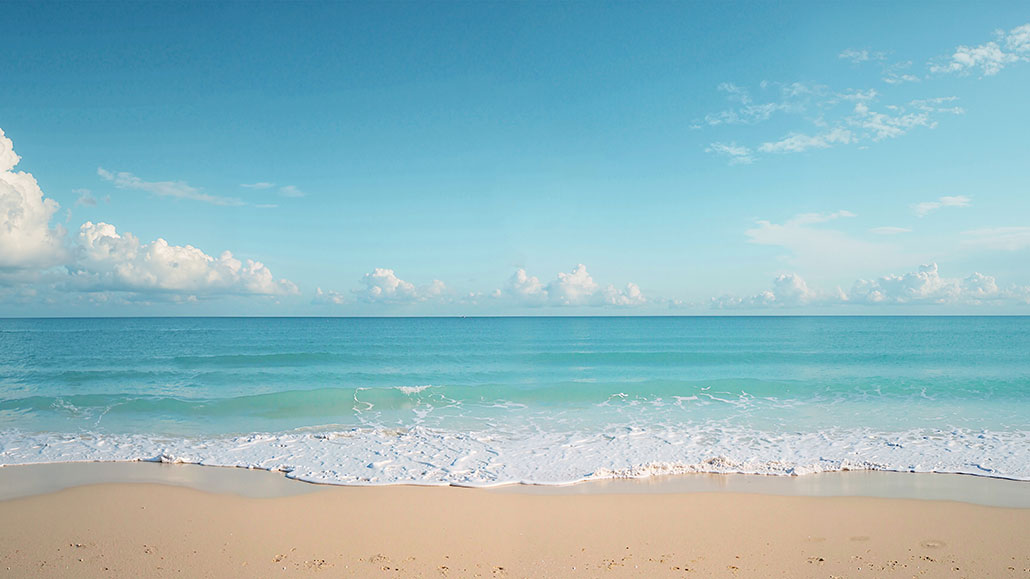
Forget sand castles. In this science experiment, use sand to build a whole mini beach.
Wang RuiXin/iStock /Getty Images Plus
Objective: Build a model beach and see how waves affect the shoreline of the beach.
Areas of science: Ocean sciences
Difficulty: Easy beginner
Time required: Very short (≤ 1 day)
Prerequisites: None
Material availability: Readily available
Cost: $20 – $50
Safety: No issues
Credits: Michelle Maranowski, Ph.D., Science Buddies. This science fair project is based on one found in the following science project book: VanCleave, Janet. Oceans For Every Kid. New York: John Wiley and Sons, Inc., 1996. 92-93.
There is nothing better than spending a sunny day at the beach. There is always a lot to do. Build a sand castle, investigate tide pools and just relax. But have you ever wondered how the beach you are standing on came to be or if it will ever change? A beach is a geological formation made up of loose rock particles, such as sand, gravel and shell fragments, along the shoreline of a body of water.
 Figure 1. Diagram of a typical beach. TinyGoong (sky), Martin Design (sand), Gambar Suriy (water)/Canva Pro
There are a few key parts that make up a beach, as shown in Figure 1. The beach berm is the part that is mostly above water. This is the active shoreline. The top of the berm is known as the crest, and the part that slopes toward the water is called the face. At the bottom of the face, there may be a trough, and farther into the water there may be one or more sandbars parallel to the beach. At a point inland where the waves cannot reach, the wind takes over. The wind blows the sand into features beyond the crest. These features are known as dunes.
The erosion of rock formations in the water, coral reefs and headlands create rock particles that the waves move onshore, offshore and along the shore, creating the beach. Continual erosion of the shoreline by waves also changes the beach over time. When larger and stronger waves hit the shoreline, such as in a storm, more shoreline is eroded. One change that erosion can cause is the appearance of a headland. A headland is land, usually made of larger rocks, that juts out from the coastline and into the water. It affects how the surrounding shoreline erodes.
In this science project, you will make a model to investigate how water makes a beach and how a headland affects beach formation. Have fun, and remember to bring your sunscreen and icy soda to your handmade beach!
Terms and conceptsHave an adult help you do further research by visiting the following website, which gives information about shorelines and erosion:
For help creating graphs, try this website:
1. Cover the bottom of the paint roller pan with 5 cups (1.2 liters) of sand.
2. Build up a small beach with most, but not all, of the sand at the shallow end of the pan.
3. Slowly pour 6 cups of water into the deep end of the pan. Let the water and sand settle for five minutes.
4. Take a picture of the beach so that you have a record of how it looked. Note where the shoreline is. The shoreline is where the beach and the water meet.
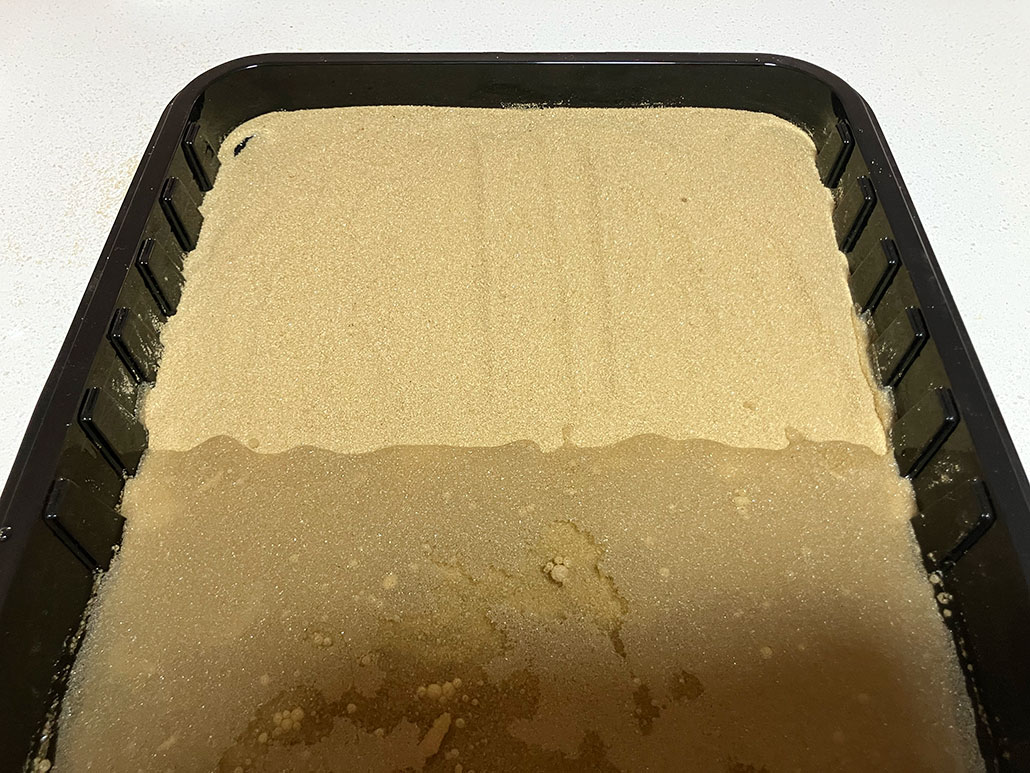 Figure 2. This is an example of the model beach in the paint roller pan.M. Temming
5. Make sure the plastic water bottle is empty and has its lid on. Lay the water bottle horizontally so it is floating in the deep end of the pan, along the beach.
6. Set the timer for one minute. Start the timer and then bob the water bottle up and down in the water with your fingertips to create waves.
7. At the end of one minute, stop bobbing the water bottle and take a picture of the beach. How does it look compared to the first picture? Write down your observations in a data table, like Table 1, in your lab notebook.
| Beach type | Time | Observations | Picture |
| Without headland | 0 minutes | ||
| 1 minute | |||
| 2 minutes | |||
| With headland | 0 minute | ||
| 1 minute | |||
| 2 minutes |
8. Repeat steps 6–7 one more time for a total of two minutes of waves.
9. Empty out, clean and dry your paint roller pan.
10. Repeat steps 1–9 two more times.
11. You will now use the gravel to model a headland. Repeat steps 1–3 and then make a mound out of 2 cups of aquarium gravel in the middle of the shoreline. The headland should be partly in the water and partly on the beach, as shown in Figure 3.
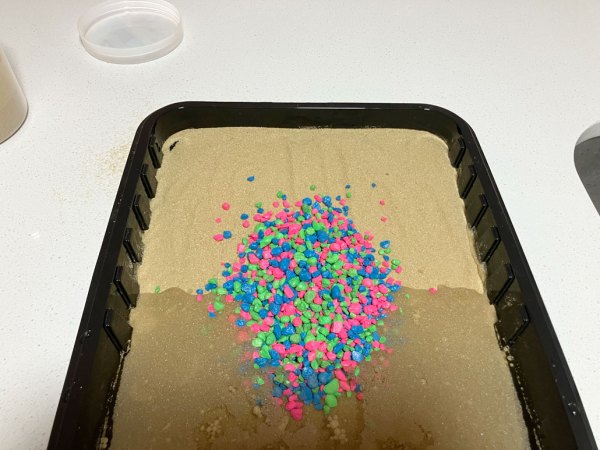 Figure 3. This is an example of a model beach with a headland.M. Temming
12. Repeat steps 4–9, but in step 7a, in your data table this beach type will be called “With Headland.”
13. Repeat steps 11–12 two more times.
14. Review your observations and pictures. How does the beach change over time when it does not have a headland compared with when it does have a headland? How do the headlands affect where the water goes? Does the water swirl more at the sides? Did the distance between the shoreline and the edge of the roller pan change?
This activity is brought to you in partnership with Science Buddies. Find the original activity on the Science Buddies website.

| # | Наименование новости | Тональность | Информативность | Дата публикации |
|---|---|---|---|---|
| 1 | Experiment: Remove microplastics from water with yeast | 0 | 4.65 | 30-06-2026 |
| 2 | Build your own seismograph with this science activity | 0 | 10 | 09-03-2026 |
| 3 | What to do in summer: Your complete guide to making the most of the season | 5 | 7 | 08-05-2026 |
| 4 | 💥💦Лето, жара, солнце, вода — всё это можно превратить не ... | 5 | 7 | 03-07-2026 |
| 5 | Hawaii is turning fishnets and other plastic trash into roads | 0 | 7.9 | 29-05-2026 |
| 6 | ☀ Подготовила новые карточки на тему Summer Outdoor Activities! Лето ... | 0 | 6.17 | 21-08-2026 |
| 7 | Love for Bugs | 0 | 13.19 | 23-07-2026 |
| 8 | 0 | 0 | 25-05-2026 | |
| 9 | 0 | 5 | 25-05-2026 | |
| 10 | White Cloud library encourages kids to 'dig' into reading | 6 | 7 | 24-06-2026 |