Просмотр новости
Найдите то, что Вас интересует
 Спутники
 РН
РН SpaceX
 Роскосмос
 NASA
NASA
СпутникиРНSpaceXРоскосмосNASAKids with math learning disabilities process number symbols differently than numbers shown as dots.
Patterns in brain activity look different for kids with math learning disabilities
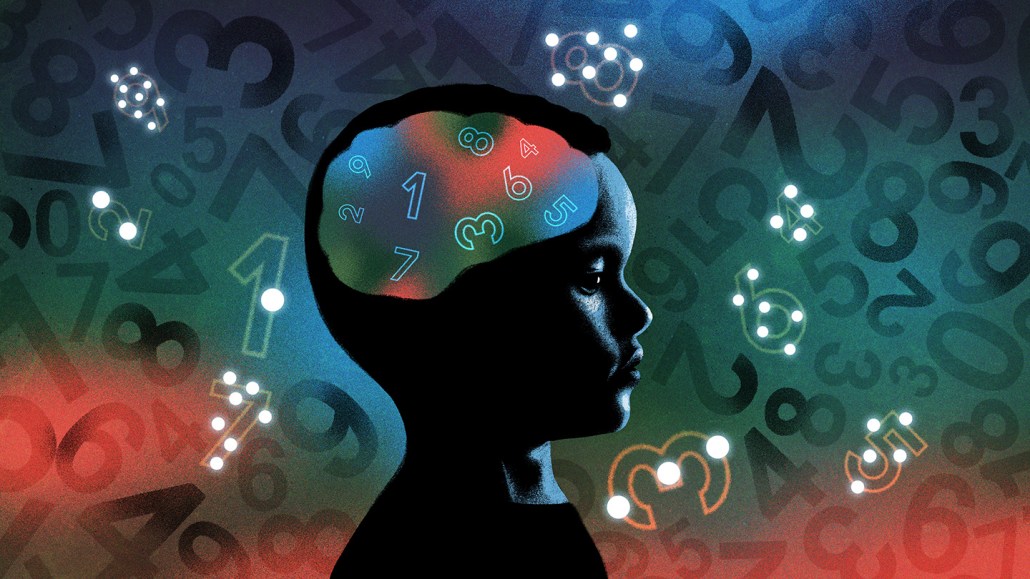
Kids with math learning disabilities solve math problems differently than other kids — but only when they work with number symbols. Those differences disappear when numbers are shown as dots.
Matt Chinworth
This is a human-written story voiced by AI. Got feedback? Take our survey . (See our AI policy here .)
Some kids struggle with math more than others. Now, scientists have pinpointed some thinking processes and brain regions that might explain why.
In a new study, kids were given simple math problems. In earlier testing, some of these kids were found to have math-learning problems. Others had typical math skills. In the new study, those with a math learning disability tended to be less cautious about giving their answers. They also didn’t slow down after making errors, as the other kids did.
But with one small change to how math problems were written, those differences between how the two groups performed disappeared.
In a second test, the same kids were given problems with dots used to represent numbers instead of number symbols. Now the kids in the math-disability group didn’t rush to give their answers. They also slowed down after making errors, more like the other group.
Researchers shared these findings in the March 11 Journal of Neuroscience.
The idea that working with number symbols can be challenging for kids is not new, says Bert De Smedt. He did not take part in this new research. But he does study the neuroscience of learning at Catholic University Leuven in Belgium. Past data have shown “it’s the symbolic processing that is really the struggle” for kids with math troubles, says De Smedt. This study, he says, teaches us something new.
It shows that there are small differences in how kids with math learning disabilities approach problems. Those details, he says, could help explain why some kids struggle to process number symbols.
 Kids who find math overly challenging tend to approach and process problems with number symbols differently. These new findings hint at ways to help these students. Phynart Studio/E+/Getty ImagesMath on the brain
The kids in this study were all in second or third grade. All had first taken a standardized test with math questions. Those who performed poorly were assigned to a “math-disability” group. The rest were put in a group for kids with typical math skills. All kids were shown pairs of numbers (from 1 to 9) on a screen and then asked which was larger. Each time, they had a few seconds to answer.
The researchers recorded how long each kid spent answering the questions. At the same time, they scanned each child’s brain with an MRI machine. The resulting images showed which parts of the brain were most active as the kids worked.
The scientists also looked for subtle patterns in how kids answered math problems. They watched for how carefully they answered questions and how they acted after making mistakes.
“We weren’t necessarily interested in the performance of this task,” says Hyesang Chang. Rather, her team wondered how the two groups “may approach this task differently.” Chang is a cognitive neuroscientist at San José State University in California. She worked on the research while at Stanford University in the same state.
In looking at kids’ behaviors and brain activity, the scientists noticed something about the middle frontal gyrus. This brain region is involved in thinking about numbers and short-term memory. It was less active in the kids with math disabilities when they answered questions with less caution.
Another brain region — the anterior cingulate cortex — also stood out. It’s involved in finding mistakes and paying attention to how well we’re doing a task. When the kids in the math-disability group made errors and didn’t slow down afterward, this region tended to be less active.
Those patterns showed up only when the kids were working with number symbols. When they were instead shown groups of dots, their brain-activity differences went away. Kids with math learning disabilities had just as much activity in these two brain areas as kids with typical math skills.
If math stresses you out, you’re not alone — and it’s not your fault. TED-Ed explains how cultural factors add up to give people math anxiety. It also offers suggestions for what stressed students can do to soothe their fears.Key takeawaysChang’s team can’t say for sure if the observed brain-activity patterns caused the kids’ difference in math abilities. But one thing is clear. There isn’t just one part of the brain that handles math and numbers.
The part of the brain that looks for mistakes also seems important, says Marie Arsalidou. A neuroscientist, she works at York University in Toronto, Canada. She studies childhood brain development. “We’re learning that there’s many regions involved” in doing math, she says.
Chang points to another big takeaway from her team’s new work. There are “hidden mechanisms” in how the brain handles math problems that may impact our performance.
In the future, kids could be taught to notice how they are solving problems, Chang says. Those who are struggling might be offered different problem-solving techniques.
Submit your question here, and we might answer it an upcoming issue of Science News Explores
| # | Наименование новости | Тональность | Информативность | Дата публикации |
|---|---|---|---|---|
| 1 | High Schoolers Can’t Read Or Write Anymore | 0 | 10 | 24-08-2026 |
| 2 | Socioeconomic factors are becoming 'biologically embedded' in children's brains | 0 | 8 | 11-06-2026 |
| 3 | Brain scan breakthrough reveals why Parkinson’s drugs don’t always work | 5 | 8 | 29-06-2025 |
| 4 | Therapist shares tips on reducing back-to-school anxiety | 0 | 14.1 | 04-08-2026 |
| 5 | A hidden brain problem may be an early warning for Alzheimer’s | 3 | 8 | 03-01-2026 |
| 6 | Doctor reveals a shocking cause of ADHD symptoms that could have a simple fix | 0 | 6.66 | 27-06-2025 |
| 7 | Latest Canvas Attack Shows Schools Still Struggle With Cybersecurity | 0 | 10 | 12-05-2026 |
| 8 | Simple eye scan in preterm infants may help predict brain development | 2 | 7 | 24-06-2026 |
| 9 | Children's Dyslexia Center - October 11th Walk & Family Event | 0 | 5.39 | 02-10-2026 |
| 10 | Early Childhood Education Teachers Grapple with Screen Time | 0 | 10 | 24-07-2026 |