Просмотр новости
Найдите то, что Вас интересует
 Спутники
 РН
РН SpaceX
 Роскосмос
 NASA
NASA
СпутникиРНSpaceXРоскосмосNASAWith real-time feedback, people can learn to turn on a part of the brain that helps rev up the immune system, new data show.
The mind can regulate the immune system. And through directed thinking, people can learn to turn on immune-boosting brain areas, a new study finds.
The idea that the brain can influence the body emerged long ago, says Tor Wager. He’s a neuroscientist at Dartmouth University in Hanover, N.H. But only in the last few years have there been “real breakthroughs in understanding the neuroscience behind this,” he says.
Positive expectations turn on one part of the brain’s reward system. This region triggers the feelings of pleasure we get from eating good food, winning a game or receiving a compliment. Nerve cells in this part of the brain respond to such rewards by releasing the chemical dopamine.
Tamar Koren is a physician scientist at Tel Aviv Medical Center in Israel. She was part of a team that used genetic methods to stimulate these “reward” cells in mice.
Turning on those neurons brought surprising health benefits. The mice were better able to fight bacterial infections and recovered more quickly from heart attacks. Stimulating the animals’ reward circuit even slowed the growth of tumors.
The approach looked so promising that Koren’s team wanted to know if it could work for people, too. But the genetic and molecular tools used in mice can’t ethically be used in humans. Instead, the team trained people to turn on their reward circuits with their own thoughts.
Her team shared details on how they did that in the January 19 Nature Medicine.
Responding to cuesThis line of research grew out of work done in the late 1890s by Ivan Pavlov. This Russian scientist studied how our bodies extract energy and nutrients from food. In one famous experiment, he rang a bell every time he got ready to feed a hungry dog. Before long, just the sound of the bell would make the dog start salivating — even when there was no food. Psychologists call this a conditioned response. (For this and related work, Pavlov would take home the 1904 Nobel Prize in physiology or medicine.)
Decades later, Robert Ader and Nicholas Cohen at the University of Rochester’s medical school did something similar in rodents. They gave the animals a cue — here, a sweet drink — at the same time they injected a drug that suppresses the immune system. Eventually, giving rats just the drink could trigger the immune change.
Such an effect is known as psychosomatic (SY-koh-soh-MAT-ik). It means that the brain can trigger changes in the body after some conditioned cue (such as hearing a dinner bell or getting a sweet drink).
That term can carry stigma. It’s often used to describe real health symptoms — such as headaches, pain, nausea or skin changes — that can be triggered or worsened by mood or stress. People might see these health effects as being imagined or trivial.
But the opposite also occurs, such as getting relief after taking a sugar pill that looked like an actual drug. This is what’s called the placebo (Pluh-SEE-boh) effect. Some people also dismiss this, saying it’s not real medicine.
Yet it can be. In fact, some researchers view placebos as an opportunity.
The placebo effect reflects real physical changes. The effect may result from having positive expectations or a sense of hope. Whatever causes it, says Koren, “maybe we should understand how it works.” That, she says, might help people respond better to treatments.
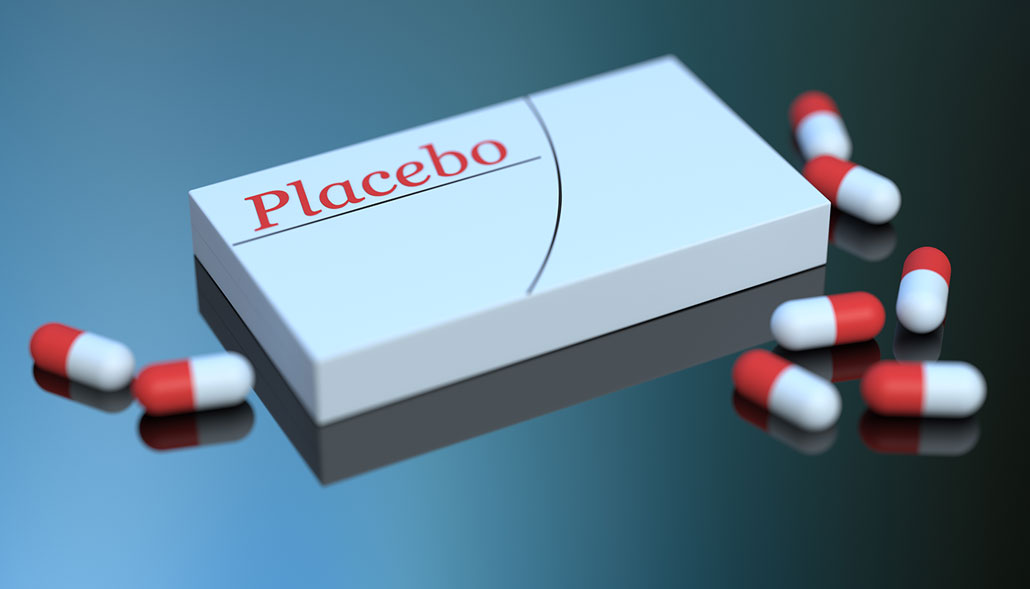 Placebos, such as sugar pills, contain no medicine but can lead to health benefits. A new study suggesting a link between positive expectations and immune activity might help explain how the body can produce a placebo effect.Olemedia/E+/Getty Images PlusTurning on the placebo effect
Her team has now tested that. Working with a psychology lab at Tel Aviv University, they recruited 85 young adults. All were employees who needed a vaccine to work at the medical center. This shot is given to ward off the hepatitis B virus (HBV). Seeing how people responded would offer an easy way to measure immune changes.
For the first phase of the experiment, the recruits had functional MRI (fMRI) scans. They laid in a machine that scans the brain and shows which parts are active. For each 40-second session, participants were told to put their brain to work. Each could choose how they wanted to do so. For instance, they could watch a red dot on the screen. Or recall a trip. Or think about the future. Or solve a math problem.
The new study used fMRI to measure what parts of the brain were turned on by some training techniques. Learn what fMRI is — and how it works — from this short video.Neuroscientifically Challenged/YouTubeAfterward, areas of the brain scan got a rating from 0 to 10. Those scores reflected activity in deep-brain regions of the reward pathway. One key region is known as the VTA, short for ventral tegmental area. This is the same area Koren’s team targeted in mice to trigger health benefits.
Some participants were randomly put into a control group. Their scores came from an unrelated brain region.
When someone got a low score, they were asked to focus their thoughts on something else for the next session. If their score rose, they might repeat or refine that thought-focusing strategy. This trial-and-error process, called fMRI neurofeedback, was carried out in 45 to 60 sessions over several weeks. Through it all, participants had one goal: Get the highest score possible.
“The important thing for us was not the absolute score but the improvement,” says Nitzan Lubianiker. He led this study back when he was a graduate student on the team. (He now works as a psychology researcher at Yale University in New Haven, Conn.)
Right after their final fMRI session, each recruit got the HBV vaccine. This shot instructs the body to make antibodies. Those immune proteins recognize hepatitis B virus and help protect the liver from becoming infected by it. Blood tests measured virus antibodies before and two weeks after each person got their shot.
People who had been better at increasing brain activity in the VTA showed a larger rise in HBV antibodies after vaccination. That indicates a stronger immune response.
The improvement was just a 7 to 10 percent increase in HBV antibodies. Still, that was impressive, says Jonathan Kipnis. He was not involved in the research. But he knows about such things: His lab studies brain-immune connections at Washington University in St. Louis, Mo.
In this early video, Asya Rolls, who led the new study, explains her team’s interest in learning how thoughts and emotions can control the body’s immune system — and how people might learn to harness this process.Technion Institute of Technology/YouTubeMind-body connection“We were all surprised that there actually was an effect,” says Koren. The response her team saw in lab mice was less surprising because they directly targeted the nerve cells. But getting people to turn on that region through thoughts alone seemed like “science fiction,” she now says.
And success here did not depend on someone’s personality. People who said on a questionnaire they’re more optimistic or hopeful did not all get higher VTA scores.
But high scorers did have something in common: They tended to choose mental strategies that involve positive expectations. For some, thoughts centered on friends or family. Others focused on experiences. The details didn’t seem to matter, since participants were not told what to think about. Rather, they adjusted their thoughts based on the neurofeedback scores. That was a “cool finding,” says Lubianiker.
The result “emphasizes how much our mental state is relevant to our well-being and day-to-day physiology,” Koren says. “Even if we’re not aware of it.”
activate: (in biology) To turn on, as with a gene or chemical reaction.
antibodies: Any of a large number of proteins that the body produces from B cells and releases into the blood supply as part of its immune response. The production of antibodies is triggered when the body encounters an antigen, some foreign material. Antibodies then lock onto antigens as a first step in disabling the germs or other foreign substances that were the source of those antigens.
bacterial: Having to do with bacteria, single-celled organisms. These dwell nearly everywhere on Earth, from the bottom of the sea to inside animals.
behavior: The way something (often a person or other organism) conducts itself or acts towards others.
brain scan: A technique to view structures inside the brain, typically with X-rays or a magnetic resonance imaging (or MRI) machine. With MRI technology — especially the type known as functional MRI (or fMRI) — the activity of different brain regions can be viewed during an event, such as viewing pictures, computing sums or listening to music.
cell: (in biology) The smallest structural and functional unit of an organism. Typically too small to see with the unaided eye, it consists of a watery fluid surrounded by a membrane or wall. Depending on their size, animals are made of anywhere from thousands to trillions of cells.
chemical: A substance formed from two or more atoms that unite (bond) in a fixed proportion and structure. For example, water is a chemical made when two hydrogen atoms bond to one oxygen atom. Its chemical formula is H2O. Chemical also can be an adjective to describe properties of materials that are the result of various reactions between different compounds.
circuit: A network that transmits electrical signals. In the body, nerve cells create circuits that relay electrical signals to the brain. In electronics, wires typically route those signals to activate some mechanical, computational or other function.
control: (n.) A part of an experiment where there is no change from normal conditions. The control is essential to scientific experiments. It shows that any new effect is likely due only to the part of the test that a researcher has altered. For example, if scientists were testing different types of fertilizer in a garden, they would want one section of it to remain unfertilized, as the control. Its area would show how plants in this garden grow under normal conditions. And that gives scientists something against which they can compare their experimental data. (v.) To include some unchanged or unaffected conditions in an experiment so their results could later be contrasted with those from where changes had been made.
dopamine: A neurotransmitter, this chemical helps transmit signals in the brain.
extract: (v.) To separate one chemical (or component of something) from a complex mix. (noun) A substance, often in concentrated form, that has been removed from some source material. Extracts are often taken from plants (such as spearmint or lavender), flowers and buds (such as roses and cloves), fruit (such as lemons and oranges) or seeds and nuts (such as almonds and pistachios). Such extracts, sometimes used in cooking, often have very strong scents or flavors.
feedback: A response or assessment that follows some a particular act or decision. Or a process or combination of processes that propel or exaggerate a change in some direction. For instance, as the cover of Arctic ice disappears with global warming, less of the sun’s warming energy will be reflected back into space. This will serve to increase the rate of Earth’s warming. That warming might trigger some feedback (like sea-ice melting) that fosters additional warming.
fMRI: A special type of medical scanning technology for studying brain activity. It uses a strong magnetic field to monitor blood flow in the brain as an individual is performing some task (from reading or viewing pictures to thinking about various spoken words). Tracking areas of elevated blood flow can tell researchers which brain regions are especially active during those activities. (See also, MRI or magnetic resonance imaging)
genetic: Having to do with chromosomes, DNA and the genes contained within DNA. The field of science dealing with these biological instructions is known as genetics. People who work in this field are geneticists.
graduate student: Someone working toward an advanced degree by taking classes and performing research. This work is done after the student has already graduated from college (usually with a four-year degree).
heart attack: Permanent damage to the heart muscle that occurs when one or more regions of it become starved of oxygen, usually due to a temporary blockage in blood flow.
hepatitis: A potentially serious form of liver inflammation due to infection by any of several hepatitis viruses. They have been named hepatitis-A, -B, -C, -D and -E viruses.
immune system: The collection of cells and their responses that help the body fight off infections and deal with foreign substances that may provoke allergies.
immunity: The ability of an organism to resist a particular infection or poison by providing cells to remove, kill or disarm the dangerous substance or infectious germ. Or, when used colloquially, it means the ability to avoid some other type of adverse impact (such as firing from a job or being bullied).
infection: A disease that can spread from one organism to another. It’s usually caused by some type of microbe.
liver: An organ of the body of animals with backbones that performs a number of important functions. It can store fat and sugar as energy, break down harmful substances for excretion by the body, and secrete bile, a greenish fluid released into the gut, where it helps digest fats and neutralize acids.
matter: Something that occupies space and has mass. Anything on Earth with matter will have a property described as "weight."
nausea: The feeling of being sick to one's stomach, as though one could vomit.
nerve: A long, delicate fiber that transmits signals across the body of an animal. An animal’s backbone contains many nerves, some of which control the movement of its legs or fins, and some of which convey sensations such as hot, cold or pain.
neuron: The main cell type of the nervous system — the brain, spinal column and nerves. These specialized cells transmit information by producing, receiving and conducting electrical signals. Neurons also can transmit signals to other cells with chemical messengers.
neuroscience: The field of science that deals with the structure or function of the brain and other parts of the nervous system. Researchers in this field are known as neuroscientists.
Nobel prize: A prestigious award named after Alfred Nobel. Best known as the inventor of dynamite, Nobel was a wealthy man when he died on December 10, 1896. In his will, Nobel left much of his fortune to create prizes to those who have done their best for humanity in the fields of physics, chemistry, physiology or medicine, literature and peace. Winners receive a medal and large cash award.
nutrient: A vitamin, mineral, fat, carbohydrate or protein that a plant, animal or other organism requires as part of its food in order to survive.
physiology: The branch of biology that deals with the everyday functions of living organisms and how their parts function. Scientists who work in this field are known as physiologists.
placebo: A substance that has no therapeutic effect, used as a control in testing new drugs.
placebo effect: A reaction someone experiences in response to a drug or treatment that comes from the person’s beliefs about the treatment, not from the drug or treatment itself.
protein: A compound made from one or more long chains of amino acids. Proteins are an essential part of all living organisms. They form the basis of living cells, muscle and tissues; they also do the work inside of cells. Antibodies, hemoglobin and enzymes are all examples of proteins. Medicines frequently work by latching onto proteins.
psychology: (adj. psychological ) The study of the human mind, especially in relation to actions and behavior. To do this, some perform research using animals. Scientists and mental-health professionals who work in this field are known as psychologists.
questionnaire: A list of identical questions administered to a group of people to collect related information on each of them. The questions may be delivered by voice, online or in writing. Questionnaires may elicit opinions, health information (like sleep times, weight or items in the last day’s meals), descriptions of daily habits (how much exercise you get or how much TV do you watch) and demographic data (such as age, ethnic background, income and political affiliation).
recall: To remember. (in commerce) A procedure whereby companies remove particular products from the market (i.e. store shelves) because the products were defective, dangerous or might pose some newfound risk of harm. Or a product that had already been purchased (such as a car or lawn mower) might be recalled so that a manufacturer could fix a problem in it or give people their money back.
regulate: (n. regulation) To control with actions. Governments write rules and regulations — laws — that are enforced by police and the courts.
reward center: (Also reward system) A region of the brain that processes the pleasant reactions we get when we get smiles, gifts, pleasurable stimuli (including food) or compliments.
rodent: A mammal of the order Rodentia, a group that includes mice, rats, squirrels, guinea pigs, hamsters and porcupines.
scanner: A machine that runs some sort of light (which includes anything from X-rays to infrared energy) over a person or object to get a succession of images. When a computer brings these images together, they can provide a motion picture of something or can offer a three-dimensional view through the target. Such systems are often used to see inside the human body or solid objects without breaching their surface.
science fiction: A field of literary or filmed stories that take place against a backdrop of fantasy, usually based on speculations about how science and engineering will direct developments in the distant future. The plots in many of these stories focus on space travel, exaggerated changes attributed to evolution or life in (or on) alien worlds.
stigma: A disgrace, source of shame or a stain on one’s reputation — often not justifiably — due to something that one did, experienced or represents to others.
strategy: A thoughtful and clever plan for achieving some difficult or challenging goal.
stress: (in biology) A factor — such as unusual temperatures, movements, moisture or pollution — that affects the health of a species or ecosystem. (in psychology) A mental, physical, emotional or behavioral reaction to an event or circumstance (stressor) that disturbs a person or animal’s usual state of being or places increased demands on a person or animal; psychological stress can be either positive or negative. (in physics) Pressure or tension exerted on a material object.
symptom: A physical or mental indicator generally regarded to be characteristic of a disease. Sometimes a single symptom — especially a general one, such as fever or pain — can be a sign of any of many different types of injury or disease.
system: A network of parts that together work to achieve some function. For instance, the blood, vessels and heart are primary components of the human body's circulatory system. Similarly, trains, platforms, tracks, roadway signals and overpasses are among the potential components of a nation's railway system. System can even be applied to the processes or ideas that are part of some method or ordered set of procedures for getting a task done.
tumor: A mass of cells characterized by atypical and often uncontrolled growth. Benign tumors will not spread; they just grow and cause problems if they press against or tighten around healthy tissue. Malignant tumors will ultimately shed cells that can seed the body with new tumors. Malignant tumors are also known as cancers.
vaccine: (v. vaccinate) A biological mixture that resembles a disease-causing agent. It is given to help the body create immunity to a particular disease. The injections used to administer most vaccines are known as vaccinations.
ventral tegmental area: Part of the midbrain. It plays an important role in thinking, motivation, emotions and addiction.
virus: Tiny infectious particles consisting of genetic material (RNA or DNA) surrounded by protein. Viruses can reproduce only by injecting their genetic material into the cells of living creatures. Although scientists frequently refer to viruses as alive or dead, in fact many scientists agree that viruses are not truly alive. They don’t eat as animals do or make their own food as plants do. A virus must hijack the cellular machinery of a living cell to survive.
Esther Landhuis is a freelance journalist in the San Francisco Bay Area. She worked on her high school newspaper and spent a decade studying biology before discovering a career that combines writing and science.
| # | Наименование новости | Тональность | Информативность | Дата публикации |
|---|---|---|---|---|
| 1 | Внимание к ощущениям может влиять на работу иммунной системы | 0 | 8.36 | 20-08-2026 |
| 2 | Внимательное отношение к своему телу может фактически изменить реакцию вашего иммунитета | 0 | 9.79 | 19-08-2026 |
| 3 | Исследователи выяснили, как сауна активизирует иммунитет | 5 | 7 | 19-07-2026 |
| 4 | Protein secreted by immune cells may help drive brain aging | 0 | 10.42 | 12-08-2026 |
| 5 | Найден способ защитить мозг от негативного влияния недосыпа | 0 | 10 | 26-08-2026 |
| 6 | Scientists say they’ve reversed brain aging with a simple nasal spray | 0 | 7.04 | 26-05-2026 |
| 7 | A simple supplement could help the immune system fight cancer and viruses | 0 | 7.36 | 03-08-2026 |
| 8 | CBD may slow Alzheimer’s by calming the brain’s immune system | 0 | 7.12 | 29-05-2026 |
| 9 | В Роспотребнадзоре рассказали, как повысить иммунитет | 0 | 0 | 01-03-2020 |
| 10 | Brains update sensory predictions through single timing hub, electric fish study finds | 0 | 7.43 | 12-06-2026 |