Просмотр новости
Найдите то, что Вас интересует
 Спутники
 РН
РН SpaceX
 Роскосмос
 NASA
NASA
СпутникиРНSpaceXРоскосмосNASA
Tolgurov’s two films were made with a crew of five friends, a trickle of crowdfunding, and end credits that are, by his own cheerful admission, fake.
The credits at the end of In the Mountains. He roll past like those of any festival film: long, dense, and respectable. Yet, as director Said Tolgurov tells OC Media, they are a total invention. The names displayed were created ‘to throw dust in people’s eyes’, so nobody would judge the size of the operation behind it — both of Tolgurov’s feature films were made by five people.
‘If you love cinema, you can make it simply by getting together with friends. That’s all’, he says, adding that this is one of his main messages.
Over the last few years, Tolgurov, a Balkar director from Nalchik, has become one of the most distinctive new voices in cinema from the North Caucasus — largely by rejecting what that phrase has come to mean. His first film, In the Mountains. She (2025), focused on a woman returning from Moscow to a village in Kabarda-Balkaria; his second, In the Mountains. He (2026), followed two young men into the mountains to record an old song from its last living bearer — it won the Silver Rose Award for Best Music at the Spirit of Fire film festival where it premiered. Both are quiet, sunlit films — a deliberate departure from the harsh social dramas that made the region a festival brand.
Review | In the Mountains. He — a comedic ode to the Caucasus mountains
 OC MediaXandie (Alexandra) Kuenning
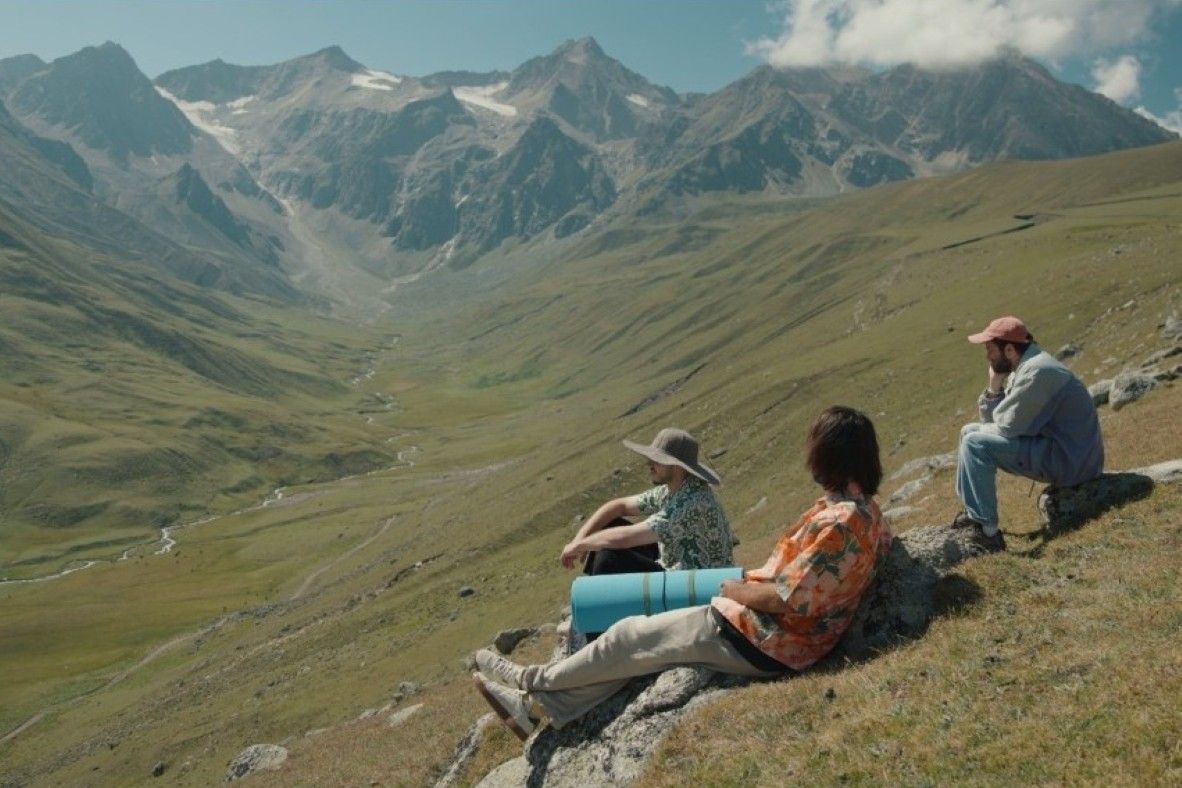
The films were financed through crowdfunding that raised, in his words, a ‘super-insignificant’ sum, which was spent mostly on logistics, props, and the Hawaiian shirts his characters wear. Nobody was paid, and the camera equipment belonged to a friend.
‘The approach was that you don’t need millions to make cinema — at least not at the start’, he says.
If the film reaches theatrical release, he adds, he may one day tell the story of its budget in full: ‘Maybe it will inspire young people from the Caucasus — that you don’t need to be heaven’s favourite to break into cinema.’
‘I want to idealise the Caucasus’For festival audiences, new cinema from the North Caucasus has largely meant one school: the directing workshop that Russian auteur Aleksandr Sokurov ran in Nalchik, which produced Kantemir Balagov, Kira Kovalenko, and Vladimir Bitokov, among others. When the workshop began, Tolgurov was advised to apply, but was talked out of it by an older friend who warned him that he would come out filming ‘not like Said Tolgurov’ but like Sokurov.
Instead, Tolgurov went to the Moscow School of New Cinema, though he is quick to note that his films sit far from that school’s canon as well.
‘I manage to find my own individuality precisely because I’m far from the Sokurov people and far from the Moscow School of New Cinema. The films I make and want to make are very far from my school’s canon as well’, he explains, adding that he likes not being subject to any ‘strong influence’
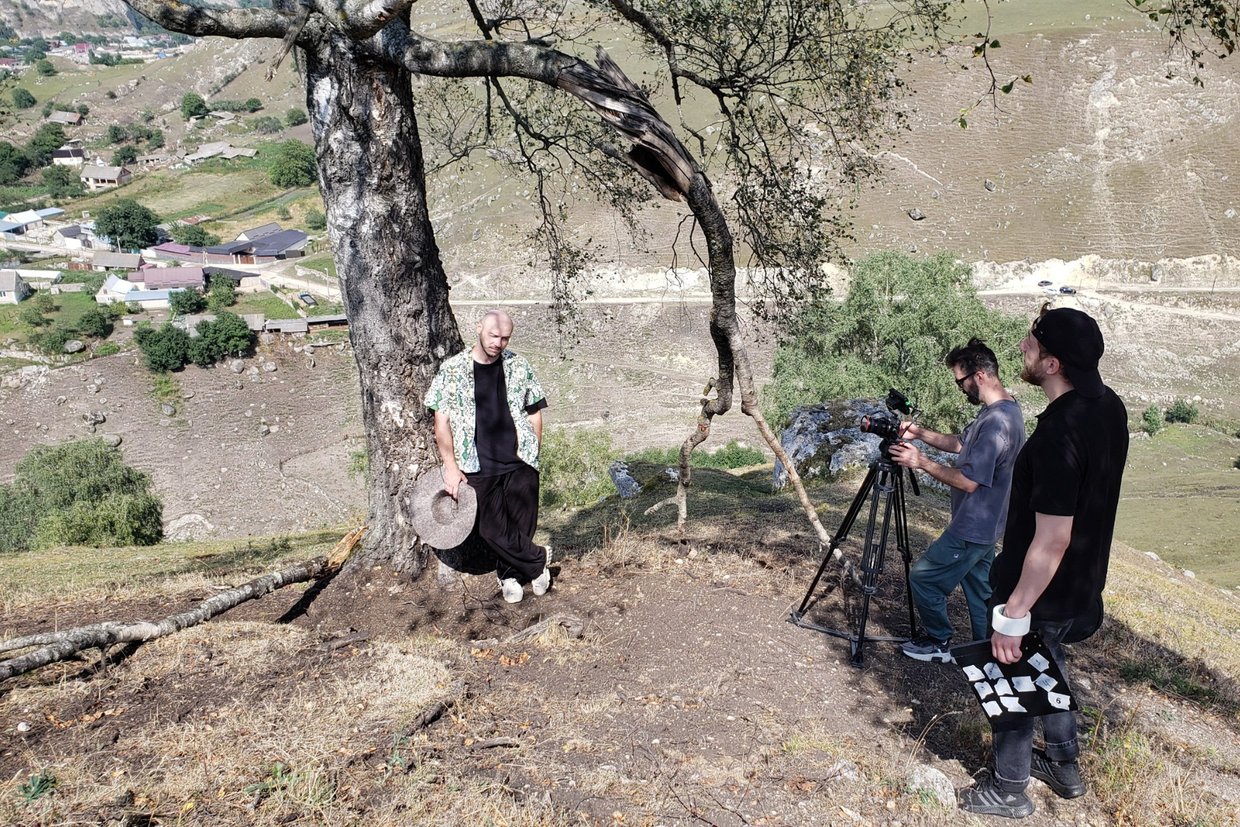 The crew sets up a scene for ‘In the Mountains. He’. Courtesy photo.
He is just as untroubled by one of the more common objections to his work — that in a region better known on-screen for violence and a lack of personal freedom, his cinema idealises the North Caucasus rather than portraying its problems.
‘Let them talk. I’m just making films — the films I want to make. Why should I depend on anyone’s opinion?’, he asks.
He goes on to admit that perhaps he wants to idealise the Caucasus, emphasising that ‘For me it’s maybe not an ideal place, but it is a beloved one’.
When Tolgurov is asked about the shooting process, he compares it to a trip with friends.
‘Just five of us go hiking and shoot’, Tolgurov says, ‘I remember those times less as work and more as enjoyable trips’.
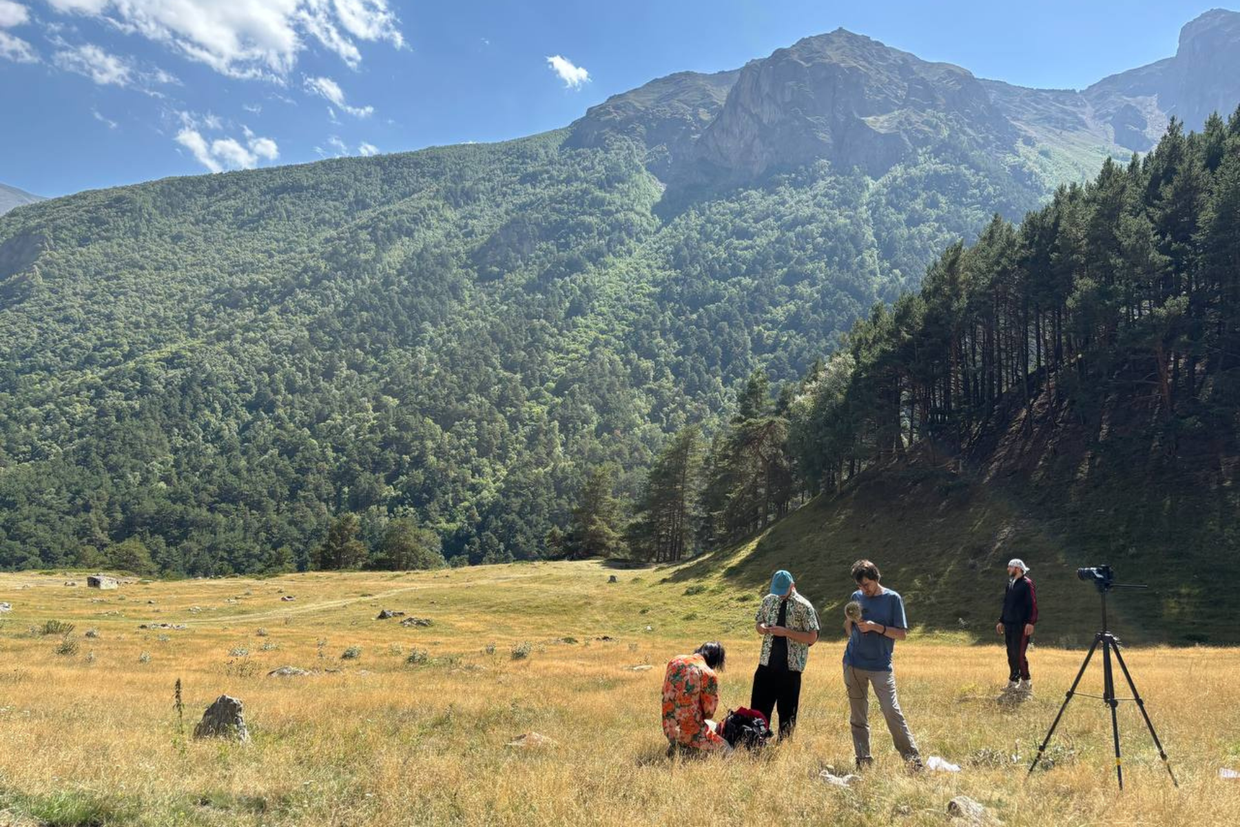 The five-person cast and crew setting up a shot for ‘In the Mountains. He’. Courtesy photo.
According to him, the camera was always on, and some elements were recorded — random actions or jokes — that later made it into the final production. This was exactly the sort of filmmaking Tolgurov wanted to lead, and is a large part of why he involved his friends — not professional actors but amateurs whom he directed while filming.
‘When I watch short films with professional actors, I always find this process tiresome. Everyone is trying way too hard to appear convincing’, he explains. ‘I was aiming for real life situations with my films. That is why I kept the actors’ playing down and got the performance which can only be offered by a non-professional actor’.
At the same time, the gentleness of Tolgurov’s films does not stem from naiveté, but rather from a loss he talks about with disarming directness: despite being the son of a scholar of Balkar philology, he himself does not speak the language.
The weight of this loss was something he only realised when he moved to Moscow. There, he spent his first nine months living with friends from the Caucasus. They knew exactly who they were, he says — they had the language, the mentality — while he kept catching himself being unlike them. His friends teased him by calling him Russian, which made him think that he had lost his identity, language, and ‘a certain perspective, that one inherent to the people of our republic’.
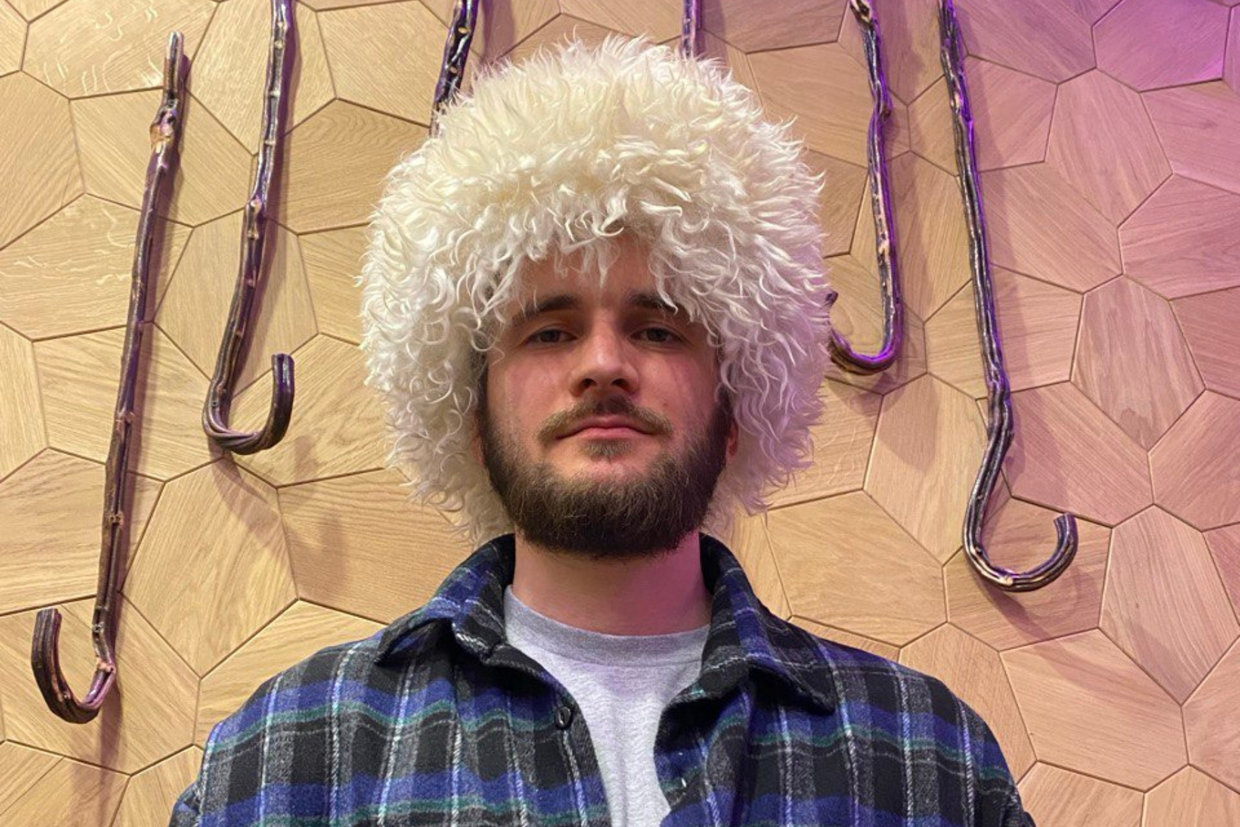 Said Tolgurov in a traditional a sheepskin hat worn throughout the Caucasus. Courtesy photo.
His movies became a tool for trying to process this issue — as he says, a way of bringing something back or moving towards a new identity. While he did not become a filmmaker for this reason, he says that ‘the instrument is available to me now, so I raise these subjects, I hear how people react, and their reactions help me understand something about myself through their words’.
They also became a way of walking back towards the languages he lost.
Thus, In the Mountains. She contains some words in the Balkar language, while In the Mountains. He is in Circassian, though Tolgurov does not understand either language at all. Knowing that he would spend his working life in the republic, he regarded his student films as an exercise of directing by ear or through closely watching people’s faces.
It connects to something he has said before — that in cinema, magic is born from a lack of vocabulary.
‘There are feelings I can’t pass on, can’t give the form of words, yet through cinema I somehow manage to catch them’, he says.
‘Cinema is an instrument that can feel what can’t be told’.
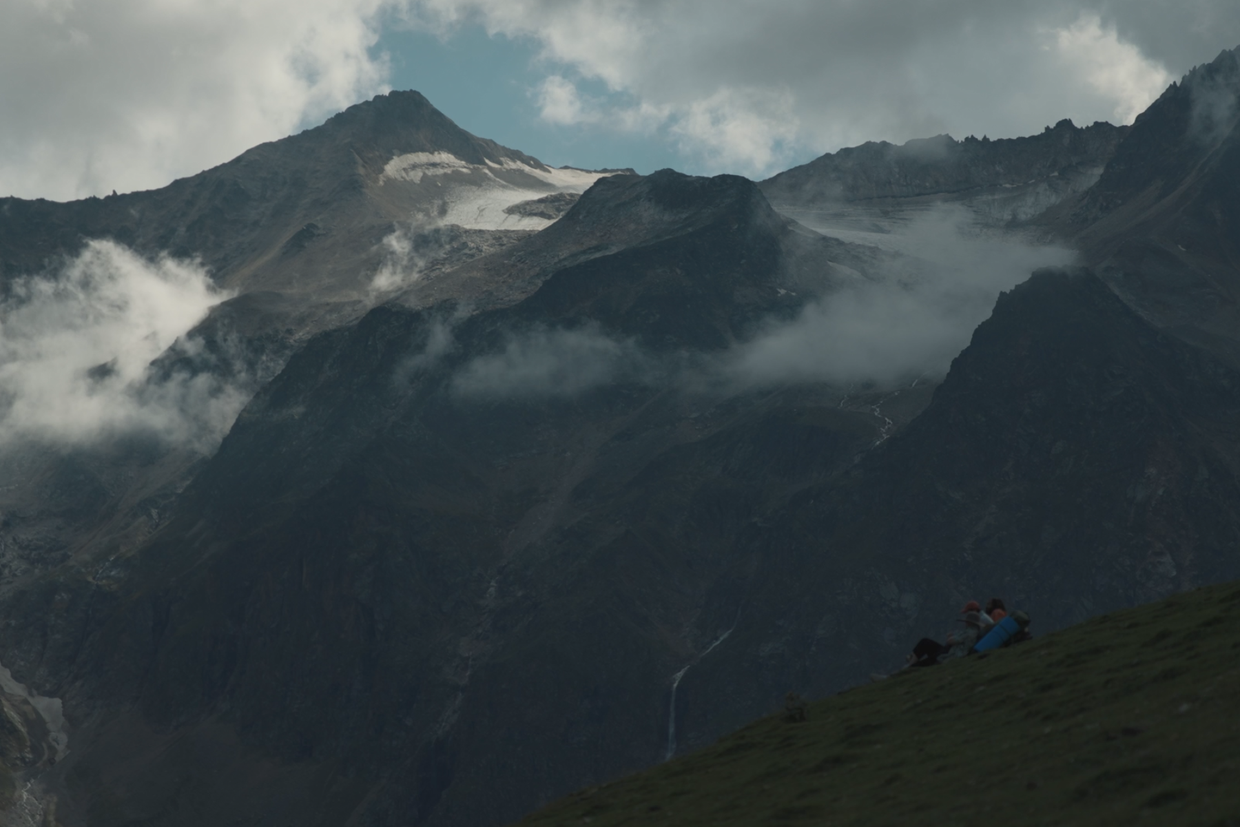 ‘In the Mountains. He’. Still from film.
He points to a moment near the end of the second film — darkness falls, the sound gathers, the stars dissolve into a blue sky as an eagle crosses the frame: ‘Even I, who made the film and know how it’s done, still felt something I can’t explain in words’.
‘More films, and courage’Whether he can keep working this way is another question. It is hard to get found in Kabarda-Balkaria. Tolgurov believes one reason for this is that people simply don’t know what auteur cinema is: ‘For them auteur cinema is Sokurov’s school, and that doesn’t inspire them’.
The deeper problem, he argues, is a closed circle. Viewers arrive with a fixed picture of what a film should look like, and anything outside it stops counting as a film at all. Directors then adjust to those expectations, and nothing new gets made. If the circle breaks, if directors stop imitating Russian and Western cinema and start making something distinct from the region, he believes this ‘could well become its own phenomenon’.
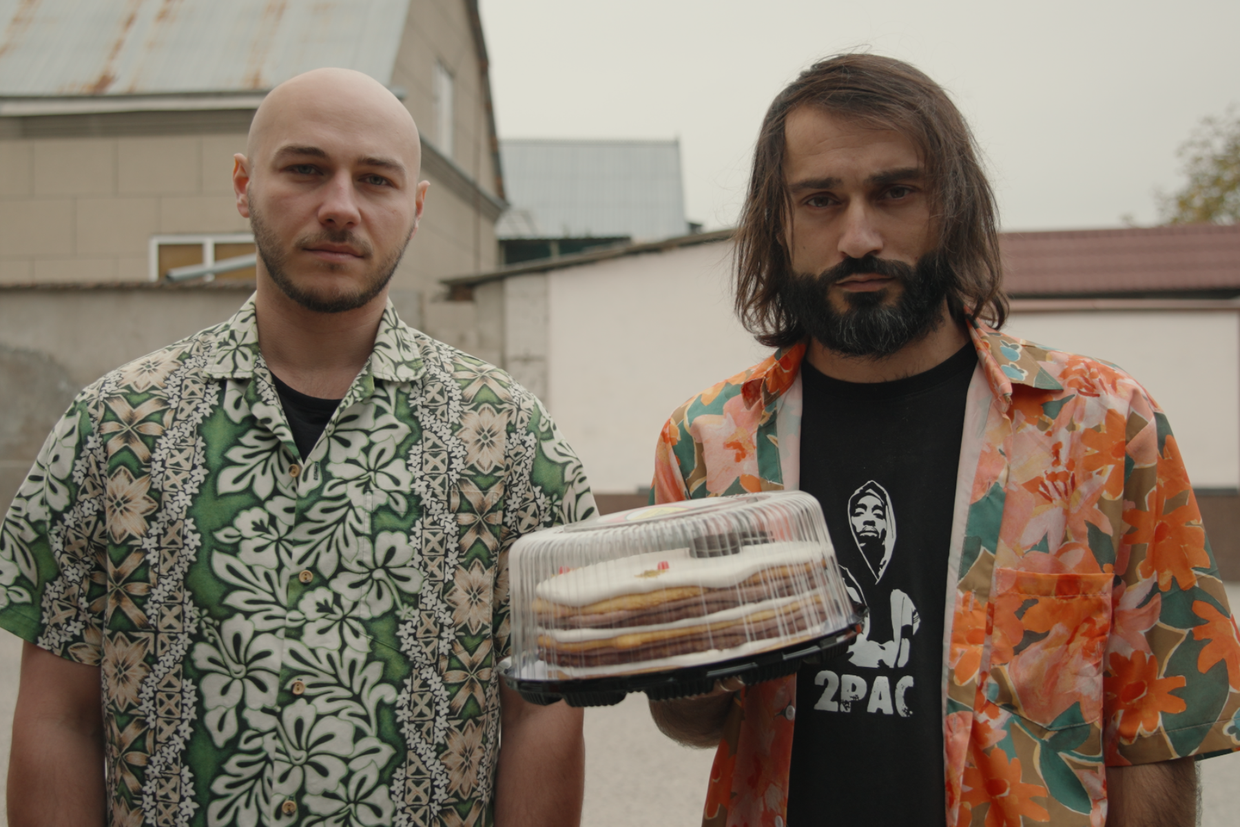 Albert Mamiev and Eldar Hagazheev in ‘In the Mountains. He’. Still from film.
‘What’s needed is more directors, more films, and courage’, he says. ‘The courage to speak in your own voice, not to imitate someone else — to make the films the director wants, not the films the viewer wants to see’. He also is not too concerned about the region’s conservatism. When a screening of his film in Circassian was announced on social media, a wave of hate messages arrived on cue.
‘There’s a certain segment of the population that is very wary of how their culture is portrayed and who is doing the portraying. This misunderstanding and caution isn’t tied to any specific nationality; whether you’re a Balkar, a Kabardian, or Russian, everyone wants to see things done with respect’, Tolgurov explains.
Yet, any negativity surrounding the film collapsed the moment he published a reply, the support many times louder.
‘Hate deflates on its own if there’s no malice feeding it. And anyway, if you’re afraid of hate, you’d never leave the house’.
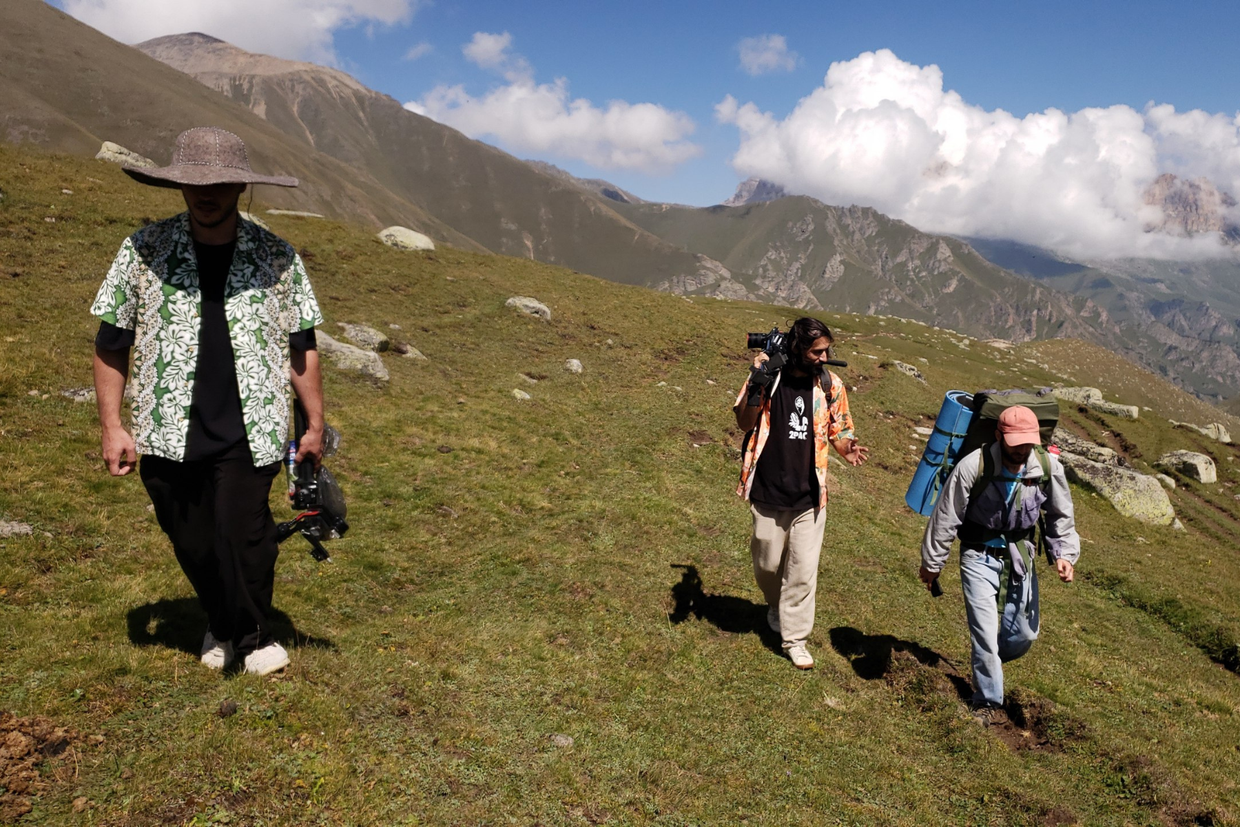 The cast and crew hike with their equipment to film a scene for ‘In the Mountains. He’. Courtesy photo.
Tolgurov is now trying to build the scene he describes himself. The next project, In the Mountains. We, will be a collective almanac of shorts by debut directors from Nalchik, stitched into a single feature. Festival programmers have already shown interest, giving the project a direct line to selectors rather than a cold submission. He is careful to add that the almanac is a collective effort, however, and that he doesn’t consider it his.
His next full-length film will be Journey to the Edge, Towards Night, a turn towards magical realism and the night-time city. Whether it happens depends on finding a producer or simply a sponsor, the aim being to raise enough money to still make a film with friends, but with a slightly bigger budget.
No matter the project, however, his wish for viewers hasn’t changed: ‘I just want a person to feel a little less anxious after watching my film. To start breathing a little more freely — to feel a little less anxious living in this world’.
| # | Наименование новости | Тональность | Информативность | Дата публикации |
|---|---|---|---|---|
| 1 | Продюссер Толстунов: российскому кинематографу не хватает зарубежных фестивалей | 0 | 0 | 03-09-2025 |
| 2 | Russia, India can make films together that aren't 'fast-food Hollywood garbage' — director | 0 | 11.77 | 21-07-2026 |
| 3 | В Чечне приступили к съемкам фильма "Хеллоу, Грозный!" | 0 | 0 | 27-11-2019 |
| 4 | Михалков: об экстренно посадившем А321 в Подмосковье экипаже можно снять "шикарный фильм" | 0 | 0 | 23-08-2019 |
| 5 | Продюсер фильма "Трудно быть богом" заявил, что план эвакуации продумали заранее | 0 | 0 | 14-06-2025 |
| 6 | Джеки Чан, космос и изолента: Клим Шипенко раскрыл секрет кассовых ... | 0 | 7.07 | 28-08-2026 |
| 7 | Режиссер Оганесян: фильмы из РФ способны серьезно конкурировать с западным кино | 0 | 0 | 31-05-2025 |
| 8 | Режиссер Михайлов: кинематограф РФ не осознает сам себя | 0 | 0 | 25-07-2025 |
| 9 | "Вольга" и Киностудия им. Горького подписали соглашение о сотрудничестве | 0 | 0 | 24-07-2025 |