Просмотр новости
Найдите то, что Вас интересует
 Спутники
 РН
РН SpaceX
 Роскосмос
 NASA
NASA
СпутникиРНSpaceXРоскосмосNASAKimchi is full of live lactic acid bacteria, but it is not a probiotic in the strict sense. Here is what the research actually shows about kimchi and gut health.
The post Is Kimchi Good for Your Gut? What the Science Actually Says appeared first on BIBIBOP Asian Grill.
Kimchi shows up on every list of gut-friendly foods, usually described as a probiotic powerhouse. Some of that holds up. Some of it does not.
Here is what is actually living in a jar of kimchi, what the research does and does not show, and how to get more of it into a normal week of eating.
The short answerRaw, refrigerated kimchi contains live lactic acid bacteria, the same family of microbes that ferment yogurt and sauerkraut. It is low in calories, has fiber, and is one of the better food sources of vitamin K.
What it is not is a probiotic in the technical sense, and it is not a substitute for a doctor. It is a fermented vegetable that happens to be good for you and happens to taste like something. That is a fair trade.
What kimchi is, and what fermentation is doingKimchi is salted and seasoned vegetables, usually napa cabbage, left to ferment. Garlic, ginger, scallion and gochugaru go in. Many recipes also include salted fermented seafood.
Preserved vegetable dishes have been part of Korean cooking for roughly two thousand years. The red, chili-forward kimchi most people picture is much newer, because chili peppers only reached Korea in the late 16th century.
The fermentation itself is simple. Salt draws water out of the vegetables. Lactic acid bacteria already present on the leaves start consuming the sugars and producing lactic acid. The acid drops the pH, which preserves the vegetables and creates the sour, fizzy edge that separates kimchi from a salad.
What is actually living in kimchi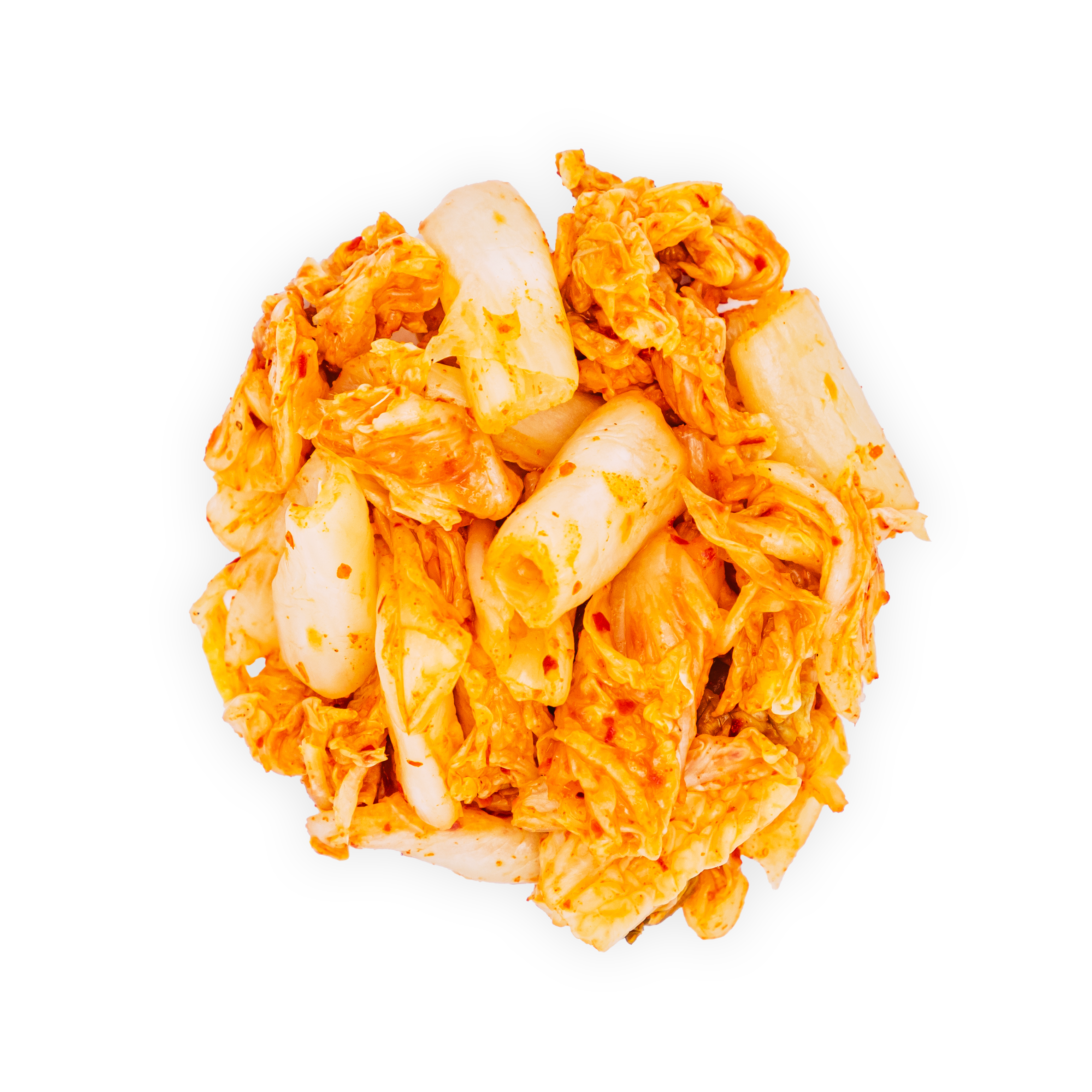
Mostly three groups of lactic acid bacteria: Leuconostoc, Weissella and Lactiplantibacillus. Which one dominates depends on the recipe, the salt level, the temperature and how long it has been sitting.
The amount varies enormously. Published counts across commercial and homemade kimchi span several orders of magnitude, and the same jar changes over time. Bacteria counts climb during fermentation, peak somewhere around the five to six week mark in cold storage, then decline as the acidity gets high enough to kill the bacteria that made it.
Which means any article that tells you kimchi contains a specific number of billions of bacteria is guessing. There is no minimum standard for kimchi the way there is for yogurt.
Is kimchi a probiotic?Not in the strict sense, and the distinction is worth understanding.
Scientifically, a probiotic is a live microorganism that meets three conditions: it is identified down to the specific strain, it is delivered in a known dose, and that strain at that dose has been shown in human trials to do something beneficial.
Kimchi meets none of the three reliably. It is spontaneously fermented, so the strains vary batch to batch. The dose varies by orders of magnitude. And the strongest evidence from a kimchi-derived bacterium came from a trial where researchers isolated one strain and put it in a capsule, which is a different thing from eating kimchi.
The international scientific association that sets these definitions is direct about it: fermented food and probiotic are not interchangeable terms. Their recommendation for foods like kimchi is the phrase “live and active cultures.”
None of that means kimchi is not worth eating. It means the honest claim is smaller and more specific than the one you usually see.
What the research shows about fermented foods and the gutThe best human evidence in this area is a Stanford trial published in Cell in 2021. Researchers randomized 36 healthy adults into two groups for 17 weeks. One group ramped up to about six servings a day of fermented foods, including yogurt, kefir, kombucha, vegetable brine and fermented vegetables such as kimchi. The other group ramped up dietary fiber instead.
The fermented food group showed a steady increase in gut microbial diversity, and 19 of 93 measured inflammatory proteins in the blood went down, including interleukin-6. The high-fiber group showed neither effect.
Two honest caveats. The study covered fermented foods as a category, not kimchi on its own, and yogurt and brine drinks were the most-consumed items. And with 18 people per arm and no separate control group, it is a promising result rather than a settled one.
There is one more finding from that trial worth knowing, because it changes how you should think about all of this. When the researchers checked whether the bacteria in the food were the same bacteria showing up in participants’ guts, they largely were not. The diversity gain did not come from the microbes in the food taking up residence. It came from shifts in the bacteria already there.
So the mental picture of “eating kimchi to add good bacteria to your gut” is probably wrong. The effect looks more like feeding and nudging the community you already have.
What kimchi gives you besides bacteriaPer 100 grams, according to USDA data:
On the sodium: kimchi is a salted preserve, and salt is not optional in the process. It is what keeps the wrong bacteria from taking over. A side-dish portion is not a problem for most people. A daily habit of several large servings is worth mentioning to your doctor, especially if you already watch blood pressure.
Cooking kimchi kills the live culturesWorth knowing if the live cultures are why you are eating it.
Lactic acid bacteria do not survive high heat. Kimchi jjigae, kimchi fried rice, kimchi on a hot grill, anything that gets properly hot, has effectively no viable bacteria left in it. The fiber, the vitamins and the compounds produced during fermentation all survive. The living part does not.
Same goes for shelf-stable jars. If kimchi is sitting unrefrigerated on a dry-goods shelf, assume it has been pasteurized unless the label says live cultures. Refrigerated kimchi is the one to buy.
Cooked kimchi is still worth eating. It is just a different food than raw kimchi, and the gut-health framing only applies to the raw version.
Who should go slowStart with a small amount if fermented foods are new to you. Bloating and gas for the first week or two are common and usually settle.
Some people react consistently to fermented foods, and histamine is often blamed. Histamine levels in kimchi genuinely do vary a lot, and they run higher in recipes made with salted fermented seafood and in kimchi that has fermented a long time. There is no validated test for histamine intolerance, so if you react every time, that is a conversation with a clinician rather than something to self-diagnose from a blog.
If you are on prescription medication or managing a gut condition, ask your doctor before you make any fermented food a daily habit.
Easy ways to consume more kimchi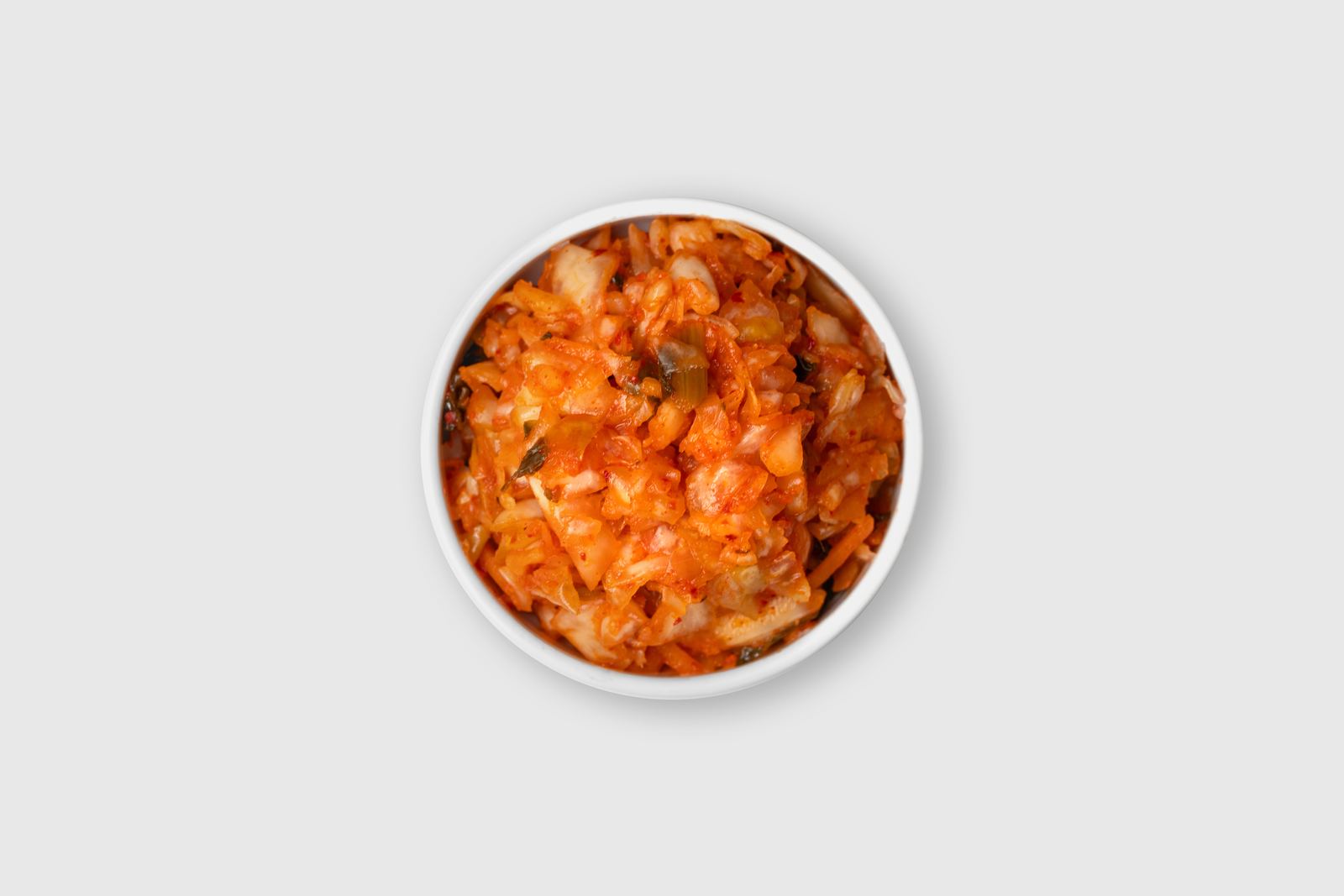
At BIBIBOP, kimchi is a standard topping, and it is gluten-free like everything else on the line, because the whole kitchen is certified gluten-free. That is not true of most kimchi sold in stores, where fish sauce and seasoning blends can bring gluten in.
Kimchi and gut health FAQRaw kimchi contains live lactic acid bacteria and fiber, and diets high in fermented foods have been shown to increase gut microbial diversity. That is a real but modest claim, and it applies to fermented foods as a category more than to kimchi specifically.
Does kimchi have probiotics?It has live lactic acid bacteria, which is not the same as a probiotic. A probiotic is a defined strain at a defined dose with proven effects. Kimchi’s strains and counts vary batch to batch.
How much kimchi should I eat a day?There is no established amount. A side-dish serving is a reasonable habit. Keep the sodium in mind if you are eating large amounts daily.
Does cooking kimchi destroy the probiotics?Yes. Heat kills the live cultures. The fiber and nutrients remain.
Is kimchi gluten-free?Not always. Some recipes and seasoning blends contain gluten. BIBIBOP’s kimchi is gluten-free, because every BIBIBOP kitchen is certified gluten-free.
Why does my stomach feel off after eating kimchi?Usually an adjustment period if fermented foods are new to you. If it happens every single time, talk to a clinician rather than pushing through it.
The simplest way to consume kimchi more often is to stop treating it as a project. Put it on a bowl you were already going to eat.
Find a BIBIBOP near you and add kimchi to your next bowl. New to BIBIBOP? Join BIBIBOP Rewards and your first bowl is on us with a minimum $5 spend.
| # | Наименование новости | Тональность | Информативность | Дата публикации |
|---|---|---|---|---|
| 1 | Ta kiszonka podbija polskie stoły. Ma wspierać jelita, odporność i trawienie | 0 | 9.09 | 30-08-2026 |
| 2 | What Is Gochujang? Korea’s Sweet Heat Chili Paste, Explained | 0 | 6.97 | 26-08-2026 |
| 3 | А вы знали- про кимчи🤩 Эта история началась больше двух ... | 0 | 7.5 | 16-09-2026 |
| 4 | This Probiotic From Kimchi Can Vacuum Nanoplastics Right out of Your Gut | 0 | 18.19 | 18-03-2026 |
| 5 | Meet the Well B·ing Meal: A Feel-Good Favorite Starting at Just $10 | 0 | 9.34 | 20-02-2026 |
| 6 | New Holly Springs, NC location to open Thursday, June 18th | 0 | 7.48 | 03-06-2026 |
| 7 | Leicht verdauliches Gemüse: Das sind die besten magenschonenden Lebensmittel | 0 | 8.52 | 18-05-2026 |
| 8 | Bulgogi Inspired Burger | 5 | 6 | 05-05-2026 |
| 9 | Диетолог Лебедева рассказала, кому нельзя пить квас | 0 | 5.78 | 02-08-2026 |
| 10 | Правда о квашеной капусте: людям с этим диагнозом этот суперфуд запрещен - превращается в опасный яд | 0 | 8.1 | 15-08-2026 |