Просмотр новости
Найдите то, что Вас интересует
 Спутники
 РН
РН SpaceX
 Роскосмос
 NASA
NASA
СпутникиРНSpaceXРоскосмосNASAI hope Ukrainian drones will protect the Arctic
“We live in an era of great power rivalry, the rules-based order is fading” – this is the diagnosis to the world of Canadian Prime Minister Mark Carney in his historic speech in Davos. In contrast to the new “law of the jungle”, he calls on countries with common values to unite in coalitions.
Natalka Cmoc is confident that Ukraine is the one to unite with, because it shares the desire for a rules-based international order. She has served as Canada’s ambassador to Kyiv for 3 years and has been building a partnership between the two countries since the 1990s.
Her term as ambassador is coming to an end, so on the eve of Canada Day, July 1, Ukrinform asked her about the results of the work of the Canadian mission under her leadership, as well as about defence cooperation between Ukraine and Canada and support for our country within the framework of the G7.
25 CANADIANS WORK IN EMBASSY IN KYIV
– You are completing your term as an ambassador to Ukraine. Please summarize the results of your work from 2023. What have you managed to achieve, and what have you not?
– I have to admit it is very painful to be leaving this role. My time here was excellent. I still cannot believe that it happened.
There is so much that we did as a team. First of all, when I had just arrived, my mandate was to rebuild the team and bring the embassy back to full capacity, which was done. We were back in the embassy with everything we needed to do our job.
The second part is that we were preparing for our G7 presidency, with Canada’s leadership of the G7 Ambassadors Support Group here in Ukraine. Throughout our presidency, we held nearly fifty meetings with external stakeholders in support of Ukraine’s Euro-Atlantic integration.
On the bilateral level, we were one of the first to have the security cooperation agreement between Canada and Ukraine, which was signed in February 2024, and a year later, with the action plan. With this agreement, Ukraine can count on its partners' support. It widely covers what we have agreed with Ukraine and serves as an umbrella to expand on our security and defence cooperation.
Our military training and mentorship program, which started in 2015 –Operation Unifier – has been extended for another three years. I worked on it at the beginning, so to see it extended to 2029 is very meaningful.
And on a personal level, I noticed that a lot of information and news was not being picked up in Europe and in Canada. Many Canadians reach out to me, asking for more information.
So, I decided to start a podcast at Kyiv Post, which was fun to do. We did 30 episodes with other people I thought would be interesting, diplomats on a more conversational level about what they do here, what they think, how they are feeling, and surviving.
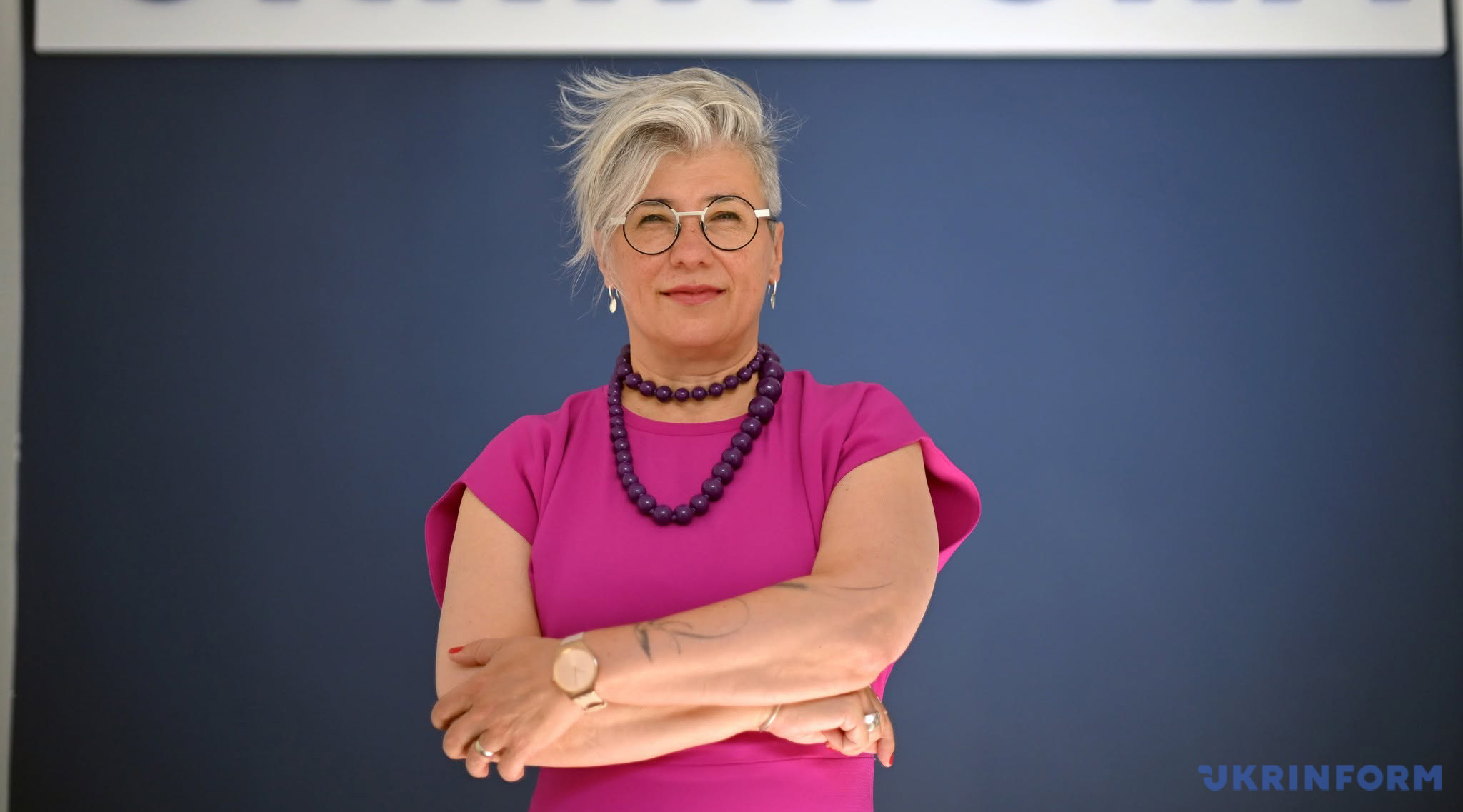
– About surviving in Kyiv, together with all the residents of the capital of Ukraine, you hear all this and witness all this Russian air terror that goes on and on. How has it affected you, and what do you think about this personally?
– It is important for my team to be here and not go. There are now 25 Canadians in the embassy. Of course, we have a locally engaged staff we rely on. Our mission has strict protocols during an air alert. We understand when it is drones or ballistic missiles, but either way, we take it very seriously.
We take cover. We sleep between two walls for those who do not have a shelter, and others go down to the shelter. But is it scary? Of course it is. You hear the explosions or the counter-strikes, and you cannot always tell how close it is.
There have been times when the walls have cracked, and the windows have really shaken. I was sure that they had shattered. It is not a pleasant experience, but we stayed and are not planning to go anywhere.
Many diplomats would agree that Russia is now attacking civilian cultural sites more harshly, possibly, reacting to how well Ukrainians are doing on the front lines these days.
– You said that the windows were shaken, and the walls are cracked. Has that happened to any member of the embassy team?
– To our Ukrainian colleagues who live on the left bank of Kyiv. We have had team members whose building was actually hit, not their apartment, thank goodness, but their building. We have had team members whose family apartments were destroyed. They had to take in family members in their own apartment.
I check in on them to make sure everyone is okay. I cannot imagine if my country were being attacked. My roots come from Ukraine, and that is very, very painful. The war is illegal, unprovoked. There's no justification for it. It just feels wrong, and it makes me angry.
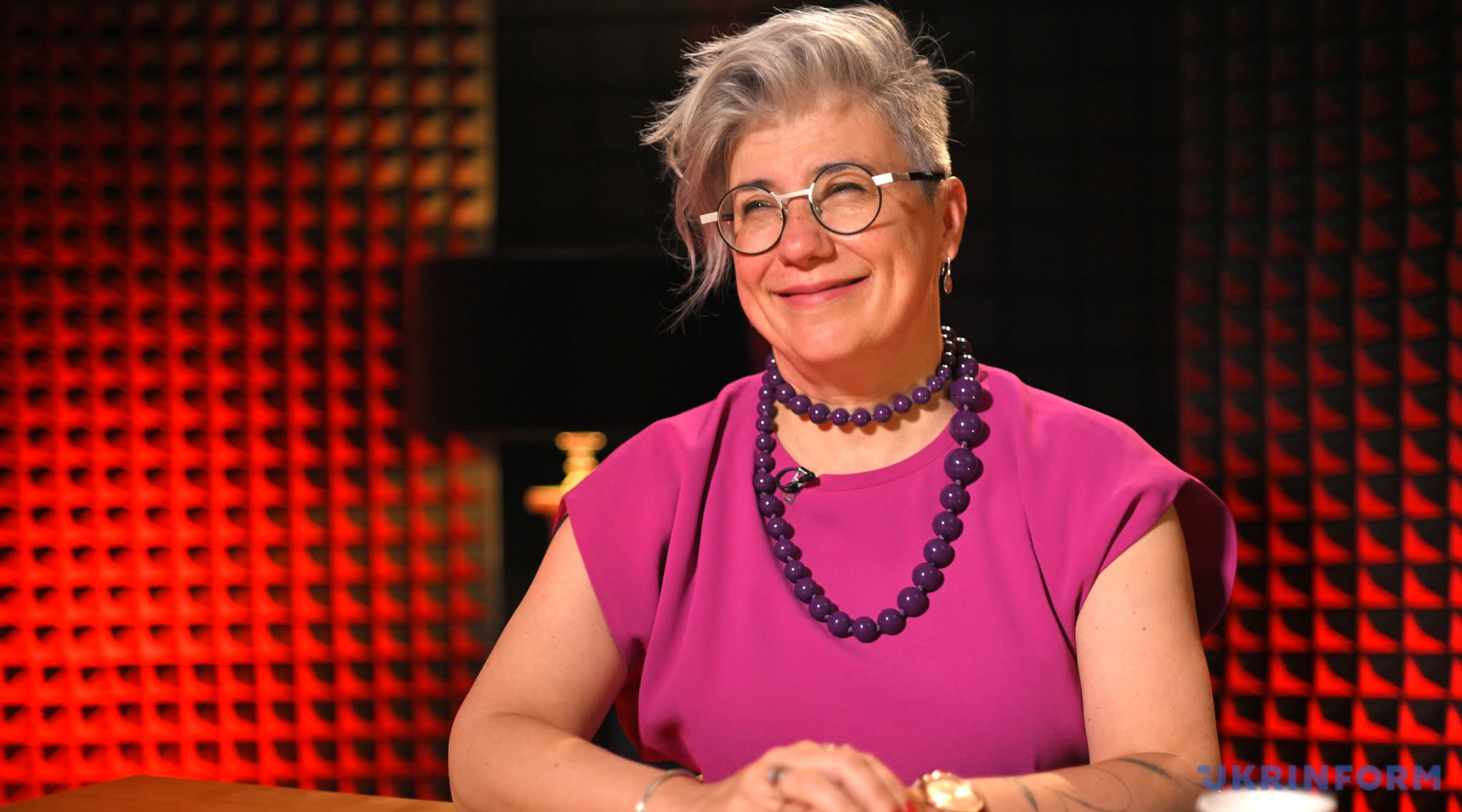
WE SEE PROGRESS BUT IT IS IMPORTANT OT ACCELERATE REFORMS IN UKRAINE
– We hope that some peace deal or ceasefire agreement will come rather sooner than later, but you mentioned that Canada has prolonged the training mission to 2029. So, it seems Canada will continue to support Ukraine even after the ceasefire.
– Yes, absolutely. Prime Minister Mark Carney, who was in Kyiv for Independence Day, very clearly said in front of Saint Sophia that at every important hinge of Ukraine's history, Canada is there, and we plan to continue to do so.
We were here before the full-scale invasion, before the annexation of Crimea, supporting Ukraine and its democratic ambitions, transatlantic aspirations. We have been speaking very loudly on making sure that we acknowledge the sovereignty and territorial integrity of Ukraine, supporting everything from cybersecurity to military training. We plan to be here for reconstruction, recovery, and so on – whatever future Ukraine takes for itself.
– Madam Ambassador, as a member of the G7 Ambassadors Group to Ukraine, how do you assess the reform process in Ukraine?
– The G7 Ambassadors Support Group was created in 2015 by the G7 leaders, and it remains active today, which speaks volumes about the importance that the G7 countries are putting on supporting Ukraine's reform process.
Since 2015, we have seen progress. I would say that it is actually accelerating. Congratulations to Ukraine for opening the EU cluster discussions and negotiations. I think it is going to be very important to accelerate it. We support Ukraine's future being in the European Union. So, these reforms are very critical. We also acknowledge that it is a lot of work, especially for a country fighting a war. Congratulations to Ukraine on the really hard work you have done and continue to do.
Another reform we often speak about is Ukraine's anti-corruption strategy. Canada is supporting Ukrainians, the public who want this. You can see that in every survey. It is a very important issue for every Ukrainian. We support various stakeholders involved: the government, communities, NGOs, MPs, and the various committees.
Canada has supported justice reform. We supported the SAPO across various court structures and in police reform. Last year, we celebrated 10 years of our police reform partnership with Ukraine. So, we respond to what Ukraine has identified as a priority. And I feel we are pretty quick at doing that.
Right now, we are looking at veterans, namely, what can we do more to support the largest veteran community in the world? We are with Ukraine, with other partners and donors. We are not alone in this work, and I think it is very important.
Canada is a very strong middle power. Prime Minister Carney spoke very eloquently at the World Economic Forum in Davos that we recognize that those alliances and coalitions are incredibly important. So, we put a lot of emphasis on that – Ukraine does it as well. We are watching you establish them and want to be part of them.
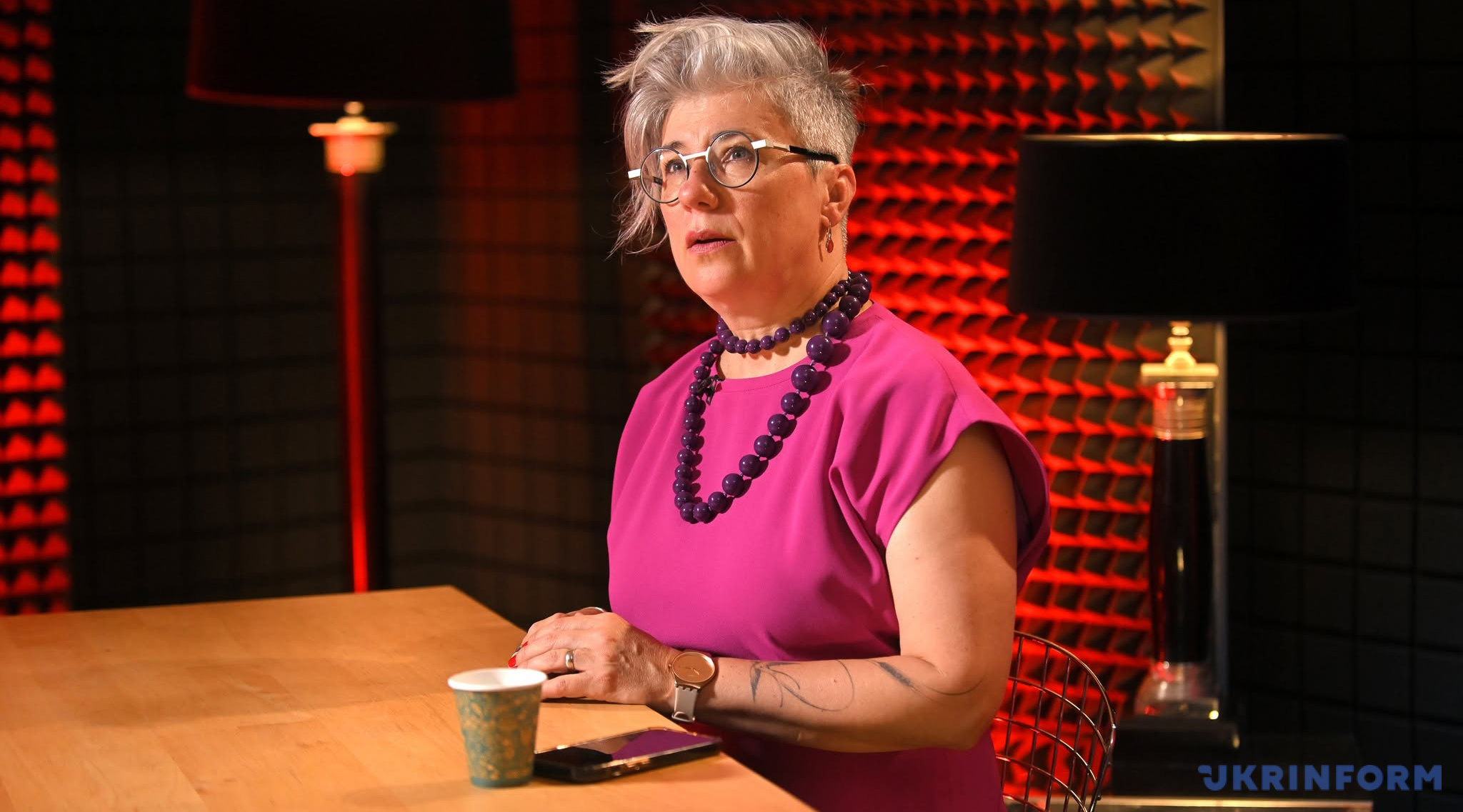
– So, in this world that Prime Minister Mark Carney described in his Davos speech about the destruction of the rule-based world order and the rise of middle powers and authoritarian regimes, you see Ukraine as a contributor to value-based middle powers, right?
– Correct. That is actually a big reason why we are supporting Ukraine. As long as it is on this democratic path and shares the same values in the international rules-based order, we will keep supporting Ukraine.
I think the Prime Minister meant that we still believe in those, but we are seeing that they might not be achieving everything we had hoped they would. It is on us to strengthen them and maybe re-examine what we could do differently to be able to do so.
– We have the NATO summit next month on the horizon. What do you think the allies will achieve for Ukraine?
– Before the actual summit, there will be a G7-Ukraine coordination group meeting on the margins of the defence ministers' meeting.
As allies, we need to keep coordinating and making sure our defence systems understand how Ukraine is evolving, and we meet the needs as it evolves in this war. It is very fast-paced. You are a good partner in sharing information with us, so that we can meet those needs in the way that you need. I mean specifically things like the mid to long-range ammunition.
Ukraine is developing and updating its drones at a very fast rate. So, what can we do to support that? For example, at CANSEC – Canada's defence trade show – we signed an important business-to-business joint production agreement where we are looking at Ukrainian technology and taking advantage of Canada's manufacturing capabilities that we can scale up very quickly. We use Ukraine's innovation and Canada's strengths.
President Zelensky was invited. We will focus on things like keeping planning towards the 5% (to achieve a military spending target of 5% of its GDP) and making sure that burden sharing is equal among all partners. There is a lot of work to be done there, but everyone is committed.
Allies need to keep supporting Ukraine. We are learning from Ukraine, and it is a very important partner. We are seeing how the war itself is evolving. So, the NATO summit is going to be critical.
Canada is ramping up. The original plan to achieve 5% military spending was by 2030, but we are looking at ways to ramp up quicker.
We are going to do that, and our partnership with Ukraine is helping with that because all of that counts towards our 5%. To help with this, Canada has proposed a concept called the Defence Security and Resilience Bank. Hopefully, it will be announced more as a concrete idea at the NATO summit.
It is a very important model because, as multilateral banks cannot support defence directly, the idea is to build a multilateral bank that could fund scaling up small and medium enterprises of partner countries, so that we can have longer-term planning and make sure that it does not become too expensive.
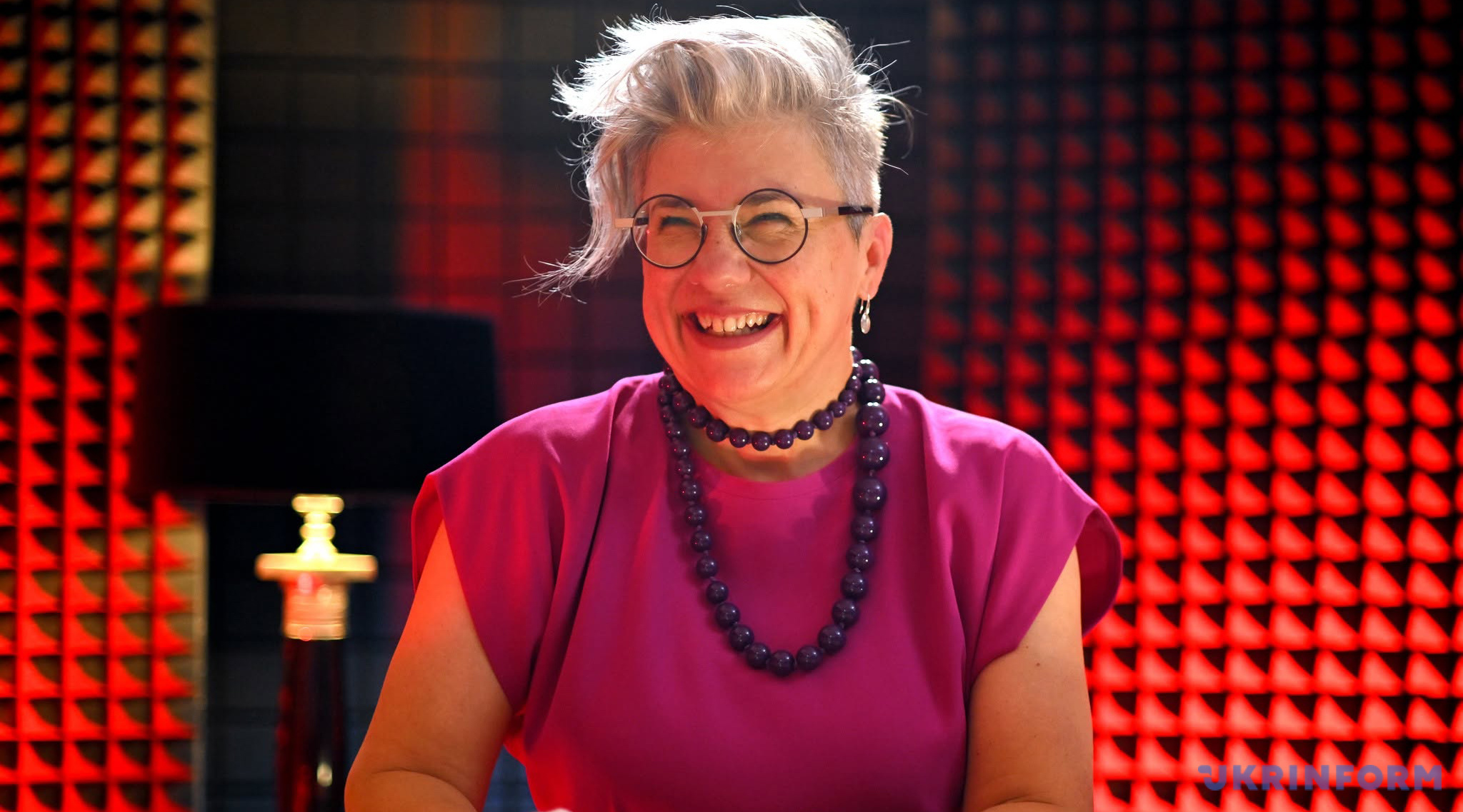
— Your active military support and cooperation with Ukraine can go behind Russian intelligence's back, as they try to interfere and hamper that. We all know about Russia's possible meddling in the US election process, about the hybrid attack on the EU countries. But how exactly is Russia attacking Canada?
– Hybrid warfare exists and takes shape in various forms. You mentioned some of them, but even attempted assassinations, weaponization of migration – all of these are aggressive actions that Russia has taken, as you said, primarily in European countries. This is probably to affect the EU accession talks as well. So, it is very critical. Russia knows what it is doing and has been doing this for a long time. They are masters of disinformation.
In Canada, of course, we see the effects too. We see that sometimes, if you throw more and more disinformation or different interpretations of the same data, the public will never trust anything.
Canada takes this very seriously bilaterally and through the G7. We monitor foreign interference, survey, and counter it.
Our government identifies Kremlin-fabricated disinformation and does its part to correct it or provide the public with accurate information. We have a very high trust in our government in this regard.
With G7 partners, we started a couple of important initiatives, building on our own rapid response mechanism to track and identify. We have done the two aspects, and we are the permanent chairman of this G7 group.
One example is an academy to support analysts in this area. Working together with other countries, you are sharing information and building stronger tools to counter this. Another one is a fund to support victims and support them in this, whether it is an organization, an individual, or NGOs that cannot counter it.
Canada takes it absolutely seriously and recognises it as a form of war.
UKRAINIAN DRONES DESTROY VESSEL THAT TOOK YEARS TO BUILD IN AN HOUR
– Canada and Ukraine have recently agreed on joint drone production. I'm talking about the Airlogix-Sentinel joint venture. What type of drones are we talking about, and when will production begin?
– It was just signed on May 29 at CANSEC. I got to witness this. It is a big deal. Right now, it is focused on aerial drones, but nothing prevents this from being expanded to other types.
The plan is to support one that does reconnaissance. These drones also help with operation planning, even infrastructure protection.
I have to be really careful because there are operational requirements that we need to protect. I am not going to go into a lot of the details. But the point is that the agreement is an umbrella framework that allows Ukraine to pivot and expand freely. I imagine this is just the first of many things we will support or develop with Ukraine.
– May I also ask a futuristic question? Is Canada interested in Ukrainian naval drones? Ukraine, without a fleet, managed to defeat Russia on the Black Sea. Can we see Ukrainian drones patrol in the Canadian Arctic?
– I hope so because the protection of our waters is important to Canada. As you have seen, three oceans surround our country. So, marine surveillance protection is important.
We all watch with admiration what Ukraine could do. I saw some of the videos where it only takes an hour for Ukraine to destroy a sea vessel that took years to build.
I would not rule it out. I think it absolutely would make sense. Let us hope it also comes sooner rather than later.
Ivan Kosiakin, Kyiv
Photos by: Yevhen Kotenko
| # | Наименование новости | Тональность | Информативность | Дата публикации |
|---|---|---|---|---|
| 1 | Yvan Baker, Chair of the Canada-Ukraine Parliamentary Friendship Group | 0 | 16.67 | 30-06-2026 |
| 2 | Olha Stefanishyna, Ukraine's Ambassador to the United States | 0 | 10 | 03-07-2026 |
| 3 | Ukraine needs NATO as much as NATO needs Ukraine - Stubb at meeting with Zelenskyy | 0 | 5 | 07-07-2026 |
| 4 | Mark Norman, Former Vice Chief of the Defence Staff of the Canadian Armed Forces | 0 | 7.74 | 22-08-2026 |
| 5 | Бывший премьер Украины выразил надежду на продолжение диалога с США по Украине | 0 | 10 | 25-08-2026 |
| 6 | Канада поддержала заявку Украины на вступление в НАТО | 0 | 0 | 30-09-2022 |
| 7 | Volodymyr Bachynskyi, Ambassador of Ukraine to Bosnia and Herzegovina | 0 | 8.92 | 14-08-2026 |
| 8 | Stefanie Babst, Former Head of NATO’s Strategic Foresight Team | 0 | 7.66 | 25-08-2026 |
| 9 | Ukraine's fight is ours, the EU offers unconditional support: Costa | 0 | 10 | 24-08-2026 |
| 10 | Ukraine's fight is ours, the EU offers unconditional support: Costa | 0 | 10 | 24-08-2026 |