Просмотр новости
Найдите то, что Вас интересует
 Спутники
 РН
РН SpaceX
 Роскосмос
 NASA
NASA
СпутникиРНSpaceXРоскосмосNASAThe Ukrainian embroidered shirt is part of the spiritual heritage of the Ukrainian people—and, indeed, of humanity as a whole
Ukraine marked Constitution Day on June 28, an occasion that serves as a reminder not only of the country's Basic Law but also of the values on which the state is built: freedom, dignity, independence, and the right of Ukrainians to preserve their cultural identity. One of the most enduring symbols of that identity is the vyshyvanka—the traditional Ukrainian embroidered shirt, a legacy passed down from generation to generation that preserves the nation's historical memory, traditions, and cultural continuity.
In an interview with Ukrinform, Lviv-based designer Khrystyna Rachytska reflected on the enduring power of this cultural code. For many years, she has studied historic Ukrainian embroidery, restored authentic embroidered shirts, revived long-forgotten techniques, and showcased Ukrainian textile artistry around the world. To her, the vyshyvanka is far more than a garment—it embodies the continuity of Ukrainian history, the resilience of the nation, and a unique way of sharing Ukraine's story with the world.
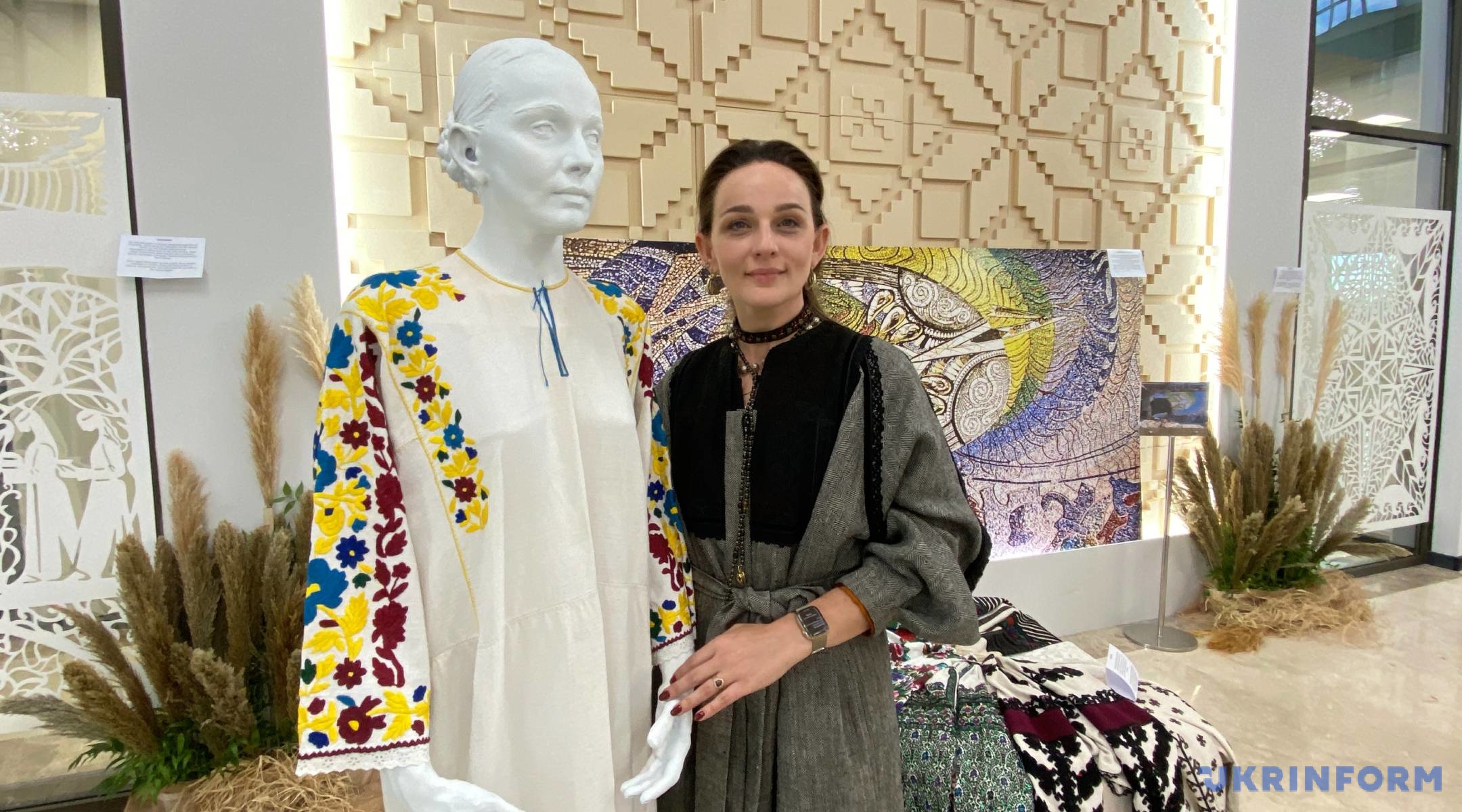
EACH OF MY COLLECTIONS REFLECTS A PERSONAL TRANSFORMATION
Ukrinform (UI): Ms. Rachytska, you have presented your original collections in Türkiye on two occasions. Could you tell us about them?
Khrystyna Rachytska (KhR): Both at the Embassy's Independence Day reception last autumn and at a charity event dedicated to Ukraine in Çeşme this April, I presented more than a collection of original embroidered garments. What I sought to showcase was a contemporary interpretation of Ukrainian clothing rooted in the tradition of the authentic embroidered shirt.
For me, it is essential to convey that the Ukrainian embroidered shirt is far more than a piece of clothing. It is a profound spiritual and intangible legacy of the Ukrainian people and an integral part of the world's cultural heritage. With my education in art, a deep understanding of its broader context, and the skills to work in this field, I felt drawn to embroidery as a way of preserving that legacy.
To safeguard these ancient traditions as faithfully as possible, we reproduce historic embroidery with exact precision in contemporary garments. These are pieces designed for modern women to wear today and pass on as family heirlooms.
UI: In Ankara, you presented the collection Rooted, while in Çeşme you showcased To Live. What ideas do these collections express?
KhR: Rooted consists of two parts. The first was unveiled a year ago during Lviv Fashion Week. It was presented entirely in white, complemented by white floral wreaths. Later, we reinterpreted the collection in warm ochre tones, giving it a more autumnal mood.
I searched for a long time for a title that could fully capture its essence. To me, Rooted is about continuity, preserving memory, and remaining connected to one's origins. We also created a beautiful film for the collection, set in centuries-old apple orchards during the blossom season. A delicate flower becomes an apple; inside the apple is a seed, and from that seed a new tree grows. It is a metaphor for genetic and historical memory—a mature tree firmly rooted in the earth giving rise to new life that will continue the cycle for generations to come. My message is that we must preserve this inherited memory, pass it on to our children, and help them understand who they are.
The collection To Live, which I presented in Çeşme, carries an uplifting yet deeply philosophical message about finding light in the darkest of times. It was first unveiled during Ukrainian Fashion Week this March and speaks to the conscious choice to keep living, regardless of the circumstances. The interplay of fabrics and the way they embrace the body symbolize support, warmth, and protection amid today's realities.
UI: How do your collections come into being?
KhR: Every collection reflects a personal transformation and offers me an opportunity to tell the story of the past through contemporary forms. Living in today's circumstances teaches you one thing above all: you have to act.
Whenever I am surrounded by embroidered shirts—washing them, restoring them—I feel as though I am drawing closer to the women who created them. I often think about the lives they led. They lived in villages, managed large households, and raised many children. Before they could make a single shirt, they first had to cultivate the land, grow hemp, spin it into thread, weave the fabric, and only then begin embroidering and decorating it. Compared with everything that came before, embroidery was perhaps the least physically demanding part of the process—the moment when a woman could finally pause, rest, and pour a part of her soul into her work. It was, in many ways, a form of meditation.
From my own family history, I know that my great-grandmother had twelve children, while my grandfather bred horses and traveled with them to exhibitions across Europe, including France and Austria. My grandmother, by contrast, knew little beyond raising children and working in the fields. It made me realize that this was the reality for most women of that time: many never ventured beyond their own village.
Yet despite such demanding lives, they created extraordinary beauty. They infused their work with timeless meanings, profound wisdom, traditions, and history. It is a remarkable phenomenon—one that deserves much deeper study. And when a little girl sat beside her mother, embroidering her first shirt from the age of five, she was not simply learning a craft; she was absorbing generations of wisdom and inheriting a unique cultural legacy.
UI: That, in itself, is what being rooted means, isn't it?
KhR: Exactly. It is about rootedness, but also about personal growth, creativity, and meditation. We may follow different religions and have different understandings of spirituality, but whenever people create with their hands, they become co-creators. Our women were co-creators of beauty, and they knew how to pass that gift from one generation to the next.
I once spent time studying old photographs. The women were beautifully dressed, yet most of them were barefoot. It was not because they were poor—they simply stood firmly on the earth. They were rooted, grounded in its life-giving energy. To me, it symbolizes an unbroken connection between heaven and earth, and between earth and heaven.
ANCIENT EMBROIDERY IS LIKE AN ENCODED MESSAGE FROM THE PAST TO THE PRESENT
UI: Some of the embroidered motifs featured in your collection can also be found in Türkiye. Have you explored this cultural connection?
KhR: People who share a common history often develop a shared artistic language. Ukraine and Türkiye have much in common—not only in painting, poetry, and folk art, but also in embroidery. Every embroidered piece tells the story of previous generations and the experiences they lived through. The techniques are remarkably similar, and even the threads are almost identical.
I believe Ukrainian and Turkish women embroidered what they saw around them—the sun, flowers, and fruit. In that sense, ancient embroidery is like an encoded message carried from the past into the present.
UI: What do you feel when you touch that energy—someone else's life story?
KhR: It feels like touching something sacred. Every time I hold one of these shirts, I imagine a woman creating a masterpiece without electricity, specialized tools, or even materials of the quality we have today. The level of skill, patience, and imagination that required is truly extraordinary.
The Ukrainian embroidered shirt is a work of great artistic achievement. Every musician knows how much practice it takes to master a piece of music. Embroidery is no different. Creating a vyshyvanka required years of dedication and painstaking work. Today, we often sit down to embroider only to realize we have no time, or we struggle to achieve the desired result—even with patterns that can be counted stitch by stitch. In the past, no one counted anything. Women simply repeated each stitch until they perfected it.
UI: You collect embroidered shirts with their own histories. Do you try to learn who owned them and how they were made?
KhR: Whenever possible, I certainly do. Unfortunately, today it has become a business in Ukraine. These shirts are bought and resold through several intermediaries, and by the time they reach a collector, no one can tell their story anymore.
Many of these shirts are discovered in abandoned houses in the Chernihiv region or in Polissia, where no one has lived for decades. I even own embroidered shirts from the Chornobyl Exclusion Zone. I cannot say whether they are radioactive or not.
I also have shirts that were once used as sacks to transport piglets to market. I would ask their owners to let me have the shirts and wait until they had sold the piglets before taking them.
UI: What made those shirts suitable for that purpose?
KhR: They were made of hemp cloth. The neckline could be drawn together and tied shut, turning the shirt into a sturdy sack. Piglets were carried inside.
The fabric is remarkably durable. These shirts can withstand considerable weight and last for generations.
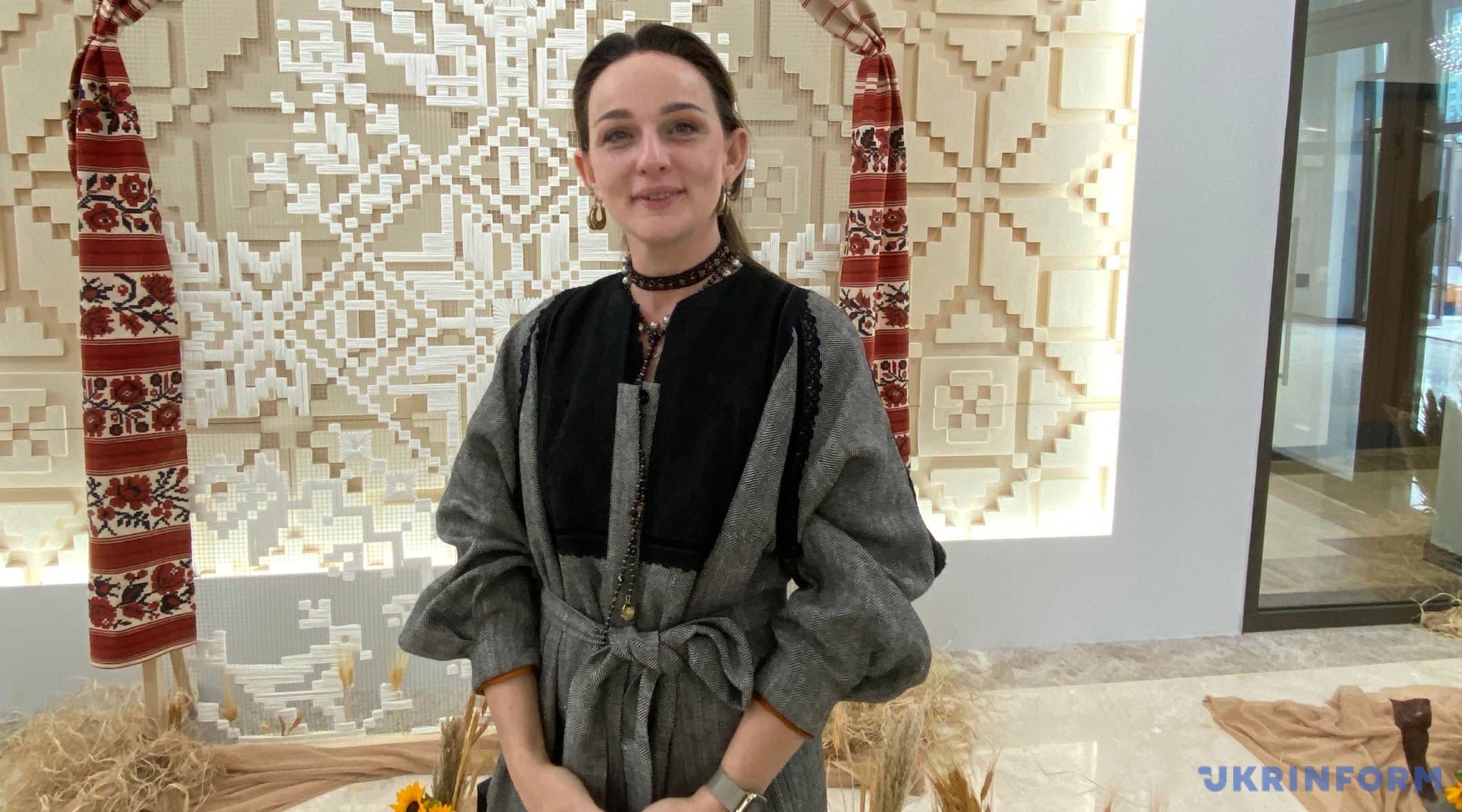
REVIVING AND RESTORING LOST EMBROIDERY TECHNIQUES HAS BECOME MY CALLING
UI: How did your deep love for the Ukrainian embroidered shirt begin, and what inspired you to share its uniqueness with the world?
KhR: I graduated from the Department of Design at the Lviv National Academy of Arts. Embroidery had always captivated me with its beauty. You look at it and immediately realize that it is something extraordinary—far more than mere decoration. It is a way of connecting with the history of Ukrainian culture, of exploring and preserving our heritage.
Gradually, embroidery became part of me. I no longer experienced it only with my eyes, but with my soul. That is how my passion began.
One day, one of my professors at the Academy, then in her seventies, told me that a single lifetime is not enough to truly understand and study Ukrainian embroidery. I was just over twenty at the time, and her words surprised me. It did not take long, however, for me to grasp their wisdom and appreciate just how profound and inexhaustible this art form really is.
Ukraine once had no fewer than a hundred embroidery techniques, yet most of them have been lost, many as a result of deliberate Soviet policies. Reviving and restoring those forgotten techniques has become my life's calling.
UI: In times of hardship, embroidered shirts often became a family's means of survival. People sold them during the Holodomor and other periods of extreme deprivation. Later, the Soviet regime sought to trivialize, simplify, and even ridicule this tradition. That makes the authentic shirts you have preserved and restored truly unique—a priceless cultural treasure.
KhR: Ukrainian embroidery has existed for centuries. Now that my collection includes more than 500 embroidered shirts, I no longer see them simply as garments. To me, each one carries someone's life story, with every thread and every stitch preserving a fragment of that history.
An embroidered shirt speaks to our continuity and our historical heritage. Some of the pieces in my collection are more than 120 years old. The people who embroidered and wore them are long gone, yet the shirts remain. They preserve not only a material legacy but also a spiritual code—one that we can continue to study, experience, and draw upon as we strengthen our culture and identity. Above all, it is a legacy we can pass on to our children.
UI: How do you find these embroidered shirts?
KhR: In many different ways. When I was a student at the Academy, I bought them at markets and traveled from village to village searching for them. I spent my entire scholarship on embroidered shirts. Even if I found only a small fragment, I wanted to understand how the embroidery had been made.
Later, after I established my brand, virtually every contemporary shirt I sold enabled me to acquire another antique one. It has become a continuous investment.
My parents joke that one day I will look like the women in those old photographs—barefoot, but wearing a beautiful embroidered shirt. In many ways, they are right. You have to give up certain things in order to preserve what truly matters. I believe the day will come when this collection will become a valuable resource for the people of Ukraine.
UI: It already has. We are witnessing a genuine revival of authentic Ukrainian clothing, and, most importantly, the vyshyvanka has become part of everyday life rather than something reserved for holidays or stage performances. What should we do to encourage children to embrace and carry on this tradition?
KhR: We need to tell them more, explain more, and speak the truth more often. We should neither embellish nor conceal anything. We must seek the truth ourselves, bring children to places where they can experience beauty firsthand, and, above all, lead by example.
I have two sons—they are six and four years old. I have a very clear understanding that it is my responsibility to introduce them to Ukrainian culture and Ukrainian identity. My children do not know a single Russian word and do not understand the Russian language at all. I let them play with and even wear the antique embroidered shirts from my collection. I want these shirts to be part of our everyday life—something my children naturally grow up with and see at home.
Today we are witnessing an extraordinary cultural revival—a powerful resurgence of Ukrainian culture. We have remarkable new musicians, traditional Christmas carols being reinterpreted for contemporary audiences, and theatrical productions that present our heritage in new ways. This is a process we must continue to support.
EVEN WHEN I GO TO A BOMB SHELTER, I TAKE A SUITCASE WITH THE MOST PRECIOUS EMBROIDERED SHIRTS FROM MY COLLECTION
UI: Ms. Rachytska, in addition to presenting your collection in Ankara, you also exhibited pieces from your personal collection. Could you tell us about them?
KhR: The exhibition I brought to Türkiye represents only a small part of a collection I have been building for more than twenty years. We displayed embroidered shirts dating from the nineteenth and twentieth centuries. It is my modest, yet living, presentation of Ukraine's history.
I brought to Türkiye the shirts that are most precious to me personally. I acquired one when my first son was born and another when my second son was born. Altogether, I exhibited ten shirts. Each of them is unique. They are, without exaggeration, always with me. Even when I go to a bomb shelter, I take a suitcase containing the most valuable embroidered shirts from my collection.
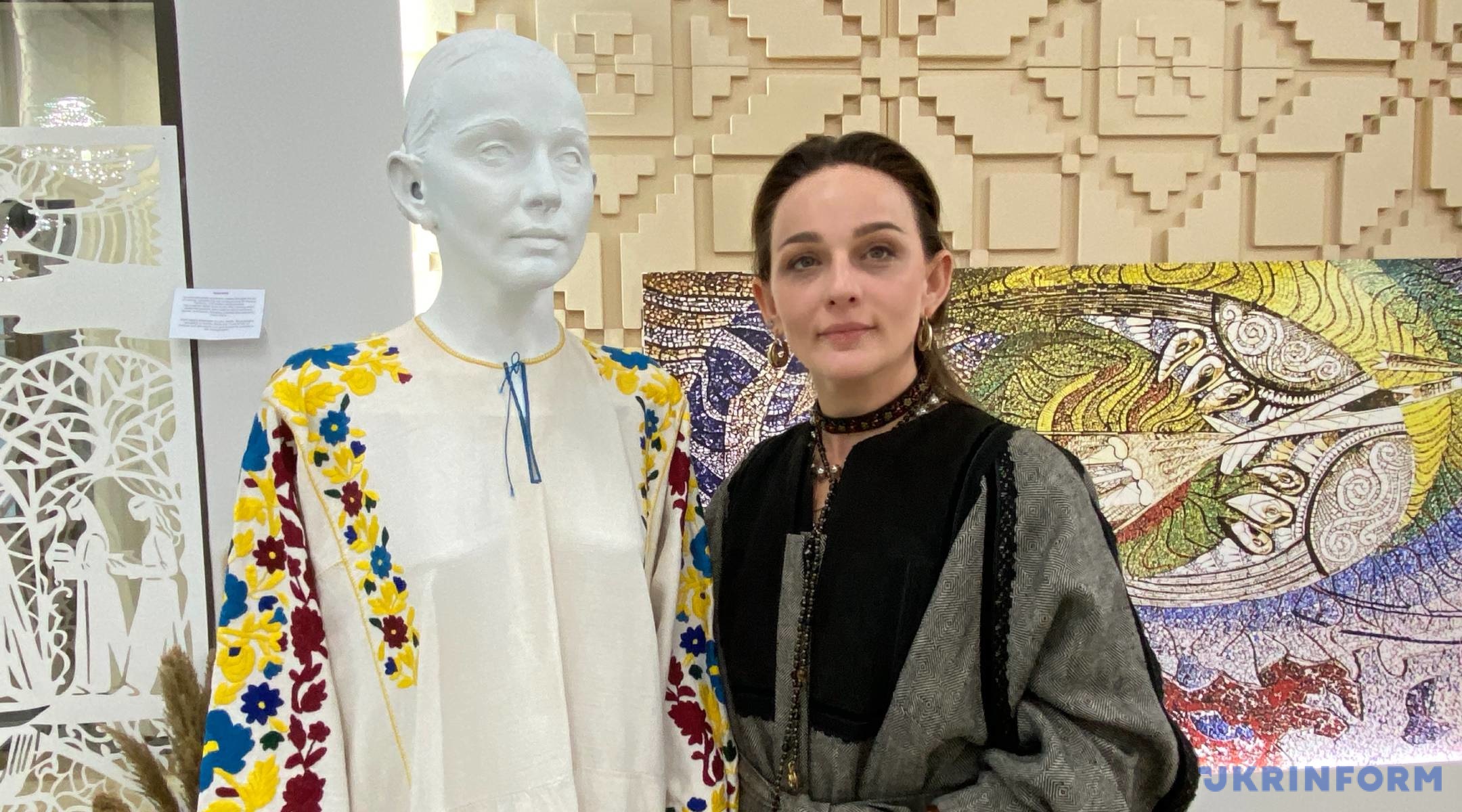
The mannequins are unusual as well. They were modeled on my own body (laughs). Contemporary fashion mannequins simply do not suit the display of antique embroidered shirts.
Old photographs show us how Ukrainian women dressed at the beginning of the twentieth century. Most of those photographs were taken on the occasion of a wedding. A woman would wear her finest embroidered shirt and hold either her youngest child, also dressed in embroidered clothing, a loaf of bread placed on an embroidered ritual towel, or the towels themselves. These were not wealthy people. They were ordinary Ukrainians who, despite lives of hard work, preserved a beautiful tradition of dressing with care, dignity, and pride.
We wanted our mannequins to resemble those women. I have immense respect for them—for their devotion to their families, their tireless work, and their deep spirituality. And, in a way, I even received some feedback from them (laughs).
UI: Feedback from past generations?
KhR: When I was preparing a major exhibition for Ukrainian Fashion Week in Kyiv, I wanted to introduce people in the fashion industry to the rich history and cultural heritage of traditional Ukrainian dress.
Organizing the exhibition under wartime conditions was exhausting. After days of travel, sleepless nights, and constant anxiety, I began to question whether I should have taken on such an ambitious project. Just before the exhibition opened, I finally drifted off to sleep.
I had a remarkable dream. I was walking along a road when a flock of sheep surrounded me and carried me into an ancient forest filled with mysterious fragrances. As I stood admiring its beauty, a young woman approached, placed her hand on my shoulder, and invited me to follow her.
At first, I hesitated and was afraid, so I refused. But she gently insisted.
"Do not be afraid," she said. "Do not doubt yourself. Do not doubt anything."
So I followed her.
We entered an old clay house with many rooms. In every room sat an elderly woman. As each one saw me, she reached beneath her pillow or into a wooden chest, took out an embroidered shirt, and held it out to me.
I refused to accept them because I knew they were treasured family heirlooms. But they kept placing the shirts in my hands, whispering:
"Take them. Take them. You are one of us."
That was where the dream ended.
Until then, I had occasionally questioned whether what I was doing truly mattered. After that dream, all my doubts disappeared.
TODAY, MEMORY IS NOT ONLY ABOUT THE PAST, BUT ALSO ABOUT OUR IDENTITY AND OUR RESPONSIBILITY TO FUTURE GENERATIONS
UI: Does your family have stories that have been passed down from generation to generation?
KhR: We do, and there are many of them. My great-grandmother and her sister served as couriers for the Ukrainian Insurgent Army (UPA), delivering food to fighters hiding in forest bunkers. The men were eventually executed, while my great-grandmother was sent into exile. In effect, she took the blame upon herself to save her older sister, who had a young child. There is even a photograph of my great-grandmother holding my grandmother, who was only three or four years old at the time. To me, it is an incredibly powerful story of fear, loss, and, at the same time, extraordinary courage, sacrifice, and devotion to family.
I also vividly remember 1991, when Ukraine regained its independence. Our family retrieved a statue of the Virgin Mary that had been hidden in a well for years. It had been concealed because even possessing such religious objects could be dangerous during the Soviet era. That, too, is part of our family's memory—a story of people who lived in fear but never lost their faith or their dignity.
I believe that today, during Russia's full-scale invasion of Ukraine, we understand those experiences far better. Many of the things previous generations remained silent about for decades now resonate in an entirely different way. They are no longer distant history; they help us understand who we are today.
We have come to appreciate the true price of freedom and independence in a new light. This war has compelled us to reexamine our own past. We now have a deeper understanding of those who endured struggle, loss, and political repression before us.
Today, memory is not only about the past—it is also about our identity and our responsibility to future generations. If we do not tell these stories ourselves, they will either be forgotten or told by someone else in our place.
At the same time, it is essential to speak about them honestly, without romanticizing war, while helping people understand the immense price that is paid for the right to live in freedom.
Olha Budnyk led this conversation. Ankara
Photos via Author
| # | Наименование новости | Тональность | Информативность | Дата публикации |
|---|---|---|---|---|
| 1 | Olha Stefanishyna, Ukraine's Ambassador to the United States | 0 | 10 | 03-07-2026 |
| 2 | Ukrainian Woman Expertly Crafts Prosthetics For Victims Of Russian Conflict | 0 | 7.51 | 13-03-2026 |
| 3 | Ihor Kharchenko, Ambassador, Chief Adviser to the Pylyp Orlyk Foundation | 0 | 11.13 | 27-07-2026 |
| 4 | Захарова: Украину "стирают ластиком с лица земли" | 0 | 10 | 27-07-2026 |
| 5 | Antonina Samoilova, the first Ukrainian woman to summit the world's five highest mountains | 0 | 9.07 | 06-08-2026 |
| 6 | Volodymyr Bachynskyi, Ambassador of Ukraine to Bosnia and Herzegovina | 0 | 8.92 | 14-08-2026 |
| 7 | Oleksii Makeiev, Ambassador of Ukraine to Germany | 0 | 7.09 | 03-07-2026 |
| 8 | Эксперт: украинцы хотят восстановления мира и прекращения русофобии | 0 | 0 | 01-06-2019 |
| 9 | Захарова: Украина - это инструмент, который Запад грязно использует | 0 | 6.05 | 27-07-2026 |
| 10 | Захарова: закон Украины о религиозных общинах имеет политическую составляющую | 0 | 0 | 23-01-2019 |