Просмотр новости
Найдите то, что Вас интересует
 Спутники
 РН
РН SpaceX
 Роскосмос
 NASA
NASA
СпутникиРНSpaceXРоскосмосNASAWe Must Not Only Win the War but Also Make the Most of the Potential It Has Given Us
Can Russia Collapse? Is Putin's Removal from Power a Prerequisite for Ending the War? How Dangerous Is the Rise of Anti-Ukrainian Sentiment in Poland? And What Is the State of Ukrainian Society in the Fifth Year of the Full-Scale War?
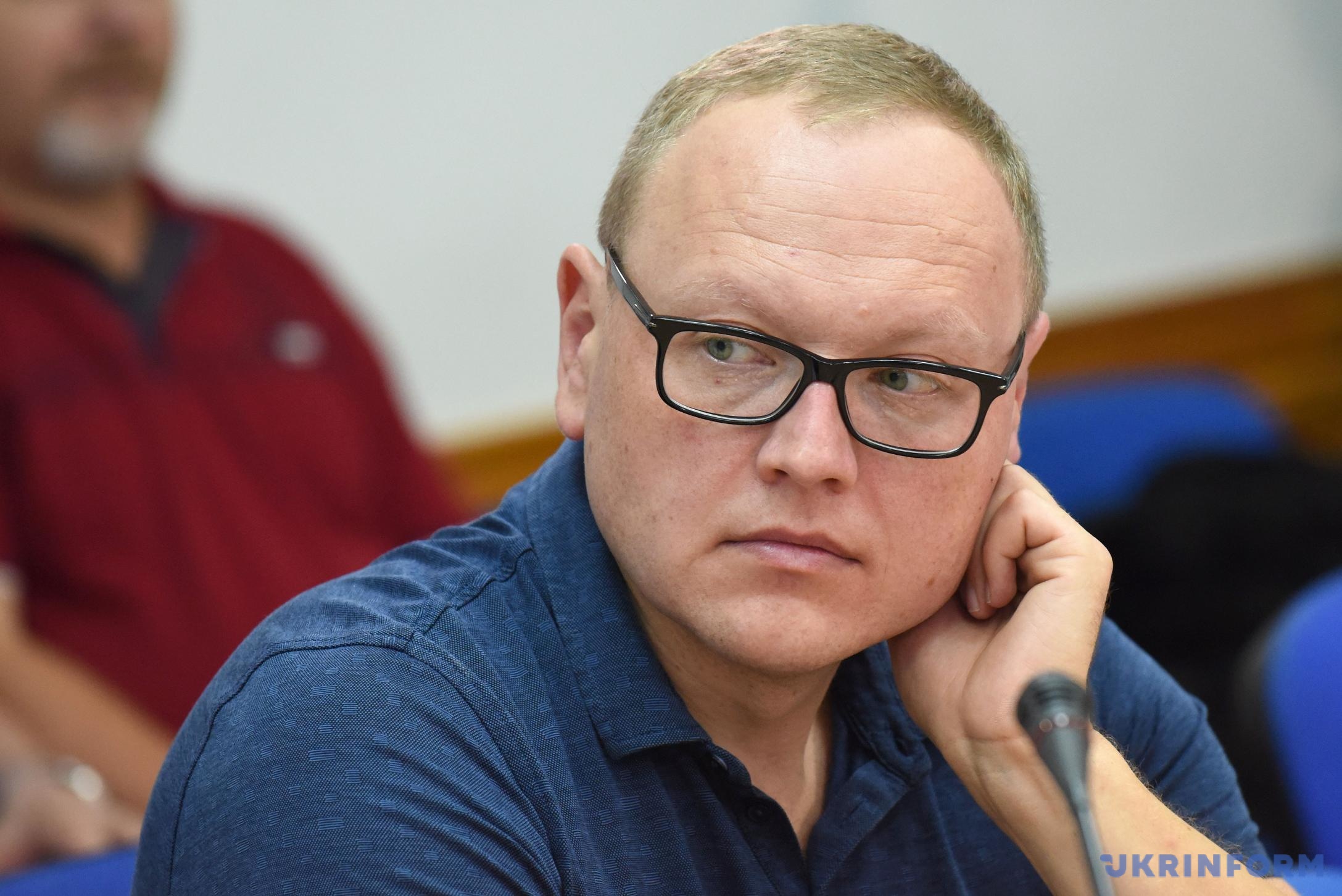
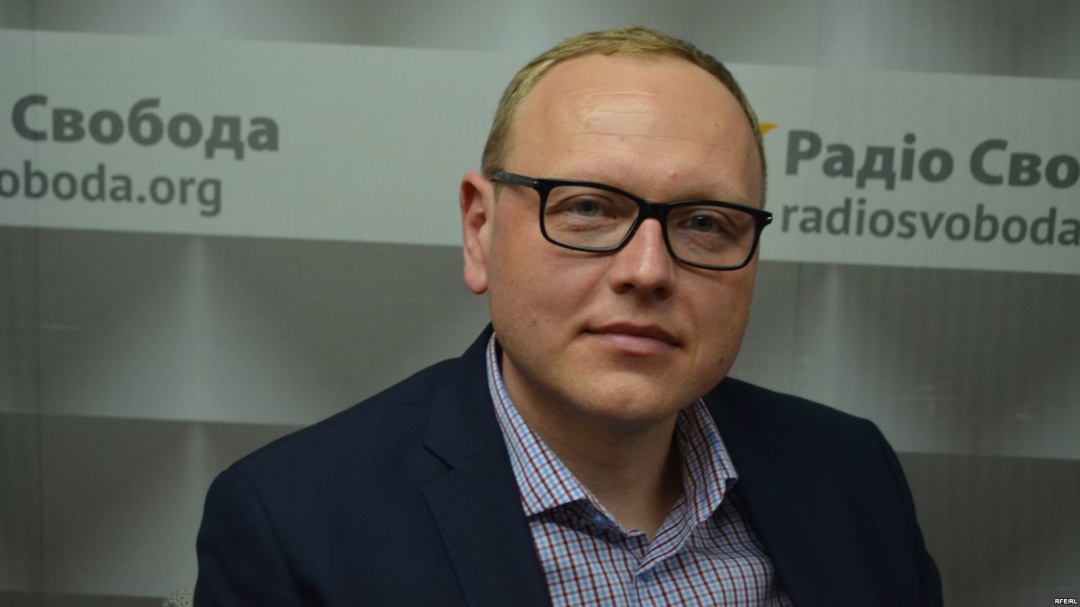
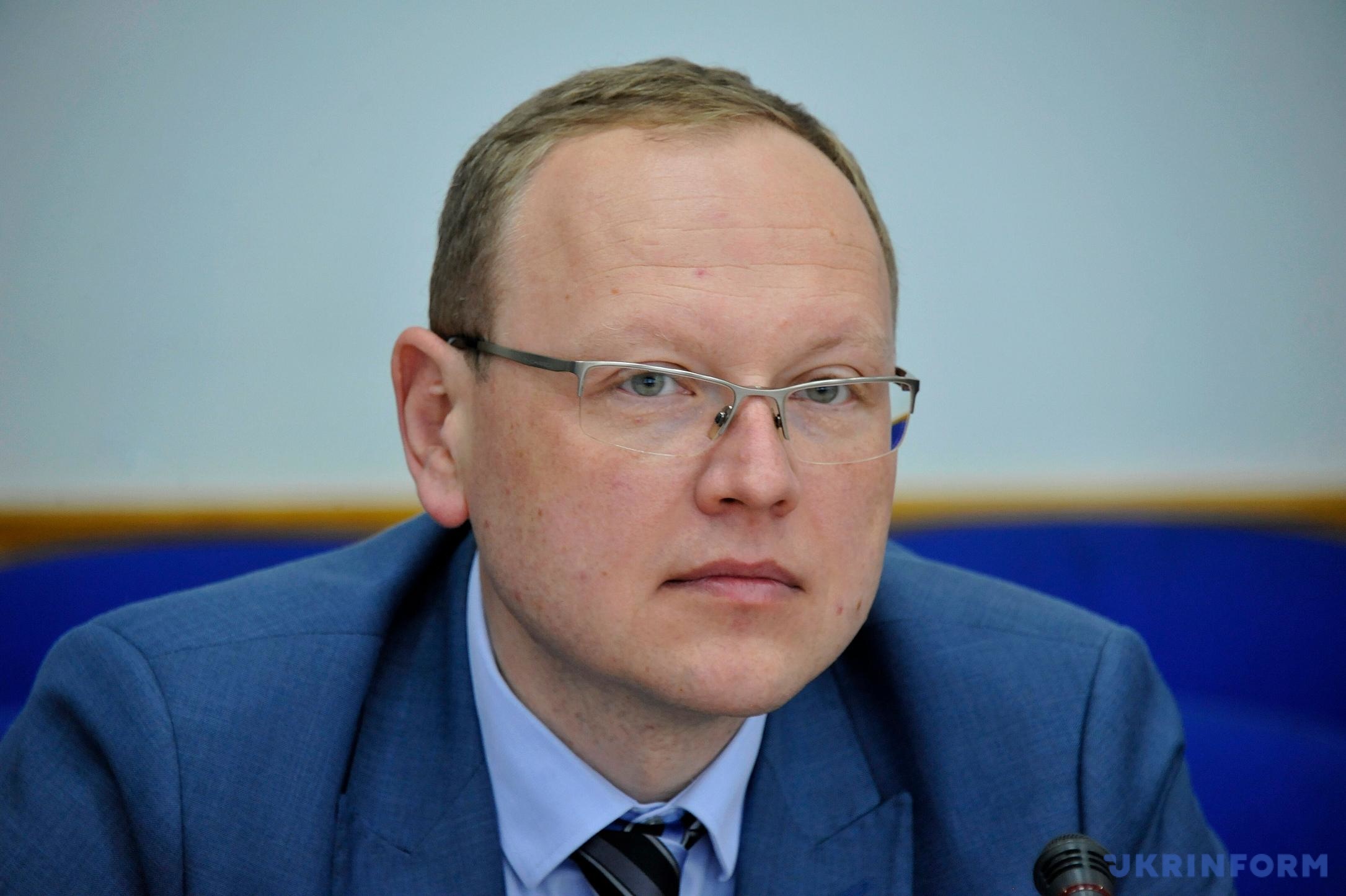
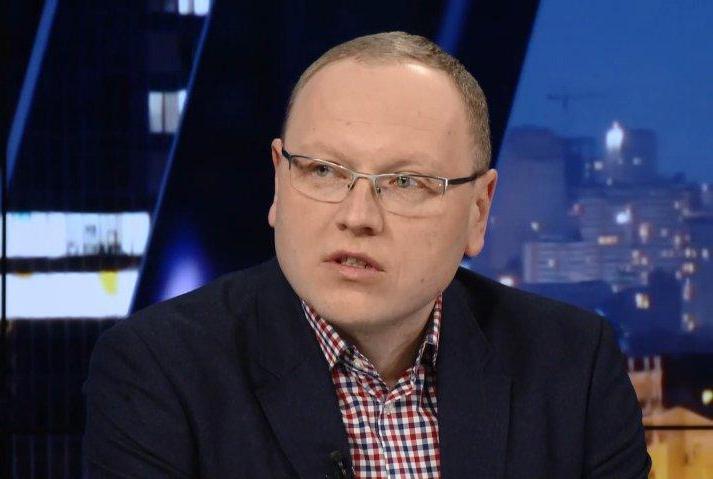
In a conversation with Ukrinform, Mykhailo Basarab, a serviceman in the Armed Forces of Ukraine and a political analyst, discussed these and other questions.
During the conversation, he explained why he believes the Ukrainian nation is the country's greatest source of resilience, assessed the prospects for an internal crisis in Russia, discussed possible scenarios for Crimea, and outlined his vision of Ukraine's future role in Europe's security architecture.
DURING WARTIME, WE CANNOT AFFORD TO BECOME ENEMIES OF ONE ANOTHER
Ukrinform (UI): We are now in the fifth year of Russia's full-scale invasion. Mr. Basarab, how would you assess the current state of Ukrainian civil society? How resilient is it, given that it faces daily attacks from Russian missiles and drones, relentless propaganda and information and psychological operations (IPSO), as well as domestic useful idiots—and not-so-useful scoundrels?
Mykhailo Basarab (MB): The greatest adversary Russia faces in this war is not the Ukrainian state but the Ukrainian nation—a community of engaged and responsible citizens united by a common purpose and capable of organizing itself.
The Russians have stubbornly failed to understand this reality, and it seems they still do. Even many of our Western partners have yet to fully appreciate the true strength and potential of Ukrainian society. They recognize Ukraine's resilience, but they do not always understand where it comes from.
Ukraine's tradition of civic solidarity runs deep. It has endured regardless of whether state institutions were strong or weak—and even during periods when an independent Ukrainian state did not exist.
UI: We saw Ukrainians of different ethnic backgrounds stand together during the Orange Revolution, the Revolution of Dignity, and many other defining moments in the country's history...
MB: Exactly. Time and again, Ukrainians have demonstrated an extraordinary ability to unite on their own whenever circumstances demanded it.
During the full-scale war, that capacity has found its clearest expression in the volunteer movement—both among those who joined the armed forces and those who mobilized on the home front. It was the determination, initiative, and sacrifice of these volunteers that helped transform Ukraine's military into the force that not only Ukrainians but the entire world recognizes today.
Had Ukraine lacked this immense grassroots volunteer resource, the course of the war would have been very different. Without this core of the nation, Ukraine would not have been able to withstand the invasion or inflict such devastating losses on the aggressor.
It was the willingness of ordinary citizens to take responsibility, act in the national interest, and support one another that enabled Ukraine to endure—first in 2014 and again after the full-scale invasion in 2022. The state's institutions alone would not have been sufficient to withstand a challenge of this magnitude.
Imagine that no volunteer military units had emerged in Ukraine—units that have since grown into entire corps. Imagine there had been no volunteer movement to support the armed forces through their most difficult moments. Would this war have unfolded the way it has? Would the Ukrainian military have become the force we admire today—a force respected and, in many ways, envied around the world? Would our country have been able to withstand Russian aggression for so long?
I believe the answer is obvious.
It is difficult to grasp the sheer scale of what committed Ukrainians do every single day to help secure victory. They act selflessly, without coercion, driven by their own sense of responsibility rather than by orders from above. I witness this firsthand, and I would not say it if I did not know it from personal experience. It is an extraordinary source of motivation.
That, in itself, is the clearest answer to your question about how strong the Ukrainian nation remains in the fifth year of Russia's full-scale invasion.
UI: Staying with the subject of Ukrainian society, do you believe it has responded adequately to recent developments?
MB: At the outset of the full-scale invasion, a mistake was made. Above all, the authorities sought to preserve as normal and comfortable a life as possible for the civilian population.
I would encourage every Ukrainian to open the Law of Ukraine On the Legal Regime of Martial Law and carefully read the provisions outlining the restrictions on citizens' rights and freedoms that may be introduced during wartime. The law authorizes the state to impose a broad range of extraordinary measures. Yet the overwhelming majority of Ukrainians have scarcely felt any of these restrictions and are often unaware that such measures even exist. That, in turn, has contributed to many of the internal tensions and misunderstandings we are witnessing today.
To some extent, we repeated the mistake made after 2014. Back then, the front lived one life while the rear lived another. Over time, a vast gulf emerged between those two realities, and it only continued to widen.
Today, we are once again seeing two parallel worlds take shape within the same country. One is inhabited by those who fight every day, risk their lives, carry out combat missions and countless other tasks essential to victory, along with their families. The other consists of people who, to a considerable extent, live as though there is no war at all.
That is why misunderstandings arise between those whose lives are defined by the war and those who remain largely untouched by it, even though they may live side by side. Those on the front line see the world through the lens of constant danger, personal combat experience, immense responsibility, and daily risk.
At the same time, they see fellow citizens who contribute nothing to the country's defense, yet can sometimes be remarkably forceful in demanding that their own rights be respected.
What struck me most about the so-called Cardboard Maidan protests was something else entirely. A simple question: how competent and well-informed were the participants when they made their persistent—and at times quite brazen—demands? After all, they were effectively issuing ultimatums over personnel appointments in the national security sector.
I will go even further. Neither I nor the overwhelming majority of people with military experience who are directly involved in prosecuting this war would presume to make categorical judgments about the performance of specific officials or commanders, because we simply do not possess all the relevant information. Yet we saw people making emphatic demands with complete confidence despite plainly lacking the necessary knowledge, experience, or expertise.
That level of certainty—and audacity—came as a genuine shock to many servicemen.
Forgive the comparison, but it resembles a kind of postmodern Bolshevism.
UI: The Armed Forces now have a new Commander-in-Chief, Mykhailo Drapatyi. At the same time, regarding Oleksandr Syrskyi... We are certainly not trying to idealize him. But he is one of Ukraine's most distinguished combat generals, and very few people in the country can match his military experience. Yet some protesters were chanting, "Syrskyi must go!"...
MB: I believe it is unacceptable for calls to dismiss the Commander-in-Chief to become the focus of street protests when 90 percent of those taking part have no connection to the military and, quite possibly, no sustained involvement even in volunteer work.
Today it was Syrskyi. Tomorrow someone may try to organize the same kind of campaign against Drapatyi or another battle-tested general. The issue is not the individual—it is the precedent such actions create.
I am convinced that there must be certain limits to how we express our civic views, especially during wartime. Ukraine today is in a fundamentally different situation from the one it faced during the Revolution of Dignity.
The country is no longer confronting a regime of collaborators. Yes, there are still people who obstruct reforms, and some individuals with deeply troubling records continue to do damage behind the scenes. But back then, Ukraine was led by President Yanukovych, and the state apparatus was effectively controlled by people acting in the Kremlin's interests. That was an entirely different situation—one that justified a nationwide uprising.
Today, the circumstances are fundamentally different.
Incidentally, many of those who took part in the Revolution of Dignity are now serving on the front line, fighting the enemy by every means available or volunteering to support the war effort. They would never have participated in the so-called Cardboard Maidan or allowed themselves to make such offensive remarks about the Commander-in-Chief of the Armed Forces of Ukraine.
UI: At that time, the confrontation was between Ukraine and Russia...
MB: Exactly. Today, we are trying to resolve internal issues within a country that is fighting for its very existence. That is something we must never lose sight of.
When discussing military leadership or other complex wartime issues, we must not become adversaries. I am not saying this because I advocate pretending that everything is fine. Quite the contrary. Debate is always necessary. Even military operations are discussed and scrutinized before orders are issued.
But we must remember one fundamental fact: today, everyone should be working toward the same objective—the defense of Ukraine and the defeat of the enemy. We should not casually try to influence decisions in areas where we lack the necessary knowledge and expertise. In wartime, overconfidence born of incompetence costs lives.
UI: In your view, is it appropriate to demand the appointment or dismissal of the Commander-in-Chief through street protests?
MB: I have already answered that question to some extent. Let me add only this: during a full-scale war, a person's civic commitment should be measured first and foremost by their tangible contribution to defeating the enemy—not by fighting one another inside Ukraine.
If you are able to serve, then join the armed forces. If you cannot, support them through volunteer work. There is more than enough work for everyone who genuinely wants to help.
I'll use my own experience as an example. Before the full-scale invasion, like many fellow political analysts, I regularly commented on domestic politics, political competition, and internal conflicts. After February 24, 2022, however, I made a conscious decision to stop commenting publicly on those issues.
I set a clear priority for myself: the enemy is not within the country—it is beyond our borders. That is why we should be cautious about making public judgments on domestic political issues. Instead, we should devote all our energy, knowledge, experience, and abilities to securing Ukraine's victory and defeating the enemy.
I am not suggesting that everyone must make the same choice. That is a personal decision. But for me, this is what fulfilling my duty means today.
RUSSIA IS ACTIVELY FUELING THE WAVE OF ANTI-UKRAINIAN SENTIMENT IN POLAND
UI: We will always remember the unprecedented support Poland extended to Ukraine immediately after the full-scale invasion began. At the same time, a number of difficult issues have accumulated between our countries. How deep is this crisis? Is genuine reconciliation between Ukraine and Poland—including on historical issues—still possible?
MB: I am convinced that reconciliation is possible. Ukraine and Poland have demonstrated an exceptional level of partnership—not only over the past few years but for decades. Together, often alongside Lithuania and our other Central and Eastern European partners, we have set an example of close regional cooperation, mutual support, and strategic partnership.
The current crisis is not of Ukraine's making. Moreover, it escalated remarkably quickly. What we are witnessing in Poland today could not have emerged overnight simply because of a few political statements. Clearly, deeper anti-Ukrainian attitudes had existed within parts of Polish society for quite some time. Incidentally, we do not see comparable attitudes toward Poles in Ukraine, even though Ukrainians have far more historical reasons to harbor resentment.
I do not believe this wave of hostility can be reversed quickly. It has already gathered considerable momentum. It will begin to recede only after reaching its peak, when a significant share of Polish society realizes that it has taken on unacceptable—even grotesque—forms. Only then will many of those who have fueled or participated in this hostility toward Ukrainians begin to feel ashamed of their association with such a regrettable phenomenon.
Unfortunately, we may still witness further violence against Ukrainians, including physical attacks, pogroms, and various forms of discrimination. We can already discern a trajectory pointing in that direction. Only when a critical mass of Polish society recognizes how dangerous, irrational, and ultimately self-destructive this trend has become will it be possible to return to a more rational public discourse. That is when this wave is likely to begin gradually subsiding.
Ironically, Russian missiles and drones flying over Polish cities could bring about reconciliation much sooner. Russian airstrikes—or Russian troops—have a way of sharpening people's understanding of reality. No one wishes such a scenario upon Poland, but the risk is serious enough that it cannot be dismissed.
There is another important point worth emphasizing. Polish researchers themselves have observed that the rise in anti-Ukrainian sentiment has been accompanied by a broader increase in xenophobia across Polish society.
UI: So this is not just about hostility toward Ukrainians, but toward other nations as well?
MB: Exactly. We can already see that some Polish politicians who until recently focused almost exclusively on anti-Ukrainian rhetoric have begun making similar statements about Lithuanians. Before that, they targeted Germans, Jews, and others.
The problem is therefore much broader than Polish-Ukrainian relations alone. What we are witnessing is the mainstreaming of xenophobia as a political tool in Poland's domestic discourse. That is an extremely dangerous development.
Nor should we underestimate the Russian factor. It has long been established that Russia has supported both far-right and far-left political movements in Poland. Some politicians who consistently promoted xenophobic rhetoric have already been formally charged with collaborating with Russia.
If you take a closer look at those who are currently among Ukraine's most vocal critics, you will find that many of them also promote openly pro-Russian narratives. They call for the normalization of relations with Russia, question the need to support Ukraine, echo familiar Kremlin talking points, or advocate Poland's withdrawal from the European Union and NATO.
That provides ample reason to conclude that Russia is actively encouraging and fueling the wave of anti-Ukrainian sentiment in Poland. But, as I have already emphasized, this is not solely about hostility toward Ukrainians. We are witnessing the deliberate cultivation of xenophobia directed at multiple nations. For the Kremlin, this is yet another instrument for weakening European unity, driving wedges between allies, and creating additional challenges for Ukraine, NATO, and the European Union.
THE RUSSIAN SYSTEM IS GRADUALLY RUNNING OUT OF RESILIENCE
UI: Almost the entire territory of the aggressor state is now within range of Ukrainian drones. Even Russia's own polling increasingly points to declining public confidence in Putin. Clearly, the regime is not about to collapse tomorrow, but do you already see the first signs of its erosion?
MB: Without question, the greatest surprise for the Kremlin leadership was Ukraine's ability—and above all, the determination of the Ukrainian people—to mount an effective resistance to Russian aggression. That is precisely why, when the Kremlin planned the invasion, it never envisioned a war that would drag on for years.
Today, however, we can see that the Russian system is gradually exhausting its reserves of resilience. There is ample evidence to support that conclusion.
First and foremost, Russia is being forced to devote an ever-growing share of its federal budget to military spending. At the same time, funding for civilian needs is being reduced, and the standard of living for ordinary Russians continues to decline. This is setting off a chain reaction across the broader economy.
The Kremlin's strategy of sustaining the war primarily through generous financial incentives for contract soldiers has also largely run its course. Fewer and fewer Russians are willing to fight against Ukraine, even in exchange for substantial sums of money.
As a result, the Kremlin is increasingly looking abroad for manpower. We are witnessing large-scale recruitment campaigns in poorer countries across Asia, Africa, and other parts of the world. In effect, Russia is importing mercenaries to compensate for its growing personnel shortages.
In many cases, this recruitment relies on deception. There is abundant evidence that people are promised civilian jobs in Russia or transit to Europe through Russian territory. Once they arrive, however, many of these vulnerable individuals find themselves sent almost immediately into so-called "meat grinder assaults" on the front line.
Russia's economy is becoming increasingly distorted. Based on verified data and official statistics, macroeconomic analysts already describe entire civilian sectors unrelated to the defense industry as being in stagnation. Virtually all available resources are being redirected toward the war effort, while civilian industries continue to deteriorate.
For now, Russia's financial system still projects an image of stability. But that cannot continue indefinitely. The Central Bank's monetary interventions cannot forever compensate for the economy's deep structural imbalances.
An additional burden has come from Ukraine's deliberate long-range strikes against high-value targets inside Russia. Attacks on oil refineries and export infrastructure, the destruction of chemical industry facilities, military installations, logistics hubs, and other strategic assets are steadily increasing the pressure on Russia's economy. At the same time, they are forcing Moscow to devote ever greater resources to defending its own territory and plugging an ever-growing number of vulnerabilities.
UI: Yet from the outside, the regime still appears remarkably stable. Why is that?
MB: That is characteristic of virtually every totalitarian system. Such regimes can project an image of strength and stability for a very long time.
The Soviet Union also appeared to be an exceptionally powerful state right up until the eve of its collapse. Despite mounting internal problems, it was engaged in a global arms race with the United States, giving the impression that the system was robust and durable. Much of that strength, however, was little more than a façade intended for external audiences.
Modern Russia operates in much the same way, carefully cultivating an image of power, confidence, and stability.
Yet once a critical mass of problems had accumulated, they overwhelmed the Soviet Union, which then unraveled with remarkable speed. It was a classic example of a regime attempting to conceal a profound internal crisis behind an imposing façade.
Modern Russia is following a strikingly similar trajectory.
Totalitarian regimes differ fundamentally from democratic states. In democracies, problems become visible almost immediately, and society has mechanisms for discussing and addressing them collectively. Freedom of speech, independent media, and political competition enable societies to identify emerging crises at an early stage.
Totalitarian systems operate in exactly the opposite way. They are sustained by coercion, fear, repression, and the illusion of stability. They project the image of a strong state, even as extraordinarily serious problems accumulate beneath the surface.
That is precisely why, once such a system begins to lose control, events can unfold with remarkable speed. The first signs that the center is no longer capable of fully maintaining its grip are enough to trigger a chain reaction of disintegration.
We should not forget that a significant portion of the Russian Federation consists of subjugated peoples spread across vast territories, held together by force for centuries. Beyond that, there are regional elites, criminal networks, and local business interests whose relationship with Moscow is based not on loyalty, but on the way the system itself is structured.
The moment it becomes clear that the center is losing its power and control, many will seize the opportunity to gain greater freedom, more control over their own resources, or increased political autonomy. That will unleash powerful centrifugal forces that will be impossible to contain. Just look at how the totalitarian regime in almost entirely monoethnic Romania collapsed. Now imagine today's Russian Federation, where a Buryat, a Chechen, or a Bashkir knows perfectly well that he is not ethnically Russian.
A few years ago, I had the opportunity to speak with Yakut volunteers who had come to fight for Ukraine. I was astonished to discover that these citizens of the Russian Federation could barely understand Russian, let alone speak it. What, then, holds all these people together apart from the coercive power of the state's repressive apparatus? Once that coercive force weakens, they will no longer remain together.
Exactly when this will happen—whether in a few months or in a few years—is impossible to predict. But I am convinced that Russia cannot continue indefinitely under its current model of permanent war and economic exhaustion. Such a system is ultimately unsustainable.
THE LOSS OF CRIMEA WOULD BE ONE OF THE MOST PAINFUL BLOWS TO THE KREMLIN
UI: Ukraine is steadily severing occupied Crimea from the Russian mainland. To what extent could the Crimean factor become a serious source of pressure on the Kremlin?
MB: The loss of control over the peninsula—or even a significant weakening of Russia's position there—could become one of the most painful blows to the current regime, above all in psychological terms.
For Putin, Crimea has long symbolized his so-called "march of victories." It serves as a source of legitimacy for his personal rule and is one of the central pillars of contemporary Russian imperial mythology. Any serious setback on the peninsula would be perceived as unmistakable evidence of the Kremlin's weakness.
That, in turn, could undermine public confidence in Putin's ability to remain in control. After all, the foundation of any authoritarian regime is the belief that its rulers are strong and incapable of losing.
As a result, even a partial loss of control over Crimea could become the catalyst for an increasingly visible chain of destabilizing processes within the Russian Federation itself.
UI: So, a Crimea without the "Russian world" is a realistic prospect?
MB: Yes. At the same time, Ukrainian society should avoid an overly simplistic understanding of what Russia's withdrawal from Crimea would actually entail.
Even if Russia loses the ability to exercise effective control over the peninsula, that would not automatically mean Crimea immediately returns under Ukrainian administration. Re-establishing effective governance over such a territory would require enormous military, financial, and human resources. During an ongoing war, Ukraine may urgently need those same resources elsewhere along the front.
That is why a transitional period is entirely conceivable—and it could prove lengthy—in which Russia is no longer capable of exercising full control over Crimea, while Ukraine has not yet acquired the capacity to fully restore its own authority there.
We should therefore prepare for such a scenario now, above all through the work of our intelligence services and the Armed Forces. At the same time, we should already begin drafting legislation establishing a special transitional legal regime for Crimea and, potentially, other liberated territories. Restoring these areas to normal life under Ukrainian law and administration will inevitably take time.
PUTIN'S DEPARTURE WOULD NOT MEAN RUSSIA HAS CHANGED
UI: Is Putin's departure from power—whether for political or biological reasons—the key prerequisite for ending the war?
MB: Ukraine's problem is not Putin. Ukraine's problem is Russia as an empire and its centuries-long policy of aggression toward the Ukrainian people and the Ukrainian state.
Unfortunately, Ukraine—and Kyiv in particular—occupies a unique place in Russia's state identity. Within the Russian imperial worldview, Kyiv is regarded as one of the principal sources of the historical legitimacy of the Russian state itself.
That is precisely why the Kremlin will always regard the existence of an independent Ukraine as a fundamental challenge to its imperial project.
For that reason, it makes little fundamental difference who happens to be in power in Moscow—a tsar, a Communist Party general secretary, or a president. It could be Putin's daughter, Patrushev, or even a hypothetical Navalny. If Russia continues to exist as an empire, it will remain a threat to Ukraine.
That is an axiom.
UI: So if the Russian Federation survives as an empire, it will continue to pose an existential threat to Ukraine?
MB: Absolutely. The Russian imperial project is fundamentally incomplete without Ukraine. For the Kremlin, the struggle over Ukraine is not merely about territory. It is a struggle for its own historical legitimacy—for the right to be what it has aspired to become for centuries: an empire.
That is why our objective cannot be limited to driving Russian forces out of the occupied territories. Ukraine will enjoy lasting security only when Russia ceases to exist as an imperial state.
One of the greatest strategic mistakes made in 1991 was that policymakers in the White House, the State Department, and the Pentagon feared the complete collapse of the Russian empire. The Soviet Union disintegrated, but the Russian imperial structure was never fully dismantled. It was allowed to survive. In effect, yesterday's Cold War adversaries helped Muscovy preserve its imperial character.
Later, the Soviet security apparatus—first the KGB and then its successor, the FSB—managed to rebuild the empire, redirecting the Soviet legacy toward consolidating the Russian Federation. From that point onward, Russia once again became a source of threats not only to its neighbors but to the entire free world.
UI: Georgia, Syria, Ukraine...
MB: The restored Russian empire, now operating under the banner of the Russian Federation, has been waging a large-scale undeclared war against the West for years. Many of the crises confronting Western democracies today have reached their current scale because of the systematic efforts of the Russian security services.
We are talking about extensive covert operations designed to weaken the West: polarizing societies, discrediting democratic institutions, undermining allied unity, corrupting public officials, exacerbating migration crises, and much more.
Russia has never concealed its hostile intentions toward the West. Through its war against Ukraine, it seeks to restore its imperial legitimacy. Through its undeclared campaign against Western democracies, it aims to reshape the global balance of power by weakening U.S. leadership and gradually eroding the foundations of Western civilization.
In essence, Russia has long served as an instrument in a broader struggle to transform the international order. The Kremlin seeks to displace the United States as the world's leading power and replace the existing rules-based order with one more favorable to authoritarian regimes. In that respect, Russia's strategic objectives largely coincide with those of China.
UI: So removing Putin would not solve the problem...
MB: Certainly not. Russia has its own version of a "deep state." At the core of that deep state is the FSB, the successor to the KGB. It was this security establishment that effectively rebuilt the Russian empire after the collapse of the Soviet Union. It is the institution that defines the country's long-term strategic course, regardless of who formally occupies the presidency.
Under Putin, incidentally, the KGB–FSB establishment has dramatically expanded its influence over both Russia's domestic governance and foreign policy.
That is why replacing the individual at the top does not necessarily mean changing the system itself.
They have no intention of stopping. In the foreseeable future, the Kremlin could well resort to open military aggression against one or more NATO member states.
UI: Why do you believe that?
MB: The reason is straightforward. Russia's war against Ukraine has dragged on and, in many respects, reached a strategic impasse. It has become costly and exhausting, and it no longer provides the Kremlin with the image of continuous military success that it wanted to project both to the Russian public and to the rest of the world.
For that reason, the Kremlin is likely to look for new arenas in which it can visibly project military power in order to sustain the narrative of a "victorious" war.
Russia could resort to limited acts of aggression against NATO member states—most likely the three Baltic states or targets in the Baltic Sea region. The objective would not necessarily be to trigger a full-scale war with the Alliance, but rather to test NATO's cohesion, resolve, and capacity for a collective response. The Kremlin's calculation would be that hesitation or disunity within NATO would create shock and uncertainty among its members.
Another possibility is the opening of new pressure points along Ukraine's northern border. Both the President of Ukraine and the country's military leadership have already warned of potential threats in the Chernihiv direction.
The Russians might even be prepared to relinquish ground or reduce pressure in southern Ukraine—or scale back operations elsewhere—in order to establish a new axis of pressure. The objective would be to demonstrate at least some visible momentum and preserve the appearance of offensive progress.
I AM CONVINCED THAT UKRAINE WILL WIN THIS WAR
UI: It seems that most of our Western partners have now come to realize that Russia is incapable of winning this war. At the same time, many of them remain deeply concerned about the prospect of instability—or even the collapse—of the Russian Federation. How can Ukraine change that perception?
MB: Ukraine has only one way to prove its case: to endure, to defend its freedom, sovereignty, and territorial integrity. Only by doing so can we convince the skeptics that Russia is not invincible and that the Kremlin's aggression cannot be contained through concessions.
Unfortunately, many in the West still cling to a stereotype inherited from the Soviet era. It is the belief that the Soviet Union—and now Russia—is somehow unconquerable, and that the only viable way to deal with it is through coexistence and endless compromise. Paradoxically, even the collapse of the Soviet Union was not enough to persuade many Western elites otherwise.
Stereotypes are remarkably resilient.
In reality, Russia is an extraordinarily fragile construct, even if it appears formidable from the outside. It is held together not by genuine national cohesion but primarily by a rigid system of coercion—its repressive apparatus, fear, and force.
But the moment that apparatus begins to show even the slightest sign of weakness, internal centrifugal forces can gather momentum with remarkable speed. If Russia were truly a consolidated society—if there genuinely existed a single Russian nation—there would be far less reason to believe that the state is destined to unravel. If the peoples of the federation genuinely shared a common historical narrative, a common culture, a common identity, and a shared vision for the country's future...
But nothing of the sort exists.
UI: What exactly do you mean by that, Mr. Basarab?
MB: A significant portion of the Russian Federation's population simply does not identify with the hastily assembled, eclectic identity that the Kremlin has sought to impose over the past several decades. That is only natural.
It is very difficult to persuade the average resident of Kaluga Oblast that he is the brother of a Tuvan, a Buryat, a Yakut, or a Lezgin. It is equally difficult to convince members of those peoples that they and their ancestors have always been Russians—and always will be.
Today, what holds them together is little more than the coercive power of the National Guard and the FSB, combined with the belief that the regime remains strong.
To some extent, the system is also sustained by Soviet mythology, lightly overlaid with imperial-era symbolism and occasional displays of contemporary patriotic rhetoric. Taken together, it forms a rather grotesque construct—artificial and ultimately unconvincing, even to many citizens of the Russian Federation themselves.
The Kremlin's propaganda revolves around Soviet symbols and historical memory, clinging to them as though they were its last remaining lifeline. This is virtually the only narrative that still gives Russia's highly heterogeneous population the illusion of belonging to a single nation.
That is precisely why it occupies such a sacred place in the Kremlin's worldview. The message is simple: one man's grandfather fought alongside another's during the so-called Great Patriotic War; together they captured Berlin; therefore, they all belong to one nation.
But that narrative is no longer enough.
The Kremlin has no other convincing foundation on which to build the idea of a unified Russian nation. Putin and the other ideologues behind this war believed that a triumphant victory over the so-called "Kyiv regime" and the humiliation of the West would provide the basis for a new Russian identity.
That victory never came.
So, to borrow a familiar phrase, the project of forging a new Russian identity has effectively been abandoned, leaving the Kremlin to recycle the same old stories about the capture of Berlin in 1945.
That is precisely why everything will begin to unravel the moment it becomes clear that the center is no longer all-powerful. Once that happens, there will be nothing left to hold the system together.
UI: Unlike the Russian Federation, the Ukrainian political nation is fully formed...
MB:Ukrainian identity is real. We share a common understanding of our history stretching back at least to the early Middle Ages, as well as a clear awareness of our distinctiveness. We remember both our shared tragedies and our greatest achievements. We have common heroes and common antiheroes, and we take pride in that shared historical experience. Today, this is more evident than ever.
The overwhelming majority of Ukrainians also share the same understanding of what Ukraine's success looks like.
Russia's repeated attempts to divide Ukraine into East and West, or to portray it as an "artificial state" or a "non-existent nation," failed even when Ukrainian society was far less united than it is today. They have even less chance of succeeding now.
Ukrainians know who they are. Some know their history better than others, but the overwhelming majority possess a clear sense of national identity. That is what guarantees Ukraine's survival as an independent state and nation.
The real question is what our future will look like.
Here I would draw attention to one important point. We could speak with much greater confidence about the future of Ukraine, Europe, and the wider world if we knew how the current global confrontation would ultimately end. This is not merely about the Russian-Ukrainian war.
In reality, we are witnessing a much broader conflict—a campaign by the heirs of Stalin and Mao Zedong against Western civilization.
China, Russia, North Korea, and their partners are waging an undeclared war against the West in an effort to reshape the international order and impose their own rules on the world.
That is why the Russian-Ukrainian war must be viewed within the broader context of this civilizational confrontation.
If Western civilization preserves its leadership, defends its values and the rules-based international order, and succeeds in preventing the resurgence of post-communist authoritarian regimes, that will create one set of prospects—for both the world and Ukraine.
If, however, China, Russia, and their partners succeed in implementing even part of their agenda, the world will become a fundamentally different place. Consequently, the environment in which Ukraine will have to exist will also be profoundly different.
UI: Looking beyond the war and considering Ukraine's future more broadly, do you see yourself today primarily as an optimist, a realist, or a pessimist? Why?
MB: I am convinced that Ukraine will win this war because it will preserve its freedom. Russia will not achieve its strategic objective of destroying Ukrainian statehood.
I also believe there is a strong likelihood that the Russian empire, in its current form, will not survive. It is unlikely to avoid either disintegration or a significant reduction in its size and power.
I would add one more point: Beijing is unlikely to be particularly troubled by such an outcome, and the West would do well to take that into account.
But let me emphasize once again that Ukraine does not exist in a vacuum. Our country will be part of the profound global transformations that are already underway. To a significant extent, Ukraine's future prospects will depend on what kind of world emerges in the years ahead.
If I were to answer your question in a single sentence, however, I would say that I am undoubtedly an optimist.
I have no doubt that Ukraine will preserve and strengthen its standing as a sovereign actor on the international stage. More than that, I believe that by the end of this war, Ukraine will have every opportunity to emerge as one of Europe's new leaders.
We have already gained unparalleled experience in modern warfare, built one of the continent's most capable armed forces, developed cutting-edge military technologies, demonstrated the resilience of our society, and proven our ability to defend not only ourselves but Europe as a whole. We have mobilized as a nation, fully consolidated our national identity, and we will remain vigilant and prepared.
All of this is giving Ukraine a fundamentally new international standing and opening the door to a far more influential role in both European and global affairs.
Our task is not only to win this war but also to make the most of the extraordinary potential that the Ukrainian state and society have developed through this immensely difficult struggle. To a large extent, Ukraine's future place in the world will depend on how effectively we capitalize on that potential.
Myroslav Liskovych led this conversation, Kyiv
| # | Наименование новости | Тональность | Информативность | Дата публикации |
|---|---|---|---|---|
| 1 | Yehor Cherniev, Head of the Ukrainian Delegation to the NATO Parliamentary Assembly | 0 | 8.19 | 04-08-2026 |
| 2 | Владимир Жириновский: Полностью освободить Украину и там поставить везде свою власть. Украины быть не должно | 0 | 9.18 | 24-12-2021 |
| 3 | Volodymyr Bachynskyi, Ambassador of Ukraine to Bosnia and Herzegovina | 0 | 8.92 | 14-08-2026 |
| 4 | Stefanie Babst, Former Head of NATO’s Strategic Foresight Team | 0 | 7.66 | 25-08-2026 |
| 5 | Песков: поставленные Россией цели на Украине сейчас можно достичь только военным путем | 0 | 0 | 13-03-2023 |
| 6 | "Мы должны достичь своих целей". Песков о конфликте на Украине | 0 | 8.1 | 25-07-2026 |
| 7 | Given Kiev’s stance, freezing conflict in Ukraine impossible — Kremlin spokesman | 0 | 10 | 25-07-2026 |
| 8 | Украине некем воевать, заявил Медведев | 0 | 7.51 | 28-07-2026 |
| 9 | לחקור, לאמת, להצליב את ההרג בעזה — שלא תישאר מעל צה"ל וישראל עננה | 0 | 5 | 05-07-2026 |