Просмотр новости
Найдите то, что Вас интересует
 Спутники
 РН
РН SpaceX
 Роскосмос
 NASA
NASA
СпутникиРНSpaceXРоскосмосNASAIn the historic southeastern city of Türkiye's Şanlıurfa, one dish stands out during winter and on special occasions: the geographically registered “Urfa pencer (chard) borani...
In the historic southeastern city of Türkiye's Şanlıurfa, one dish stands out during winter and on special occasions: the geographically registered “Urfa pencer (chard) borani.” Known for its distinctive flavor, the dish remains a beloved part of the region’s gastronomy.
Although preparing borani is labor-intensive and its home-cooked tradition is gradually declining, women in Şanlıurfa continue to make the dish for family gatherings and festive celebrations. Its vibrant presentation appeals to the eye, while its rich taste satisfies the palate, making borani one of the city’s culinary treasures that risks being forgotten.
Chef Ayşe Akyol, who shared the recipe, emphasized borani’s significance in Şanlıurfa’s unique culinary tradition. “Our aim is to preserve this nearly forgotten dish and pass it on to future generations,” she said.
According to Akyol, borani has historical roots that trace back to earlier periods. Legend has it that the dish is named after a talented Persian princess, and over time, “borani” became a term associated with highly praised dishes.
Borani recipe (serves five)Ingredients
1 kilogram meat
500 grams chard stems
1 onion
1 handful tail fat (kuyruk yağı)
2 cups cooked chickpeas
Salt
Urfa clarified butter (for browning meat)
For the meatballs
2 cups bulgur
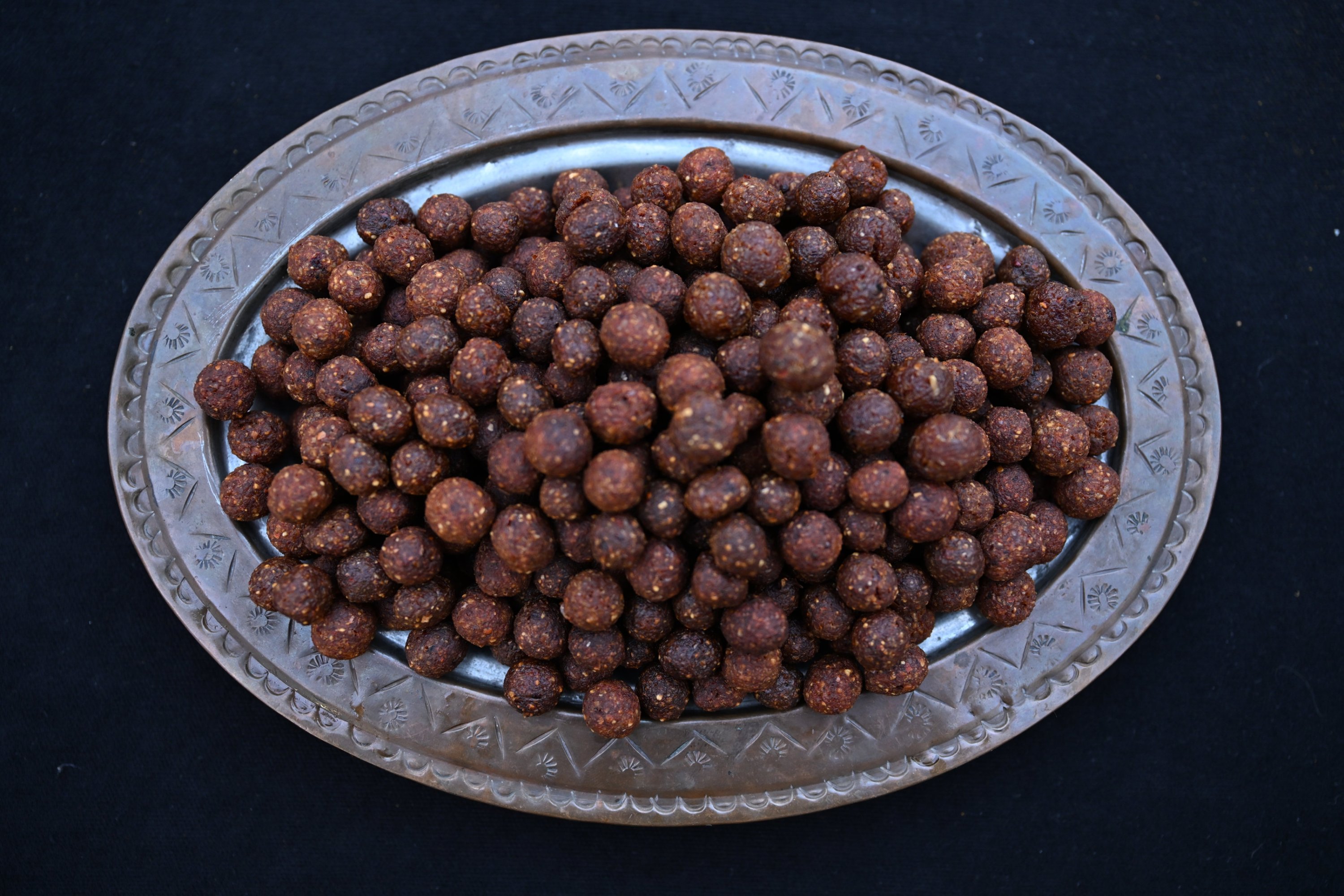 In this undated photo, the meatballs of borani are displayed, southeastern Türkiye, Şanlıurfa. (AA Photo)
1 egg
1 cup semolina
½ tea cup flour
Red pepper flakes
Black pepper
Salt
Preparation
Soak bulgur in warm water.
Cut the meat into cubes and cook in a pressure cooker for 15 minutes.
Chop chard stems and boil for five minutes.
After cooking, drain the meat and reserve the liquid.
Saute chopped onion and tail fat with the meat in the pressure cooker.
Add the boiled chard stems to the sauteed meat.
Add cooked chickpeas and pour the reserved meat broth over the mixture.
Season with salt, bring to a boil, then cover and simmer on low heat for 40 minutes.
For the meatball, mix bulgur with semolina, egg, flour, salt, black pepper and red pepper flakes; knead thoroughly.
Shape the mixture into balls and fry in oil until golden, then set aside.
Once the borani is cooked, place it on serving plates and top with the fried köfte.
Optionally, serve with garlic yogurt for added flavor.
| # | Наименование новости | Тональность | Информативность | Дата публикации |
|---|---|---|---|---|
| 1 | Bayburt’s ‘lor dolması’ highlights Türkiye’s regional cuisine | 0 | 9.78 | 15-03-2026 |
| 2 | Turkish foods offer health benefits beyond basic nutrition: Study | 0 | 6.69 | 15-04-2026 |
| 3 | How to make Adana stuffed meatball: Classic Turkish cuisine staple | 0 | 7.95 | 09-03-2026 |
| 4 | Analı kızlı: Taste of Türkiye's heritage for your Ramadan table | 0 | 7.16 | 25-02-2026 |
| 5 | Çorum in central Anatolia targets UNESCO gastronomy recognition | 0 | 6.14 | 14-01-2026 |
| 6 | Ancient clay pots make beans a must-try in Türkiye’s Nevşehir | 0 | 8.88 | 13-03-2026 |
| 7 | Not sure what to make for iftar? Try Turkish tray mantı | 0 | 7.23 | 24-02-2026 |
| 8 | Delicious iftar ideas: Make traditional Turkish tray kebab at home | 0 | 7.54 | 02-03-2026 |
| 9 | Sinop mantı: Turkish dumpling gains fame for walnut-yogurt twist | 0 | 8.31 | 12-03-2026 |
| 10 | TasteAtlas ranks 10 best Turkish dishes in world for 2026 | 0 | 12.43 | 14-05-2026 |