Просмотр новости
Найдите то, что Вас интересует
 Спутники
 РН
РН SpaceX
 Роскосмос
 NASA
NASA
СпутникиРНSpaceXРоскосмосNASA[…] © Vermont Center for Ecostudies […]
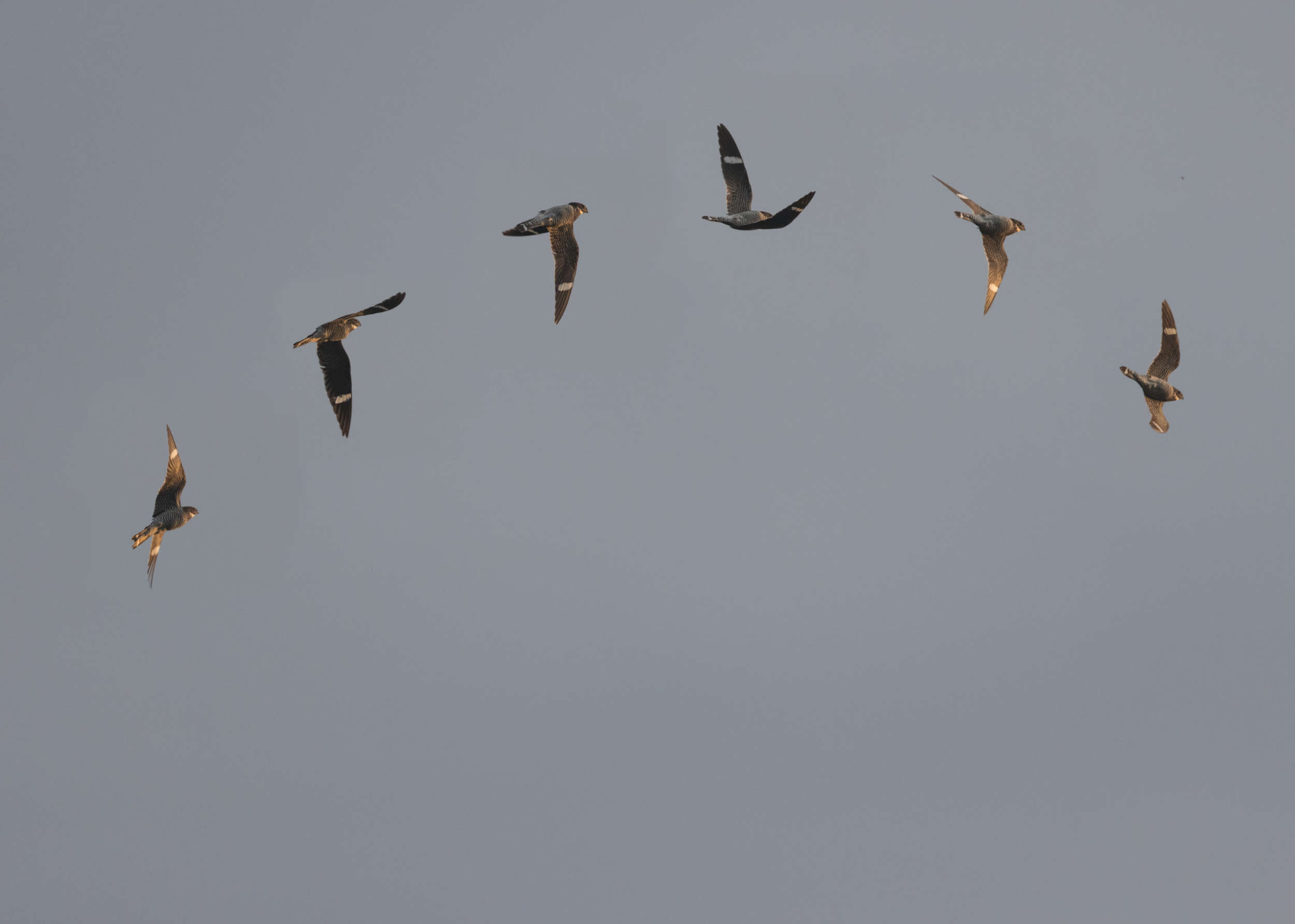
A Common Nighthawk’s erratic, graceful flight evokes wonder in any observer. Edited images of a migrant bird at Campbell Flat, Norwich, VT on 26 August 2021. © Tig Tillinghast
Swooping, swerving, dipping, gliding, fluttering, looping—the erratically graceful flight of migrant Common Nighthawks on late summer evenings enthralls anyone who beholds it. When performed by tens or even hundreds of birds simultaneously coursing overhead, the effect is spellbinding. The annual southward migration of nighthawks through Vermont and other New England states, peaking in late August and early September, is a truly stirring spectacle.
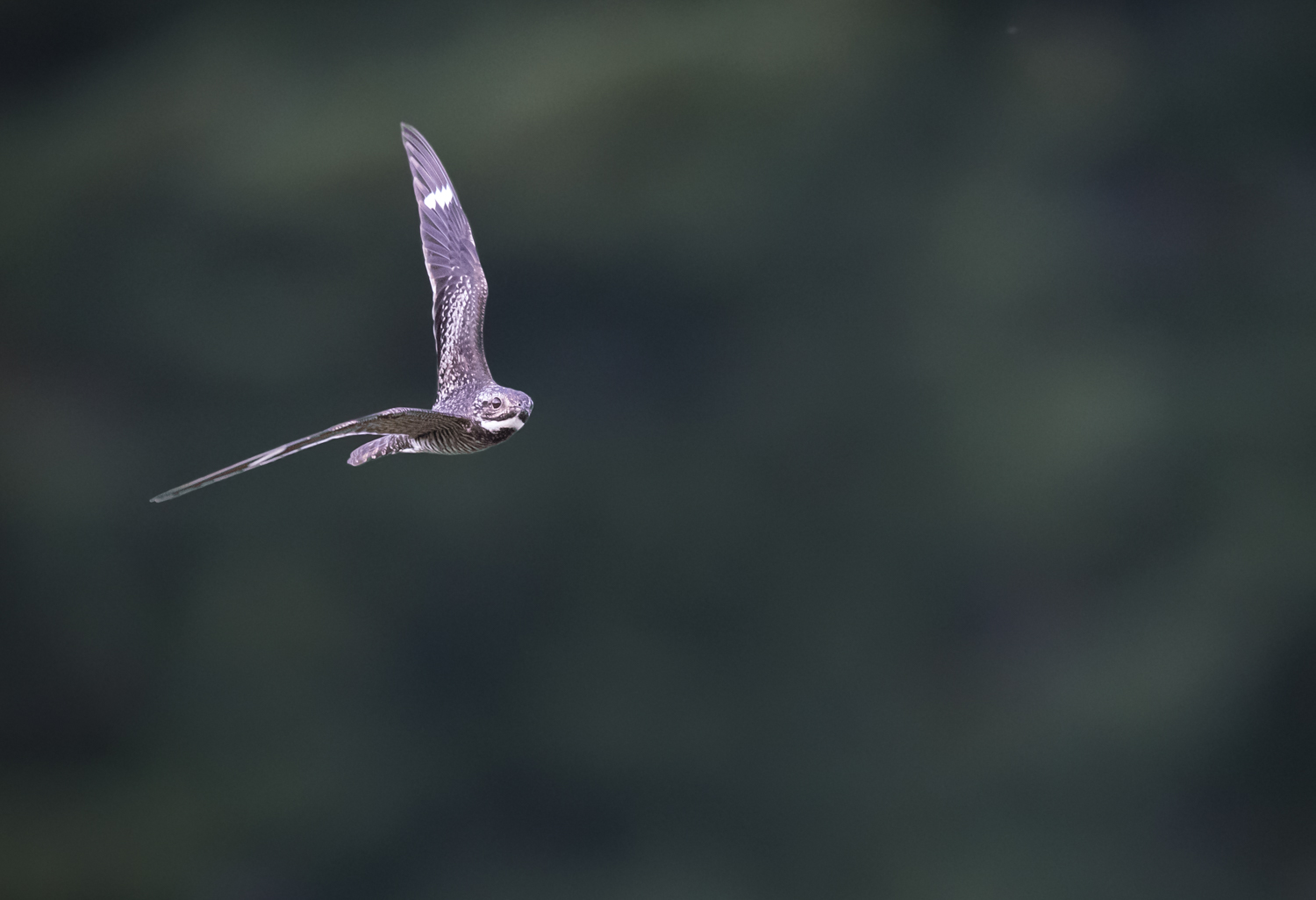
Strictly an aerial insectivore, Common Nighthawks pursue and consume flying insects such as ants, beetles, caddisflies, moths, and true bugs. This migrant was foraging over uncut meadows at Campbell Flat, Norwich, VT on 25 August 2021. © Tig Tillinghast
Nighthawks are well to the south of Vermont now, but Jacob Crawford’s October 6 sighting of a very late migrant in Richmond—only the 5th state record for October—put final punctuation on a southward migration that was among the best in recent memory. And, Liz Lackey’s secondhand report of 6,000 migrating Common Nighthawks on September 23 at the Kekoldi Hawkwatch site on Costa Rica’s southern Caribbean slope, underscores the species’ extraordinary concentrations at all stages of its southward passage!
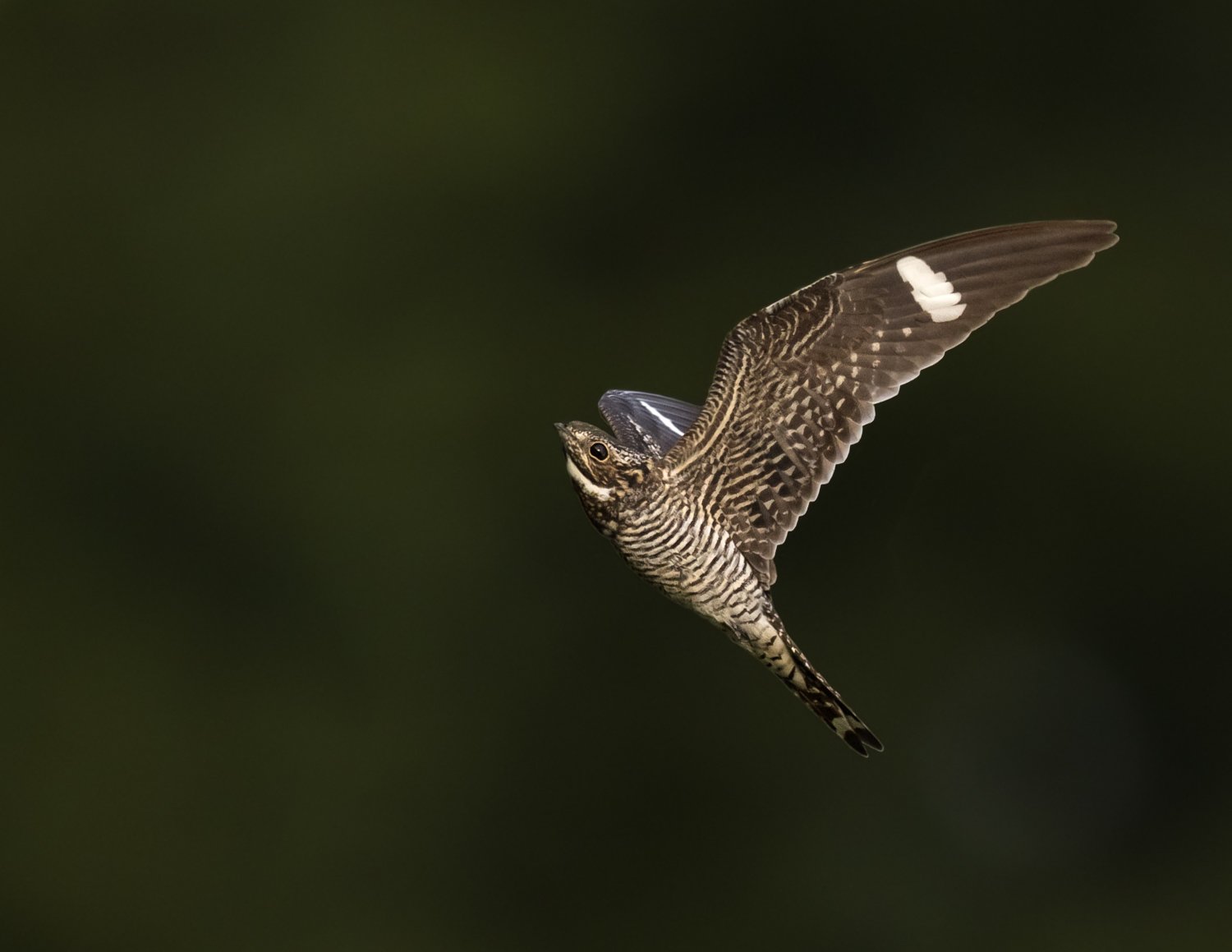
A nighthawk’s long wings show distinctive, flashing white patches as migrants hawk flying insects in the low light of late summer evenings. © Tig Tillinghast
Common Nighthawks undertake one of the longest-distance migrations among North American breeding birds. Nesting as far north as Canada’s Yukon and Labrador provinces, nighthawks overwinter in South America all the way to Argentina, a migratory distance that spans 7-8,000 miles. And, the species—which remains poorly understood overall, despite being well-studied—appears to be in trouble. Breeding populations across the continent have declined sharply. A drop of 50% has been documented in Canada, where the species is designated as federally Threatened, while U.S. populations are declining at a worrisome rate of 1.2% per year. By all accounts, nighthawks are extirpated as a breeding species in Vermont, which classifies the species as state Endangered; the Second Atlas of Breeding Birds of Vermont confirmed not a single instance of breeding.
Fortunately, nighthawks are clearly reproducing in good numbers north of the U.S., even if at reduced abundance from years ago. Southbound migrants continue to stream down the Connecticut River Valley, where longtime birder Don Clark and associates have discovered a site that concentrates migrating birds like no other in the state: Westminster Station in Windham County, a large open space between Route 5 and the Connecticut River. Since 2010, Don and his dedicated cronies have devoted countless hours to conducting careful daily censuses of all nighthawks that pass by. Their effort has increased impressively from their inaugural 2010 season, when they counted nightawks on 9 evenings, and has leveled off at 19-24 evenings (average = 22) during the past 5 years.
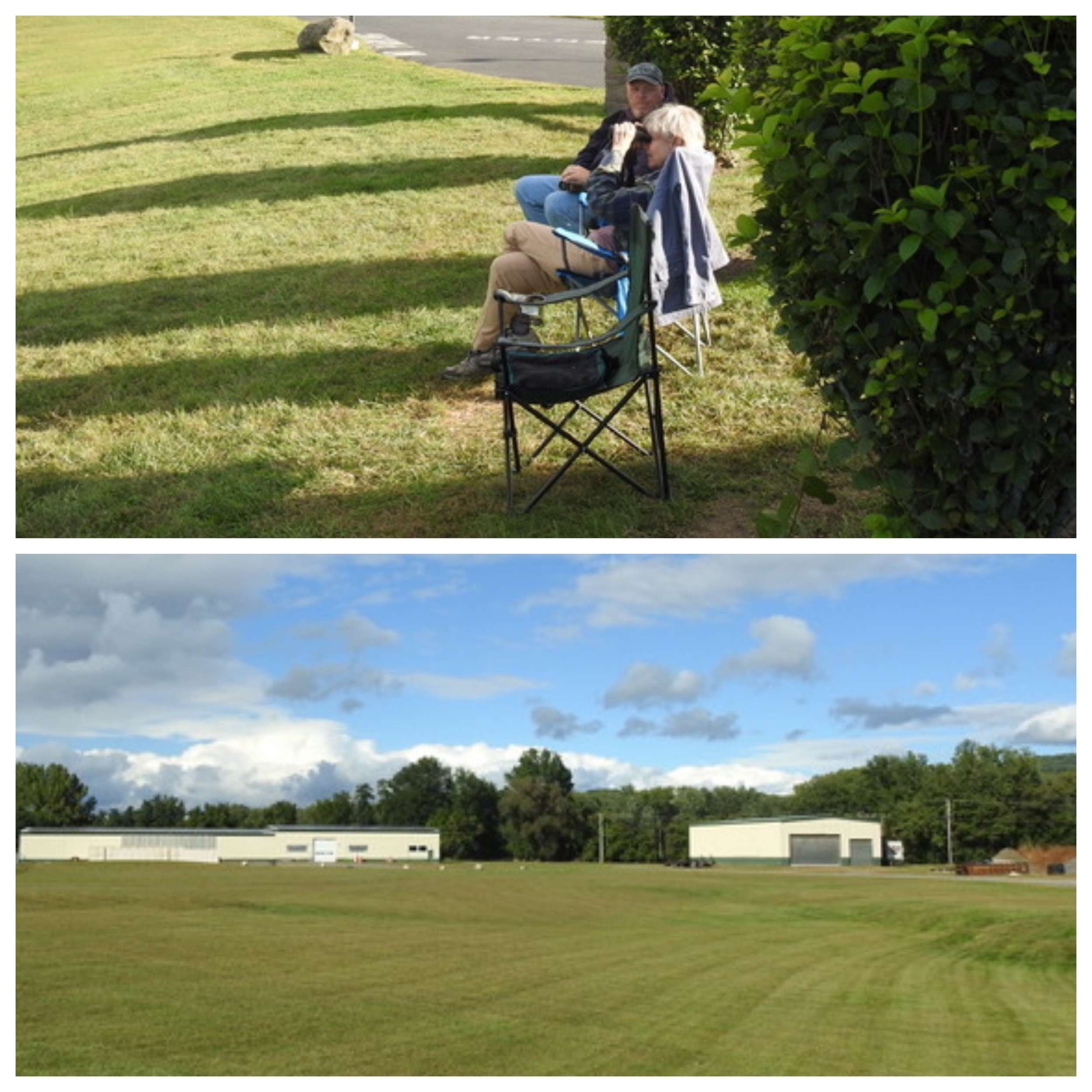
The Westminster Station nighthawk census site (bottom), with counters Martha Adams and Chris Roberts (top). © Don Clark
This past August and early September produced a record flight for Don and his crew, as they counted no fewer than 12,283 Common Nighthawks during 24 evenings of observation at Westminster Station. Although they didn’t manage to eclipse their all-time single-day record of 3,624 birds tallied on 27 August 2016, their high 2021 count of 1,791 birds (with one group of 442) was recorded on the late date of 9 September. How anyone can keep track of such numbers boggles the mind!
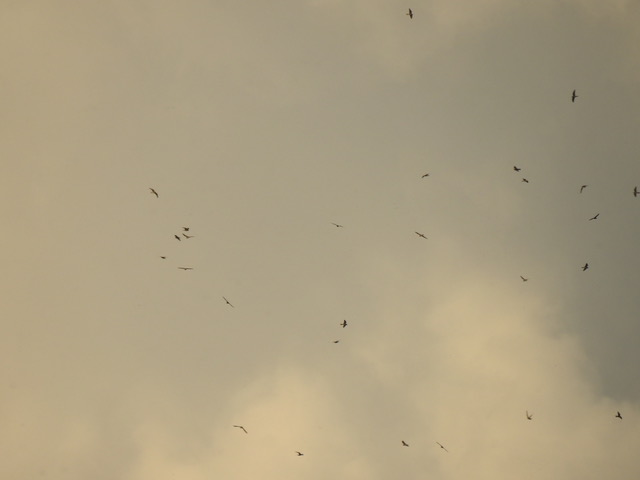
A dizzying concentration of migrating Common Nighthawks over Westminster Station, August 2021. © Don Clark
Totals over the 12-year count period at Westminster Station:
Year # days # hours Total High daily count
2010 9 13 781 8/24 — 145
2011 14 24 3,227 9/2 — 771
2012 14 21 1,923 8/22 — 641
2013 16 31 2,526 8/28 — 779
2014 12 29 1,602 8/20 — 504
2015 13 30 3,196 8/30 — 948
2016 13 32 8,003 8/27 — 3,624
2017 19 48 11,059 9/5 — 4,096
2018 23 61 8,522 8/24 — 1,834
2019 23 63 4,922 9/3 — 1,110
2020 22 73 6,936 8/24 — 1,930
2021 24 71 12,283 9/9 — 1,791
According to Don, the best flights occur on warm evenings with SE or SW winds, on evenings following rains that produce a big flying ant hatch, or a combination of the two. However, Don is the first to admit that migratory patterns of nighthawks are anything but predictable. As he says, “There are occasional nights where all birds are moving northward, to the NE or NW, regardless of wind direction. What route the birds are using also varies greatly. Some nights birds follow the river; other nights they head SE over NH (Keene usually has a big flight when this happens) while other nights they head SW. There is a lot yet to learn, and this sure would be a great research project for someone!”
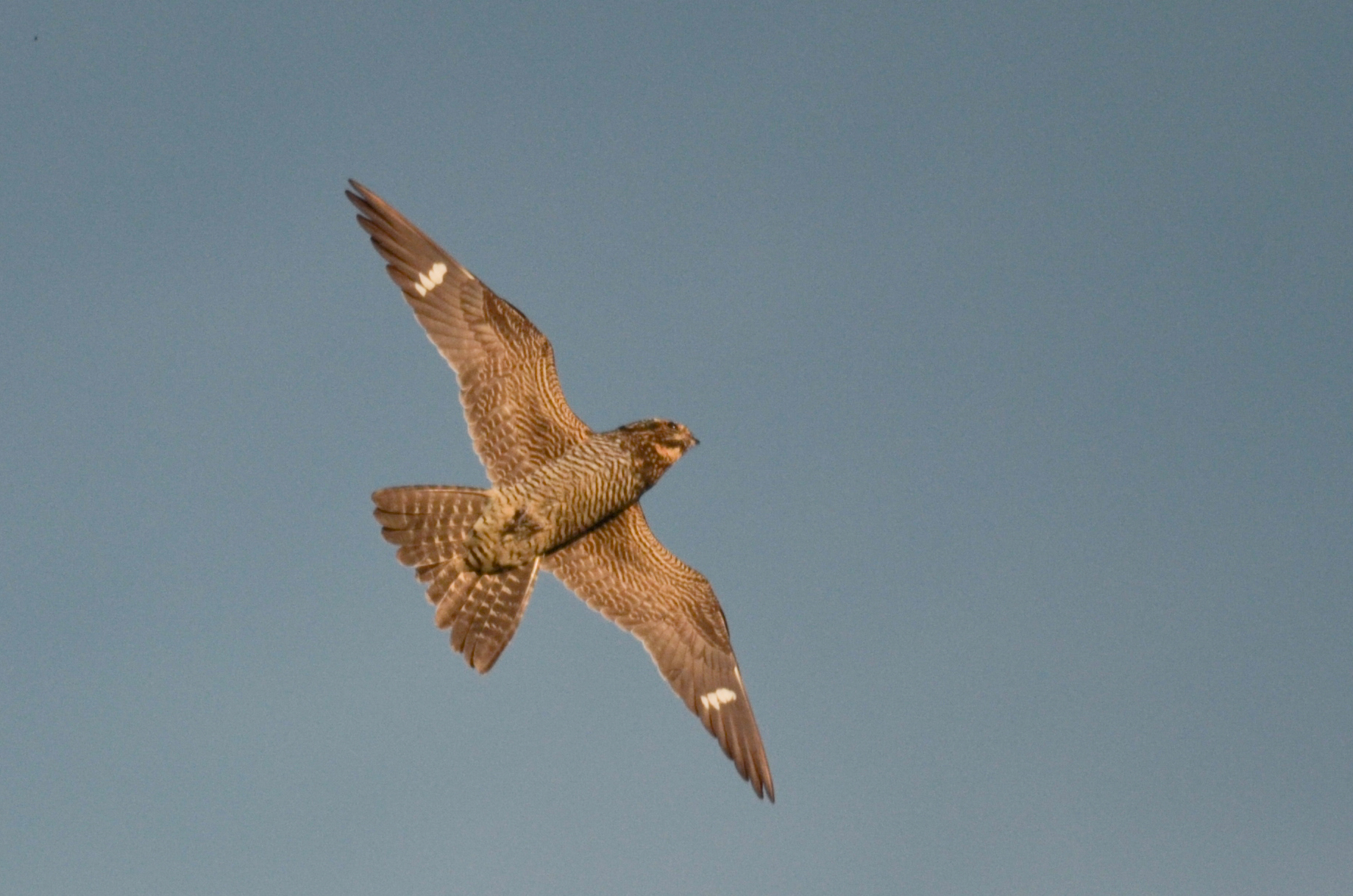
A nighthawk’s seemingly tiny bill belies its enormous gape, which foraging birds put to good use in pursuit of their flying insect prey. © Nathaniel Sharp
Perhaps over time, as more birders get out and keep track of nighthawk numbers that pass by various strategic points, we’ll be able to piece together the migration puzzle of this intriguing, yet declining nightjar, or “goatsucker”. Regardless of the biology and conservation issues involved, Don Clark and his friends inspire us all that the sheer spectacle of nighthawk migration is not to be missed. We’ll just have to wait another 10 months or so…

Chris Rimmer is a co-founder and Director Emeritus of the Vermont Center for Ecostudies. Always game to be lured out of retirement for field work, he can still be found from time to time in mountain forests, whether in Vermont or the Dominican Republic, pursuing Bicknell's Thrush with binoculars and mist nets.
| # | Наименование новости | Тональность | Информативность | Дата публикации |
|---|---|---|---|---|
| 1 | Comment on Field Report: How the Birds Are Doing on Mount Mansfield This Summer by Rita Pitkin | 0 | 9.11 | 20-08-2026 |
| 2 | Comment on A Master Gardener and His Habitat Garden by Kristin Plante | 0 | 14.64 | 01-08-2026 |
| 3 | Comment on Spiders in Winter by David Nelson | 0 | 14.39 | 06-08-2026 |
| 4 | Bug zappers rarely kill mosquitos — here’s what to use instead | 0 | 7 | 15-06-2026 |
| 5 | Атака с воздуха. Как защититься от комаров | 0 | 5 | 26-06-2026 |
| 6 | Вампиры под матрасом. Как очистить дом от блох и клопов | 1 | 5.71 | 12-08-2026 |
| 7 | Названы способы защититься от комаров | 0 | 10 | 01-08-2026 |
| 8 | Как избавиться от комаров на даче и в доме | 5 | 7 | 17-07-2026 |
| 9 | Vous faites comment pour lutter contre les moustiques ? | 0 | 5 | 18-06-2026 |