Просмотр новости
Найдите то, что Вас интересует
 Спутники
 РН
РН SpaceX
 Роскосмос
 NASA
NASA
СпутникиРНSpaceXРоскосмосNASAIndia is urged to establish a polar ambassador to oversee its expanding interests in the Arctic and Antarctic. The committee's recommendation underscores the crucial strategic and economic significance of the polar regions. Warming climates in these areas influence global weather patterns and have ramifications for Indian agriculture. It is essential for foreign policy to effectively merge energy security with scientific knowledge, reflecting the changing landscape of security interests.
India is urged to establish a polar ambassador to oversee its expanding interests in the Arctic and Antarctic. The committee's recommendation underscores the crucial strategic and economic significance of the polar regions. Warming climates in these areas influence global weather patterns and have ramifications for Indian agriculture. It is essential for foreign policy to effectively merge energy security with scientific knowledge, reflecting the changing landscape of security interests.
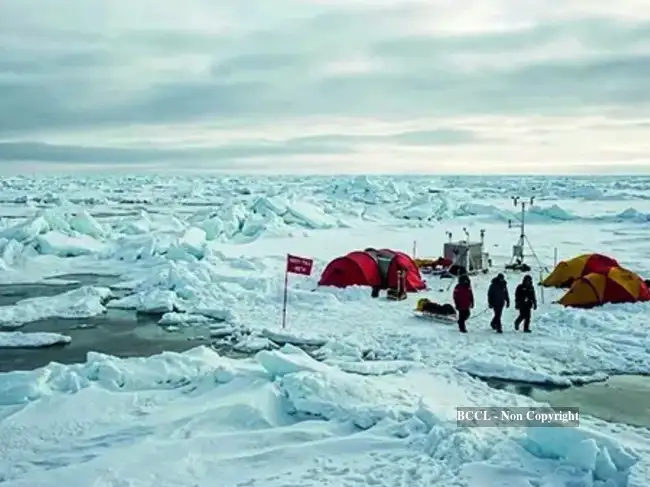
A parliamentary standing committee on external affairs' recommendation that GoI appoint a 'polar ambassador' makes good sense. As noted by the committee, most Arctic resources lie within sovereign territories, and Arctic nations strongly, and understandably, resist treating the region as a global commons - or future US territory, for that matter. Yet, the Arctic and Antarctic are no longer just frontiers for scientific exploration. They have acquired geopolitical, strategic and economic significance, particularly in the context of fossil fuel reserves. But creating an ambassadorial post or a dedicated division is not enough. It will require abandoning a foreign policy approach that subordinates energy, environment and science to transactional diplomacy.
The polar regions have risen in prominence not just because of critical minerals and shorter maritime routes, but also because warming in the Arctic and Antarctic affects global weather systems. Scientists point to links between a warming Arctic and the monsoon, with cascading effects on livelihoods, agricultural productivity, food security and the broader economy. Climate and science can no longer be treated as diplomatic pageantry or peripheral talking points. MEA should focus on integrating energy security needs, scientific expertise and other domain knowledge into foreign policy, rather than pursuing tech and environmental milestones that primarily serve narrow bilateral objectives.
Security and strategic interests today extend much beyond traditional notions of hard security. Nowhere is this shift more evident than in the polar regions, where science, climate and geopolitics are deeply intertwined. A polar ambassador needs to be more than another 'exotic' diplomatic posting.
Elevate your knowledge and leadership skills at a cost cheaper than your daily tea.
Subscribe Now
| # | Наименование новости | Тональность | Информативность | Дата публикации |
|---|---|---|---|---|
| 1 | Why India Needs a Comprehensive Polar Strategy | 0 | 6.21 | 14-08-2026 |
| 2 | India’s foreign policy must look seaward | 0 | 10 | 24-07-2026 |
| 3 | РФ рассматривает интерес Индии к присутствию в Арктике как стабилизирующий фактор | 0 | 0 | 20-03-2025 |
| 4 | Эксперт Данькин: Арктика становится для Индии стратегическим регионом | 0 | 0 | 18-03-2025 |
| 5 | Эксперт Варма призвал к расширению областей сотрудничества Индии и России | 0 | 0 | 16-10-2025 |
| 6 | Индия предлагает учитывать экологические аспекты при развитии Севморпути | 0 | 10 | 13-08-2026 |
| 7 | Reimagining sovereign AI for India’s strategic future | 5 | 7 | 01-07-2026 |
| 8 | India’s Critical Mineral Challenge in a New Global Resource Order | 0 | 5 | 25-06-2026 |
| 9 | Посол Индии считает нужным подумать о строительстве судов для перевозки нефти вместе с РФ | 0 | 0 | 02-02-2023 |