Просмотр новости
Найдите то, что Вас интересует
 Спутники
 РН
РН SpaceX
 Роскосмос
 NASA
NASA
СпутникиРНSpaceXРоскосмосNASAIn today’s fast-paced DevOps landscape, every second counts. Smaller Docker images mean quicker builds, faster deployments, reduced bandwidth costs, and enhanced security. At Collabnix, we believe that optimizing your Docker images isn’t just about saving space—it’s about creating a robust, efficient, and agile deployment pipeline. Let’s dive into some practical strategies to help you create […]

Adesoji Alu Follow Adesoji brings a proven ability to apply machine learning(ML) and data science techniques to solve real-world problems. He has experience working with a variety of cloud platforms, including AWS, Azure, and Google Cloud Platform. He has a strong skills in software engineering, data science, and machine learning. He is passionate about using technology to make a positive impact on the world.
10th February 2025 3 min read
In today’s fast-paced DevOps landscape, every second counts. Smaller Docker images mean quicker builds, faster deployments, reduced bandwidth costs, and enhanced security. At Collabnix, we believe that optimizing your Docker images isn’t just about saving space—it’s about creating a robust, efficient, and agile deployment pipeline. Let’s dive into some practical strategies to help you create lean, mean containers.
Table of ContentsStreamlining your Docker images is more than just a neat trick—it’s a necessity. Smaller images lead to:
Every Docker image starts with a base image. Opting for a minimal base can make a huge difference. Consider these options:
Alpine LinuxA popular, lightweight option at around 5MB. (Note: Some dependencies might need extra work.)
FROM alpine:3.18
Distroless Images
Designed for production, these images contain only the essentials needed to run your application.
FROM gcr.io/distroless/base
Multistage builds allow you to separate the build environment from your final image. This approach means you only ship what’s necessary for production.
# Stage 1: Build
FROM golang:1.19 AS builder
WORKDIR /app
COPY . .
RUN go build -o main .

# Stage 2: Production
FROM alpine:3.18
WORKDIR /app
COPY --from=builder /app/main /app/
CMD ["./main"]
Keep your Docker images lean by installing only what your application truly needs. When using package managers like apt-get, avoid pulling in extra, non-essential packages.
RUN apt-get update && apt-get install --no-install-recommends -y \
    curl \
    ca-certificates \
 && rm -rf /var/lib/apt/lists/*
Similar to a .gitignore file, a .dockerignore file ensures that extraneous files aren’t sent to the Docker build context. This not only reduces build time but also keeps your images clutter-free.
node_modules
.git
.env
tmp/
logs/
Every instruction in a Dockerfile adds a layer to your image. Combining commands can minimize the number of layers and help eliminate leftover temporary files.
Before Optimization:
RUN apt-get update
RUN apt-get install -y python3
RUN apt-get clean
After Optimization:
RUN apt-get update && apt-get install -y python3 && apt-get clean
During the build process, package managers often leave behind caches and temporary files. Cleaning these up is vital to maintaining a compact image.
For Debian-based images:
RUN apt-get update && apt-get install -y python3 && apt-get clean && rm -rf /var/lib/apt/lists/*
For Alpine-based images:
RUN apk add --no-cache python3
Many programming languages offer slim or Alpine versions of their runtime images. Switching to these can trim down your image significantly.
# Instead of:
FROM python:3.11

# Use the slim version:
FROM python:3.11-slim
While Docker compresses layers by default, you can further optimize by manually compressing files (e.g., using gzip or tar) before including them in your image. This is particularly useful when dealing with large binaries or package archives.
Debug symbols and metadata can bloat your application binaries. Removing this extra information, especially in production, can save precious space.
RUN strip /path/to/binary
Over time, even the best images can accumulate unnecessary components. Regularly cleaning up your Docker environment using commands like docker image prune can keep your system tidy.
docker image prune -f
Docker also offers an experimental --squash flag that can combine multiple layers into one, though its usage depends on your project’s requirements.
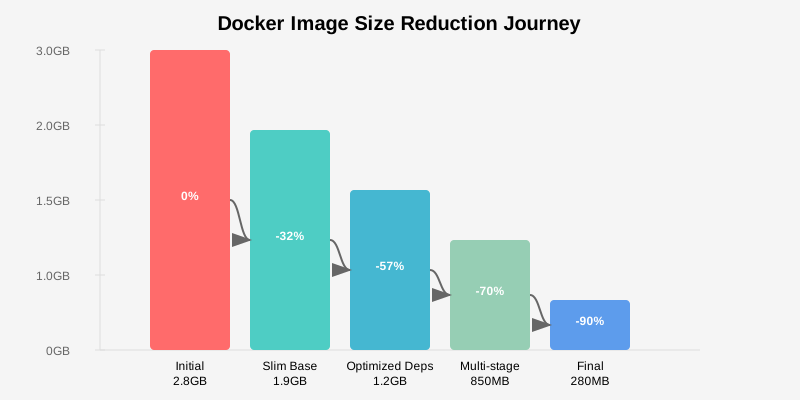
Optimizing Docker image size is more than a technical exercise—it’s a commitment to efficiency, speed, and security. By choosing minimal base images, harnessing the power of multistage builds, and meticulously cleaning up after package installations, you can dramatically reduce your image sizes. Regular audits and advanced techniques ensure that your containers remain agile and production-ready.
At Collabnix, we’re passionate about sharing best practices that empower you to build smarter, faster, and leaner applications. Embrace these strategies, and watch your deployment pipelines transform into efficient, streamlined workflows.
Happy containerizing!
For more information, feel free to reach out to us at collabnix@gmail.com.

| # | Наименование новости | Тональность | Информативность | Дата публикации |
|---|---|---|---|---|
| 1 | Учёные НИТУ МИСИС впервые в реальном времени обнаружили «слабое звено» перспективных высокоэнтропийных сплавов | 0 | 7.03 | 29-07-2026 |