Просмотр новости
Найдите то, что Вас интересует
 Спутники
 РН
РН SpaceX
 Роскосмос
 NASA
NASA
СпутникиРНSpaceXРоскосмосNASAFreebee shows how electric microtransit is moving beyond pilots to fill network gaps, connect riders to transit, and prove lasting value.
Freebee shows how electric microtransit is moving beyond pilots to fill network gaps, connect riders to transit, and prove lasting value.
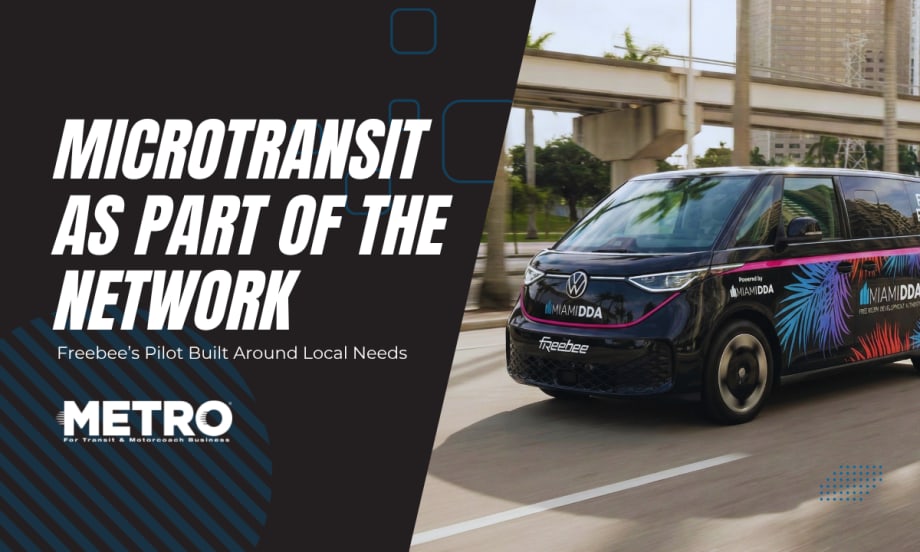
According to Freebee, what began in 2017 as a service providing a few hundred rides per month in Key Biscayne, Florida, now serves more than 10,000 passengers monthly.
Credit:
Freebee/METRO
*Summarized by AI
For years, microtransit occupied an uncertain space in public transportation.
Transit agencies embraced it as a promising solution for first- and last-mile connections, low-density service areas, and gaps that fixed-route systems struggled to address. Yet many early deployments remained pilots, raising persistent questions about scalability and long-term value.
Today, a growing number of cities are treating microtransit differently. Like any new service, it was seen as an experiment, but for many agencies, it has become a permanent layer within transportation networks.
Among the companies helping drive that shift is Freebee, an operator of fully electric, on-demand microtransit services that now works with more than 50 communities across Florida and North Carolina. The company's growth reflects a trend playing out across the industry as local governments search for flexible ways to improve mobility and connect riders to existing transit services while reducing congestion.
However, transportation planners recognize that fixed-route transit cannot solve every mobility challenge. High-frequency bus corridors and rail lines remain the backbone of urban transportation systems, but many communities continue to struggle with short local trips, neighborhood circulation, and a lack of connections, all of which discourage transit use.
"Cities should think of microtransit as a flexible layer within the broader transportation system," said Jason Spiegel, co-founder of Freebee. "It should not be used to duplicate strong fixed-route corridors. Instead, it should be planned around gaps, including areas where fixed-route transit is not efficient, where first-and-last mile connections are missing, or where short local trips are creating unnecessary vehicle traffic."
This is an important development to note in the evolution of microtransit. Rather than competing with traditional transit, more and more operators are positioning the service as a connector.
"The goal should never be to compete with high-performing fixed-route transit," Spiegel said. "The goal is to complement it. We do that through thoughtful service design."

Microtransit complements fixed-route transit by connecting neighborhoods, filling first- and last-mile gaps, and serving lower-density areas.
Credit:
Freebee
Freebee's partnerships also illustrate how cities are deploying microtransit for different objectives.
The concept is attracting attention as agencies face mounting pressure to improve mobility outcomes while managing financial constraints. Transit leaders are evaluating services not solely on ridership totals but on broader community impacts, including access to jobs, healthcare, education, and economic activity.
In some communities, the service functions as a downtown circulator, reducing parking demand and easing congestion in commercial districts. In others, it serves as a first- and last-mile connector to rail stations and bus corridors. Universities use it to move students between campuses and nearby destinations, while resort and tourism communities often use it to reduce vehicle traffic in areas with limited roadway capacity.
"The most important metrics are utilization, cost per rider, wait times, trip completion rates, customer satisfaction, and how well the service integrates with the broader transportation network," Spiegel said. "But I also think cities need to look beyond traditional transit metrics and evaluate how the service is driving broader economic impact while creating a better quality of life within the community."
The shift also aligns with larger transportation demand management strategies. As cities seek ways to reduce parking demand and single-occupancy vehicle trips, microtransit offers an alternative for trips that often fall outside the strengths of conventional transit.
"Microtransit plays a very important role in transportation demand management because it gives people a practical alternative to driving alone," Spiegel said.
In Key Biscayne, Florida, microtransit has evolved from a pilot into a daily transportation option for residents, visitors, and workers. The island community faces a unique combination of transportation challenges, including limited parking, seasonal congestion, and a sizable senior population.
According to Freebee, what began in 2017 as a service providing a few hundred rides per month now serves more than 10,000 passengers monthly. Local leaders initially viewed the service as a mobility amenity, but now it serves as part of the community's transportation infrastructure, helping residents and visitors reach destinations without relying on a personal vehicle or renting one.
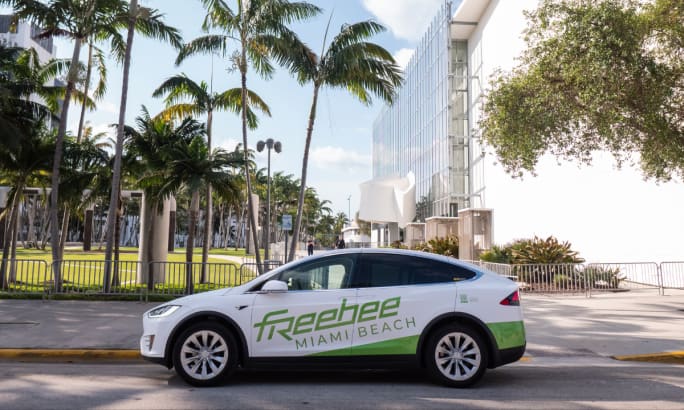
"Cities should think of microtransit as a flexible layer within the broader transportation system," said Jason Spiegel, co-founder of Freebee. "It should not be used to duplicate strong fixed-route corridors."
Credit:
Freebee
Climate and sustainability goals are another factor driving interest. Transportation remains one of the largest contributors to greenhouse gas emissions, and many agencies are seeking near-term strategies to reduce vehicle miles traveled without major infrastructure projects.
Freebee argues that electric microtransit can contribute to those efforts by replacing short automobile trips and improving access to transit. The company currently operates a fleet of more than 300 electric vehicles and reports providing more than two million rides annually across its service areas.
Yet, the industry's biggest challenge may not be technology. It may be proving long-term operational value.
Many transit leaders remain cautious after a decade of highly publicized microtransit pilots that struggled to scale or deliver sustainable economics. As a result, agencies focus on measurable outcomes, integration with existing services, and clear definitions of where microtransit adds value.
"The best approach is to define the role of each mode clearly," Spiegel said. "Fixed-route transit is great for high-volume corridors. Rail is great for regional movement. Microtransit is ideal for neighborhood circulation, first-and-last mile access, lower-density areas, and connecting people to the larger system."
The next phase of microtransit's evolution may ultimately depend on whether operators and transit agencies can demonstrate that those complementary roles create measurable benefits for riders and communities. If they can, microtransit may finally move beyond its pilot-era reputation and become a permanent component of urban mobility networks.
| # | Наименование новости | Тональность | Информативность | Дата публикации |
|---|---|---|---|---|
| 1 | Transit Pilot Offers Lessons for Expanding Mobility Access | 0 | 11.02 | 01-07-2026 |
| 2 | Turn Transit Data Into Action | 0 | 14 | 02-08-2026 |
| 3 | Jacksonville’s NAVI Project Charts a New Course for Autonomous Public Transportation | 0 | 7.79 | 17-08-2026 |
| 4 | Building the Next Generation of Transit Technology | 0 | 5.74 | 20-07-2026 |
| 5 | Building the Next Generation of Transit Technology | 0 | 5.74 | 13-07-2026 |
| 6 | FTA Launches 'Transit Moves America' Dashboard to Highlight Agency Safety and Performance | 0 | 9.28 | 24-07-2026 |
| 7 | CharterUP Expands Into New Mobility and Autonomous Transportation | 0 | 6.01 | 31-07-2026 |
| 8 | В России протестируют полностью беспилотные трамваи | 0 | 10 | 12-08-2026 |
| 9 | Las ciudades medianas lideran la descarbonización con bicis compartidas | 0 | 7.83 | 13-05-2026 |
| 10 | В Москве могут появиться беспилотные трамваи | 0 | 0 | 19-09-2020 |