Просмотр новости
Найдите то, что Вас интересует
 Спутники
 РН
РН SpaceX
 Роскосмос
 NASA
NASA
СпутникиРНSpaceXРоскосмосNASAThe award-winning Workforce Transit Modernization project replaced paper bidding with a transparent digital platform, cutting administrative effort while improving access for operators.
The award-winning Workforce Transit Modernization project replaced paper bidding with a transparent digital platform, cutting administrative effort while improving access for operators.
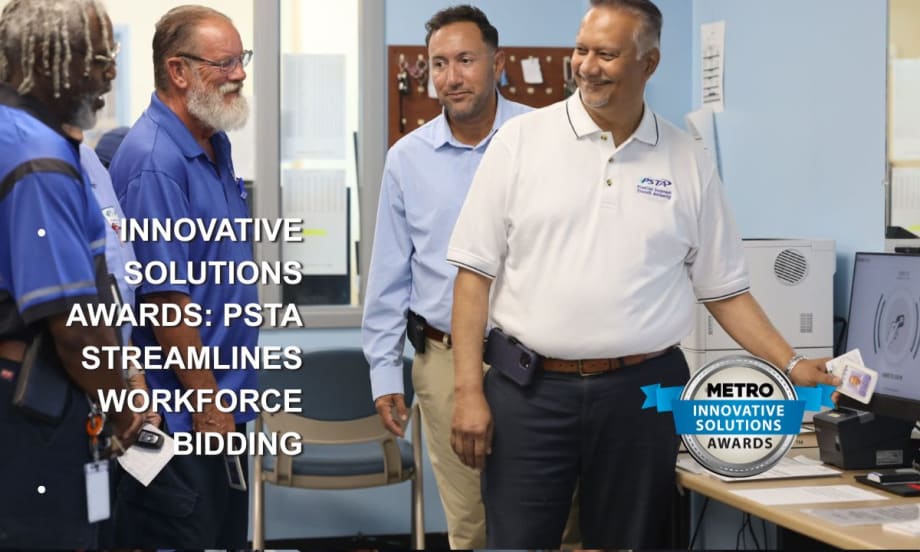
PSTA used the project to rethink how bidding could work for a modern transit workforce.
Credit:
PSTA
*Summarized by AI
When St. Petersburg, Florida’s Pinellas Suncoast Transit Authority (PSTA) set out to modernize one of its most labor-intensive workforce processes, the goal wasn't simply to eliminate paper; it was to create a faster, more transparent system that benefited employees, managers, and union leadership alike.
That approach earned PSTA and its technology partner GIRO one of METRO Magazine's Innovative Solutions Awards for the agency's Workforce Transit Modernization project, which transformed operator duty, holiday, and vacation bidding through HASTUS-SelfService and its BidWeb digital bidding platform.
PSTA used the project to rethink how bidding could work for a modern transit workforce. The result allows employees to submit bids remotely, gives union representatives visibility, and provides management with a verifiable digital record while preserving seniority rules and contractual protections.
"We were excited and honored to receive this award," said PSTA CEO Brad Miller. "Workforce technology is playing an increasingly important role in transit, particularly as agencies look for ways to modernize internal processes, reduce administrative burden, and better support frontline employees."
Rethinking the Bid ProcessLike many transit agencies, PSTA had relied on a traditional paper-based bidding process for operator work assignments, vacations, and holidays.
The process required handwritten paperwork, manual reconciliation, and frequent follow-up from supervisors and union bid marshals. Delayed updates, legibility issues, and the need for some employees to be present during bidding added further friction.
To ensure a smooth transition, paper and digital bidding operated simultaneously during several bid cycles. Administrative staff entered bids electronically, while union bid marshals maintained oversight, and time-stamped audit logs served as the official record.
The process was first formalized through a memorandum of understanding and later incorporated into the unions' collective bargaining agreement, reinforcing existing seniority rules rather than changing them.
"The team effort started by ensuring the software solution was not going to undermine current seniority assignments and would protect the current process and provide full transparency," said Raj Singh, PSTA's assistant manager of schedules. "The accuracy of the audit log allowed the union bid marshals to reassure operators that the software was not doing anything outside the union contract rules."
Employees can now use any internet-connected device, such as a smartphone, tablet, or computer, to review available work, submit bids, and monitor results in real time, without waiting for paper postings or manual updates.
Measurable and Immediate Operational Gains
PSTA approached the project as a collaborative change-management effort involving management, union leadership, and frontline employees from the outset.
The operational impact was immediate.
During the pilot, PSTA achieved 100% operator participation while eliminating paper bidding slips. Vacation bidding throughput increased by 300%, allowing four employees to complete the process in the time it previously took one.
Overall, the vacation bidding process was completed in roughly half the time. At the same time, operations staff reported a 75% reduction in administrative effort because far less manual coordination, tracking, and reconciliation were required.
The project also improved the employee experience by giving operators direct access to schedules, vacation balances, and leave information through the self-service portal.
"The solutions we implemented have made a vast improvement to the independence of our workforce," said Nicole Dufva, PSTA's director of planning and scheduling. "The shift toward transparency, self-service, and real-time access is what made this a broader workforce modernization effort rather than simply a technology upgrade."
The success quickly extended beyond operator bidding.
As employees and managers became familiar with the self-service platform, interest grew across the organization. PSTA has since expanded the initiative to include additional employee groups and is working toward broader implementation for other bargaining units.
Direct access to paid time off balances, work assignments, and payroll data reduced routine questions to supervisors and improved confidence in workforce information.
PSTA approached the project as a collaborative change-management effort involving management, union leadership, and frontline employees from the outset.
A Model for Workforce ModernizationFor other transit systems, the takeaway is clear: successful workforce modernization depends as much on communication and trust as it does on technology.
As agencies address workforce shortages, operational efficiency, and employee retention, PSTA's project shows that some of the most valuable innovations happen behind the scenes.
By replacing a cumbersome paper-based process with a transparent, employee-centered digital platform, PSTA and GIRO improved efficiency, strengthened labor-management collaboration, and created a better experience for employees and managers alike.
The project is an initiative by the PSTA to modernize workforce management by replacing paper bidding processes with a digital platform.
*Summarized by AI
| # | Наименование новости | Тональность | Информативность | Дата публикации |
|---|---|---|---|---|
| 1 | FTA Launches 'Transit Moves America' Dashboard to Highlight Agency Safety and Performance | 0 | 9.28 | 24-07-2026 |
| 2 | Turn Transit Data Into Action | 0 | 14 | 02-08-2026 |
| 3 | Jacksonville’s NAVI Project Charts a New Course for Autonomous Public Transportation | 0 | 7.79 | 17-08-2026 |
| 4 | King County Metro Makes ADA Paratransit Easier to Navigate | 0 | 12.49 | 19-08-2026 |
| 5 | LA Metro, City of West Hollywood, and Partners Advance Smarter Bus Lane Enforcement | 0 | 14.1 | 12-08-2026 |
| 6 | Utah Transit Authority Adopts New Governance Model | 0 | 8.57 | 02-07-2026 |
| 7 | Smarter Maintenance Starts with Risk, Not Routine | 0 | 10 | 24-06-2026 |
| 8 | TransDASH Summit Focuses on Measuring What Matters in Transit | 0 | 9.27 | 18-08-2026 |
| 9 | How Data, Strategy, and Community Engagement Are Reshaping Transit | 0 | 9.88 | 05-08-2026 |
| 10 | MBTA Debuts Managed Event Ticketing Platform With Masabi | 0 | 8.16 | 29-06-2026 |