Просмотр новости
Найдите то, что Вас интересует
 Спутники
 РН
РН SpaceX
 Роскосмос
 NASA
NASA
СпутникиРНSpaceXРоскосмосNASAAbstract* Background Hand recovery following stroke presents a profound clinical challenge due to the intricate anatomy and complex neuronal control of the human hand. While many stroke survivors successfully regain functional movement of proximal upper limbs, persistent fine-motor deficits frequently remain, severely disrupting independence in activities of daily living. Conventional rehabilitations are unfortunately constrained by multiple factors. Although advanced, multidisciplinary robot-assisted systems have effectively stimulated neuroplasticity and improve motor recovery, substantial gaps remain in understanding how these innovations are applied locally. Objective We aim to outlines a systematic plan to comprehensively map the existing literature, technological designs, clinical outcomes, and implementation barriers of robotic hand rehabilitation devices within Malaysia healthcare. Methods and analysis Guided by the Joanna Briggs Institute (JBI) methodology and PRISMA-ScR guidelines, this review will source literature from electronic databases (Scopus, Web of Science, IEEE Xplore), alongside Malaysian university repositories, and grey literature with no date restrictions. Studies focusing on adult stroke patients with hemiparesis, or healthcare providers’ perspectives on robotic hand gloves within Malaysian healthcare, community, or research settings, will be included. Two independent reviewers will screen titles, abstracts, and full texts, resolving discrepancies via senior consultation. Data extraction will systematically capture study characteristics, participant demographics, glove technical specifications, training protocols, and reported clinical or usability outcomes. Findings will be presented through tabular descriptive statistics and narrative synthesis. Discussion This review will map the evolution of hand robotic rehabilitation devices in Malaysia from academic prototypes to clinical applications. By contextualizing these devices within local healthcare constrains, such as specialist shortages and community-care transition gaps, the synthesis will identify key facilitators and barriers to technology adoption. Ultimately, these insights will highlight local evidence gaps, identify robust technological designs, and lay the groundwork for standardized clinical protocols to inform national health policies and advance contextually feasible stroke neurorehabilitation across Malaysia.
Globally, stroke is a leading cause of mortality and long-term disability, a reality reflected in Malaysia, where cerebrovascular disease represents the third leading cause of death.1 In 2019 alone, the country recorded approximately 47900 new stroke cases, nearly 19900 fatalities, and the loss of over 512000 disability-adjusted life years (DALYs).1 More than half of stroke survivors experience persistent motor deficits such as hemiparesis which severely disrupt activities of daily living (ADLs) and make stroke a primary driver of adult functional disability across the country.2,3 While survivors often regain gross motor movement in proximal upper limbs, restoring fine hand function remains exceptionally challenging due to its anatomical and functional complexity.4 The human hand presents unique rehabilitation hurdles. First, it possesses more than 20 degrees of freedom (DOFs), creating a high level of dexterity that is mechanically difficult to replicate in therapeutic devices. Second, the hand occupies a disproportionately large area of the motor cortex to facilitate precise, individualized finger control, which is often not adequately addressed by current neurorehabilitation methods.4 Traditional rehabilitation is frequently constrained by a shortage of clinical personnel and resources, particularly in low- and middle-income healthcare settings.
To bridge this gap, robot assisted rehabilitation has evolved from the basic mechanical frameworks of the 1990s into multidisciplinary systems that integrate insights from neuroscience, anatomical knowledge, and clinical experience.4 Modern devices automate high-quality, repetitive movement training, allowing clinicians to customize force and range of motion individual patient needs.5,6 To ensure safety and efficacy, these robotic gloves must align with the biomechanics of the human hand anatomy, accurately targeting both the thenar (innervated by the median nerve for opposition and pinching) and hypothenar (innervated by the ulnar nerve for grip strength) group muscles.7–11 This intensive, targeted movement directly drives neuroplasticity, which is the brain’s ability to reorganize and form new neural pathways after an injury.6 While neurorehabilitation utilizes passive, active and active-assisted motion, active patient participation is the most critical component, as it voluntarily engages the musculoskeletal system and triggers the neural adaptations necessary for recovery and functional improvement.6
Despite rapid global technological strides, there is a clear gap in understanding how these innovations are being utilized locally, particularly within developing healthcare landscapes like Malaysia. Malaysia presents a critical case study due to its unique epidemiological shifts and structural challenges, with 13% of stroke admissions in the country involve individuals under 45 years old, with mean age was 60.6 years.12 This results in a profound socioeconomic burden due to premature disability in the working-age population. Furthermore, local stroke care faces systemic bottlenecks, including severe shortage of specialized neurorehabilitation professionals, highly centralized services that disadvantage rural communities, and high out-of-pocket costs that frequently lead to patient default. Therefore, a scoping review is necessary to systematically map the existing evidence on robotic hand rehabilitation for stroke patients specifically within Malaysia context. This review will identify the types of devices developed or used locally, characterized the targeted patient demographics, evaluate reported clinical outcomes, and identify the systemic barriers to adopting and scaling this technology within the Malaysian healthcare ecosystem. Ultimately, these insights will serve as foundational resource for researchers, clinicians, and policymakers working to leverage affordable technology to democratize long-term stroke care across the nation.
This scoping review aims to systematically identify, map and synthesize the available literature regarding robotic hand rehabilitation devices for stroke patients in Malaysia. Specifically, this review seeks to provide a comprehensive overview of the local technological landscape by examining the types and configurations of devices currently developed or deployed, the specific clinical and demographic characteristics of the targeted populations, the primary anatomical structures and neurophysiological mechanisms targeted by existing devices, the operational parameters and protocols of the delivery models, and documented clinical, functional, and user-reported outcomes.
To address these objectives and map the existing evidence base within the Malaysian healthcare framework, this scoping review will address the following primary research questions:
i. What specific types of robotic hand glove technologies have been designed, developed, or clinically implemented for stroke rehabilitation in Malaysia?
ii. What clinical, functional, and safety outcomes have been reported in literature involving the use of robotic hand gloves among stroke patients within the Malaysian context?
This scoping review protocol will be conducted in accordance with the updated Joanna Briggs Institute (JBI) methodology for scoping reviews.13,14 The final review will be reported following the Preferred Reporting Items for Systematic Reviews and Meta-Analyses extension for Scoping Reviews (PRISMA-ScR) checklist.15 The protocol is also available in the Open Science Framework platform (https://doi.org/10.17605/OSF.IO/8HR9Z). The execution of this study will progress through five sequential stages outlined below:16
i. Stage 1: Identifying research questions. To establish a robust foundation for this study, a preliminary literature search was conducted. This initial step served to map out the overall scope of the topic dedicated to Malaysian context, ensure that no identical reviews were currently underway and confirm the availability of a sufficient volume of primary literature to warrant a scoping review.
ii. Stage 2: Identifying relevant studies and defining eligibility criteria. All relevant studies will be identified across major academic databases. To ensure transparency and precision, explicit inclusion and exclusion criteria will be established prior to the search, focusing strictly on studies involving robotic hand gloves for stroke rehabilitation within the Malaysian context.
iii. Stage 3: Study selection. The selection process will follow a rigorous, multi-stage screening framework. Titles and abstracts will first be assessed against the predefined eligibility criteria, followed by a detailed evaluation of full-text articles. This process will be documented systematically to account for all included and excluded literature.
iv. Stage 4: Data extraction and charting. Data from the final pool of included studies will be extracted and organized using a standardized charting template. This extraction tool will capture key study characteristics, including technological specifications of the robotic gloves, clinical characteristics, intervention parameters, and measured clinical outcomes, ensuring a consistent and reproducible approach.
v. Stage 5: Data collating, summarizing, and reporting. The extracted data will be synthesized to provide a comprehensive landscape of robotic glove utilization in Malaysia. Quantitative and descriptive findings such as geographical distribution of research, types of technology used and clinical metrics will be mapped visually using tables, charts, or diagrams. Qualitative insights regarding implementation barriers, costs and patient default rates will be analysed using thematic analysis to identify critical gaps in the current Malaysian stroke care framework.
Types of participants
This review will include studies that involve adult stroke patients aged 18 years and older. No restrictions will be placed on the specific type of stroke (ischemic or haemorrhagic), the clinical stage of recovery (acute, subacute, or chronic), gender, or ethnicity. To be eligible, participants must undergo a rehabilitation intervention that explicitly utilizes a wearable robotic hand glove or closely related robotic hand device.
Concept
This scoping review protocol will focus on the identification and mapping of wearable robotic hand glove technologies designed, developed, or implemented for stroke rehabilitation. Beyond physical motor recovery, this review will also explore the broader, secondary impacts of these devices on the rehabilitation process. Investigating these multi-dimensional effects is essential because robotic interventions influence more than just musculoskeletal recovery. Therefore, eligible studies must also report on one or more secondary outcomes, such as psychological well-being and patient motivation, cognitive engagement through interactive software or virtual reality (VR) integrations, functional independence in ADLs and finally the cost-effectiveness and feasibility of home-based rehabilitation within local communities.
Context
The context of this scoping review protocol is strictly defined by stroke neurorehabilitation research and clinical environments within Malaysia, including the clinical, academic and community settings. To ensure a thorough mapping of the local literature, eligible studies must be conducted within Malaysia healthcare facilities or local research institution. Accordingly, the search strategy will utilize tailored combinations of core regional and clinical terms, including “hand,” “glove,” “wearable device,” “stroke,” “cerebrovascular disease,” “neurorehabilitation,” and “rehabilitation device.”
Restricting the geographical and institutional scope to Malaysia is necessary because local neurorehabilitation pathways operate under infrastructure and financial constraints distinct from those in high-income nations. In Malaysia, post-stroke care is frequently challenged by a shortage of specialized neurorehabilitation professionals, uncoordinated transitions to community-based care, and high patient default rates after hospital discharge due to travel distances and geographical barriers.17 Furthermore, existing clinical services remain highly centralized within major urban centres, disadvantaging rural populations. Mapping and analysing technologies developed or tested specifically within this framework allows for a realistic assessment of how robotic gloves can be practically integrated into existing Malaysian clinical workflows and socioeconomic realities. Accordingly, eligible studies must be conducted by Malaysian institutions or evaluated directly within the Malaysian healthcare system.
Types of study
The scoping review will examine published primary articles reviews, and grey literature sources, including Malaysian government websites, university repositories, hospital or rehabilitation institution records involving stroke patients receiving robotic hand rehabilitation. While global research on robotic hand rehabilitation is extensive, applying international technology to a local healthcare system involves unique economic, regulatory, and population-specific challenges. To provide a highly relevant resource tailored to a developing healthcare environment, this review limits its geographic scope to studies conducted in Malaysia. This localized approach allows for an accurate mapping of domestic technological readiness, local barriers to clinical use, and engineering designs specifically suited for Malaysian users. As a result, studies focusing on the robotic rehabilitation of shoulders, lower limbs and feet are outside the scope of hand recovery and will be excluded from this review.
Sources
This scoping review will include the complete trajectory of robotic hand devices in Malaysia, spanning from early academic engineering prototypes to recent clinical implementations. Hence, this review will apply no date restrictions to its search strategy. Limiting the timeline would risk omitting formative domestic baseline data, as the development and deployment of hand robotics remains a relatively recent phenomenon within the Malaysian healthcare ecosystem. Furthermore, to accommodate local and international contributions, the review will consider eligible studies published in both English and Malay language. A comprehensive range of literature will be considered to ensure a thorough mapping of the local research landscape, including primary literature (quantitative, qualitative, or mixed-method designs, regardless of methodological approach), secondary literature (evidence syntheses, including systematic reviews, scoping reviews, meta-analyses, clinical practice guidelines, and policy papers), and grey literature. Grey literature was adopted because given the specific geographical focus on Malaysia, grey literature will be actively targeted to minimize publication bias and capture local innovations that may not be indexed in mainstream commercial journals. This will include conference proceedings, government health reports, institutional white papers, unpublished research reports, and local university repositories for postgraduate medical and engineering theses. Books and book chapters will be excluded from this review due to structural limitations in accessing their full content consistently. Additionally, personal blogs, opinion pieces, and non-scholarly digital media will be omitted because they lack standardized, rigorous peer-review frameworks.
To ensure thorough coverage of the local landscape, a three-step search strategy will be employed across major international and regional electronic databases, including Scopus, Web of Science, and IEEE Xplore. This database cluster will be supplemented by targeted manual searches within specialized Malaysian academic databases to retrieve localized institutional outputs. The inclusion and exclusion criteria for articles screening can be found in Table 1.
- Adult stroke survivors, aged 18 years and above
- Any stroke type (ischemic/haemorrhagic)
- Any clinical stages (acute, subacute, chronic)
- Any gender or ethnicity
- Undergone neurorehabilitation using the wearable robotic hand devices
- General population who affected with stroke and sustained hemiparesis
- Age: 18 years and above
- Acute or chronic phase of stroke
- Perspective from healthcare providers, including therapists and physicians
- Non stroke population: Hand impairment other than stroke
- Robotic hand glove technologies designed, developed, or implemented for stroke neurorehabilitation
- Studies reporting on secondary impacts (e.g., psychological well-being, motivation, cognitive engagement/VR, independence in ADLs, cost-effectiveness of home-based rehabilitation)
- Robotic technologies targeting only the proximal upper limbs (shoulders and elbows) or lower limbs
- Stroke neurorehabilitation environments (clinical, academic, and community settings)
- Conducted by Malaysian institutions or evaluated within the Malaysian healthcare system
- Primary literature (quantitative, qualitative, or mixed methods)
- Secondary literature (systematic review, scoping reviews, meta-analyses, clinical guidelines, policy papers)
- Grey literature (conference proceedings, government health reports, white papers, unpublished reports, university repositories for postgraduate theses)
- English or Malay language
- No date restriction
- Books and book chapters (due to full-text accessibility limitations)
- Personal blogs, opinion pieces, and non-scholarly digital media (due to lack of peer-review standards)
- Languages other than English or Malay.
The systematic search will follow the three-phase search strategy recommended by the JBI guidelines for scoping reviews.14 This approach ensures an exhaustive and transparent retrieval of both published and unpublished literature relevant to Malaysia context. Phase one, where we identify the keyword and piloting phase. An initial keyword analysis was conducted by examining the titles, abstracts, and index terms of foundational literature in the field. Preliminary search strings were piloted and iteratively refined across the Scopus, Web of Science, and IEEE Xplore databases using various Boolean logic combinations to optimize search sensitivity and specificity. Based on these exploratory trials, the baseline search string is structured as follows: (“robotic glove” OR “robotic hand” OR “robotic device” OR “wearable hand” OR “wearable glove” OR “exoskeleton robot”) AND (“stroke” OR “cerebrovascular accident” OR “post-stroke”) AND (“rehabilitation” OR “neurorehabilitation” OR “physical therapy” OR “occupational therapy” or “therapy”) AND (“Malaysia” OR “Malaysian”). Initial search that has been conducted in the selected databases and search engine can be found in Table 2.
Phase two of search strategy is by comprehensively searching across all selected databases and grey literature. The finalized search string will be systematically executed across all selected electronic databases. To ensure local research outputs, engineering prototypes, and clinical trials within the Malaysian context are captured, the search will extend to specialized grey literature platforms. This involves screening institutional university repositories for postgraduate medical and engineering theses, utilizing customized Google search engines, and searching the Grey Literature Report database. Furthermore, content experts and local researchers in the field of neurorehabilitation will be consulted to identify any missing, ongoing, or unpublished studies.
The third phase is screening the references. To maximize coverage, the reference lists of all final included primary articles and related systematic reviews will be manually screened. This backward citation tracking helps identify any additional studies that may have been missed during the electronic database search. A comprehensive log of the piloted search strategy across selected databases is detailed in Appendix I.
Following search in selected databases, all identified citations will be compiled in a Google spreadsheet for centralized data management. Duplicate records will be identified and removed. To ensure screening accuracy and establish high inter-rater reliability among the research team, a pilot test of the selection criteria will be conducted on a random sample of abstracts prior to the formal screening process. The primary screening of titles and abstracts will be performed independently by FN, with collaborative cross-checking assistance provided by WMAWAR and AHI based on the predefined eligibility criteria. Potentially eligible articles will undergo a detailed full-text review by the same team to confirm final inclusion. Any discrepancies or disagreements during either stage of the screening process will be discussed and resolved through consensus, or through consultation with ZIM or MHH. Methodology and validation will be reviewed by SAAH.
Records that do not fulfil the inclusion criteria at any stage will be excluded from the review. For articles evaluated and omitted during the full-text screening phase, the specific justifications for exclusion will be meticulously documented and reported. The complete screening, selection, and exclusion pathway will be visually summarized and presented in the final publication using a PRISMA-ScR flow diagram, as referenced in Figure 1.
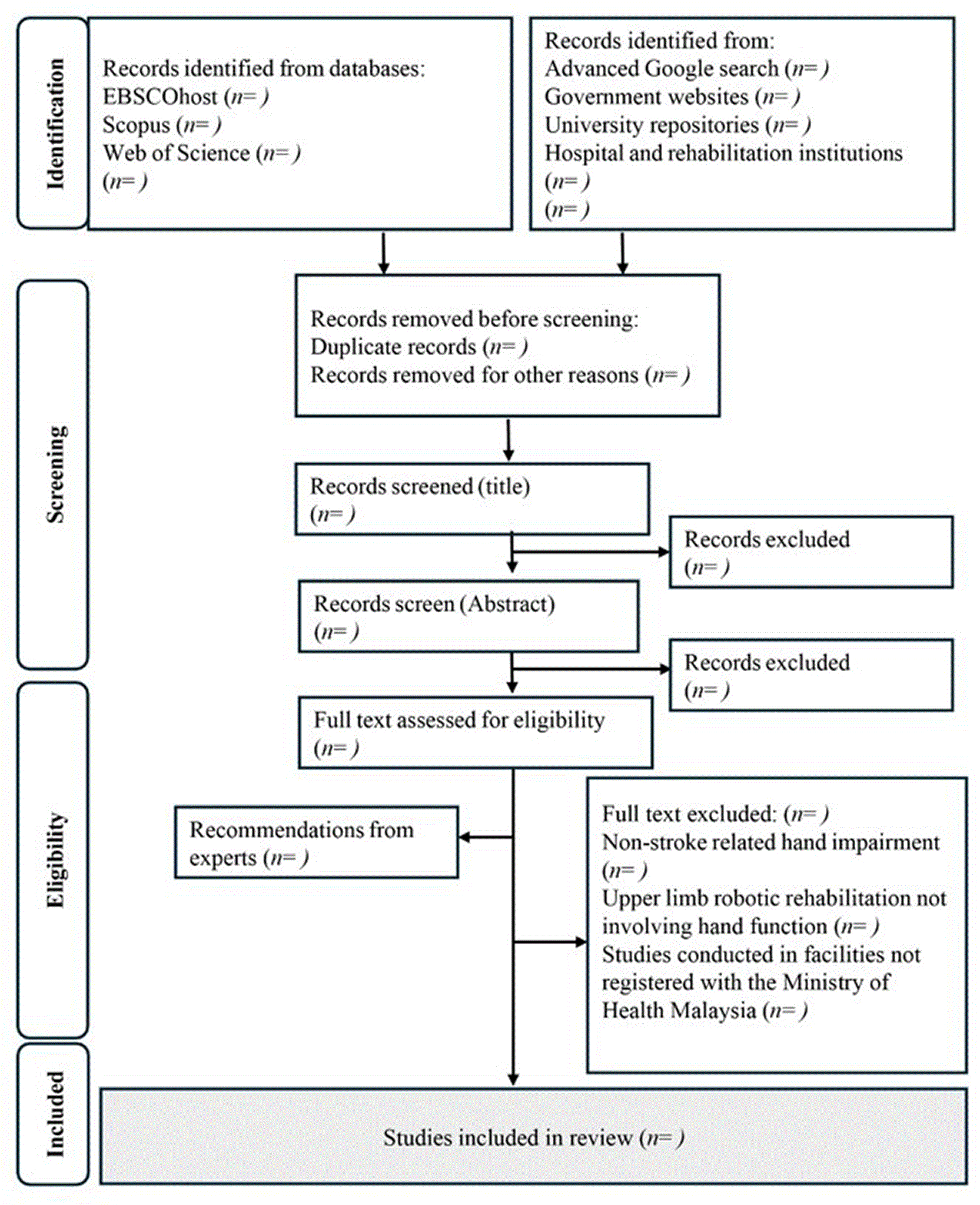
Data from the final pool of included records will be extracted using a structured data extraction form developed specifically for this review ( Table 3 and Table 4). This charting tool is designed in accordance with the JBI scoping review methodology to ensure a comprehensive, systematic, and reproducible approach to data collection. Using a standardized framework will allow for the consistent identification and categorization of relevant technological and clinical information across all included studies.
The primary categories of data to be extracted from each study will include:
• Study Characteristics: Author(s), year of publication, specific study design, and the local Malaysian setting or institution where the research took place.
• Participant Demographics: Sample size, age distribution, and the specific phase of stroke recovery (acute, subacute, or chronic) represented in the Malaysian cohort.
• Technological Specifications: Type of robotic hand glove technology utilized (e.g., soft pneumatic robotics vs. rigid mechanical exoskeletons), actuation mechanisms, degrees of freedom (DOFs), and the engineering control strategies employed.
• Intervention Characteristics: Specific training protocols, frequency, duration, and the delivery context (such as hospital-based, community centre, or home-based rehabilitation).
• Reported Outcomes: Targeted clinical metrics, including specific functional hand assessments, physiological or neuroplastic measures, usability and patient compliance indices, and documented systemic or financial barriers to local clinical adoption.
The baseline draft of the data extraction form is provided in Table 3 and Table 4. To ensure the tool captures all relevant nuances of the local literature, it will be refined iteratively by the research team during the active extraction phase. Any subsequent modifications or expansions made to this form to accommodate unexpected data fields will be fully documented and detailed in the final scoping review publication.
The extracted data will be systematically organized and presented in both tabular and narrative form to provide a clear overview of the findings.13 Tabular displays will be utilized to provide a clear, structured overview of the quantitative findings across all included literature. Descriptive statistics, including frequencies and percentages where applicable, will be used to summarize key baseline characteristics of the domestic research landscape. These visual matrices will specifically map out, including the geographical distribution of research and clinical trials across different states and institutions in Malaysia, specific types of robotic glove technologies implemented (e.g., soft pneumatic systems versus rigid exoskeletons), targeted neurophysiological and muscle groups (e.g., thenar and hypothenar coordination), and range of standardized clinical, functional, or usability outcomes reported.
A comprehensive narrative synthesis will accompany the tabular data to contextualize the quantitative metrics and provide deeper insights into the current state of the field. This narrative will discuss emerging technological themes, highlight variations in engineering and actuation designs, and critique current implementation practices within the constraints of the Malaysian healthcare framework. Furthermore, the synthesis will map out the relationship between specific device configurations and their practical utility, specifically focusing on documented barriers and facilitators to technology adoption, such as equipment affordability, clinical training demands, and patient compliance rates. Together, these complementary presentation methods aim to deliver a nuanced understanding of the current scope, developmental readiness, and systemic landscape of robotic hand rehabilitation devices for stroke survivors in Malaysia.
This scoping review will provide a comprehensive mapping of the existing literature surrounding robotic hand glove rehabilitation devices for stroke patients within Malaysia. By systematically identifying domestic engineering trends, clinical evaluation patterns, and structural implementation gaps, the review will contribute significantly to the evidence base guiding local stroke neurorehabilitation. The resulting insights will support the development of more targeted, accessible, and contextually feasible interventions designed to optimize fine-motor recovery and enhance the overall quality of life for Malaysian stroke survivors. Ultimately, this study will lay the necessary groundwork for future research aiming to standardize clinical application protocols and inform national health policies regarding the adoption, resource allocation, and commercialization of assistive rehabilitation technologies across the country’s healthcare ecosystem.
No ethical approval and written consent were required as we do not involve human participants in this study. We also expect to submit a manuscript in a peer-reviewed journal.