Просмотр новости
Найдите то, что Вас интересует
 Спутники
 РН
РН SpaceX
 Роскосмос
 NASA
NASA
СпутникиРНSpaceXРоскосмосNASAHeir turned ‘professional revolutionary’ left his home in Ireland for a holiday in Spain but was arrested after US extradition order on terror funding charges
The night before Fergie Chambers left Ireland in June, the US-born multimillionaire-turned-“communist” was nervous.
He had told a friend it felt as if he was being followed. He said his car had been broken into outside the €7 million Dublin home he had purchased when he relocated with his family, but nothing of value was stolen.
Rachel Lavin was speaking to Aideen Finnegan for the In the News Podcast.Ireland was supposed to be a safe haven for Chambers, once an heir to one of the largest family fortunes in the US, but more recently a prodigal son.
By the age of 41, he had transformed from a New York private school kid, who was relatively unaware of the scale his family’s wealth, to a self-described “professional revolutionary” tattooed with portraits of Josef Stalin and Mao Zedong. He claimed he wanted to see the fall of America.
But it was his pro-Palestinian activism that was making him paranoid on that summer night in Dublin.
Chambers had left the US three years earlier after a series of Palestine Action protests. The factories of an Israeli weapons supplier were vandalised and four young women, Chambers’s comrades from a commune he funded in rural Massachusetts, had been jailed.
He used some of his fortune to cover the legal fees of protesters from Palestine Action, which was declared a terrorist group in the UK after similar targeted demonstrations at a weapons factory there. He also funded some Palestinian humanitarian organisations.
Chambers also spent time in Tunisia, a country without an extradition treaty with the US, and funded the Tunis-based football team Club Africain, which won the top division title last May.
When he left Ireland in June for a holiday in Spain, another strongly pro-Palestinian country, he figured he would be safe. But on July 10th, while driving in Ibiza, several unmarked vehicles surrounded his car and he was arrested and taken to Aranjuez prison near Madrid.
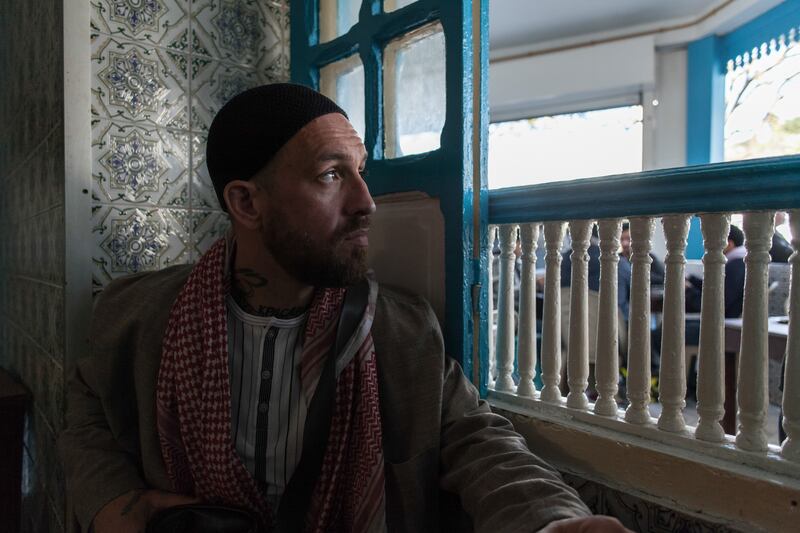
A day earlier, US secretary of state Marco Rubio had announced the Trump administration was going to target “transnational far-left terrorism” – an international crackdown on what the American right calls “antifa”.
US authorities have issued an international arrest warrant requesting that Chambers be extradited to face a series of charges. Ultimately, his partner Stella Schnabel says, he is accused of providing Hamas with $7.5 million in funding.
Chambers’s case raises many questions: how did a member of one of America’s richest families become a centrepiece of the Trump administration’s moves against “antifa”?
At what point when he was living in Ireland on and off over the past three years is he alleged to have become embroiled in a global terror plot? And how might his case impact US relations with Spain, and perhaps even Ireland, over Palestine?
Fergie Chambers is otherwise known as James or Jim Cox Chambers jnr He largely dropped the Cox name after becoming estranged from his family in recent years. The Cox family were, according to Forbes, America’s 10th richest as of last June, with a combined worth of $38 billion.
This wealth is largely attributed to Cox Enterprises, a company founded in 1898 when Chambers’s great-grandfather, James M. Cox, an enterprising young journalist, purchased the Dayton Evening News in Ohio. It has evolved and expanded into a global conglomerate, with interests spanning the telecommunications, media and automotive sectors, including news outlet Axios and motors marketplace AutoTrader.
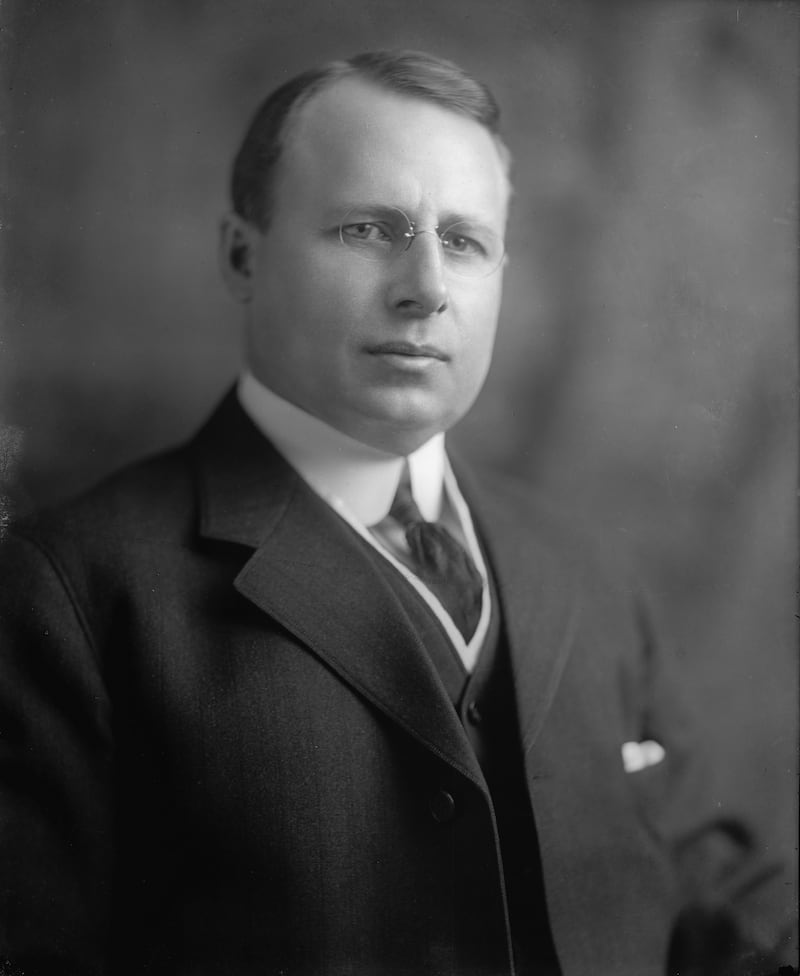
Success fed status, and the Cox family rose through the ranks into elite US society. James M Cox became governor of Ohio shortly before the first World War, and contested the US presidential election on the Democratic ticket in 1920, with Franklin D Roosevelt as his running mate. He lost to another Ohio man, Republican Warren G Harding.
Chambers’s grandmother, Anne, later became US ambassador to Belgium under Jimmy Carter, and the family remains aligned with the Democratic Party to this day.
“It’s good business to be good citizens,” the company’s website states.
Fergie Chambers was a troubled teen. He experienced mental-health difficulties and addiction issues, and was kicked out of Bard College in New York for cooking crack cocaine in his dorm room. Yet, after becoming smitten with a Russian woman he met on campus, he committed to a life of sobriety and Catholicism. They had a large wedding on his grandmother’s estate in the south of France and he became a father to three children, all while in his early 20s.
During this time, Chambers also became a keen Russofile, living part-time in Russia in the 2000s. But after separating from his wife, he moved back to Atlanta to set up a gym company and began to develop a passion for mixed martial arts and increasingly radical left-wing politics.
Chambers donated to Occupy Wall Street in 2011, protested over the shooting of an unarmed black teenager in Ferguson, Missouri in 2014, and supported protests against oil pipelines on indigenous land at Standing Rock in 2016.

It was around 2020 when he began an on-off relationship with his childhood friend, Schnabel, which brought him a fourth child. The daughter of Julian Schnabel, a famous Jewish artist and film-maker, Stella was a glamorous New York actress and producer, and part of a certain class of Brooklyn bohemia.
A portrait by Julian of Stella was used on the front of the Red Hot Chili Peppers’ 2002 album By the Way, with Stella having been engaged to the band’s guitarist, John Frusciante. She modelled for Vivienne Westwood, and counted actresses of a similar ilk, Jemima Kirke and Natasha Lyonne, among her friends.

As Chambers’s anti-American and anti-capitalist beliefs grew, he sought to justify Russia’s invasion of Ukraine in 2022. He travelled to the newly annexed Donbas region during a stint as a “citizen journalist”, stating at the time: “The only thing anyone’s angry at Putin about there is that he didn’t intervene sooner.”
On his return, the Cox family reportedly demanded that he would dissociate his holdings as an heir should he ever return to Russia. Another dispute over the family business providing funding for a police training facility in Atlanta, known as Cop City, further pushed him away, leading to Chambers describing his relatives as “enemies of the people” and the “Cox Klux Klan”.
After lengthy negotiations, he was permitted to sell his shares in the family company for an estimated $250 million in 2023. Chambers promised to dedicate his fortune to communist revolution and established a philanthropic foundation – the Babochki Collective (babochki meaning butterflies in Russian). He set up a number of communes in rural parts of the US, funding the housing and salaries of small groups of people who shared his radical beliefs.
After the October 7th, 2023 attacks by Hamas on Israel, and the subsequent Israeli assault on Gaza, he became increasingly involved in supporting the Palestinian cause.
With people from his commune, Chambers was involved in pro-Palestine protests at a manufacturing site of Elbit Systems in November 2023.
“We’re a direct action network targeting Elbit Systems, the US chapter specifically; they are Israel’s largest weapons supplier,” he told a TV team that reported on the protests.
A series of incidents, where protesters blockaded offices, damaged property and poured red paint on factory buildings, resulted in arrests. Four young women from the commune served short prison sentences for misdemeanour charges. Chambers, who was not arrested, paid their legal fees.
He left the US shortly after.
Next up was Tunisia, where Chambers converted to Islam and helped fund the popular Tunis football team, Club Africain. For a brief period he separated from Schnabel, marrying a Tunisian volleyball player last year, before moving to Dublin and reconciling their romance.
By this year, the couple had decided to settle, buying a south Dublin home, and focusing on funding Palestinian causes through The Babochki Collective, which claims to have donated a further $1 million to humanitarian aid organisations last February.
This included $300,000 to the Sameer Project, an initiative supplying emergency shelter and aid to displaced families in Gaza; $400,000 to Meca for Peace, which works for the “rights and wellbeing of children in the Middle East”, and $300,000 to PHM global, a campaign to rebuild destroyed health infrastructure in Gaza and the West Bank.

British-Palestinian surgeon Ghassan Abu Sitta, well known for his field work in Gaza over the past three years, has described Chambers as a “vital supporter for the provision of care for children wounded in the genocide”.
Yet, despite attempting to clean up his act, Chambers was no poster boy. His thirst for a revolutionary iconoclasm led him to post increasingly radical rhetoric online, often including incendiary comments in response to political events.
Shortly after the October 7th, 2023 attacks on Israel, he posted on X: “No faction of the Palestinian resistance, Hamas or other, has done *anything* wrong”.
On July 4th last, as the US marked 250 years of independence, he posted a photo on his Instagram account of a burning stars and stripes with the caption “250 years of unmitigated horror ... Death to Amerikkka, to hell with any of those celebrating.”
A July 8th post on his X account read: “Who gives a shit what’s a terrorist organization or not? ... If Pal Action is terrorism, terrorism is awesome.”
Whether or not his extreme beliefs are genuine, or just a cause he dabbles in, the playthings of a rebellious rich kid, is hard to decipher.
Chambers became the subject of a documentary by Irish director Sinéad O’Shea that premiered at this year’s Sundance Film Festival and was screened at last month’s Galway Film Fleadh. Titled All About the Money, it portrays Chambers during his time moving between the US, Tunisia and Ireland and offers insight into his radical, and often contradictory, views.
Chambers offered O’Shea a substantial cash sum not to publish the documentary, which she refused. But a bruised ego was the least of his worries, as it was during the period O’Shea captured on camera that the US authorities allege he engaged in terrorist financing activity.
US authorities want Chambers extradited to face charges of money laundering with the intent of supporting terror organisations; riot; and conspiracy to riot, The Irish Times understands.
The Spanish Audiencia Nacional high court said: “The United States ... is seeking [Chambers] for financing the terrorist organisation Hamas.”
The US department of justice declined to comment on the case when contacted.
Chambers’s legal team is still waiting for the full details of the indictment to be provided by the US authorities before an extradition deadline at the end of this month.
Riot and conspiracy to riot, they say, appear to be in connection with the 2023 Palestine Action protests in New Hampshire, for which the US is seeking a five-year sentence. Chambers denies being present and his legal team argue that even if he were charged over this, the sentence would be disproportionate given that other protesters served one month.
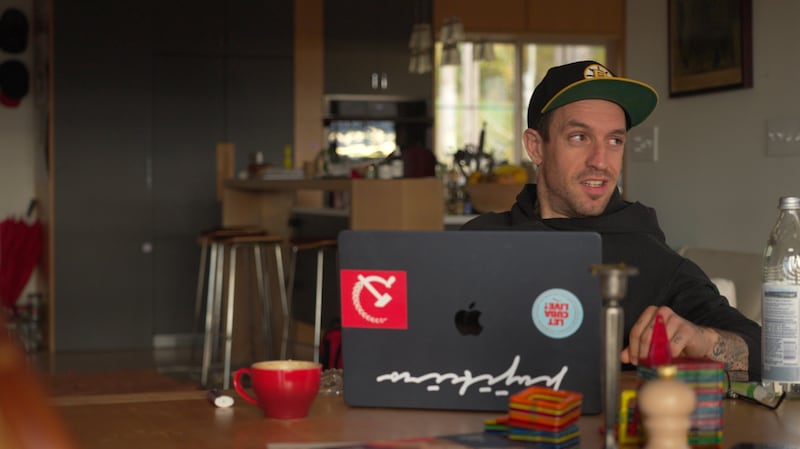
The more significant charge of money laundering relates to his time in Tunisia.
“The part of the indictment I have seen appears to rely only on the fact that he transferred $7.5 million of his own funds from the US to Tunisia,” Stella Schnabel told The Irish Times. “The reality is that this money was transferred to Tunisia because we were living there and for philanthropic activities, including supporting Club Africain.
“The money sponsored the club, helped to pay its debts and overdue salaries, rebuild its training centre and develop football fields for young people.”
Chambers has hired a prominent former Spanish judge to lead his defence, Baltasar Garzón of the firm Ilocad, who has previously represented WikiLeaks founder Julian Assange. A spokeswoman for Ilocad said: “If we analyse the text of the arrest warrant, it refers to a money transfer that we know was used to provide financial aid to the Tunisian Club Africain, which is, in and of itself, a philanthropic act.
“However, it is alleged that this transfer of funds abroad was made with the intent to support terrorist groups.”
The legal team believes this suggests that US authorities have been “unable to readily identify issues” with Chambers’s philanthropic support for Palestine and “are instead relying on his routine business investments as a basis for a flimsy money laundering charge”. They insist no crime has been committed and the proceedings are “politically motivated”.
Schnabel is more blunt, arguing that this is a case of political persecution.
“Fergie is being targeted because he has stood with Palestine people facing genocide as one of the largest donors to humanitarian projects in Gaza,” she said.
“The US government is now seeking to extradite him on extraordinary allegations, including that he has somehow funded the Palestinian resistance, without providing a shred of evidence for this trumped up charge.”
The case comes at a time of complicated political relations between Washington and Madrid over support for Palestine and Middle East issues more broadly. Left-leaning prime minister Pedro Sánchez has come under pressure from the US of late, with Donald Trump threatening to cut off all trade with Spain over its refusal to increase defence spending through Nato. Earlier this year, Sánchez drew Trump’s ire after refusing to allow the US use joint military bases in southern Spain for the offensive against Iran.
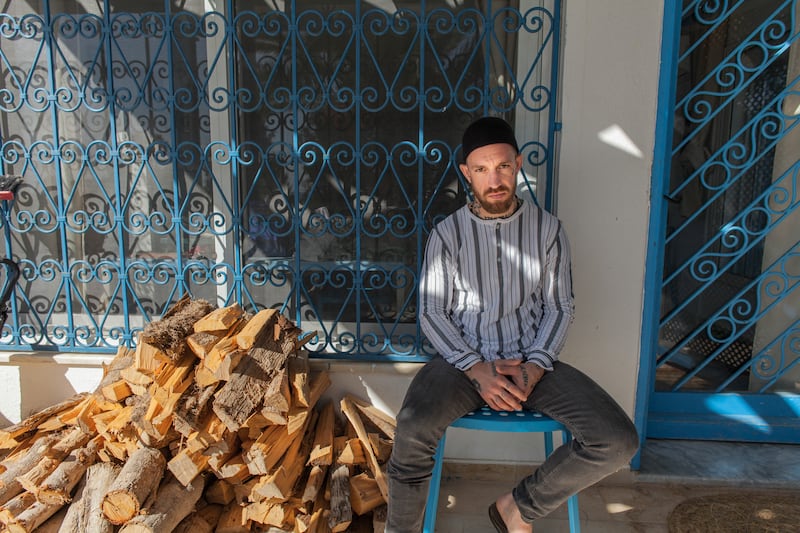
The arrest of Chambers is one of the first high-profile moves under the Trump administration’s international “antifa” crackdown.
The Washington Post reported that some US officials see the drive as an “effort to use powerful counterterrorism tools to crack down on US activists they view as left-wing extremists”.
Spain’s Audiencia Nacional said Chambers had appeared before a National Court judge at the request of the prosecutor’s office, with the US having a 40-day period to present the formal extradition paperwork, which ends on August 26th.
“If the person requested authorises the extradition, he is sent to the United States quickly. If he does not agree, a hearing is held to decide whether he will be extradited or not.”
Should the court rule that he should be extradited, the final decision falls to Sánchez and his council of ministers, who could again become a thorn in the Trump administration’s side.
A dossier from the US in support of the extradition request is being awaited by the Spanish side. Once received, officials will review whether it meets the legal requirements for extradition. Spanish courts will not try the facts of the case, but can seek to determine whether the extradition request is legally permissible. Such a request could be refused on a number of grounds: for technical reasons, such as a breach of deadlines or insufficient documentation, or on legal grounds, such as it being deemed “politically motivated”.
A number of Spanish politicians are putting pressure on Sánchez to reject the extradition request. Irene Montero, an MEP for the left-wing Podemos party, this week posted on X: “Spain cannot collaborate with Trump in the persecution of solidarity with Palestine. The Government must protect [Chambers] and not hand him over to [Israeli prime minister Binyamin] Netanyahu’s friends.”
[ How Spain’s Pedro Sánchez became Trump’s fiercest critic in EuropeOpens in new window ]
The case has also become a focus for some in the wider European left movement.
“This sets a terrifying precedent for repression of the wider movement for a free Palestine,” Schnabel said, “including precedent for the Trump administration exporting its repression far beyond the US’ borders to target people in Europe.”
Amid the many developments in his case, a new and surprising one emerged in recent weeks – Chambers has reconciled with his family. But for the moment, the rebel rich kid turned bad boy of the American left, and now alleged international criminal, remains in a Spanish prison, waiting to hear the evidence against him.
– Additional reporting: Naomi O’Leary