Просмотр новости
Найдите то, что Вас интересует
 Спутники
 РН
РН SpaceX
 Роскосмос
 NASA
NASA
СпутникиРНSpaceXРоскосмосNASAIndia’s nuclear expansion could sharply raise uranium demand, with PHWRs alone expected to require around 5,400 tonnes of uranium oxide annually. A Parliamentary Committee flagged that domestic production currently meets only 30% of this requirement and urged faster mining, strategic stockpiles, overseas sourcing and clearer timelines to secure long-term fuel supplies.
Synopsis
India’s nuclear expansion could sharply raise uranium demand, with PHWRs alone expected to require around 5,400 tonnes of uranium oxide annually. A Parliamentary Committee flagged that domestic production currently meets only 30% of this requirement and urged faster mining, strategic stockpiles, overseas sourcing and clearer timelines to secure long-term fuel supplies.
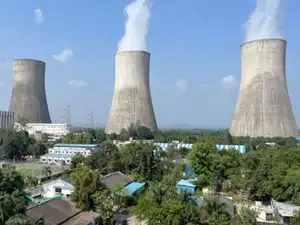 ANIIndia's future nuclear fleet may need 5,400 tonnes uranium annually: Parliamentary Panel (Representative image)
New Delhi: India's planned expansion of nuclear power capacity could significantly increase its uranium requirement, with Pressurised Heavy Water Reactors (PHWRs) alone expected to need around 5,400 tonnes of uranium oxide annually, while domestic production currently meets about 30 per cent of this requirement, according to a Parliamentary Committee's findings.
The Committee on Public Undertakings, in its report on action taken by the government on the performance of Nuclear Power Corporation of India Limited (NPCIL), highlighted the country's continued dependence on imported uranium and called for faster expansion of domestic production.
"Given that future PHWR expansions will require approximately 5,400 tonnes of U3O8 per annum, and domestic output currently satisfies about 30% of this baseline, accelerating domestic production remains an essential priority for comprehensive fuel assurance," the Committee said.
The panel noted that the Nuclear Fuel Complex manufactures fuel assemblies for PHWRs in India using uranium concentrate supplied by Uranium Corporation of India Limited (UCIL) or through imports arranged under government oversight.
According to the report, uranium imports currently come from Kazakhstan, Russia, Uzbekistan and Canada, while a long-term supply contract with Uzbekistan is valid up to 2026.
The Committee also noted that a proposed joint venture between UCIL and NTPC to acquire stakes in overseas uranium assets could help secure supplies and reduce exposure to fluctuations in the international market.
"The proposal for a joint venture between UCIL and NTPC to acquire stakes in overseas uranium assets is a constructive and encouraging step toward stabilizing long-term fuel costs and supporting the domestic nuclear fleet against market fluctuations and uncertainties," it said.
However, the panel sought a more detailed plan and definite timelines from the Department of Atomic Energy (DAE). It asked DAE to provide a report detailing timelines for the UCIL-NTPC joint venture, future uranium sourcing strategies and a framework for participation of Mine Developer-cum-Operators in domestic uranium production.
The Committee also stressed the need for strategic uranium reserves to protect reactor operations against possible supply disruptions.
"Establishing strategic uranium stockpiles, calibrated to refueling cycles and outage risks, is essential to sustaining reactor operations during supply disruptions," the Committee said.
On domestic availability, the report noted that the Atomic Minerals Directorate for Exploration and Research has established around 4.31 lakh tonnes of uranium oxide resources in the country. Of around 80,423 tonnes transferred to UCIL, about 39.22 per cent has already been depleted. At current production rates, the remaining reserves could last around 40 years if no new reserves are added.
In its response to the Committee, DAE said UCIL plans to double uranium production by expanding existing mine capacity and setting up mining projects in Jharkhand, Rajasthan and Chhattisgarh.
The uranium requirement assumes significance as India expands its nuclear power programme. NPCIL currently operates 25 reactors with an installed capacity of 8,780 MW, while another 17 reactors totalling 13,100 MW are under various stages of execution. The government has set a target of reaching 100 GW of nuclear power capacity by 2047, with NPCIL expected to contribute nearly half of it.