Просмотр новости
Найдите то, что Вас интересует
 Спутники
 РН
РН SpaceX
 Роскосмос
 NASA
NASA
СпутникиРНSpaceXРоскосмосNASA On September 5 and 6, 2025, the group of Talitraits editors met to include new thematic experts, refresh the workflow for the inclusion of trait information aligned with the WoRMS taxonomic backbone, and define new goals for the mid- and long-term....
Trait analysis is a valuable approach to ecosystem functioning and functional trade-offs (Titocci and Pata, 2025) and a promising insight into organism distributions across a range of environmental conditions.
The Talitroidea superfamily is found across a range of environments, from marine sandy beaches to leaf litter inland, and even to oases (Sfenthourakis et al., 2020). The Talitraits editors therefore agreed on an important conceptual extension of the activities: by considering the superfamily as a whole (Lowry and Myers, 2013), Talitraits’ goals are now going beyond the marine coastal-only focus which characterized the first years of activity of the group. Such expansion will provide further challenges but will ensure Talitraits is relevant to a range of disciplines, contributing to evolutionary and biogeographic knowledge, while also tightening gaps in research on traits, such as the known lack of information about traits at the land-water interface environments.
The Talitraits editors were assisted by the WoRMS Data Management Team (DMT) to clarify important aspects related to the use of the WoRMS platform as a tool to bring quantitative inputs to species and taxa, utilizing current research from different disciplines.
Curation priorities were discussed and agreed: traits “qualitative body size” and “diet” will be tackled first, following criteria of: applicability across most taxa, availability for most species, and potential usage. In particular “body size” was prioritized as it is intertwined with several ecological functions, both as a response to and as a driver of them (e.g. feeding, growth, survival). Being a morphological trait, size is more likely to have been measured and published in literature, whether in the species’ description or in population ecology studies. Such a key trait (sensu Litchman et al., 2013) provides relevant information in itself, but also represents a starting point for further queries on relevant interactions with other traits’ categories: how does size matter for physiology, life-history, and behaviour?
The discussions among experts further targeted key elucidations on other attributes of the platform: for instance, in case of semiterrestrial environments, the definition of “Environment” needed to be discussed and agreed upon. This resulted in the decision that information about environment for talitroids should include “terrestrial” along with marine, brackish or freshwater environments. This is the best option to adequately represent the fact that talitroids do breathe through a water film on their gills, but also spend their life cycle on emersed littorals, banks, and even inside woods, in a distribution that also includes spots away from water bodies. These features will need to be checked species by species, so it might take some time and, for a while, will be a work in progress.
Where to find Talitroidea? Figure by Koraon Wongkamaheng based on Lowry and Myers (2019).
The group included previous Talitraits editors: Lucia Fanini (University of Salento, Italy), Omar Defeo (Universidad de la Republica, Uruguay), Lauren Hughes (Natural History Museum, London, UK), Filipa Bessa (MARE, Portugal) and new editors: Luke Ireland (EAWAG and University of Zurich, Switzerland), Christophe Piscart (CNRS, France), Emanuele Mancini (University of Salento, Italy), Koraon Wongkamaheng (Kasetsart University, Thailand), Kyle Emery (University of California, Santa Barbara, USA), Matheus Augusto (UNIRIO, Brazil), Linda R. Harris (Nelson Mandela University), and Giovanna Reis (UFRGS, Brazil) for a total of 11 different nationalities represented, by Institutional affiliations: in alphabetical order Belgium, Brazil, France, Italy, Portugal, South Africa, Switzerland, UK, Uruguay, USA, and Thailand.
Group picture of 2025 Talitraits workshop (hybrid mode).
See detailed report here.
Want to get involved? Contact lucia.fanini@unisalento.it
Time- and size-limited projects can be discussed, as long as they relate to talitroids and their traits.
References
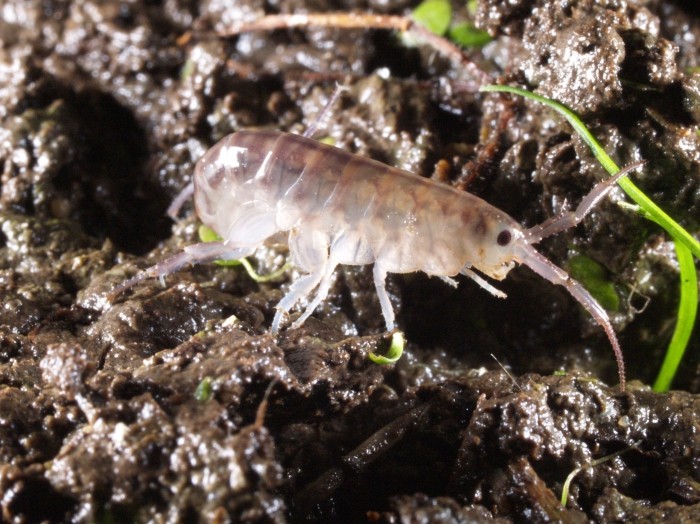
Link to image in thumbnail: https://www.marinespecies.org/aphia.php?p=image&pic=47096&tid=103200.
The contributions of the WoRMS Data Management Team to this workshop were supported by LifeWatch Belgium.
| # | Наименование новости | Тональность | Информативность | Дата публикации |
|---|---|---|---|---|
| 1 | WoRMS press release: Ten remarkable new marine species from 2025 | 0 | 9.71 | 18-03-2026 |
| 2 | Advancing Southern Ocean Biodiversity Knowledge | 0 | 9.41 | 26-05-2026 |
| 3 | Applications for the Ocean Census Species Discovery Awards 2026 are open | 0 | 6.72 | 09-04-2026 |
| 4 | INVEMAR launches the Colombia Register of Marine Species to enhance knowledge of the country's marine biodiversity | 0 | 5.1 | 24-06-2026 |
| 5 | Philippe Bouchet selected as the Carlo Heip Awardee for 2023-2025 | 0 | 4.6 | 21-04-2026 |
| 6 | Встреча со студсоветом ИМОМИ (25.09.2025) | 0 | 1 | 27-11-2025 |
| 7 | An epic milestone and number: 250.000 … | 0 | 14.34 | 18-05-2026 |
| 8 | Local Management Board Agenda - November 20, 2025 | 0 | 15.62 | 05-08-2026 |
| 9 | Всероссийская сессия византинистов (07.10.2025) | 0 | 1 | 27-11-2025 |