Просмотр новости
Найдите то, что Вас интересует
 Спутники
 РН
РН SpaceX
 Роскосмос
 NASA
NASA
СпутникиРНSpaceXРоскосмосNASAThe Oireachtas Education Committee discussed the food programme this morning.
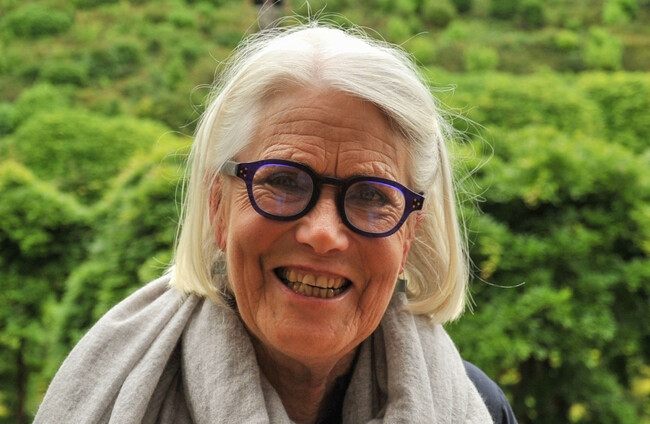
File photo of Darina Allen. Alamy
hot school meals
The Oireachtas Education Committee discussed the food programme this morning.
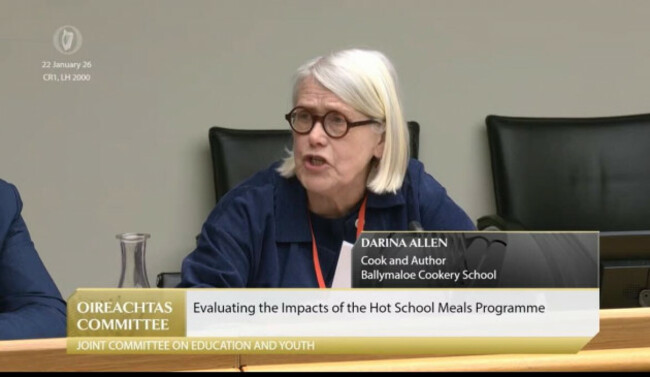
DARINA ALLEN, THE founder of Ballymaloe Cookery School in Co Cork, has blasted the Hot School Meals programme as “not fit for purpose” and in need of urgent changes.
Appearing at an Oireachtas Education Committee to discuss the food programme, the celebrity chef claimed there’s “very little transparency on how the meals are produced” by providers.
Allen further said that “ultra processed food” is causing “harm” to children – including to their diet and to their ability to concentrate and learn in class – as she called for more locally produced food to be used by schools.
But Allen received pushback from some members of the committee, who pointed to the expanded rollout of the programme since it started in 2019.
Saint Vincent de Paul and child poverty NGO Barnados also told the committee that the meals programme had meant that “every child is guaranteed a hot meal”, while also reducing strain on hard-pressed families.
Meath-based Fine Gael senator Linda Nelson Murray said the committee had heard from schools a week earlier, in which organisations including the Education and Training Board outlined that staff and families had an “overwhelmingly” positive experience of the programme.
“We’re so different in what we’re saying,” Nelson Murray told Allen.
“We’re just really starting on this. Six years ago it was in 36 schools – it’s now available to 3,200 schools and 500,000 kids, so I think fair play that we have that and children are actually getting a meal.”
Nelson Murray cited the example of children who can be “picky” about their food, but accepted that “we have to fine tune” the lunch programme, with a focus on nutrition as part of that.
The meals are prepared centrally and are reheated in the school, but Allen said this was contributing to the problem from a nutrition point of view.
“Each reheating further degrades the nutrient density,” Allen told the committee this morning.
In her address, Allen said that a focus on “lost cost” meals risks “diet-related illness” in the future, which Allen said will cause further burden on State finances.
Instead, she wants to see schools “connect with local producers” who prepare the food within a much closer radius
“With every bite comes the potential to either damage or enhance a child’s health,” Allen said.
Deprivation levelsHowever, a number of organisations supported the programme as having been crucial for families in poverty, while accepting that changes may need to be made over time to the quality of the food.
Stephen Moffatt – national policy Manager at Barnardos – told the committee that meals are a “constant stress” for families who work with the charity.
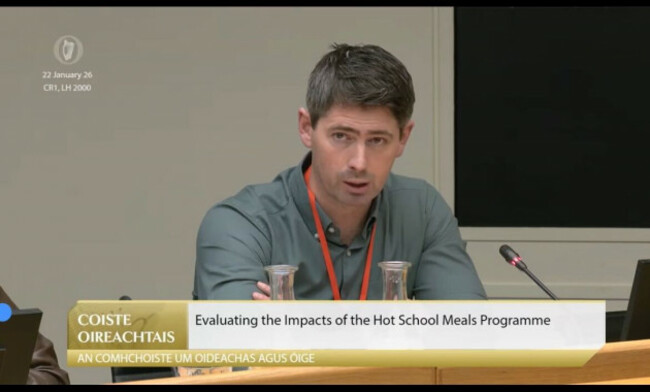
Moffat said one of the benefits of the programme has been that in its current form it already “improves the nutrition” intake for children, as it means they’re getting meals they may not get otherwise.
The committee heard further from the head of social justice and policy at Saint Vincent de Paul, Louise Bayliss, who pointed to CSO figures showing that 49% of one-parent households experience higher deprivation and poverty levels.
“We do absolutely want nutritional meals for children but there is high level of deprivation out there,” Bayliss said.
Dr Naomi Feely – policy director for the Children’s Rights Alliance – said the success of the programme will “vary depending on the community”, adding that it may need to be tailored to each area depending on the challenges they face.
Áine Lynch of the National Parents’ Council said that a key measure needed for the programme is to allow children “have time” to eat their food.
When The Journal did a callout for experiences of the programme last week, this was reported by a number of parents and teachers, who were concerned that the current timetable doesn’t allow enough time for the meals.
The committee heard today that children are often in a rush to play games during their break, meaning they often eat their food very quickly, or leave much of it uneaten.
Lynch said today that the National Parents’ Council wants the programme to be a “success”, but that the timetable and nutrition were two areas the organisation would like to see work on.
| # | Наименование новости | Тональность | Информативность | Дата публикации |
|---|---|---|---|---|
| 1 | Минпросвещения обсуждает компенсации за горячее питание детям при новой волне пандемии | 0 | 0 | 10-09-2020 |
| 2 | В Госдуму внесли законопроект о горячем питании для учеников младших классов | 0 | 0 | 20-09-2019 |
| 3 | Are school summer holidays too long? | 0 | 13.18 | 12-06-2026 |
| 4 | Primary school hours under review as department considers changes to school day | 0 | 5.63 | 06-08-2026 |
| 5 | Дума обсудит президентские поправки о бесплатном горячем питании для младшеклассников | 0 | 0 | 13-02-2020 |
| 6 | 'Profound breach of trust': Teachers' union slams Minister over Assessment of Need changes | 0 | 7.72 | 10-12-2025 |
| 7 | В кабмине поддержали законопроект об обязательном горячем питании в начальной школе | 0 | 0 | 16-09-2019 |
| 8 | Минпросвещения: родители в основном довольны организацией горячего питания в школах | 0 | 0 | 02-10-2020 |
| 9 | Яровая: приоритетом при закупках питания для школьников должно быть качество | 0 | 0 | 05-09-2025 |
| 10 | Дума обсудит проект президента об усилении воспитательной составляющей образования | 0 | 0 | 23-06-2020 |