Просмотр новости
Найдите то, что Вас интересует
 Спутники
 РН
РН SpaceX
 Роскосмос
 NASA
NASA
СпутникиРНSpaceXРоскосмосNASA
As data center development expands rapidly across Texas, the city of Fort Worth has taken the first steps to begin regulating data centers. An hours-long meeting on Tuesday, Aug. 11 resulted in the approval of several measures designed to regulate data centers and begin the process of asking the state to approve a temporary moratorium.
Earlier this summer, the Fort Worth Zoning Commission voted against amending the city’s zoning rules to regulate data centers. In response, several city council members said they would seek a moratorium. Fort Worth residents had until July 15 to submit comments on proposed regulations, and now the city has put together a plan of action.
Assistant City Manager Jesica McEachern laid out three separate actions, each approved by council: begin the legal process toward a moratorium, create a Data Center and Infrastructure Commission, and require data center developers to show proof of state approval to connect to the electric grid.
Starting the legal process toward a moratorium
Fort Worth city leaders gave taken the first steps toward a temporary moratorium on new data center development as they study whether additional regulations are needed to address concerns including water use, noise, infrastructure and impacts on surrounding neighborhoods.
But under Texas law, the city can’t simply pause data center development because officials want more time to study the issue.
Chapter 212 of the Texas Local Government Code establishes specific requirements cities must meet before imposing a development moratorium, including demonstrating why existing regulations aren’t enough.
What would Fort Worth have to prove to enact a moratorium:
Since the proposed moratorium would involve commercial development, state law requires a municipality to submit written findings that show existing regulations and laws aren’t enough to prevent new development from harming public health, safety or welfare.
The findings must identify the potential harm that could occur without a moratorium, the geographical area where the moratorium would apply, and the specific types of commercial development affected. The city must also explain what it hopes to accomplish during the moratorium, such as adopting new regulations or changing existing ones.
In Fort Worth’s case, city staff told council that its review of data centers would examine issues including noise, water supply, land-use compatibility, building scale and mechanical infrastructure. The city could ultimately consider changes to its zoning ordinance, city code and water requirements.
The resolution to begin the moratorium process would not immediately pause development. Instead, it would trigger the process required by state law, including public hearings and additional council action.
Some projects would also be protected. Texas law says a development moratorium can’t interfere with the rights of projects already in progress. The law also restricts delaying the processing of zoning applications that were filed before the moratorium takes effect.
City staff said projects that enter the development process before new regulations are adopted may acquire the right to develop under the rules in place today rather than whatever new standards Fort Worth eventually adopts. Developers could voluntarily comply with the city’s new standards, but the city says state law may not require certain vested projects to do so.
If a moratorium is enacted, Texas law limits the initial moratorium to 90 days. It can be extended to 180 days, but doing so would require more public hearings and findings explaining why an extension is necessary. After it expires, the law also restricts a city from enacting another moratorium for two years.
Creating a Data Center & Infrastructure Commission
Fort Worth is also approved the creation of an 11-member Data Center and Infrastructure Commission to explore how the rapidly growing industry could affect the city.
The proposal presented to City Council suggests the commission would be led by Dr. Mike Slattery, director of the Institute for Environmental Studies at Texas Christian University. Its members would include people with backgrounds in economic development, data center operations, environmental or natural resource management, electricity and water, along with environmental advocates and Fort Worth residents.
Several speakers during public comment called for greater representation from Fort Worth residents on the commission.
The commission would study four major areas: electricity and energy, water and other local resources, land use and neighborhood impacts, and the economic and fiscal effects of data center development. That includes questions about how additional electricity demand could affect the grid and ratepayers, whether the city’s water requirements are sufficient, and what standards could address concerns such as noise, lighting and the distance between data centers and residential neighborhoods.
The commission’s recommendations would be limited to areas where Fort Worth has regulatory authority. City staff said the commission would present its findings and recommendations to the City Council on Nov. 3, ahead of the proposed public hearings on the moratorium.
Require data centers to show proof of PUC/ERCOT approval for connection to the grid
Separate from the proposed moratorium, Fort Worth approved a new city ordinance aimed at data centers seeking to connect to the Texas electrical grid.
Under the ordinance, data center developers would have to provide the city with proof of approval from either the Public Utility Commission of Texas or the Electric Reliability Council of Texas showing the approval for the project’s interconnection to the grid.
The requirement would apply at several stages of the city’s development process, including pre-development conferences, platting and replatting, building permits and infrastructure plan reviews.
City officials said the requirement was drafted following a directive from Gov. Greg Abbott calling for state regulators to review data center projects moving through the grid interconnection process, including their electricity and water demands and potential impacts on surrounding properties.
Possible timeline
Under the timeline presented to the City Council, the proposed Data Center and Infrastructure Commission would spend the next several months studying the issue before presenting its recommendations in November.
Public hearings on the proposed moratorium would follow, with a final council vote potentially coming Feb. 16. If approved, the initial 90-day moratorium would run through May, with the possibility of one extension that could push its expiration into August. However, city officials stressed that Fort Worth does not have to wait for the moratorium to expire or use the entire moratorium period before enacting regulations.
Assistant City Manager Jesica McEachern told council that it could adopt new data center regulations at any point in the process once members believe they have enough information to move forward.
Public comment
Public comment included support for the moratorium alongside calls for greater community involvement in developing new regulations.
State Rep. Vicki Goodwin said action by Fort Worth could send a message to state lawmakers amid concerns about data centers’ water and electricity use, infrastructure costs and tax incentives.
Other speakers supported creating a data center commission but argued impacted residents should have greater representation, and the panel should have more time to study potential environmental and neighborhood effects.
Fort Worth Mayor Mattie Parker posted this statement to social media after the meeting.
This story uses functionality that may not work in our app. Click here to open the story in your web browser.
As data center development expands rapidly across Texas, the city of Fort Worth has taken the first steps to begin regulating data centers. An hours-long meeting on Tuesday, Aug. 11 resulted in the approval of several measures designed to regulate data centers and begin the process of asking the state to approve a temporary moratorium.
Earlier this summer, the Fort Worth Zoning Commission voted against amending the city's zoning rules to regulate data centers. In response, several city council members said they would seek a moratorium. Fort Worth residents had until July 15 to submit comments on proposed regulations, and now the city has put together a plan of action.
Assistant City Manager Jesica McEachern laid out three separate actions, each approved by council: begin the legal process toward a moratorium, create a Data Center and Infrastructure Commission, and require data center developers to show proof of state approval to connect to the electric grid.
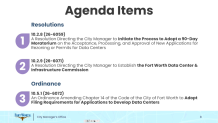
Fort Worth city leaders gave taken the first steps toward a temporary moratorium on new data center development as they study whether additional regulations are needed to address concerns including water use, noise, infrastructure and impacts on surrounding neighborhoods.
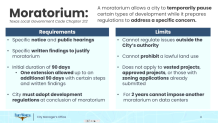
But under Texas law, the city can't simply pause data center development because officials want more time to study the issue.
The latest news from around North Texas.


Chapter 212 of the Texas Local Government Code establishes specific requirements cities must meet before imposing a development moratorium, including demonstrating why existing regulations aren't enough.
What would Fort Worth have to prove to enact a moratorium:Since the proposed moratorium would involve commercial development, state law requires a municipality to submit written findings that show existing regulations and laws aren't enough to prevent new development from harming public health, safety or welfare.
The findings must identify the potential harm that could occur without a moratorium, the geographical area where the moratorium would apply, and the specific types of commercial development affected. The city must also explain what it hopes to accomplish during the moratorium, such as adopting new regulations or changing existing ones.
In Fort Worth's case, city staff told council that its review of data centers would examine issues including noise, water supply, land-use compatibility, building scale and mechanical infrastructure. The city could ultimately consider changes to its zoning ordinance, city code and water requirements.
The resolution to begin the moratorium process would not immediately pause development. Instead, it would trigger the process required by state law, including public hearings and additional council action.
Some projects would also be protected. Texas law says a development moratorium can't interfere with the rights of projects already in progress. The law also restricts delaying the processing of zoning applications that were filed before the moratorium takes effect.
City staff said projects that enter the development process before new regulations are adopted may acquire the right to develop under the rules in place today rather than whatever new standards Fort Worth eventually adopts. Developers could voluntarily comply with the city's new standards, but the city says state law may not require certain vested projects to do so.
If a moratorium is enacted, Texas law limits the initial moratorium to 90 days. It can be extended to 180 days, but doing so would require more public hearings and findings explaining why an extension is necessary. After it expires, the law also restricts a city from enacting another moratorium for two years.
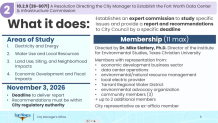
Fort Worth is also approved the creation of an 11-member Data Center and Infrastructure Commission to explore how the rapidly growing industry could affect the city.
The proposal presented to City Council suggests the commission would be led by Dr. Mike Slattery, director of the Institute for Environmental Studies at Texas Christian University. Its members would include people with backgrounds in economic development, data center operations, environmental or natural resource management, electricity and water, along with environmental advocates and Fort Worth residents.
Several speakers during public comment called for greater representation from Fort Worth residents on the commission.
The commission would study four major areas: electricity and energy, water and other local resources, land use and neighborhood impacts, and the economic and fiscal effects of data center development. That includes questions about how additional electricity demand could affect the grid and ratepayers, whether the city's water requirements are sufficient, and what standards could address concerns such as noise, lighting and the distance between data centers and residential neighborhoods.
The commission's recommendations would be limited to areas where Fort Worth has regulatory authority. City staff said the commission would present its findings and recommendations to the City Council on Nov. 3, ahead of the proposed public hearings on the moratorium.
Require data centers to show proof of PUC/ERCOT approval for connection to the gridSeparate from the proposed moratorium, Fort Worth approved a new city ordinance aimed at data centers seeking to connect to the Texas electrical grid.
Under the ordinance, data center developers would have to provide the city with proof of approval from either the Public Utility Commission of Texas or the Electric Reliability Council of Texas showing the approval for the project's interconnection to the grid.
The requirement would apply at several stages of the city's development process, including pre-development conferences, platting and replatting, building permits and infrastructure plan reviews.
City officials said the requirement was drafted following a directive from Gov. Greg Abbott calling for state regulators to review data center projects moving through the grid interconnection process, including their electricity and water demands and potential impacts on surrounding properties.
Possible timelineUnder the timeline presented to the City Council, the proposed Data Center and Infrastructure Commission would spend the next several months studying the issue before presenting its recommendations in November.
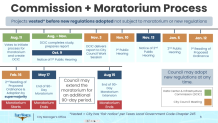
Public hearings on the proposed moratorium would follow, with a final council vote potentially coming Feb. 16. If approved, the initial 90-day moratorium would run through May, with the possibility of one extension that could push its expiration into August. However, city officials stressed that Fort Worth does not have to wait for the moratorium to expire or use the entire moratorium period before enacting regulations.
Assistant City Manager Jesica McEachern told council that it could adopt new data center regulations at any point in the process once members believe they have enough information to move forward.
Public commentPublic comment included support for the moratorium alongside calls for greater community involvement in developing new regulations.
State Rep. Vicki Goodwin said action by Fort Worth could send a message to state lawmakers amid concerns about data centers’ water and electricity use, infrastructure costs and tax incentives.
Other speakers supported creating a data center commission but argued impacted residents should have greater representation, and the panel should have more time to study potential environmental and neighborhood effects.
Fort Worth Mayor Mattie Parker posted this statement to social media after the meeting.
| # | Наименование новости | Тональность | Информативность | Дата публикации |
|---|---|---|---|---|
| 1 | Fort Worth releases timeline for data center rules, moratorium | 0 | 8.13 | 13-07-2026 |
| 2 | Trump calls Texas's data center opposition a ‘mistake' | 0 | 9.2 | 07-08-2026 |
| 3 | Crow Holdings data center may spell the end for Dallas' Market Hall building | 0 | 6.62 | 29-07-2026 |
| 4 | Texas lawmakers weigh future of data center tax breaks | 0 | 8.24 | 24-07-2026 |
| 5 | One-year ban on new data center construction in Chicago proposed by Mayor Johnson | 0 | 5.98 | 23-09-2026 |
| 6 | Amherst zoning board rejects 45-megawatt data center on Nordson campus after residents pack hearing | 0 | 14.38 | 10-08-2026 |
| 7 | Gov. Greg Abbott calls for ban on data center development in rural Texas neighborhoods | 0 | 5 | 01-07-2026 |
| 8 | Data center debate grows across Texas as leaders push for more oversight | 0 | 7.01 | 23-07-2026 |
| 9 | Flexential plans 110-acre data center campus in Kaufman County | 0 | 8.59 | 29-07-2026 |
| 10 | Mich. City Says Data Center Moratorium Suit Is Premature | 0 | 7.96 | 21-09-2026 |