Просмотр новости
Найдите то, что Вас интересует
 Спутники
 РН
РН SpaceX
 Роскосмос
 NASA
NASA
СпутникиРНSpaceXРоскосмосNASABeam-sensitive materials can hold the answers to some of today’s most important research questions, but they can also be the hardest to analyze.
Beam-sensitive materials can hold the answers to some of today’s most important research questions, but they can also be the hardest to analyze. Polymers, metal-organic frameworks (MOFs), covalent organic frameworks (COFs), organic crystals, energy functional materials, and other delicate samples may change, degrade, or lose critical structural information under electron-beam exposure.
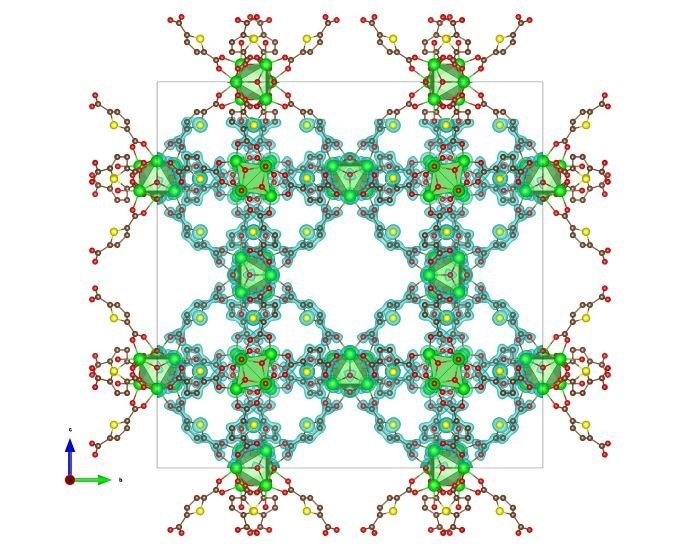 Image Credit: Tescan
That is where cryogenic electron microscopy can make a difference. By helping reduce beam-induced damage and preserve sensitive structures, analytical cryo-STEM workflows open new possibilities for materials that cannot be characterized at room-temperature conditions.
With the newly introduced cryo electron microscopy (cryo-EM) solution for Tescan TENSOR™, researchers can combine cryogenic sample transfer holder with guided low-dose procedures in Tescan Explore™ software, bringing low-dose cryo-STEM imaging, cryo-EDS analysis, cryo-3D ED, and cryo-4D STEM characterization into an accessible analytical workflow for beam-sensitive materials analysis.
Built for Longer, More Reliable Cryogenic ExperimentsCryogenic workflows can be affected by contamination, ice growth, and the risks associated with cryo-holder insertion into the microscope. TENSOR™ helps address these challenges through near-UHV conditions, achieved without liquid nitrogen cooling of the column, and a unique holder-loading mechanism that prevents liquid nitrogen spillover from the cryo-transfer holder dewar during insertion into the microscope.
This helps reduce safety-related risks and increases the success rate of cryogenic sample transfer. With a cryo-transfer holder designed to maintain cryogenic conditions for more than 8 hours, the TENSOR™ cryo-EM solution supports day-long experiments with essentially no need for liquid nitrogen refills.
Limiting Beam Exposure Before Data AcquisitionOnce the sample is kept stable under cryogenic conditions, it is key to minimize sample exposure to unnecessary electron dose before data acquisition during sample navigation, region-of-interest (ROI) identification and microscope alignments, including ROI focusing and tracking.
Tescan Explore™, the microscope control software for TENSOR™, guides users through these preparation steps using simple, intuitive low-dose procedures that help reduce beam exposure before data acquisition begins.
Enabling Cryo-EDX Compositional Analysis and Elemental MappingMinimizing ice contamination and limiting beam exposure are prerequisites for electron microscopy imaging of beam sensitive materials. Although TEM/STEM images provide information about the sample morphology and structural architecture, scientists also need to extract compositional and structural analytical data from the samples.
However, EDX compositional analysis under cryogenic conditions is challenging in conventional TEM/STEM instruments which require a cryo-box or cryo-shields to prevent fast ice growth in the microscope column. The cryo-box and cryo-shields obstruct the path of EDX signal to EDX detectors and consequently limiting access to compositional information from investigated samples.
TENSOR™ helps overcome this limitation through near-UHV conditions in the column, which are moreover achieved without liquid nitrogen cooling. With no cryo-box or cryo-shields blocking the EDX signal from the cryo sample, cryo-EDX compositional analysis and elemental mapping remain accessible, while the near- UHV conditions minimize ice contamination and ice growth during long-duration cryo- EM experiments.
More Than Cryo-STEM Imaging: Cryo-4D STEM and Cryo-3D EDThe TENSOR™ cryo-EM solution extends cryo analysis beyond STEM imaging alone, supporting advanced workflows such as cryo-4D STEM mapping and cryo-3D electron diffraction with beam precession for crystal structure determination.
This is especially valuable for beam-sensitive crystalline materials, organic crystals, MOFs/COFs, functional materials, and other complex systems where diffraction-based information can be difficult to obtain before beam damage occurs. In workflows that combine cryo-3D ED with 4D-STEM mapping capability, scientists can collect cleaner diffraction data from selected regions, improving signal-to-noise ratio, and supporting more reliable and straightforward structure determination from challenging samples.
From Cryo Preservation to Deeper Materials InsightWith the new cryo-EM solution for Tescan TENSOR™, materials scientists can extend advanced analytical workflows to samples that are difficult to characterizeunder conventional electron microscopy conditions.
By combining cryogenic sample preservation and low-dose software-guided acquisition with cryo-STEM imaging, cryo EDS analysis, cryo-4D STEM, or cryo-3D ED, TENSOR™ helps researchers move from fragile sample preparation to deeper structural and chemical insight with fewer workflow compromises.
See How Cryo-EM Expands TENSOR™ WorkflowsDiscover how the Tescan TENSOR™ cryo-EM solution can support low-dose cryo analysis of beam-sensitive materials and expand what is possible in materials science research.
Learn more: https://tescan.com/events-and-webinars/cryo-em-beam-sensitive-materials-tensor
| # | Наименование новости | Тональность | Информативность | Дата публикации |
|---|---|---|---|---|
| 1 | Keysight Expands 1.6T Test Solutions for AI and HPC Network Interconnects | 0 | 10 | 25-03-2026 |
| 2 | AI discovers the hidden signal of liquid-like ion flow in solid-state batteries | 0 | 12.39 | 07-03-2026 |
| 3 | Tennessee Announces $3 Million Commitment To Support NSF X-Labs Quantum Teams | 5 | 7 | 13-07-2026 |
| 4 | Physicists create first room-temperature quantum material | 0 | 12.57 | 15-07-2026 |
| 5 | Discovery of 'slow' electrons in 2D material could lead to new memory device | 0 | 15.28 | 10-08-2026 |
| 6 | Detecting the body's magnetic fields with a low-power Ramsey-based magnetometer | 0 | 9.88 | 22-07-2026 |
| 7 | Создан умный алгоритм для разработки антенн 6G-связи | 0 | 0 | 17-12-2025 |
| 8 | AI takes on one of physics' biggest mysteries | 5 | 7 | 08-07-2026 |
| 9 | Nouveau nano-capteur magnétique sensible au champ hors de son plan et à faible bruit | 5 | 7 | 08-06-2026 |
| 10 | Measurement basics: A field guide to instrument interfaces | 0 | 21.3 | 17-08-2026 |