Просмотр новости
Найдите то, что Вас интересует
 Спутники
 РН
РН SpaceX
 Роскосмос
 NASA
NASA
СпутникиРНSpaceXРоскосмосNASANew AI hardware like smart glasses could challenge the smartphone's primary computing role. Smart glasses are showing strong growth, while standalone AI devices struggle to gain traction. Google focuses on making existing devices more helpful with embedded AI capabilities. Smartphones offer a strong foundation with their existing hardware and software ecosystems. The future likely involves a blend of devices, with smartphones remaining a central hub.
Synopsis
New AI hardware like smart glasses could challenge the smartphone's primary computing role. Smart glasses are showing strong growth, while standalone AI devices struggle to gain traction. Google focuses on making existing devices more helpful with embedded AI capabilities. Smartphones offer a strong foundation with their existing hardware and software ecosystems. The future likely involves a blend of devices, with smartphones remaining a central hub.
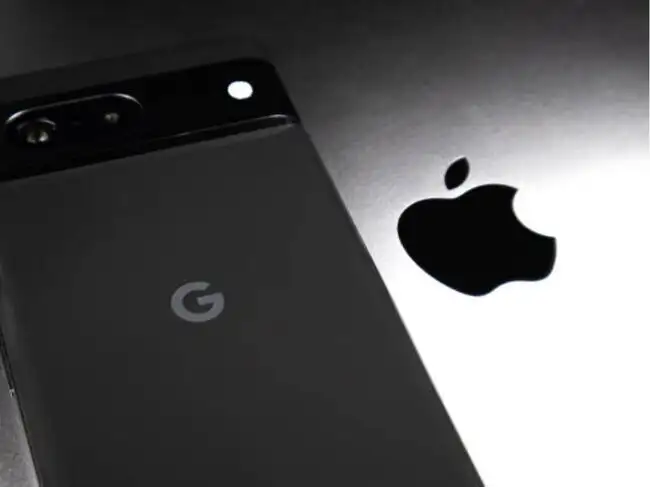 iStock
Smartphones could remain the central computing and connectivity hub behind a wider AI ecosystem in the future too
The smartphone has spent more than a decade becoming the primary computing device for billions of people. But AI is now creating a new generation of devices that could challenge its position. Google itself is working on a broader suite of AI-powered hardware, including smart glasses powered by Gemini, while companies are experimenting with AI pendants and other wearable form factors. In India, Temple, the much-talked-about AI device from Zomato founder Deepinder Goyal, has added to the conversation.
The question is simple: if AI can live in glasses, pendants or other dedicated devices, what happens to the smartphone?
Speaking to Economic Times Digital on the sidelines of Google's Pixel 11 series India launch, Gadryn Higgs, Senior Product Manager at Google, said the answer remains uncertain, but smartphones have one major advantage: ubiquity.
youtube.com/shorts/hHiCacB1wLs
“The smartphone device has really become pretty ubiquitous. And it's also become extremely helpful and extremely useful for a wide variety of different reasons for many people,” Higgs said.
“I think the question still remains unanswered, which is, what does the future look like overall?”
The early numbers suggest that not all AI hardware is finding equal traction. Smart glasses have emerged as the strongest category. IDC estimates that around 2.25 million smart glasses were shipped globally in Q1 2026, up 167% year-on-year, and forecasts roughly 13.6 million units for the full year. Meta and EssilorLuxottica's Ray-Ban Meta glasses have been a major driver of that growth.
Standalone AI devices, meanwhile, have had a much tougher run, with products such as Humane's AI Pin failing to establish a mass market. This could indicate that consumers are more comfortable with AI embedded into products they already understand, rather than carrying another dedicated device.
For Google, however, the focus is less on predicting the winning form factor and more on utility.
“At Google, we care about building devices that are helpful for people,” Higgs said. “How can we be more useful, more helpful in the right moment?”
That could leave smartphones with an important role even as new AI devices emerge. Phones already combine powerful processors, cameras, connectivity, displays and established software ecosystems, while increasingly running AI directly on the device.
Higgs pointed to Pixel's on-device AI capabilities, including offline features such as Rambler and Instant Night Sight, as examples of how smartphones can deliver AI without always relying on the cloud.
Google is also experimenting with more contextual smartphone interactions through HiLight, which currently focuses on calls and Gemini interactions and can work even when the phone is facedown. Higgs said Google plans to expand the feature to more experiences over time.
youtube.com/shorts/HCEKIWJhrHY
The future, therefore, may not be a straightforward battle between the smartphone and AI devices. Smart glasses could become a more natural interface for certain tasks, while smartphones could remain the central computing and connectivity hub behind a wider AI ecosystem.
As Higgs put it, the future remains unanswered. For now, Google's bet is to keep making the devices people already carry more useful as AI becomes increasingly embedded into everyday computing.
https://www.youtube.com/shorts/Nx3IdOLQc3Q
The conversation with Gadryn Higgs was conducted by Economic Times Digital on the sidelines of the Google Pixel 11 series India launch. Video coverage of the Pixel 11 series is already live across our social platforms, while the full video interview will go live soon.
| # | Наименование новости | Тональность | Информативность | Дата публикации |
|---|---|---|---|---|
| 1 | The Smartphone Is Not Going Away Yet: Google Exec on AI Devices and the Future of Computing | 0 | 8.08 | 14-08-2026 |
| 2 | Are smartphones becoming smarter with on-device AI? | Explained | 0 | 7 | 21-07-2026 |
| 3 | Will the smartphone survive the AI age? | 0 | 7 | 25-01-2026 |
| 4 | No, not Google Glass 2.0 — this is what’s really going on with the smart glasses coming this fall from Google and Samsung | 0 | 7 | 16-07-2026 |
| 5 | Google’s Android XR Glasses Put Gemini at the Center of Everyday Life, Taking on Meta’s Wearables Push | 2 | 7 | 19-05-2026 |
| 6 | Pocket-size AI: Powerful phones star at China show | 0 | 5 | 19-07-2026 |
| 7 | Welcome to the end of budget smartphones — thanks to AI | -2 | 6 | 20-07-2026 |
| 8 | The year in AI wearables | 0 | 5 | 25-12-2025 |
| 9 | Start-Ups Shift AI Tasks To Smartphones | 0 | 10.41 | 20-07-2026 |
| 10 | « Elles changent ma vie » : les lunettes « intelligentes » gagnent du terrain | 0 | 6.75 | 14-08-2026 |