Просмотр новости
Найдите то, что Вас интересует
 Спутники
 РН
РН SpaceX
 Роскосмос
 NASA
NASA
СпутникиРНSpaceXРоскосмосNASACut flight costs by booking in the right window, comparing sites, checking nearby airports, shifting dates, and adding fees upfront.
The post Why You’re Paying Too Much for Flights appeared first on Dollar Flight Club.
You can often cut flight costs by fixing five common mistakes: booking at the wrong time, checking only one site, ignoring nearby airports, sticking to fixed dates, and missing bag and seat fees.
I’d sum it up like this: for many U.S. trips, the best shot at a lower fare is about 28 to 60 days before departure for domestic flights and about 2 to 6 months out for international trips. I’d also compare prices across search tools and airline sites, check at least one backup airport, shift travel by 1 to 2 days if I can, and look at the full trip total instead of the fare shown first.
A few numbers make the point fast:
Here’s the short version I’d use before booking:
| What I check | What I’m looking for |
|---|---|
| Booking window | Domestic: 3 to 8 weeks out; international: 2 to 6 months out |
| Search sources | At least one meta-search tool, one airline site, and one booking site |
| Airport options | One main airport plus at least one nearby airport |
| Travel dates | Tuesday, Wednesday, or Monday if possible |
| Final cost | Fare plus bags, seats, parking, and rideshare |
The main idea is simple: the cheapest flight on the screen often is not the cheapest trip by the time all costs are added.

Airfare usually hits its lowest point in a pretty tight booking window. For domestic U.S. flights, that sweet spot is often about 28 to 60 days before departure. Book too late, and prices often jump fast. In fact, flights bought one week before departure can cost about $220 more on average than the lowest fares that showed up earlier.
Book too early, and you can also leave money on the table. Say you’re flying round-trip from New York to Denver. If you book 10 months ahead, you might pay about $420. The same trip can fall to around $300 when booked 7 weeks out. That’s a simple $120 saved.
For international trips, the timing shifts out a bit. The usual target is 2 to 6 months before departure. Miss that window, and the extra cost can sting more. A Los Angeles–Paris ticket bought within two weeks of departure can cost about $250 more than that same flight bought 3 to 4 months earlier.
The practical move is simple: start tracking fares early, but hold off on booking until you hit the target window. Then watch for the next trap: searching in just one place.
Checking only one website can hide lower faresEven if your timing is good, a narrow search can still cost you. The same flight can show different prices on airline websites, online travel agencies, and meta-search tools. Travelers who compare across several channels can save up to 30% compared with people who book from just one site.
A simple approach works well:
What counts is the total trip cost, not just the base fare on the screen. A $260 ticket can turn into $330 once carry-on fees are added. Meanwhile, a $290 fare that already includes the bag may end up being the cheaper option.
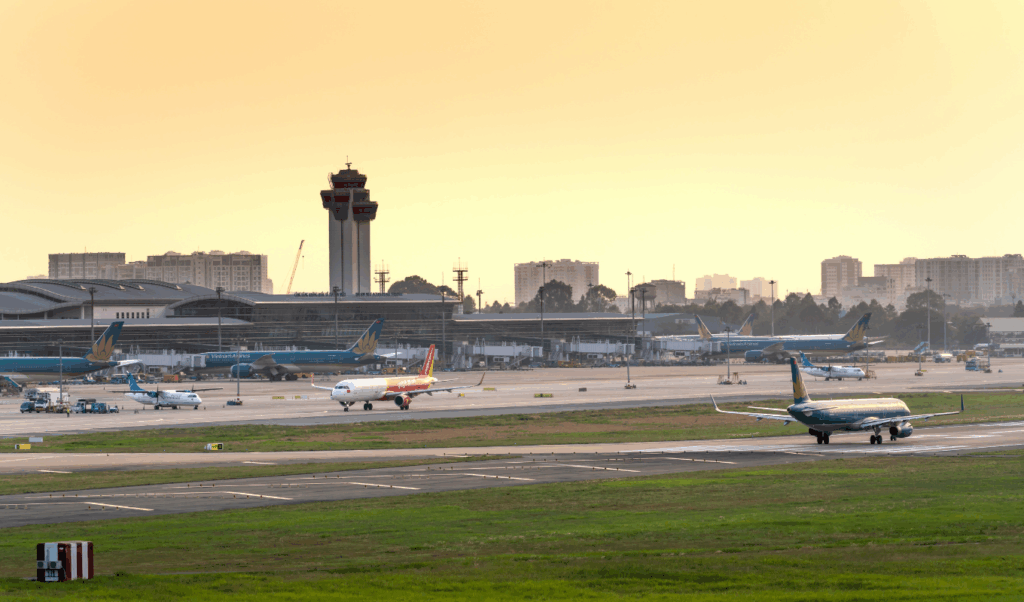
After you compare fares across booking sites, the next place to save is simple: where you fly from and which days you choose.
Skipping Nearby Airports Often Means Paying Higher Fares at Major HubsA lot of people enter the closest big airport and call it a day. That can cost more than you’d think. Smaller airports in the same metro area often have lower fares because they draw budget airlines and more price pressure.
A January 2026 USA Today comparison made that pretty clear: flying from Burbank (BUR) instead of LAX to Las Vegas on the same dates cut the round-trip fare from $128.84 to $76.99, a 40% gap. On a Washington, D.C.–to-Orlando trip, switching from IAD to BWI dropped the fare from $156.86 to $76.99, which saved nearly 51%.
Still, a lower fare doesn’t always mean a lower trip cost. Parking, rideshare, and transit can eat up the gap fast.
| Airport Option | Round-Trip Airfare | Parking (7 Days) | Total Trip Cost |
|---|---|---|---|
| LAX (Los Angeles) | $320 | $210 ($30/day) | $530 |
| BUR (Burbank) | $260 | $84 ($12/day) | $344 |
That’s the key point: the cheapest ticket isn’t always the cheapest trip. Check at least two airports in the same metro area, then add parking or rideshare before you book.
Once the airport is locked in, the next lever is your travel dates.
Fixed Travel Dates Lock in Higher FaresSet travel dates, especially quick Friday-to-Sunday trips, often come with steeper prices. U.S. domestic fares are often 13% to 14% lower on Tuesday or Wednesday than on Sunday.
| Route | Departure Day | Return Day | Round-Trip Fare |
|---|---|---|---|
| Dallas–San Francisco | Friday | Sunday | $486 |
| Dallas–San Francisco | Tuesday | Saturday | $342 |
That’s $144 less, or about 30%, for the same trip length. The easiest move is to check a flexible-date calendar before booking. Sometimes even a small shift, like coming back Monday instead of Sunday, can trim the fare.

Even after you pick the right airport and travel dates, airfare can still swing fast. Prices may change several times in a single day, which means manual searches often miss short windows when fares dip.
The fix is simple: set fare alerts early. The earlier an alert is running for your route, the more price changes it can track. And when a drop hits, speed matters. Good deals don’t sit around for long.
Dollar Flight Club sends email and SMS alerts for discounted flights, including deals up to 90% off on domestic and international routes.
The next problem shows up after the fare itself: extra charges that make a cheap ticket a lot less cheap.
Bag and Seat Fees Can Erase the Savings From a Low Base FareA $199 ticket can feel like a steal at first glance. Then the add-ons show up. About 45% of U.S. airline passengers pay more than the base fare after adding things like checked bags, carry-ons, and seat selection. These charges often appear late in checkout, so it’s easy to miss the actual total.
U.S. airlines have pushed hard on this pricing model. First checked bag fees have reached $40 on American and United for domestic itineraries, while Frontier and Spirit have charged up to $99 for a carry-on bag. Five major airlines together brought in $12.4 billion in seat selection fee revenue between 2018 and 2023.
A low base fare only helps if the full trip cost stays low. For a basic U.S. domestic round trip, the math can look like this:
| Item | Base Fare Only | All-In Trip Cost |
|---|---|---|
| Base round-trip fare | $199 | $199 |
| Checked bag (round trip, $35/way) | – | $70 |
| Seat selection (2 segments, $20 each) | – | $40 |
| Total | $199 | $309 |
That’s a 55% jump. For a family of four, the difference can top $400. So before you book, price out the full trip first and compare that number across airlines. In many cases, a full-service fare that includes a carry-on and seat assignment can beat a cheaper budget ticket that leaves both out.

Small shifts in when you book and how you compare flights can lead to solid savings. A simple pre-booking checklist helps keep those extra costs from sneaking in.
Before you book, check these five things:
Dollar Flight Club sends email and SMS alerts for discounted domestic and international flights, with deals up to 90% off and access to travel perks and partner discounts.
The lowest fare on the screen often stops being the cheapest trip once the fees hit.
For U.S. domestic trips, the sweet spot is usually 1 to 3 months before departure. In many cases, that lands around 28 to 38 days out.
For international travel, booking 3 to 6 months ahead is often the better move, though the timing can shift depending on the region.
Airfare goes up and down with demand, so it pays to watch prices early and book once the flight hits your target fare.
Are nearby airports worth checking?Yes. Flying out of a nearby airport can often save travelers $75–$150 per person, and sometimes $100–$300 on a roundtrip, compared with the closest major hub.
The key is to compare the total cost. That means looking at the ticket price, ground transportation, and the extra time you may spend dealing with traffic or a longer drive.
In most cases, it only makes sense if your all-in savings come out to at least $50–$75 per person after those added costs.
How can travelers avoid hidden airline fees?Travelers can avoid hidden airline fees by looking at the total trip cost, not just the base fare.
Before you book, check what the ticket actually includes. Budget airlines often add extra charges for carry-on bags, checked luggage, and seat selection. That low fare can look like a steal at first, then get a lot more expensive once the add-ons start piling up.
If you know you’ll need those extras, pay for them during booking when you can. Airport fees can nearly double the cost, which is a rough surprise at the check-in counter.
It can also make sense to compare full-service carriers, since their fares may include more from the start. And if you fly often, airline loyalty programs and co-branded credit cards can help you avoid some of those fees through bag and seat perks.
| # | Наименование новости | Тональность | Информативность | Дата публикации |
|---|---|---|---|---|
| 1 | The Cheapest Day of the Week to Book Flights | 0 | 6.08 | 16-07-2026 |
| 2 | How to Track Flight Prices and Know Exactly When to Book | 0 | 5.82 | 13-08-2026 |
| 3 | Why Flights Get Cheaper 3 Weeks Before Departure | 0 | 14.51 | 14-07-2026 |
| 4 | How to Plan a Trip on a Budget from Start to Finish | 0 | 5.33 | 30-07-2026 |
| 5 | Best Time to Book Shoulder Season Flights | 0 | 9.07 | 28-07-2026 |
| 6 | How to Find Cheap Flights for a Family of Four | 2 | 6 | 11-06-2026 |
| 7 | Is Booking Direct With the Airline Really Cheaper? Here’s the Truth | 0 | 5 | 16-06-2026 |
| 8 | How to Find Out If Your Flight Price Is Actually a Good Deal | 0 | 5 | 08-07-2026 |
| 9 | The Cheapest European Cities to Fly Into This Fall | 0 | 7.86 | 11-08-2026 |
| 10 | Best Affordable Destinations for a Last-Minute Summer Trip | 0 | 13 | 24-07-2026 |