Просмотр новости
Найдите то, что Вас интересует
 Спутники
 РН
РН SpaceX
 Роскосмос
 NASA
NASA
СпутникиРНSpaceXРоскосмосNASASomehow, 26 new species of bacteria have managed to survive in the harshest place on Earth -- a NASA cleanroom.
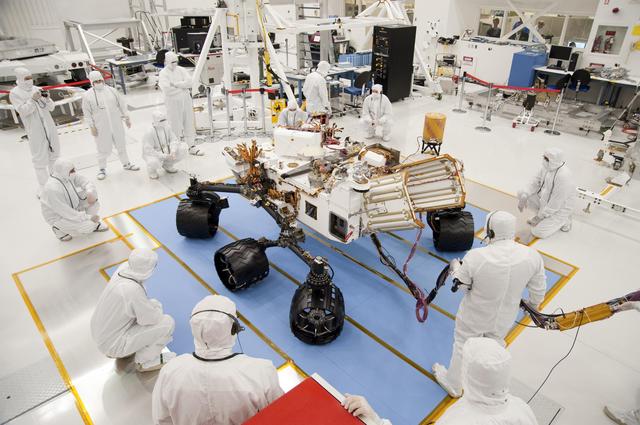 A NASA cleanroom. Photo: Space Centre Houston
In 2025, scientists identified 26 previously unknown bacterial species living inside NASA’s cleanrooms. These are rooms where spacecraft, satellites, and other objects are assembled to maintain their sterility. The idea is to prevent Earth microbes from hitchhiking to other planets.
Yet somehow, over two dozen new species have managed to survive in this off-putting environment. Now researchers want to see if they can endure a trip to Mars.
The microbes turned up in samples taken during the construction of NASA’s Phoenix Mars lander at the Kennedy Space Center in Florida in 2007. In all, researchers collected 215 strains of bacteria from surfaces in the cleanroom. Twenty-six of these had never been classified before. It has taken 17 years for advancing technology to fully map their genetics.
These NASA cleanrooms are among the most meticulously maintained on Earth. They have filtered air, strict humidity and nutrient controls, and repeated chemical and UV sterilization.
“It was a genuine ‘stop and re-check everything’ moment,” study co-author Alexandre Rosado said about the presence of these microbes.
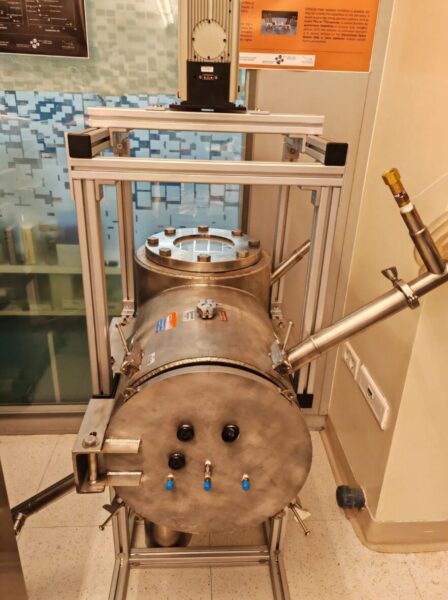
The planetary simulation chamber at King Abdullah University of Science and Technology in Saudi Arabia. Photo: Niketan Patel and Alexandre Rosado/King Abdullah University of Science and Technology
The newly identified species appear to have evolved genetic features that let them endure harsh conditions, including chemical resistance and the ability to repair radiation-damaged DNA. They can even form spores that can lie dormant for a long time. It is possible that these mechanisms might let them cope with a space flight to Mars and continue to survive on the Red Planet.
To test this, the research team will use a planetary simulation chamber. Here, the microbes will experience the temperature, vacuum, radiation, and UV levels associated with Mars. This will help determine their survival limits.
This discovery of these hardy bacteria has real implications for planetary protection. We need both to prevent Earth life from contaminating other worlds and any potential extraterrestrial organisms from successfully hitchhiking back to Earth.
Researchers will begin testing the microbes in the planetary simulation chamber in the next few months.
| # | Наименование новости | Тональность | Информативность | Дата публикации |
|---|---|---|---|---|
| 1 | 🔬 #Факт дня: Некоторые бактерии способны выживать в условиях открытого ... | 5 | 7 | 17-07-2026 |
| 2 | Бактерии выжили после полета в космос и возвращения на Землю ... | 5 | 7 | 07-07-2026 |
| 3 | Ученые обнаружили на МКС более 20 видов микроорганизмов | 0 | 0 | 16-01-2022 |
| 4 | Земные микробы вполне способны пережить путешествие на Марс. И это ... | -2 | 7 | 06-07-2026 |
| 5 | Бактерии могут выживать в космосе. Некоторые виды устойчивы к радиации. ... | 0 | 3.03 | 01-08-2026 |
| 6 | Опасные для человека бактерии выжили в марсианских условиях | 0 | 7 | 23-06-2026 |
| 7 | NASA могли случайно заселить Марс 🦠 В 2007 году бактерию ... | 0 | 9.76 | 05-08-2026 |
| 8 | Infectious microbes on Mars could become even more deadly | 0 | 5.75 | 17-07-2026 |
| 9 | U.S. Navy microbiologist discovers 14 new viruses and gives them Texas names | 0 | 13.32 | 12-07-2026 |