Просмотр новости
Найдите то, что Вас интересует
 Спутники
 РН
РН SpaceX
 Роскосмос
 NASA
NASA
СпутникиРНSpaceXРоскосмосNASAThe bizarre species came to the Adriatic accidentally in the ballast water of cargo ships. It is devastating the Italian city's lagoon ecosystem.
 Photo: Shutterstock
Hordes of cannibalistic jellyfish are spreading through Venice’s famed lagoon and wreaking havoc on local fisheries. Usually found in the western Atlantic, the warty comb jellyfish, also known as the sea walnut, is now thriving in the Adriatic Sea.
Despite its name and appearance, Mnemiopsis leidyi is not a true jellyfish but a comb jelly, which is in a different phylum than true jellyfish. Among other differences, the gelatinous, translucent creatures do not have stingers. The name “comb jellies” comes from their method of moving through the water using rows of hair-like structures called ciliary combs.
Scientists believe the species came to the Adriatic accidentally in the ballast water of cargo ships. A sometime cannibal, it will eat its own young when food is scarce. The bizarre creature has a temporary anus that appears only when it needs to expel waste, then vanishes again. Unfortunately, it is also one of the world’s top invasive species and is causing chaos for the Italian city’s fragile lagoon ecosystem.
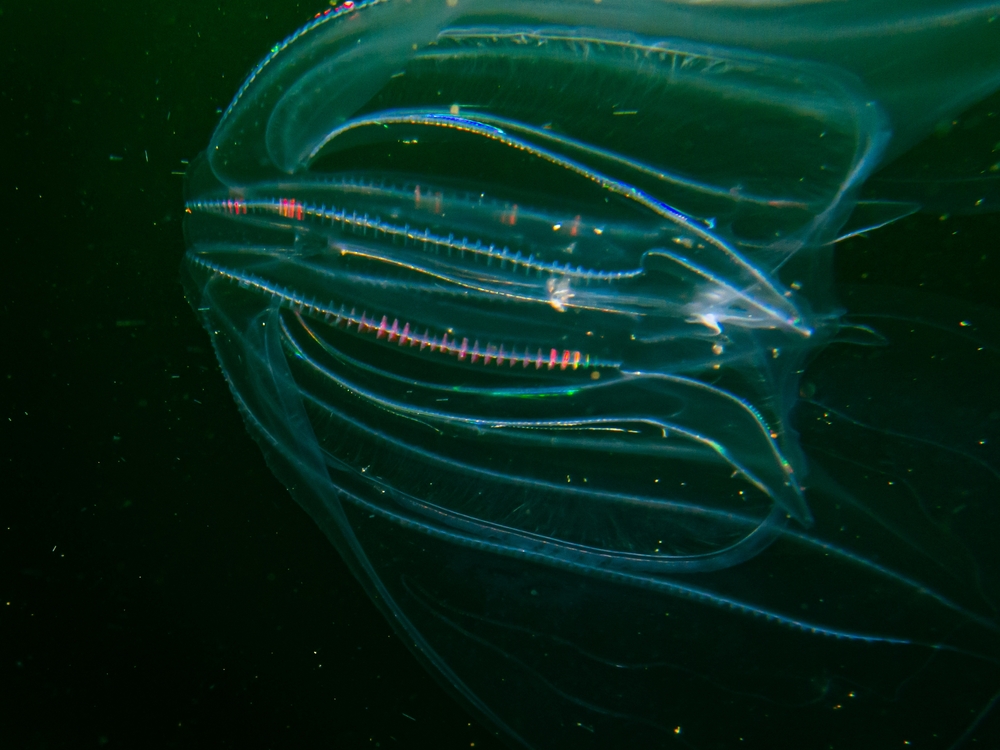
The Sea Walnut. Photo: Shutterstock
The lagoon is almost perfectly suited to its needs, allowing the sea walnuts population to explode at an alarming rate. A recent two-year study found that it can thrive in a wide range of temperatures and salinity levels. The species blooms from early spring through to early autumn, when warmer waters and stable salt levels allow it to reproduce rapidly. Researchers note that climate change is fueling the jellyfish’s success in the lagoon and that the situation is likely to worsen.
The sea walnut may sound harmless, or even cute, but that is far from the truth. The species devours plankton, fish eggs, and fish larvae, stripping the lagoon of the foundations of its food web. For local fishers, the invasion is already having serious consequences. The gelatinous creatures are clogging up fishing nets, making them heavier, harder to haul in, and less effective. At the same time, fish stocks are crashing because the comb jellies are demolishing most of their fish eggs and larvae.
| # | Наименование новости | Тональность | Информативность | Дата публикации |
|---|---|---|---|---|
| 1 | Seaweed surge a major mess for Mexico's Caribbean coast | 0 | 8.52 | 14-08-2026 |
| 2 | Giant toxic jellyfish with 120-foot tentacles invade New England beaches as officials issue chilling warning | 0 | 11.65 | 14-07-2026 |
| 3 | Everything in the Med that can leave you deathly sick - from poisonous jellyfish to a flesh-eating beach bug | 0 | 8.96 | 10-07-2026 |
| 4 | Truckload of squid spills into the street in Rhode Island, creating a smelly mess in the summer heat | 0 | 5.91 | 19-08-2026 |
| 5 | Lanzamiento masivo de pulpos al mar, la fórmula italiana para combatir la invasión del cangrejo azul | 0 | 6.07 | 20-08-2026 |
| 6 | Акула-людоед утащила спасателя под воду | 0 | 30 | 12-08-2026 |
| 7 | Гигантские ядовитые медузы заполонили воды российских курортов | 0 | 11.63 | 07-08-2026 |
| 8 | Лето – новая зараза: из-за аномальной жары в морях размножается бактерия, пожирающая плоть | -5 | 6 | 03-07-2026 |
| 9 | Ущерб экологии от работы ИИ-компаний назвали колоссальным | 0 | 24.29 | 12-08-2026 |
| 10 | В Балтийское море переселились новые виды рыб | 0 | 0 | 04-12-2025 |