Просмотр новости
Найдите то, что Вас интересует
 Спутники
 РН
РН SpaceX
 Роскосмос
 NASA
NASA
СпутникиРНSpaceXРоскосмосNASAThe new regulations aiming at curbing excessive luxury on Everest have proven so troublesome that Khumbu authorities have had to walk back some of their preliminary decisions. In particular, the obligation to use yak convoys instead of helicopters to ferry supplies the last leg to Base Camp has changed. As we reported earlier this week, outfitters were having problems finding enough yaks in Syanboche, two days away from Base Camp. The loads are so massive and the facilities at BC so expansive that the yaks simply can't keep up. The situation was only going to worsen when climbers started their […]
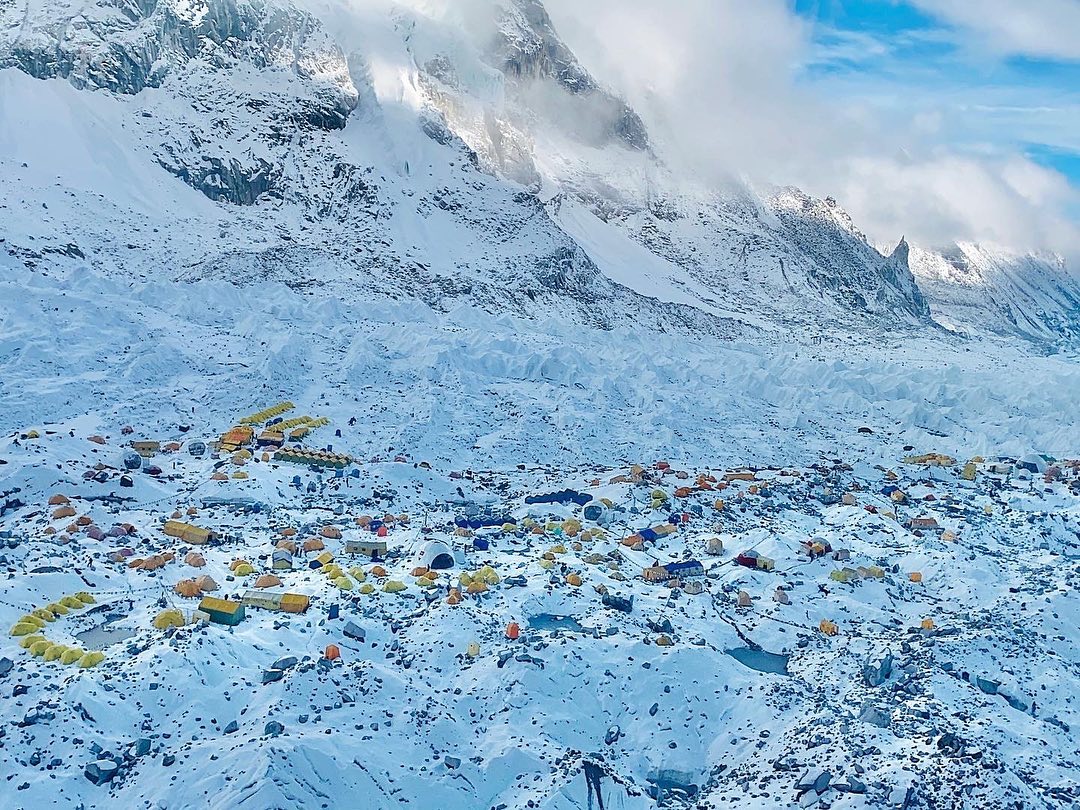 Everest Base CampPhoto: Seven Summit Treks
The new regulations aiming at curbing excessive luxury on Everest have proven so troublesome that Khumbu authorities have had to walk back some of their preliminary decisions. In particular, the obligation to use yak convoys instead of helicopters to ferry supplies the last leg to Base Camp has changed.
As we reported earlier this week, outfitters were having problems finding enough yaks in Syanboche, two days away from Base Camp. The loads are so massive and the facilities at BC so expansive that the yaks simply can’t keep up. The situation was only going to worsen when climbers started their rotations to higher camps in April. At that time, the need for supplies, especially bottled oxygen, increases.
Helicopters and big tentsWe also mentioned that the so-called Base Camp Management Procedure 2024 could be subject to adjustments. This has, in fact, occurred. The new version now allows helicopters to fly to Base Camp, as long as an ad hoc committee of supervisors approves.
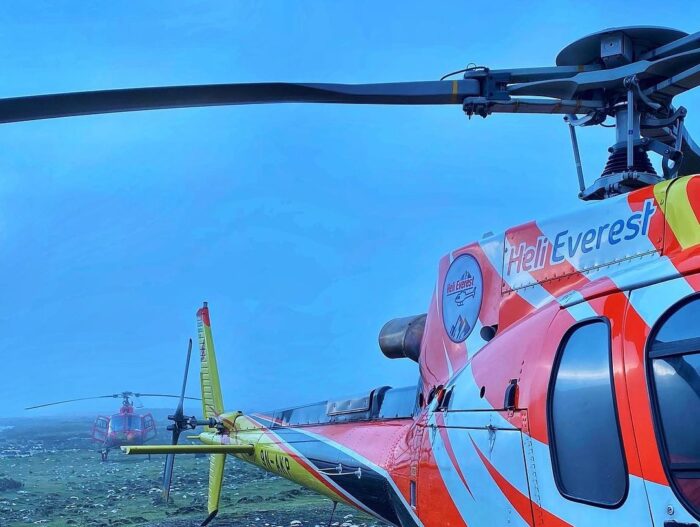
Helicopters grounded in the fog on the upper Khumbu, near Everest Base Camp. Photo: Seven Summit Treks
The updated regulations state that companies must still use yaks and porters, if available. The Sherpa mayors of the Khumbu proposed the yak requirement in the hopes of preserving part of the traditional herder’s life. Yak dung is also a main source of fuel in high-altitude villages.
As the revised rules now stand, helicopters will land and take off from three helipads in Everest Base Camp. Above that altitude, they can only fly rescue missions.
There are also new, looser limits on the size of the tents in Base Camp. Dining tents may allocate 5.5 square meters (60 square feet) per person. Each sleeping tent can have 7.4 square meters (80 square feet) per person. The previously allotted space was unrealistic and came too late for the companies that had already bought their tents to adjust.
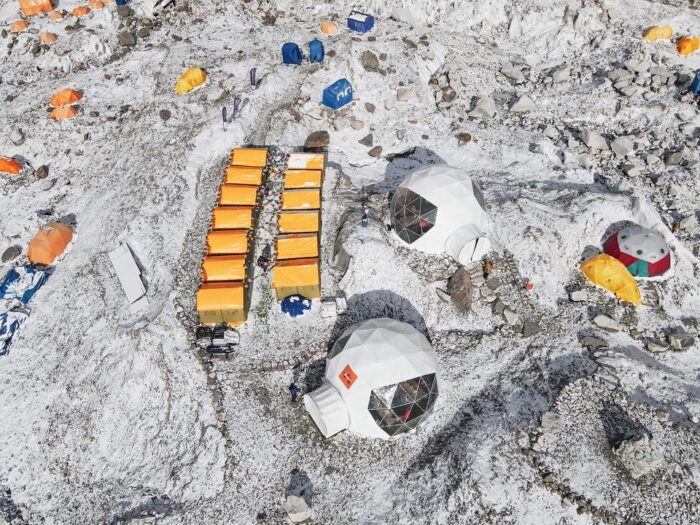
The “box-shaped” tents — the yellow ones above — are not allowed above Base Camp, and the big dome tents will have a limited size. Photo: Seven Summit Treks
And while trekkers and visitors are still not allowed to spend the night in Base Camp, climbers may still host friends and sponsors. And of course, Base Camp managers, expedition doctors, and non-climbing Base Camp crew can also stay, The Himalayan Times reported.
Above Base CampOther measures have not changed. All commercial ventures, such as cafés or massage businesses, are still disallowed in Base Camp. Climbers must still use bags to store and carry down human excrement. Each person must bring back at least 8kg of garbage.
Before setting off toward the Icefall and the upper camps, teams have to submit an inventory of what they are carrying. Officials assigned by the Sagarmatha Pollution Control Committee can then check that everything is brought back down at the end of the expedition.
At least on paper, nothing must remain on the mountain at the end of the climb. That includes dead bodies. If someone dies, the expeditions are responsible for bringing the bodies down.
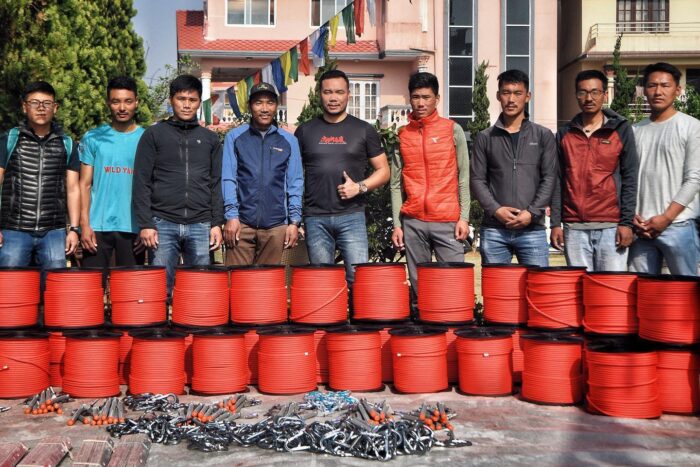
A past Seven Summit Treks team with the ropes for fixing on Everest. Photo: 7ST
Finally, new ropes must be used for all the fixing. This is pertinent for Seven Summit Treks, which is the company responsible this spring for laying the ropes from Camp 2 to the summit.
Climbing teams were also waiting for Nepal’s Department of Tourism to publish further regulations for the 8,000’ers. However, expedition leaders consulted by ExplorersWeb said there will be no last-minute rules from the central government, except for the requirement to wear some kind of location device. In the end, this will be a simple Recco reflector instead of a GPS tracker or “chip,” as some sources previously described it.
| # | Наименование новости | Тональность | Информативность | Дата публикации |
|---|---|---|---|---|
| 1 | New Everest Regulations: You Must Climb a 7,000m Peak in Nepal First | 0 | 8.26 | 16-02-2026 |
| 2 | Locals Block Helicopters to Manaslu, Demand Better Treatment | 0 | 6.08 | 25-09-2024 |
| 3 | Nepal Trekking Warning: Expect Loads of Snow | 0 | 5.33 | 05-10-2024 |
| 4 | How to Get a Permit to Solo Climb Peaks in Restricted Areas of Nepal | 0 | 6.14 | 04-03-2026 |
| 5 | Yalung Ri Avalanche Leads to Accusations That Red Tape Delayed Rescues | 0 | 6.78 | 06-11-2025 |
| 6 | Climbing History of the Peaks of the 2024 Cutting Edge Grants. Part 3: Jannu East | 0 | 7 | 29-06-2024 |
| 7 | Climbers Head for Nepal's Mountains, Escape Curfews | 0 | 8.4 | 12-09-2025 |
| 8 | Climbing Royalties Waived for 97 Nepal Peaks - And Why It's Not Such a Great Deal | 0 | 11.43 | 12-08-2025 |
| 9 | Solo Climber Heads for Newly Opened Jugal 3 | 0 | 8.9 | 28-03-2024 |